How did they discover sound recording?
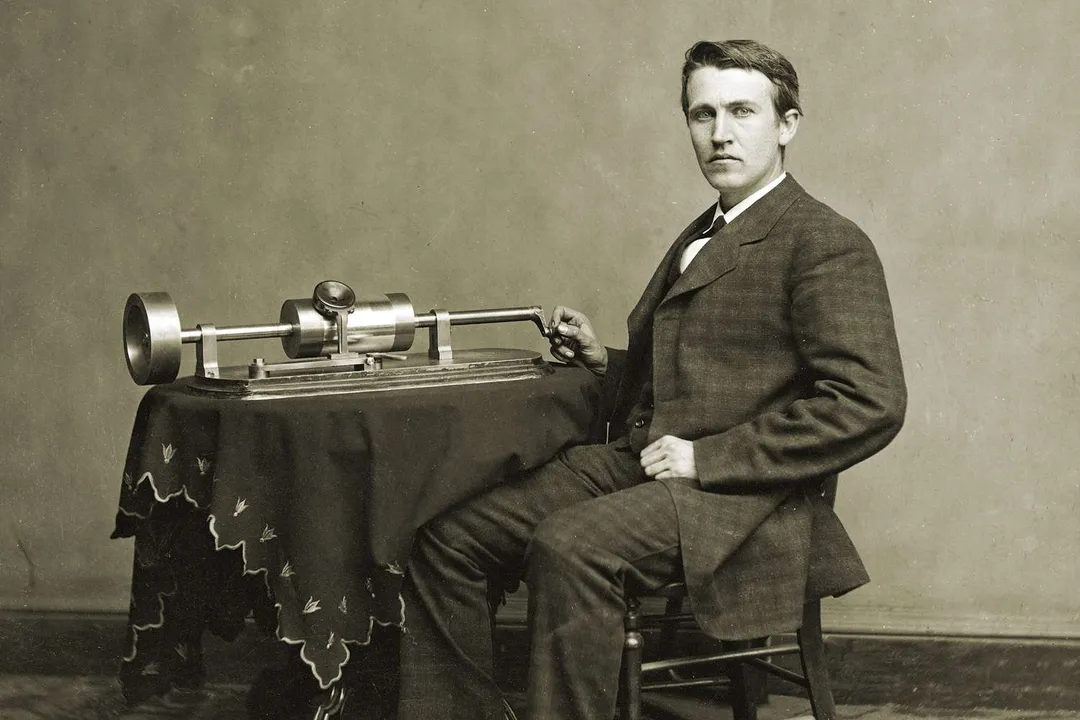
The initial steps toward capturing sound were not driven by a desire to listen to music or speeches later, but rather by a pure scientific curiosity to see sound waves in motion. For nearly two decades, devices existed that could trace the vibrations of sound onto a surface, but the ability to bring that sound back to life remained science fiction. The true history of sound recording, therefore, starts with a visual representation of acoustic energy long before we could actually hit 'play'. [1][6]
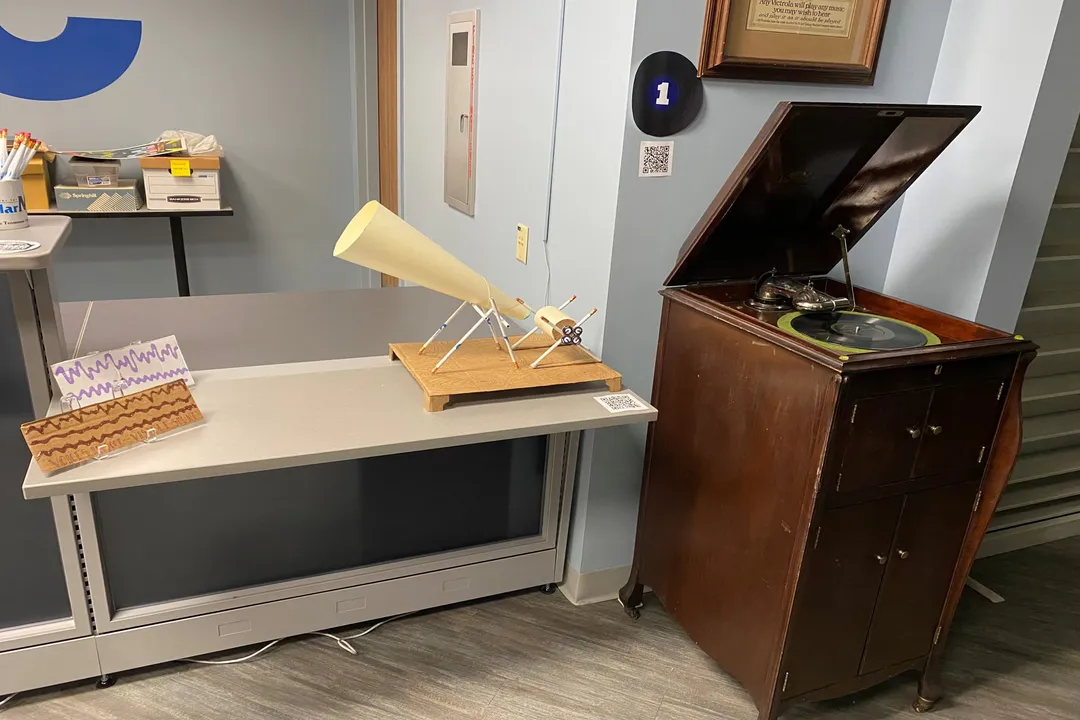
This concept began in 1857 with the French inventor Édouard-Léon Scott de Martinville. [1][5][6] He created a machine he called the phonautograph. [1][5] The purpose of this device was explicitly for research into acoustics—to make sound visible to the human eye. [5][6] It worked by having a horn focus sound onto a diaphragm, which was attached to a stylus. [1] This stylus then traced the vibrations onto a medium—often paper or glass coated in soot from an oil lamp. [1][6] When the sound vibrated the diaphragm, the stylus etched a fluctuating line into the dark coating, creating a visual record of the sound wave pattern. [1][6]
# Visual Recording
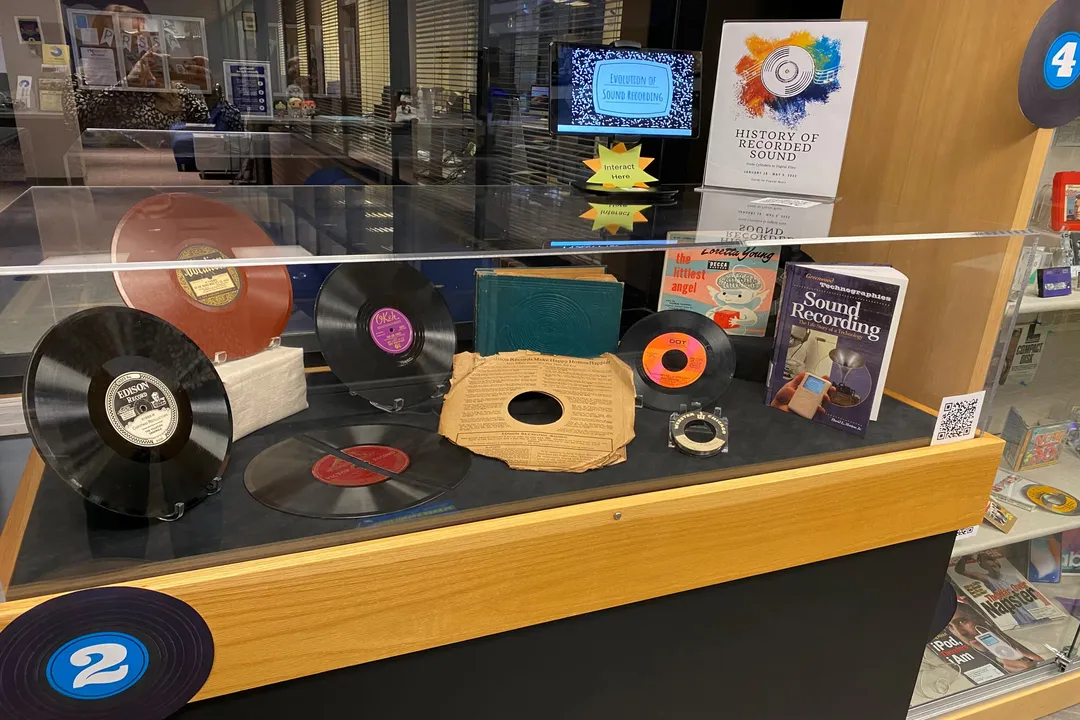
Scott de Martinville’s phonautograph successfully created the world's first known sound recording, albeit an invisible one at the time. [2][5] Though he never intended for the recordings to be played back, these fragile soot traces represented the actual, physical imprint of sound waves. [5] It took until 2008 for modern researchers to figure out how to convert those ancient, faint wavy lines back into audible sound, proving the fidelity of Scott's early work. [1][5] This entire period, spanning from the late 1850s through the mid-1870s, existed in a technological limbo where sound could be captured on a surface but could not be retrieved from it. [6]
Contrast the initial intent—treating sound as a physical wave to be drawn for laboratory study—with the eventual commercial goal of entertainment. This fundamental difference in purpose shaped the timeline of innovation, prioritizing visualization over sonic fidelity for two decades. [5][6]
# Playback Achieved
The revolutionary leap from seeing sound to hearing it happened less than a month after Thomas Edison first conceived of the idea, an astonishingly fast development cycle for the era. [1] In 1877, Edison invented the phonograph. [1][5][6][7] This machine was designed specifically to both record and reproduce sound. [1][5]
Edison's design was ingenious in its simplicity and directness. He used a cylinder wrapped in tin foil. [1][5] As someone spoke into the horn, the sound vibrated a diaphragm connected to a stylus, which then physically indented the soft tin foil on the rotating cylinder. [1] The magic happened when he reversed the process: by running the needle across the indentations again, the stylus vibrated, which in turn vibrated the diaphragm, pushing air out of the horn and recreating the original sound waves. [7] Edison famously tested it by reciting the nursery rhyme, "Mary Had a Little Lamb," making this the first recognizable spoken recording. [1][5][7] This invention instantly transformed sound from a transient event into a reproducible commodity. [6]
# Medium Shift
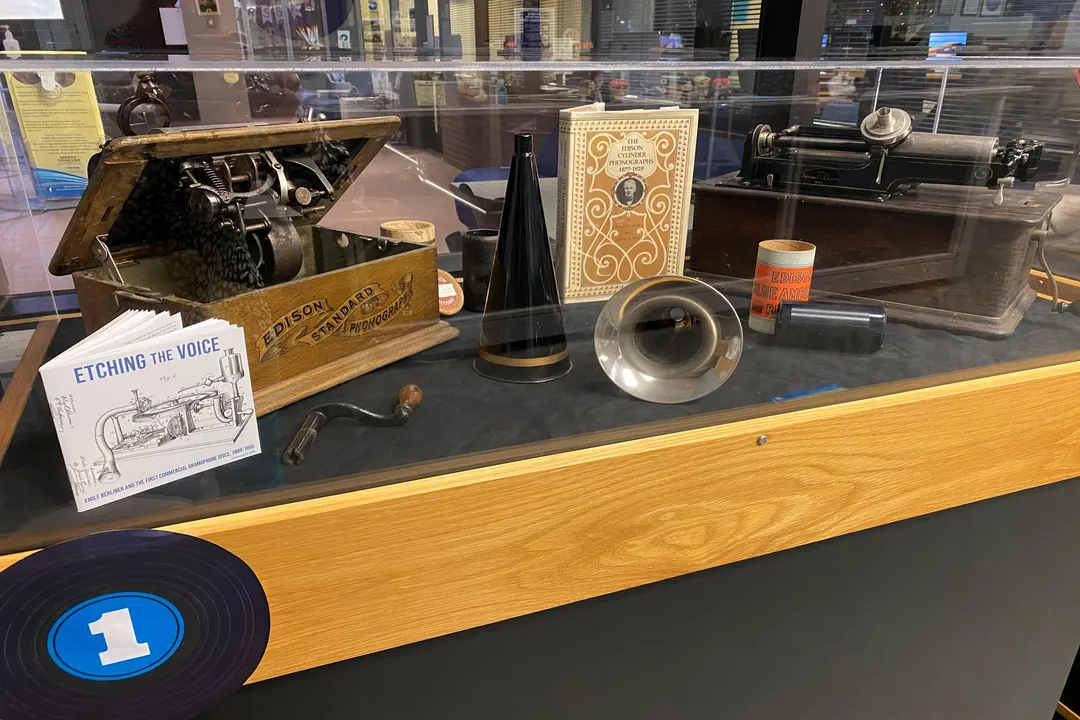
While Edison’s tin foil phonograph proved the concept, it was not practical for mass use. The foil was fragile and quickly deteriorated after only a few plays. [1] The next wave of inventors focused on improving durability and fidelity.
Around 1885, Alexander Graham Bell, along with his associates Charles Sumner Tainter and Chichester Bell, developed the graphophone. [1][6] This device was an improvement because it used cylinders made of wax-coated cardboard instead of tin foil. [1][6] Wax held the grooves much better and offered superior sound quality, allowing for more playback cycles before degradation set in. [1]
However, the cylindrical format itself presented a manufacturing hurdle. Making an exact duplicate of a cylinder was difficult and time-consuming. [1] The real game-changer came from Emile Berliner, who developed the gramophone starting in 1887. [1][6] Berliner abandoned the cylinder for a flat, rotating disc. [1][6]
This shift to discs was primarily driven by manufacturing economics. Discs could be mass-produced much more easily and cheaply than cylinders through a process similar to stamping metal, allowing for rapid duplication of recordings. [1][6] The ability to manufacture records in large quantities, rather than painstakingly duplicating each one individually, meant that recorded sound could finally reach the masses efficiently. [1] The disc format ultimately won the early format war, establishing the foundation for the record industry as we know it. [1][6]
We can compare the early mechanical recording methods by their basic reliance on air:
| Device | Year | Medium | Recording Principle | Key Limitation |
|---|---|---|---|---|
| Phonautograph | 1857 | Soot-coated surface | Visual tracing of air pressure | No playback mechanism [1][5] |
| Phonograph | 1877 | Tin foil cylinder | Direct mechanical indentation | Foil degraded too quickly [1][7] |
| Graphophone | 1885 | Wax cylinder | Improved indentation durability | Difficult to mass-replicate [1][6] |
| Gramophone | 1887 | Flat disc | Stamping for mass production | Still relied on mechanical vibration [1][6] |
# Electric Era
Even with the disc format taking hold, the quality of the recordings remained limited by acoustic recording methods. [1][6] In these early systems, the volume and frequency range that could be captured were entirely dependent on how vigorously the sound waves hit the recording diaphragm. Loud sounds were recorded better than quiet ones, and high or very low frequencies were often lost entirely because the physical diaphragm could not vibrate fast or far enough to trace them accurately. [1]
The next significant discovery involved transforming sound energy into electrical energy before engraving the groove. Beginning around 1925, the introduction of electrical recording equipment marked a true turning point in sonic quality. [1][6] Microphones converted sound into electrical signals, which could then be amplified before being sent to an electromagnetic cutter head that etched the master disc. [1] This meant that the recording machinery was no longer limited by the physical force of the sound wave itself but by the capabilities of the electronics. [6] This allowed for much greater dynamic range, capturing subtle details and achieving a volume that was far closer to the live performance experience. The realization that sound waves could be translated into a flexible electrical signal, amplified, modified, and then converted back to physical motion unlocked the fidelity that enthusiasts and artists had been seeking since Scott first drew his lines in the soot. [1][6]
Related Questions
#Citations
History of sound recording
The Origins of Sound Recording - Thomas Edison ...
ELI5: How did early sound recording devices like the ...
History of Recorded Sound - Center for Popular Music
a look back at the first sound recording
The History of the First Sound Recording
Old to New School—A Brief History of Sound Recording