What is the estimated spin-down time for the nearly-perfect sphere utilized in the Gravity Probe B experiment's London moment gyroscope?
Around 15,000 years
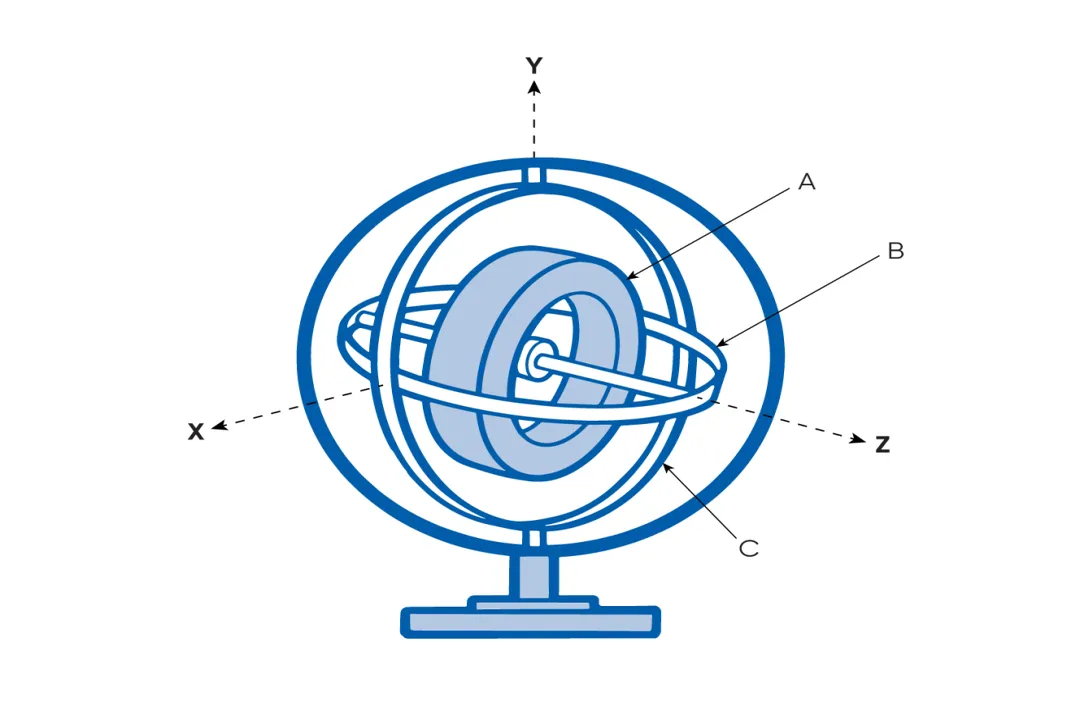
The Gravity Probe B experiment pushed the concept of gyroscopic rigidity in space to an extreme engineering limit by employing a specialized gyroscope known as the London moment gyroscope. This device utilizes a nearly-perfect sphere made of fused quartz that is coated with a superconducting material. To ensure maximum stability and minimize drift caused by energy loss, this sphere is magnetically suspended, completely eliminating all contact and bearing friction. Given the near-zero drag environment achieved through this magnetic suspension, the expected spin-down time—the time until the rotational alignment significantly changes due to internal energy loss—is estimated to be approximately 15,000 years, showcasing the ultimate refinement of maintaining rotational stability over cosmic timescales.