How did the intellectual focus of Johann Bohnenberger and Walter R. Johnson differ from Léon Foucault's application of the gyroscope concept?
Bohnenberger and Johnson were interested in demonstrating underlying physical principles of rotating bodies, while Foucault aimed to apply the proven apparatus to a large geophysical question.
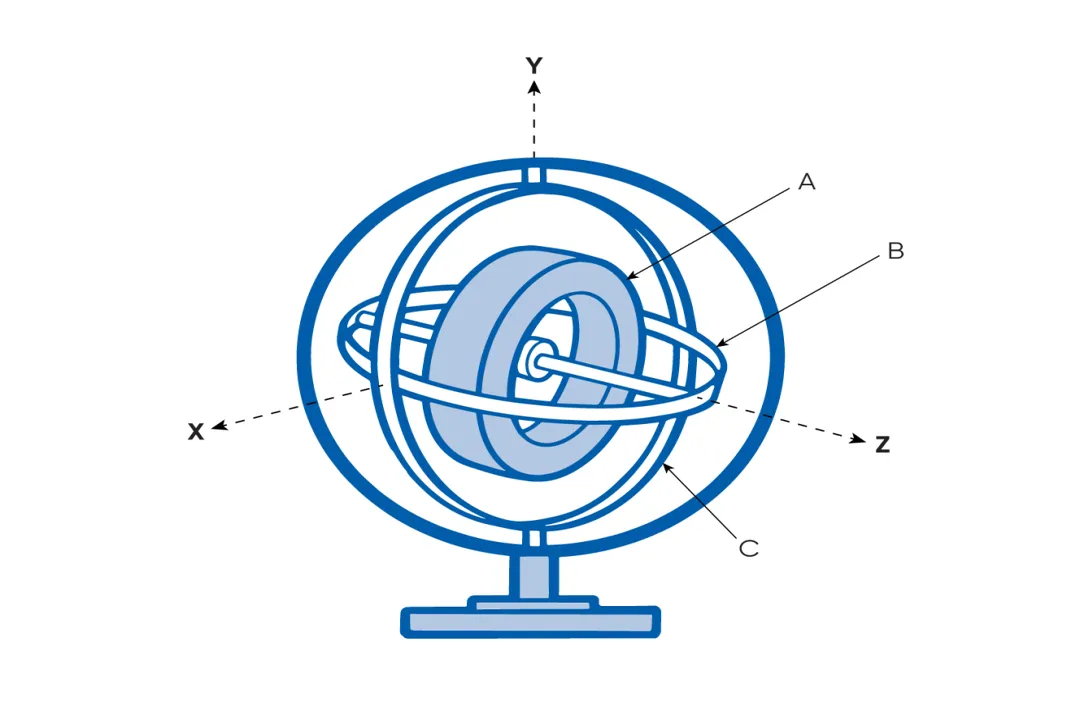
The fundamental difference in intent between the early 19th-century pioneers and Foucault marks a significant shift in the device's trajectory. Johann Bohnenberger (1817) and Walter R. Johnson (1832) were engaged in exploratory physics; their work concentrated on demonstrating the intrinsic principles governing a massive rotating body suspended in space—observing how its orientation remained rigid when the mounting framework was changed. Foucault, however, encountered this proven apparatus (which Pierre-Simon Laplace saw at the École Polytechnique) and immediately shifted the goal. He used the established principles of 'rigidity in space' to target a geophysical measurement: visually confirming the rotation of the Earth, thereby transitioning the device into one with direct scientific consequence beyond mere laboratory curiosity.