When did mercury vapor lamps come out?
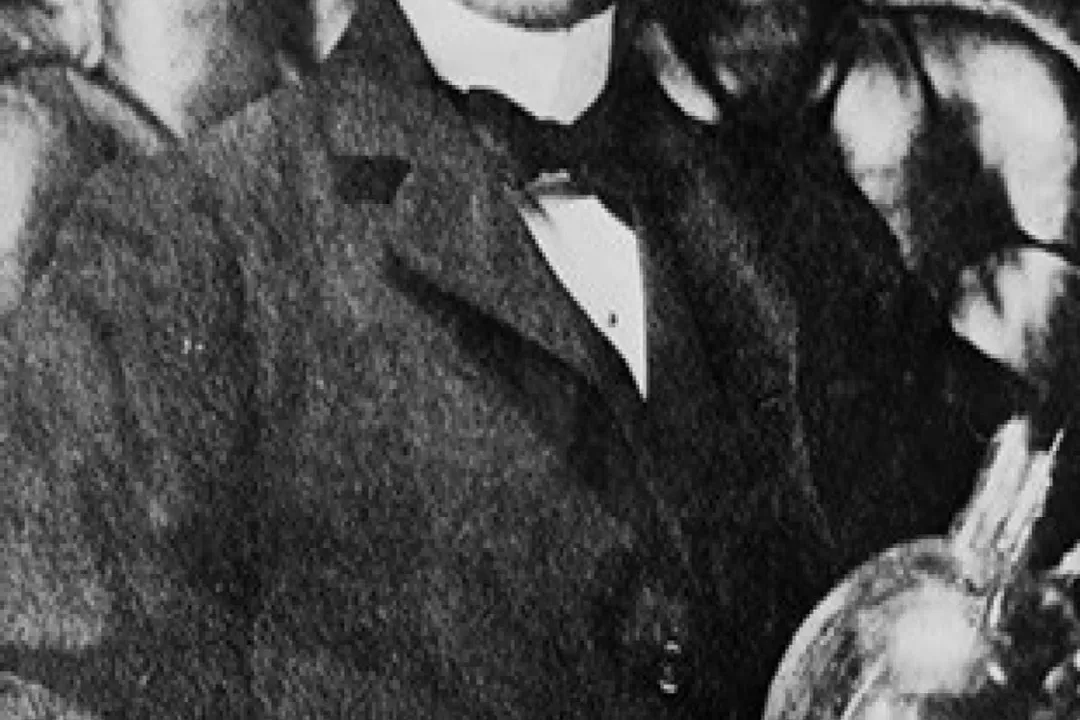
The arrival of practical mercury vapor lighting fundamentally shifted the landscape of artificial illumination, trading the warm, familiar glow of incandescent bulbs for something entirely new and decidedly blue-green. The key milestone for this technology centers around the year 1901, when inventor Peter Cooper Hewitt first demonstrated a working model of the mercury vapor lamp. While the initial concept and successful demonstration occurred then, the technology took a couple more years to move from the laboratory bench to widespread commercial availability, with patents being secured around 1903.
# Cooper Hewitt
Peter Cooper Hewitt was an inventor deeply involved in the burgeoning field of electrical engineering at the turn of the 20th century. His pursuit of better, more efficient lighting was part of a broader industrial drive to reduce the massive electrical consumption associated with lighting cities and factories. Before the widespread adoption of the mercury vapor lamp, electric lighting was dominated by the incandescent bulb, which converted only about 2.5% of its electrical energy into visible light, making it quite inefficient by modern standards. Hewitt sought a source that bypassed the resistive heating element, opting instead for the light emitted when an electric arc passes through a vaporized metal—in this case, mercury.
# Initial Appearance
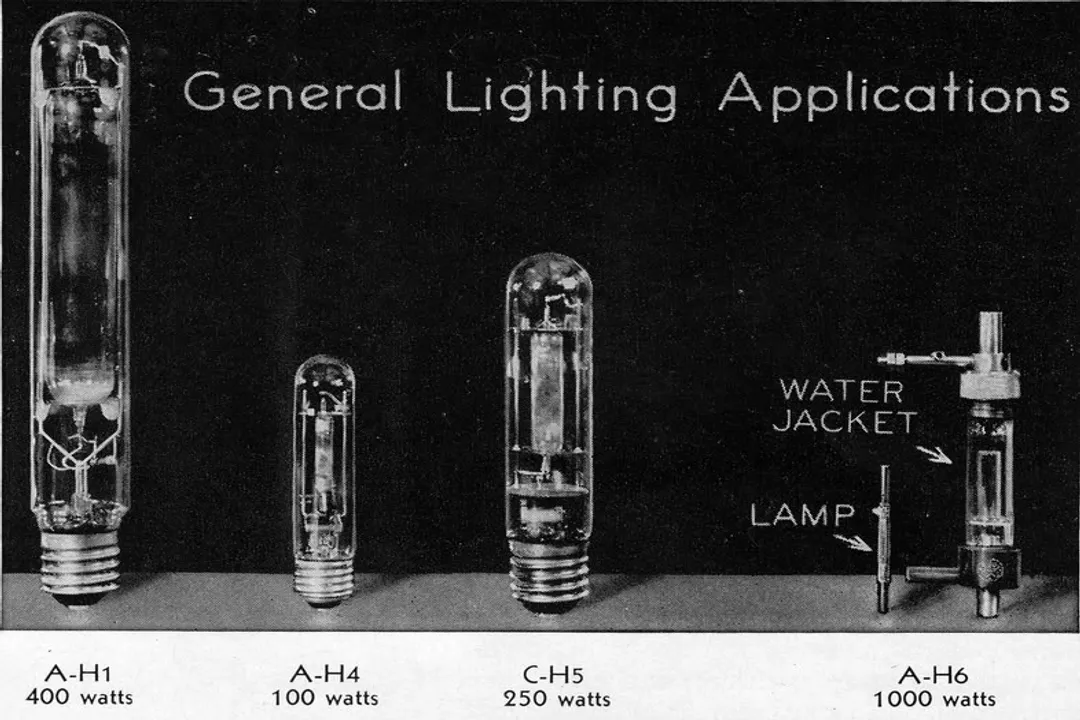
The first practical iteration of Hewitt’s invention was a quartz arc tube that contained a small amount of mercury. The arc was struck between two iron electrodes when the tube was tilted, causing the mercury to vaporize and begin emitting its characteristic light. This initial light was intense, but it possessed a distinct blue-green hue. This characteristic color meant the early lamps rendered other colors very poorly, a significant limitation for applications requiring accurate color rendition.
The timeline of its introduction shows a quick progression from concept to market:
| Year | Event | Significance |
|---|---|---|
| 1901 | First demonstration | Proof of concept by Peter Cooper Hewitt |
| 1902 | Patent filed | Legal protection secured for the design |
| 1903 | Patent issued/Introduction | Commercial launch period begins |
| 1903–1904 | Commercial Availability | Lamps begin appearing in industrial settings |
Despite the poor spectral quality—a major drawback that would plague mercury lighting for decades—the initial advantage was efficiency. This is a fascinating point of comparison when considering early 20th-century infrastructure needs. For applications like street lighting or massive factory floors, where the primary requirement was simply flooding a large area with more light per watt consumed than an incandescent bulb could manage, the color rendering index (CRI) was secondary. The sheer luminous efficacy of the mercury vapor lamp made it an immediate winner for utility over aesthetics in these specific environments. One can easily imagine a factory manager in 1905 choosing the mercury lamp not because the area looked perfectly colored, but because the operating cost for the required illumination level dropped noticeably compared to incandescent banks.
# Early Applications
The characteristics of the early mercury vapor lamps dictated their initial adoption profile. Because of the intense light output and the efficiency gain over incandescent sources, they were quickly seen as the solution for large-scale, outdoor, or industrial illumination tasks. Think of roadways, railway yards, and large manufacturing spaces—areas where the blue-white light was less conspicuous or less detrimental to tasks performed.
The quartz tube, necessary because glass would absorb too much of the ultraviolet radiation produced, was also a key feature. While this necessitated careful handling and restricted the physical size of the lamp for a time, it also heralded the later discovery that these lamps produced significant UV output, which had implications for certain sterilization or curing processes down the line, though this was perhaps not fully realized at the time of initial introduction.
# Addressing Color Defects
The inherent flaw in the initial lamp was its reliance on only the visible light emitted by the mercury plasma, resulting in that striking, monochromatic blue-green output. To make these lamps viable for more general use, engineers needed to convert that unused energy, particularly the ultraviolet component, into visible light across a broader spectrum.
This necessity led to the development of the phosphor-coated mercury vapor lamp. The addition of a phosphor coating on the inside of the outer glass envelope became the next significant evolutionary step for this technology. When the UV radiation strikes the phosphor material, the coating re-emits light in the visible spectrum. Different phosphor blends allowed manufacturers to shift the overall perceived color temperature away from that harsh blue and toward a whiter light, effectively improving the color rendering qualities.
This development marks a crucial technological pivot point. Moving from a pure gas-discharge source to a hybrid source involving both gas emission and fluorescence meant that the lamp was no longer a singular discovery but an evolving platform. The first lamps of 1901 were purely spectral emission devices; by the mid-20th century, they were spectral modifiers, relying on chemistry (the phosphor) to correct the physics (the mercury arc). This evolution suggests that the market for high-quality lighting was always present, even if the initial technology couldn't meet it immediately.

# The Twilight Years
The mercury vapor lamp enjoyed a long run, especially in industrial and street lighting applications, dominating many public spaces for several decades due to its improved efficiency over incandescent and its relative simplicity compared to the later development of metal halide lamps. However, as lighting science progressed, its drawbacks became more pronounced when compared to newer competitors.
The lamp had a few known operational quirks that eventually limited its appeal. For example, it required a relatively long warm-up time—sometimes several minutes—to reach full brightness after being switched on or after a power interruption. Furthermore, once turned off, it needed a significant cooling period before it could be successfully restarted, which is an impractical limitation for environments requiring instant restrike capability.
By the latter half of the 20th century, superior technologies began to emerge, offering both high efficiency and significantly better color rendering. The metal halide lamp, often seen as the direct descendant of the mercury vapor lamp, improved the color issue by adding different metal salts to the arc tube, which broadened the spectral output even further without needing a separate phosphor coating. Following this, High-Pressure Sodium (HPS) lamps offered even greater efficiency for many outdoor uses, despite their own distinct, often yellow-orange, color cast.
Even though the basic mercury vapor lamp itself—the one based on Hewitt’s 1901 design—has largely been phased out of new installations globally due to energy efficiency standards and the availability of better alternatives like LED lighting, its historical importance cannot be overstated. It was the first high-intensity discharge (HID) light source to bridge the gap between the relatively inefficient incandescent bulb and the highly efficient, color-corrected sources that define modern illumination. The initial 1903 market entry signaled the beginning of the high-power electric lighting era outside of residential settings, proving that light efficiency could be prioritized and achieved through electrical physics rather than just thermal physics.
#Videos
The Mercury Vapor Lamp 1901 - YouTube
Related Questions
#Citations
Mercury Vapor Lamps – Basic Lighting for Electricians: Level 2
The Mercury Vapor Lamp - How it works & history
Cooper Hewitt U-shaped mercury vapor lamp
Hewitt Invents the Mercury-Vapor Lamp | Research Starters - EBSCO
NIHF Inductee Peter Cooper Hewitt Invented the Mercury Vapor Lamp
Mercury-Vapor Streetlighting and Lamps - Light Sources
Mercury Development Timeline - Lamptech.co.uk
. - 1946 - General Electric MERCURY VAPOR LAMPS - Facebook
The Mercury Vapor Lamp 1901 - YouTube