When did bike gears come out?
The bicycle, in its earliest forms, presented a beautiful mechanical simplicity, relying almost entirely on a direct drive system. For flat terrain, this was often adequate, but the moment a rider encountered an incline, the limitations of the fixed gear or single-speed setup became painfully apparent. The demand for a way to manage varying landscapes—to conquer hills without dismounting or struggling to a halt—is what ultimately spurred the long, meandering evolution of bicycle gearing, a story that stretches from quaint experimentation in the late 19th century to sophisticated, racing-proven machinery by the mid-20th century.
The very first mechanical solutions aimed at providing variable speed were relatively crude, often involving manual intervention rather than a smooth, on-the-fly shifting mechanism as we know it today. Before true derailleurs, riders often employed simple, mechanical tricks to alter their ratio. One common method involved using two separate chainrings of different sizes on the crankset, requiring the rider to manually move the chain from one to the other—a process that usually involved stopping, getting off the bike, and potentially even unbolting something.
# Hub Solutions
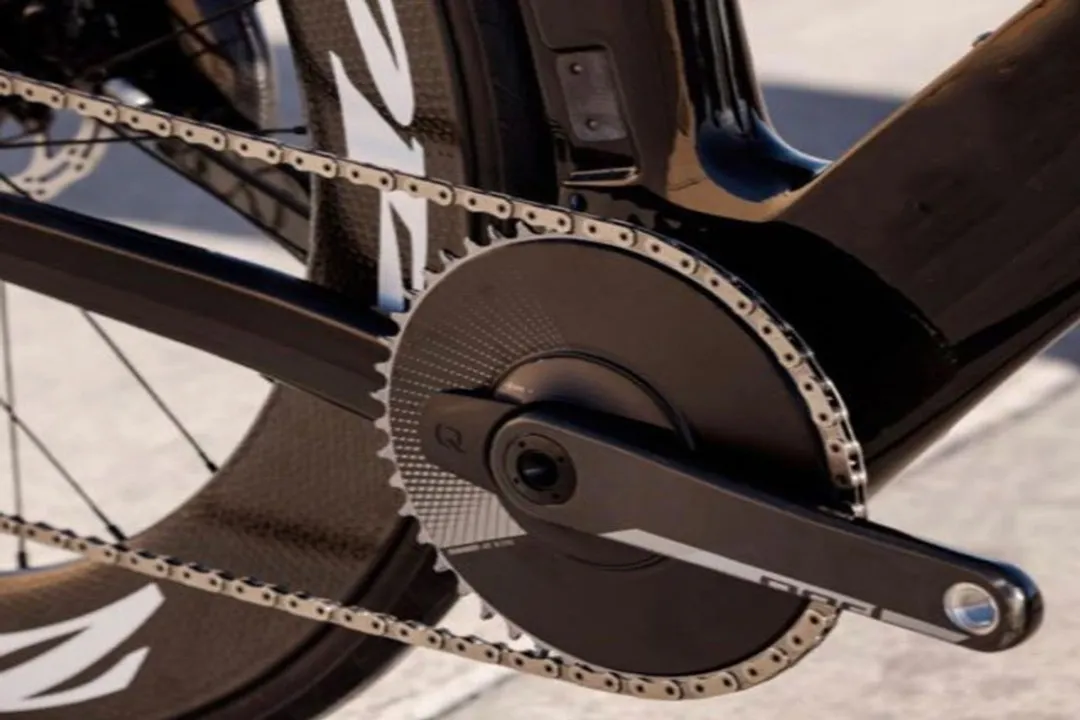
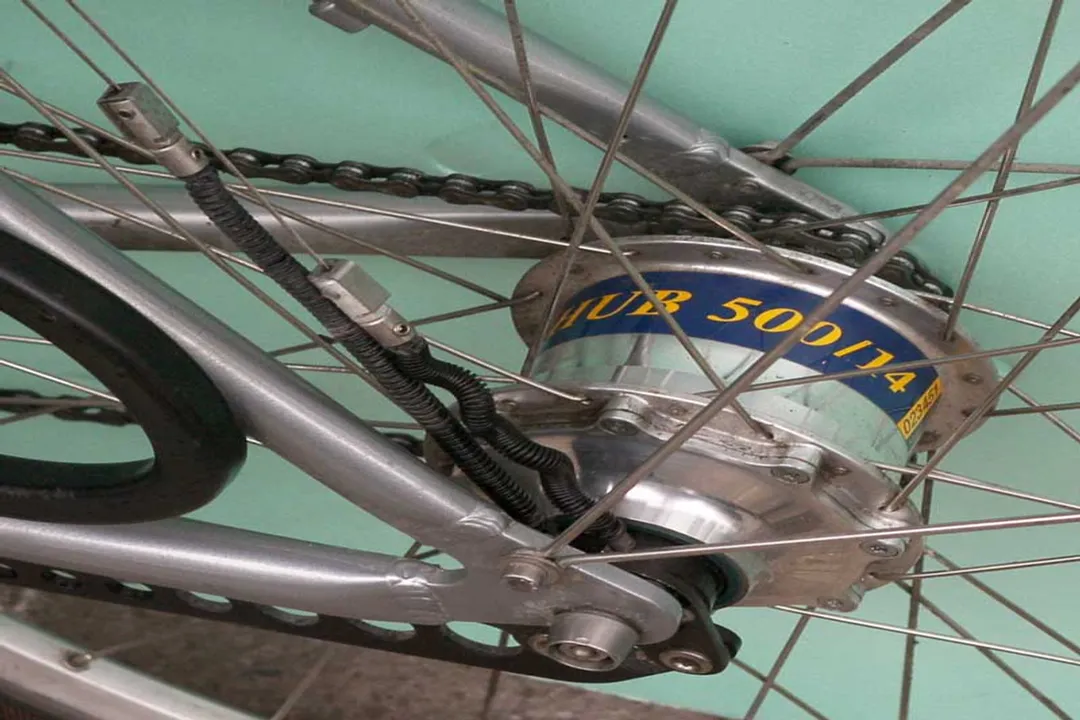
A more integrated early approach centered on the rear wheel hub itself. These systems sought to change the gearing ratio internally, protecting the mechanism from the elements and maintaining a cleaner aesthetic. The concept of a hub that offered more than one gear—often referred to as a "flip-flop hub"—was one of the earliest successful steps. This design typically featured two different-sized sprockets, one on each side of the hub shell, allowing the rider to reverse the wheel to select a different gear ratio.
One notable example from this pioneering era was the two-speed hub developed by Armstrong around the year 1904. While these two-speed systems provided a much-needed advantage for hill climbing over a single fixed speed, they were still rudimentary compared to later developments. The process of shifting was often cumbersome, involving stopping the rotation and manually flipping the wheel, which was hardly ideal for maintaining momentum on a challenging gradient.
A significant technological leap in this internal gearing category came with the Sturmey-Archer three-speed hub, introduced in 1902. This was a major step forward because it allowed the rider to select between the three available ratios without stopping, a true game-changer for general utility cycling. However, even this sophisticated hub mechanism remained focused on internal gearing, contrasting sharply with the external shifting mechanisms that would soon capture the attention of competitive cyclists.
# Derailleur Patent
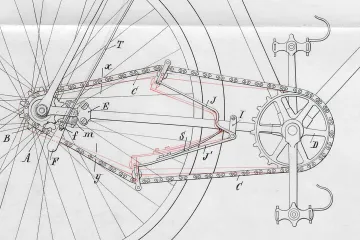
While hub gears offered convenience, they introduced weight and complexity inside the wheel hub, and critically, they were often seen as too heavy or inefficient for high-performance road racing. The concept for the mechanism that would eventually dominate the cycling world—the derailleur—appeared surprisingly early in the bicycle's history. The notion of a device designed to push the chain laterally from one sprocket to another seems to have been formally captured by Paul de Vivie, also known by his nom de plume Vélocio, who patented a variable-speed bicycle system featuring a derailleur in 1895.
However, the early derailleur was a far cry from the sleek, reliable components seen today. Many initial designs required significant rider effort or were simply too fragile for sustained, hard use. The mechanism needed refinement in two key areas: the derailleur itself had to become more effective at throwing the chain, and a reliable system was needed to tension the chain once it moved to the smaller cog. For many decades following de Vivie's patent, these concepts remained largely academic or limited to niche use; the cycling world, particularly the mainstream, had not fully embraced the external shifting revolution.
It is an interesting point of comparison that in the early 1900s, engineers were concurrently pursuing two entirely different philosophies: internal efficiency via the hub, or external simplicity and low weight via the derailleur. Given the constraints of metallurgy and precision manufacturing at the time, the hub offered reliability while the derailleur offered the potential for lower weight, a crucial factor for any competitive application. The market remained divided between riders seeking robust utility (hub users) and those prioritizing speed and lightness (experimenters with early derailleurs).
# Tour Influence
The true tipping point for the derailleur, transforming it from an inventor's curiosity into a necessary piece of equipment, was the crucible of professional road racing. The grueling demands of the Tour de France forced continuous innovation, as riders sought any advantage to tackle the high mountain passes of the Alps and the Pyrenees. Early Tour stages were often conquered by riders who dismounted and pushed their bikes up the steepest gradients, a clear sign that the available gearing was insufficient.
The governing body of the Tour de France eventually recognized that limiting riders to single-speed or two-speed setups was artificially capping the sporting potential of the event, particularly in mountainous terrain. The watershed moment arrived when the race organizers mandated that cyclists must use a system that provided at least two chainrings on the rear wheel, effectively forcing the adoption of the derailleur system by the mid-1930s. Specifically, the Tour de France began requiring the use of two-speed rear wheels in 1937. This regulatory move instantly validated the derailleur concept over the hub gear for high-level competition, as derailleurs were lighter and offered a cleaner way to manage the gear ratio change required by the new rules.
This mandatory adoption created a sudden, intense need for reliable, mass-producible derailleur systems. Before this, many early derailleur designs, like the one popularized by Simplex in the 1930s, were often viewed as fiddly or fragile. The pressure from the peloton, however, spurred manufacturers to invest in making the technology durable enough for repeated, high-stress use.
# Commercial Success
Despite the Tour's mandate in the late 1930s, the outbreak of World War II severely disrupted technological progress in cycling components. It was in the post-war environment that the final pieces of the modern derailleur puzzle fell into place, driven largely by Italian engineering prowess. While many had invented a derailleur, it took a dedicated effort to create one that was truly practical, reliable, and commercially viable for the average serious cyclist.
The company that is widely credited with perfecting the modern, successful derailleur system was Campagnolo. In 1949, Campagnolo introduced their Gran Sport model, often cited as the first commercially successful and truly practical parallelogram rear derailleur. This component marked a departure because it combined effective chain retention with a relatively straightforward (for the time) cable actuation system that could be operated with a lever mounted on the downtube of the frame.
If we look at the timeline, we see a considerable gap: de Vivie patented the idea in 1895, the Tour mandated its use in 1937, but Campagnolo perfected the sellable consumer version in 1949. This 54-year span from concept to successful mainstream product illustrates the massive leap in mechanical refinement, metallurgy, and user expectation that had to occur. The early systems were likely prone to chain dropping or cable stretch, issues that Campagnolo’s design managed to overcome sufficiently to satisfy the demanding market.

# Refinement Continues
Once the basic derailleur system was proven by Campagnolo, the trajectory of bicycle gearing shifted from invention to refinement and expansion. The focus moved toward adding more gears and improving shifting precision. The original multi-speed setups, even the successful ones, often provided just two or three usable gears in the rear.
One area of continued development was creating ratios suitable for extremely steep climbs—a gear ratio that offered even lower speed and higher mechanical advantage than the primary gearing set. This led to the eventual addition of what is sometimes known today as the Granny Gear—a sub-bottom gear designed specifically for the hardest possible ascents. This shows that even after the derailleur won the initial battle against the fixed gear, the fundamental engineering goal—conquering terrain—was always pushing for more granularity in the speed options available to the rider.
Furthermore, the "drivetrain wars" continued in the decades following 1950, pitting the external derailleur system against internal hub gears, each manufacturer trying to prove their engineering philosophy was superior in terms of weight, maintenance, and gear range. While external derailleurs became the standard for road racing due to their low weight, internal hub systems persisted in utility and touring bicycles where weather resistance and minimal maintenance were prioritized over shaving off every possible gram. Understanding this ongoing engineering tension helps explain why, even today, a cyclist shopping for a new bike faces choices between completely different transmission architectures. The gear on your bike isn't just a component; it's a decision based on a century of design compromise between simplicity, weight, and mechanical advantage.
#Videos
Fascinating forgotten history of bicycle gears development ...
Related Questions
#Citations
The History and Evolution of Bike Gears
A brief and fascinating history of road bike gears
Bicycle gearing - Wikipedia
Science of Cycling: History of Drives & Gears | Exploratorium
The drivetrain wars: A history of shifting - Velo
Fascinating forgotten history of bicycle gears development ...
Bicycle gears were invented in 1895 - Facebook
Looking for info on how fixed gear bikes fit into bicycle history. Also ...
Shifting Times - Classic Cycle Bainbridge