How did the first safety leap (frame geometry) differ from the second (pneumatic tires) in preventing accidents?
Answer
The first leap prevented the highest-risk accident (the header), while the second mitigated common loss-of-control accidents.
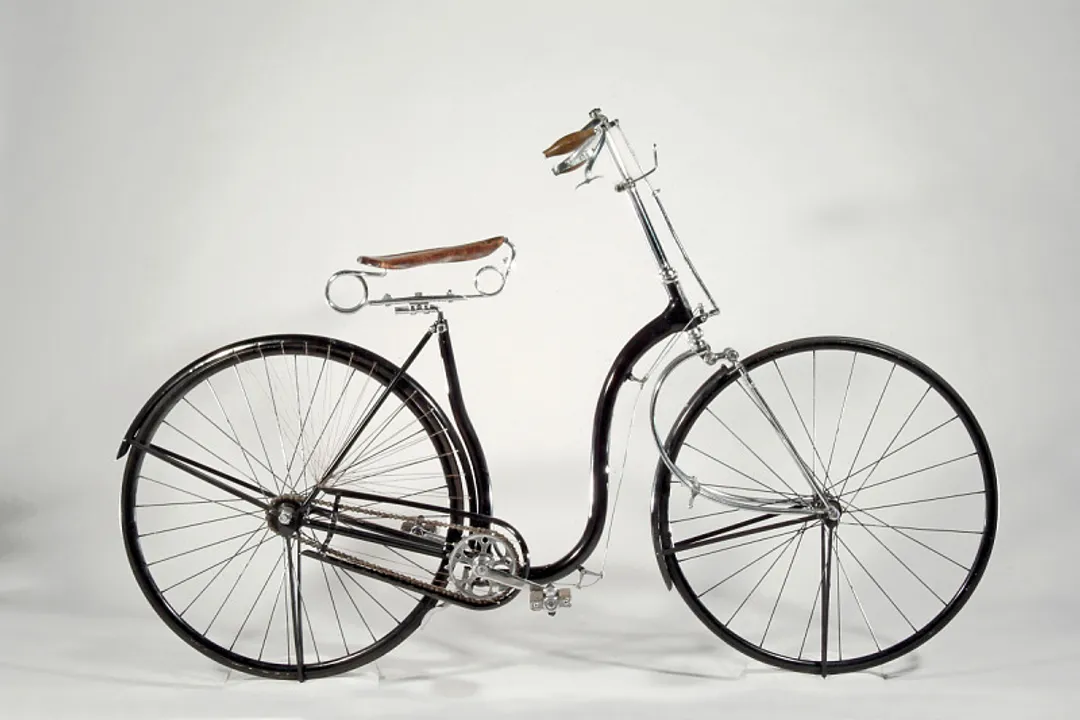
The shift to the safety bicycle geometry prevented the highest-risk accident type (falling from height), whereas the subsequent addition of pneumatic tires mitigated the risk of common loss-of-control accidents caused by poor surface interaction.
Related Questions
What was the greatest initial breakthrough in cyclist safety?What defined the high-wheel design (penny-farthing) regarding speed achievement?What was the phenomenon called when a rider on a high-wheel bike was thrown headfirst over the handlebars?Which individual is often cited for making the safety bicycle design commercially successful?What crucial mechanical addition enabled the safety bicycle to use equally sized wheels?What was the immediate effect of John Boyd Dunlop's pneumatic tire development in 1888?How did the first safety leap (frame geometry) differ from the second (pneumatic tires) in preventing accidents?What signaled the evolution of cyclist safety moving outward from the machine itself?What characterizes modern safety additions like LEDs and reflective gear?What key constraint dictates a different approach to technological implementation in cycling safety compared to automotive safety?