Who invented pharmaceutical logistics tech?

The genesis of pharmaceutical logistics technology isn't attributable to a single person or a single date; rather, it’s an evolving story shaped by medical necessity, regulatory pressure, and the introduction of mechanical and digital innovation over many decades. The entire concept rests on protecting temperature-sensitive and often life-saving medicines as they travel from the manufacturing floor to the patient. Early on, pharmaceutical distribution simply mirrored general freight handling, but as the industry matured and understood the fragility of its products—especially biologicals and vaccines—the need for specialized transport technology became unavoidable.
# Early Cooling
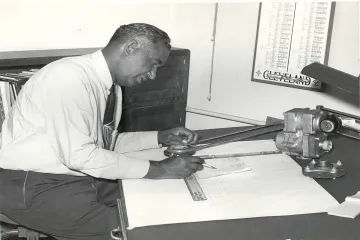
A significant technological breakthrough critical to modern pharma logistics is rooted in reliable, continuous refrigeration, particularly for vaccines that required constant low temperatures during transit. Before this, shipping temperature-sensitive goods over long distances, especially across varying climates, was incredibly risky. The solution that revolutionized refrigerated shipping is often credited to the self-taught inventor, Frederick McKinley Jones.
Jones developed and patented the first practical, self-contained, automatic refrigeration unit for trucks and trailers in the 1940s. This invention, often associated with the founding of the Thermo King Corporation, fundamentally changed how perishable items, including vital medicines, could be transported across the United States and internationally. While Jones’s work wasn't strictly pharmaceutical logistics tech, it provided the foundational technology—reliable, mobile temperature control—upon which the entire pharmaceutical cold chain would later be built. His contribution addressed the active temperature management aspect of modern logistics systems.
# Supply History

To understand the technology, we must briefly consider the path of the industry it serves. The modern pharmaceutical industry itself took shape over time, driven by advances in chemistry and biology. Early in the industry’s history, before standardized global shipping, the challenges were less about precise temperature logging and more about basic containment and security.
The sheer complexity of the pharmaceutical supply chain today—which encompasses manufacturing, storage, distribution, dispensing, and post-market surveillance—demands specialized solutions that simply did not exist even a few decades ago. The historical development of the supply chain meant that as drugs became more complex, the logistics infrastructure had to catch up, moving from simple hauling to complex, monitored movement. When you consider that the pharmaceutical industry has existed in various forms since the mid-19th century, the specialized tech segment of its logistics is relatively recent, accelerating significantly with the advent of biotech drugs in the late 20th century.

# Temperature Control
Once the concept of a cold chain was established, building the technology around maintaining that chain became the next major focus. This specialization moved beyond large truck units, like those inspired by Jones’s work, into precise packaging solutions designed for smaller, high-value shipments that might encounter varied external conditions.
This era saw the birth of sophisticated thermal packaging solutions. These systems rely on phase change materials (PCMs), gels, dry ice, or specialized insulation to create passive temperature barriers. The "invention" here is less about a single device and more about systems engineering—combining materials science with thermal dynamics to guarantee product integrity for a defined duration. The sophistication lies in the qualification and validation processes required to prove that a specific packaging solution will hold a required temperature profile, perhaps for 72 or 96 hours, despite external ambient temperatures ranging from freezing to extreme heat.
A practical consideration that few external observers grasp is the cost-benefit analysis inherent in choosing packaging technology. For instance, shipping a shelf-stable tablet via standard cardboard is inexpensive, but shipping a monoclonal antibody that must remain between 2°C and 8°C often requires a passive container costing hundreds of dollars, meaning the logistics packaging itself can sometimes cost more than the product inside for smaller volumes. This economic tension drives continuous innovation in lighter, cheaper, and more effective insulation technologies.
# Data Logging
The shift from knowing what temperature the shipment should be to knowing what temperature the shipment actually was at every point in transit marks the true arrival of modern pharmaceutical logistics technology. This is where hardware innovation met digital capability.
The introduction of electronic temperature loggers was a critical step. These small devices, placed inside packaging, continuously record ambient temperature data. Early loggers were simple, but they established the principle of data integrity over simple assurance.
This evolution towards data capture has been central to the entire logistics technology landscape, not just in pharma. Today's specialized data loggers are much more advanced, often offering real-time connectivity via cellular or IoT networks, providing immediate alerts if a deviation occurs. Furthermore, modern systems are designed not just to record temperature but also shocks, light exposure, and humidity, providing a complete environmental profile of the journey. This shift in focus—from preventing the excursion, which is packaging's job, to proving the integrity of the journey, which is data technology's job—is a key theme in the history of the discipline.
# Regulatory Tech Emerges
The development of pharmaceutical logistics technology is inseparable from global regulatory frameworks. Governments worldwide mandate strict controls over drug provenance and handling to combat counterfeiting and ensure patient safety. This regulatory pressure is a major inventor of new tech features.
One key area is serialization. Serialization involves assigning a unique identifier (often a 2D matrix barcode) to each saleable unit of medicine. The technology needed to generate, store, track, and verify these unique identifiers across the supply chain—from the manufacturer to the dispensing pharmacy—is a massive area of logistical tech development. Companies specializing in pharma logistics now integrate these tracking systems directly into their operational platforms.
If you examine the sheer volume of data involved in meeting requirements like the US Drug Supply Chain Security Act (DSCSA) or the EU Falsified Medicines Directive, it becomes clear that the software and data handling protocols are as vital as the physical shipping containers. The invention here is the system that handles billions of unique identifiers and validates them instantly across different ownership changes in the chain.
# Collective Invention
Ultimately, pinpointing a single inventor for pharmaceutical logistics technology is impossible because it is a collective invention built layer by layer. It started with the mechanical ingenuity of people like Frederick McKinley Jones creating mobile refrigeration, matured through material science advances in thermal packaging, and has been finalized by the digital revolution embedding connectivity and data verification into every step.
Modern logistics providers in the pharmaceutical space exist precisely because this convergence requires highly specialized expertise that traditional freight carriers cannot offer. They integrate hardware (like active/passive containers and loggers) with sophisticated software platforms that manage compliance, inventory visibility, and temperature excursions in real-time. The true innovation is the integration of these disparate technologies into a manageable, auditable process fit for protecting human health.
Thinking about the progression, it's useful to see the evolution as a response to increasing product sensitivity:
| Era | Primary Challenge | Key Technological Focus |
|---|---|---|
| Pre-1940s | Basic transport, spoilage | Simple durable packaging |
| 1940s–1970s | Temperature control over long haul | Active mobile refrigeration (e.g., Jones's work) |
| 1980s–2000s | Protecting high-value, sensitive biologics | Passive thermal packaging qualification |
| 2010s–Present | Counterfeiting, data transparency | Serialization, real-time IoT monitoring |
This ongoing development suggests that the next major "inventor" will likely be an AI algorithm or a blockchain application that further decentralizes and secures the integrity data, reducing the potential for human error or manipulation across the entire global network. The history is not closed; it is simply moving from mechanical engineering to information science as the dominant driver of innovation in this essential sector.
Related Questions
#Citations
The evolution of the pharma cold chain logistics and packaging
The history of the pharmaceutical supply chain
About - Pharma Logistics
Self-taught inventor Frederick McKinley Jones invented refrigerated ...
The History Of The Cold Chain
A Short History of Logistics Technology – Logmore Blog
Origin: The pharma supply chain of the future
A history of the pharmaceutical industry - pharmaphorum
Pharmaceutical industry - Wikipedia
Simple and efficient, ensuring safe pharmaceutical logistics