Did Shen Kuo invent the compass?
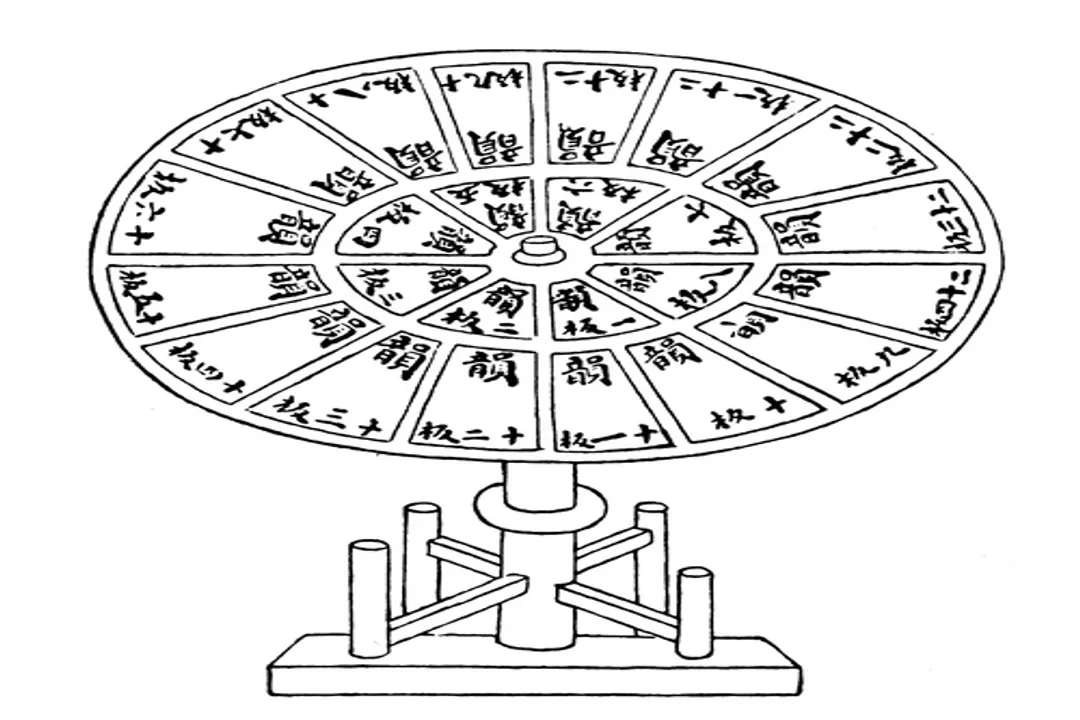
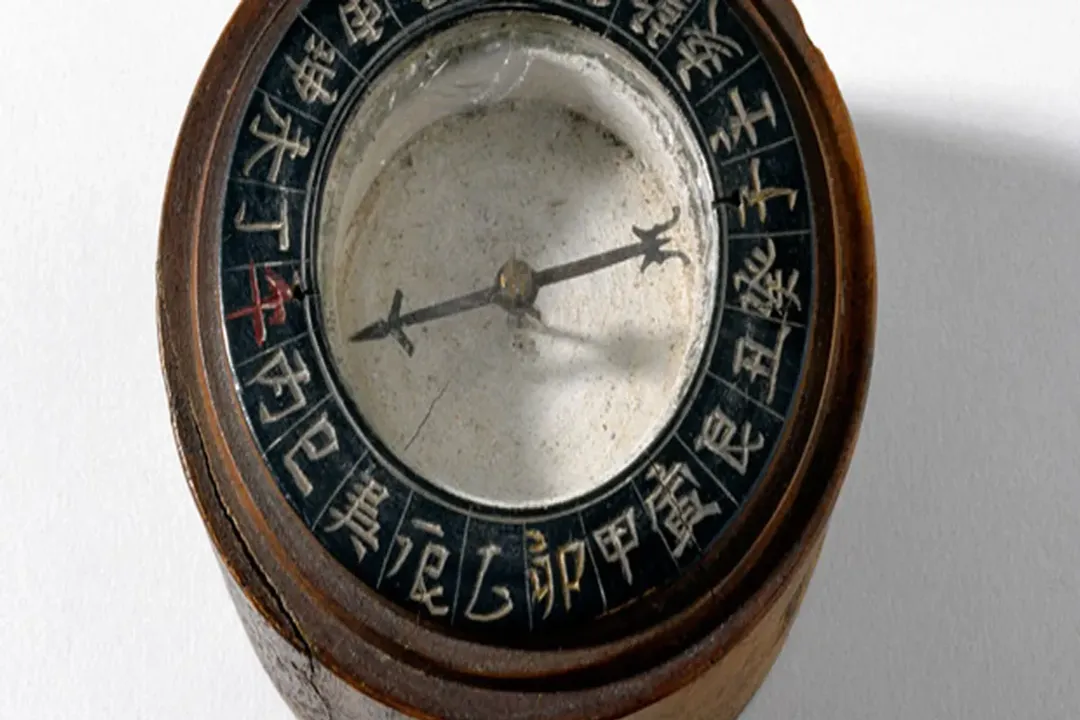
The attribution of the compass's invention often circles back to one towering figure of the Chinese Song Dynasty: Shen Kuo. His detailed written observations moved the study of magnetism from ancient superstitious belief into the realm of rigorous scientific inquiry, a shift that profoundly impacted navigation and technology across the globe centuries later. [7] While rudimentary devices utilizing lodestone existed before his time, Shen Kuo's documentation provides the earliest clear description of a magnetized needle used specifically for direction-finding, marking a crucial turning point in the instrument's history. [2][4]
# Polymath Life
Shen Kuo, who lived from approximately 1031 to 1085 CE, was a true polymath whose accomplishments spanned mathematics, astronomy, meteorology, geology, and engineering. [1][2] He served in high government positions during the Northern Song dynasty, demonstrating expertise across numerous fields during a period of significant technological advancement in China. [1][6] His reputation as a “First Renaissance Man” stems from this breadth of knowledge and his detailed, empirical approach to recording phenomena. [5][8] This scientific foundation is essential when assessing his contribution to the compass; he was not merely an inventor dabbling in mechanics, but a seasoned observer documenting natural laws. [4]
# Ancient Lodestone Use
Long before Shen Kuo’s observations in the latter half of the 11th century, Chinese civilization was familiar with the attractive properties of magnetite, or lodestone. [9] Early implements were primarily used for divination and geomancy, often referred to as sinan. [9] These devices typically featured a lodestone spoon shape placed upon a bronze plate marked with directional notations. [9] The function of these earlier tools was related to achieving harmony with the terrestrial energies, aligning structures or graves, rather than providing directional readings for maritime travel. [9] The critical difference between these ancient tools and what Shen Kuo described lies in the shift from a large, spoon-shaped stone resting on a base to a finely balanced, directional pointer—the true magnetic compass. [7]

# Documenting Magnetism
Shen Kuo’s seminal work, the Dream Pool Essays (Mengxi Bitan), compiled around 1078 AD, contains the critical passages concerning magnetism. [4] In this text, he moves beyond mere description of the lodestone's attraction to explain how to create a functional directional device. [1][2] He details an apparatus where a thin needle, magnetized by rubbing it with lodestone, is made to float on water, thus allowing it to swing freely and indicate direction. [1][4] This method freed the pointer from the friction inherent in the older spoon-and-plate design, allowing for a more sensitive and reliable reading. [7]
It is important to note that while Shen Kuo described making a needle point south, his observation was far more sophisticated than simply noting attraction to the earth’s poles. [2]
# Declination Discovery
The most significant scientific contribution Shen Kuo made regarding the compass was his documented observation of magnetic declination. [1][2][7] He specifically noted that the magnetized needle did not point to true geographical south, but rather to a point slightly east of it. [1][2] He stated that the needle pointed to the south-southwest. [1] This observation demonstrates a clear understanding that the Earth’s magnetic pole was distinct from its true geographical pole, a concept that would not be widely understood or scientifically documented in the West for centuries. [7]
This realization is a foundational element of modern navigation. While an earlier sinan might have been sufficient for terrestrial alignment based on general direction, the precise mapping of routes, especially over long distances at sea, requires accounting for this angular difference between magnetic north and true north. [1] Shen Kuo's recording of this discrepancy shows an experimental rigor characteristic of early modern science. [5]
# Invention Versus Refinement
The question of whether Shen Kuo invented the compass hinges on how one defines "invention" in this context. [7] If invention means the first time a piece of magnetized iron was used to indicate direction, the answer is likely no, as earlier Chinese texts reference such phenomena. [9] However, if invention implies the first clear documentation of a magnetized needle apparatus used for direction-finding, with a noted scientific principle like declination, then Shen Kuo is frequently credited as the originator of the documented scientific compass. [4][7] He refined the instrument from a clumsy, divination-focused tool into a scientifically observable instrument. [2]
Consider the timeline: before Shen Kuo, we have anecdotal knowledge of lodestone's attraction; after Shen Kuo, we have a detailed manual for creating a functional navigational instrument based on that attraction, complete with an understanding of its inherent systematic error (declination). [1] This transition from practical artifact to scientific instrument is often where true technological leaps are marked in historical study.
To illustrate the refinement process Shen Kuo documented, we can compare the primary methods he described or implied for creating a directional pointer:
| Method | Material/Form | Medium | Primary Use Context |
|---|---|---|---|
| Traditional Sinan | Lodestone spoon shape | Bronze plate with markings | Divination, Feng Shui [9] |
| Shen Kuo's Method | Thin, magnetized iron needle | Floating on water [4] | Direction-finding, Science |
The transition to the floating needle on water minimized physical resistance, which is a significant engineering improvement necessary for consistent directionality, whether on land or water. [4] The subsequent evolution likely involved suspending the needle using silk thread or mounting it on a pivot to reduce the need for a water basin, further improving usability for navigation outside of a fixed location. [7]
# Broader Scientific Context
Shen Kuo’s work on the compass did not occur in isolation; it was part of a larger project to systematize knowledge about the natural world. [4] His geological observations, for instance, included recognizing fossil evidence indicating that mountains that were currently inland had once been seabeds—a theory of geological uplift and erosion. [1] This mindset—observing a phenomenon, recording it accurately, and trying to deduce the underlying, consistent mechanism—is what elevates his description of magnetism above simple record-keeping. [5] When he recorded the compass behavior in Dream Pool Essays, he did so as a scientific observation, just as he recorded the behavior of humidity or meteor showers. [2] This high standard of observation lends significant authority to his description of the magnetic compass. [5]
It is worth considering the implications for maritime history. If Shen Kuo observed declination around 1078 CE, it suggests that Chinese mariners, if using the device, were aware of this deviation well before European navigators began making similar, systematic measurements centuries later. [7] While the exact date of the compass's first sea voyage use remains debated, Shen Kuo’s description provides a strong anchor point for when the theory behind reliable magnetic navigation was established in China. [1][7] The practical application of compensating for declination across the vast distances of the Indian Ocean trade routes, which China was heavily involved in, would have provided a substantial, albeit perhaps unwritten, competitive edge in dead reckoning and pathfinding. [1]

# The Weight of Documentation
Ultimately, the historical credit given to Shen Kuo is less about being the first person to observe a magnetized rock pulling metal, and far more about being the first to successfully translate that raw phenomenon into a repeatable, measurable scientific tool—the magnetized needle system—and document it with accompanying empirical data like declination. [2][7] Many foundational technologies have murky origins, with utility preceding formal scientific understanding. [9] Shen Kuo provided the bridge. He took an ancient curiosity used for mystical purposes and formalized it into an instrument of applied physics. [4][5] Had he not written it down with such clarity, our understanding of the compass's early development would rely only on potentially less precise artifacts, obscuring the true sophistication of Song Dynasty science. [1] His meticulous recording ensures that his name remains inextricably linked to the scientific charting of the magnetic field. [7]
Related Questions
#Citations
Shen Kuo - Wikipedia
Shen Kuo | Inventor, Geographer, Cartographer - Britannica
The Origins and Impact of the Magnetic Compass in Ancient China
Shen Kuo — Rethink education, redefine potential. - Young Trees
Shen Kuo, the first Renaissance man? - AAAS
(206 BC) The invention of the compass (Timeline) - Time.Graphics
History Lesson: The Magnetic Compass - IEEE Spectrum
Shen Kuo - Geniuses.Club
Facts of Ancient Chinese Compass: Ancient Chinese Inventions