Why was the invention of the Wright Flyer considered a turning point?
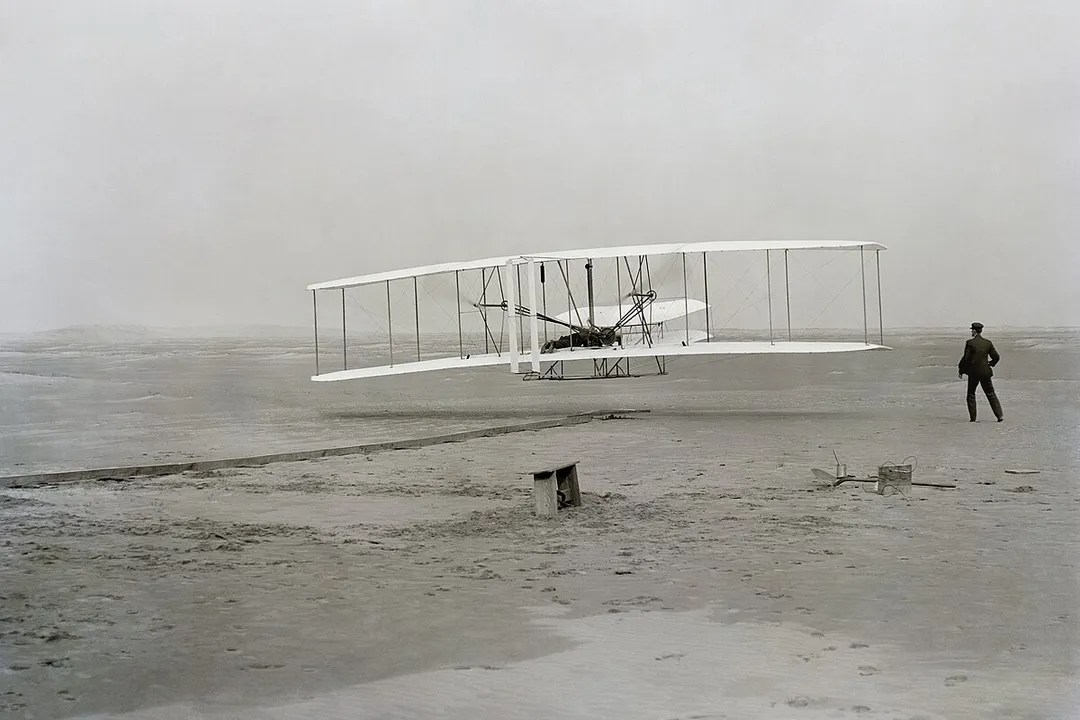
The shift that occurred on a cold, sandy stretch of North Carolina coast on December 17, 1903, was not merely the achievement of flight; it was the definitive unlocking of the controlled aerial domain. When the Wright Flyer lifted off the ground that morning, piloted by Orville, it represented the culmination of a systematic, almost stubborn, pursuit of a problem that had confounded human intellect for centuries. The first flight lasted a mere twelve seconds, covering just 120 feet, a distance shorter than the wingspan of a modern wide-body jet. Yet, in that brief span, the bond between humanity and the earth was fundamentally altered.
The turning point wasn't simply getting airborne—balloons and gliders had done that for years. Prior attempts, including those by contemporaries like Samuel Langley, often focused heavily on engine power, believing brute force would overcome gravity. The Wright brothers, Orville and Wilbur, shop owners from Dayton, Ohio, understood that the true obstacle was mastering the air after takeoff. Their success hinged on the realization that a flying machine needed to be controlled in three dimensions, much like a skilled bird or cyclist, rather than relying on passive stability.
# Bicycle Mechanics
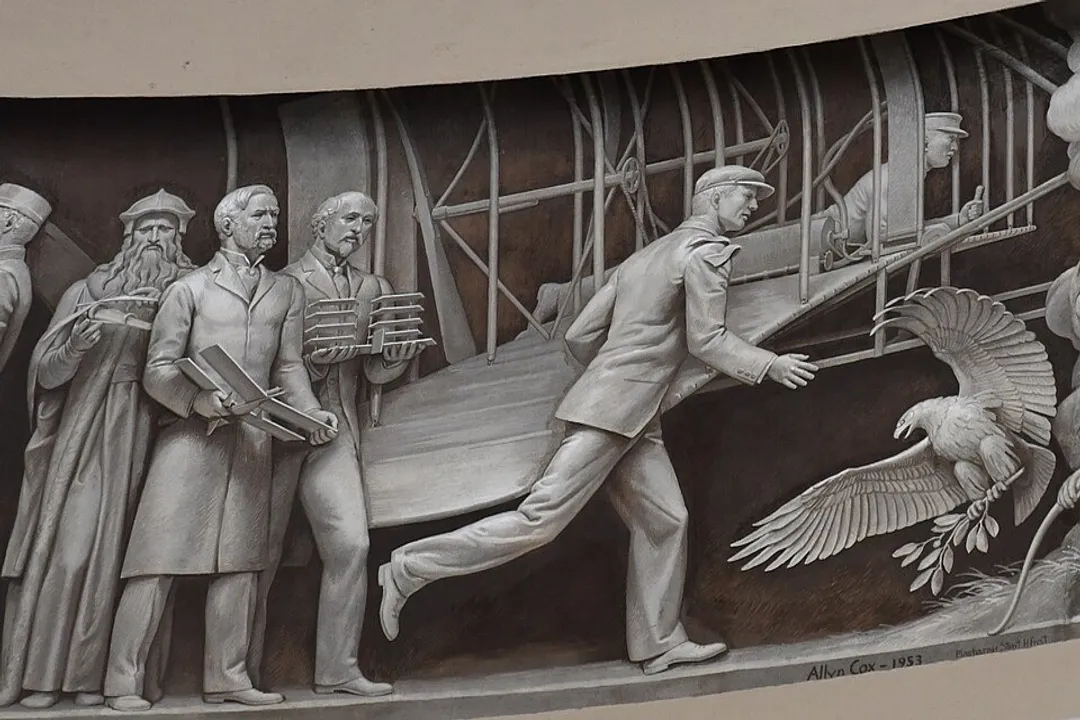
The unique genesis of this world-changing technology lies not in a government laboratory or a university setting, but in a bicycle shop. The Wright brothers were self-taught engineers whose methodical approach, honed by their bicycle repair and manufacturing business, informed their aeronautical work. Their fascination with flight was sparked early, potentially by a rubber-band-powered toy helicopter designed by Alphonse Pénaud. However, the serious, practical work began after 1896, spurred by the fatal glider accident of Otto Lilienthal, which seemed to move the abstract desire for flight into the realm of necessity for Wilbur.
Unlike many others in the field, the Wrights were financed solely by themselves through their bicycle sales, meaning they could proceed at their own pace, insulated from external pressure or the need to rush unproven designs. This financial independence allowed them to devote years—from 1899 onward—to rigorous, data-driven experimentation.
# Wind Tunnels
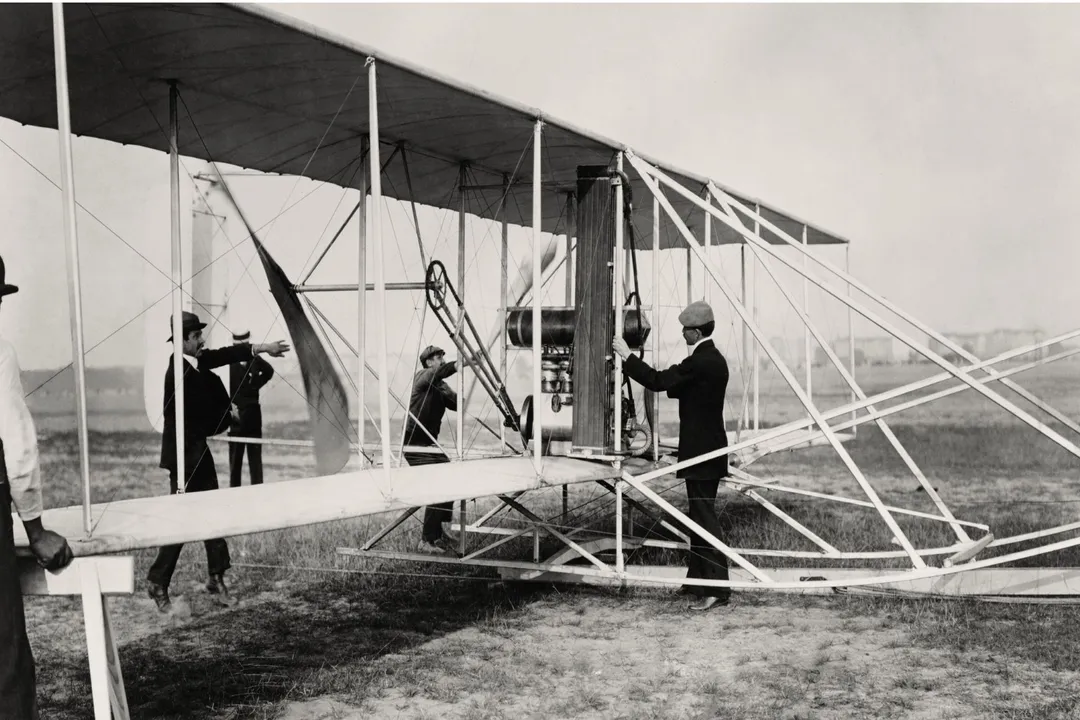
The process that separated the Wrights from their peers was their commitment to empirical testing when established scientific data proved inadequate. When their 1901 glider failed to generate the expected lift based on published data (like that from Lilienthal), they didn't simply adjust the shape; they recognized the data itself was flawed. Their response was to build their own wind tunnel, a scientific instrument that allowed them to test dozens of wing shapes (airfoils) systematically. This dedication to creating reliable aerodynamic data, a process that informed the design of their propellers and wings, was a hallmark of their expertise. They designed highly efficient wings and propellers that could maximize the marginal power provided by their custom-built, 12-horsepower engine. This homegrown engine, built by their employee Charlie Taylor, weighed 180 pounds and was meticulously designed to be lightweight for the power it delivered.
# Control System
The Flyer itself was a canard biplane, meaning it had its forward elevator (what they called the "front rudder") ahead of the main wings. The machine was inherently unstable, a characteristic the Wrights were acutely aware of, preferring pilot control over passive stability. Pitch control was managed by this forward elevator, which Orville found difficult to operate due to its balanced design, leading to initial overcontrol.
However, the true turning point in aviation design, the concept that persists in nearly every fixed-wing aircraft today, was their solution for lateral control. Wilbur’s observation of birds led to the development of wing-warping—the twisting of the wingtips to bank the aircraft into a turn. Previous attempts at turning relied on simple rudder deflection, a marine analogy that caused dangerous side-slipping or adverse yaw in the air. The Wrights discovered that the solution required coordinated movement: when the wing warped to initiate a roll (banking), the rear rudder had to simultaneously deflect to counteract the yaw. This patented system of simultaneous roll and yaw control provided the pilot with the mastery of direction that defined the first truly successful aircraft. While later designs moved away from wing-warping to ailerons, the fundamental concept of three-axis control—pitch, roll, and yaw—was solved by the Wrights on the Flyer and its immediate successors like the Wright Flyer III. The ability to make the machine turn intentionally, rather than just trying to keep it from falling, made all the difference between a brief hop and sustained flight.
It is interesting to consider how their chosen configuration, the canard, was less adaptable than later designs. While it provided necessary pitch control in 1903, the forward elevator configuration later proved problematic for higher speeds and stability, leading subsequent designers to adopt the rear horizontal stabilizer. Yet, the mechanical breakthrough—the synchronized control system—was so profound that it eclipsed the stylistic shortcomings of the airframe itself. The machine's design was a means to test their control theory, not the end goal. In a way, the Flyer was a necessary, if somewhat awkward, proof-of-concept vehicle for their revolutionary control philosophy.
# Initial Skepticism
Despite the historical significance of the four flights on December 17, 1903—the last covering 852 feet in 59 seconds—the immediate reaction was muted, bordering on outright disbelief. The brothers were so accustomed to this incredulity that they didn't expect parades; they simply knew they had achieved something scientifically important.
The general public, and even many scientific minds, were unprepared to accept the reality of powered, controlled flight, often confusing it with airships or balloons. Reports were frequently dismissed as nonsense, partly because respected scientists like Simon Newcomb had publicly explained why sustained flight was impossible. Even when the brothers began experimenting with the Wright Flyer II and Wright Flyer III near Dayton in 1904 and 1905, achieving flights of over 24 miles, local newspapers often ignored the story or downplayed it. One editor noted that the stories were being suppressed, but later admitted the truth was simpler: "We just didn't believe it". The US War Department, contacted by the Wrights with an offer to sell their secrets to the government, repeatedly dismissed them with boilerplate responses until outside interest, particularly from France, forced a reconsideration.
This period of guarded secrecy and public non-belief, which lasted until their successful public demonstration in France in 1908, had a tangible impact on the development timeline in the United States. The brothers prioritized securing their control patent—a broad claim over the principle of lateral control—over immediate exhibition. This decision, while understandable from a business perspective, resulted in a legal battle that arguably stunted the growth of the American aviation industry for several years. In contrast, European designers, though aware of the Wrights' claims, were not constrained by US patent law and continued rapid development, meaning that by the time the US entered World War I, American pilots were flying European-designed aircraft. The turning point was thus delayed in practical application due to commercial and legal friction, even though the scientific breakthrough had already occurred in 1903.
This highlights a subtle but important distinction: the Wright discovery was a sharp turning point in physics and engineering; the adoption of that discovery into global industry was a much slower, litigation-ridden process, heavily influenced by the Wrights' shrewd, yet perhaps overly cautious, business practices. Had the American public and government embraced the 1903 success immediately, the subsequent trajectory of American aerospace leadership might have been dramatically different, bypassing the period where European designs momentarily took the lead.

# Cultural Ascension
The Wright Flyer itself, after being severely damaged in a gust of wind shortly after its final flight on December 17, 1903, was shipped back to Dayton and stored for nearly a decade. Its eventual transformation from a research tool into a priceless artifact symbolizes the shift in global perception. The machine's legacy became so important that pieces of its wood and fabric have traveled to the Moon with Neil Armstrong and even to Mars attached to the Ingenuity helicopter.
The real turning point wasn't just the fact of the flight, but the method they employed, which established the discipline of modern aeronautical engineering. The Wrights' persistence in learning from failure, their meticulous documentation, and their systematic refinement of control surfaces, proved a template for subsequent technological advancement across many fields, not just aviation. Within two generations of that first 12-second flight, humanity had broken the sound barrier and walked on the Moon, a progression that began with that rickety, spruce-and-muslin machine. The Flyer proved that the impossible was merely the unsolved, provided one had the correct engineering approach.
# Flight Legacy
The success of the Wright Flyer fundamentally changed humanity's relationship with distance and possibility. The initial, fragile 12-second hop proved that heavier-than-air powered flight was a reality, shifting the focus from if to how far and how fast. This single event catalyzed the rapid evolution of aircraft from simple wood frames to machines capable of transoceanic travel, revolutionizing commerce, warfare, and personal mobility. The establishment of the world's first military aircraft, the 1909 Wright Military Flyer, less than six years later, confirmed that the technological pivot point had been reached, turning an experiment into a strategic asset. The Flyer's invention was the moment science fiction stepped into the verifiable, demonstrable world, making it perhaps the most significant single engineering demonstration of the 20th century.
Related Questions
#Citations
The Wright Brothers | National Air and Space Museum
Wright Brothers Day: How the Wright Brothers Taught the World to Fly
The Road to the First Flight - Wright Brothers National Memorial ...
Wright Flyer - Wikipedia
Why did the Wright brothers invent the airplane? : r/AskHistorians
They Wouldn't Believe The Wrights Had Flown