Did the Wright Brothers invent propellers?
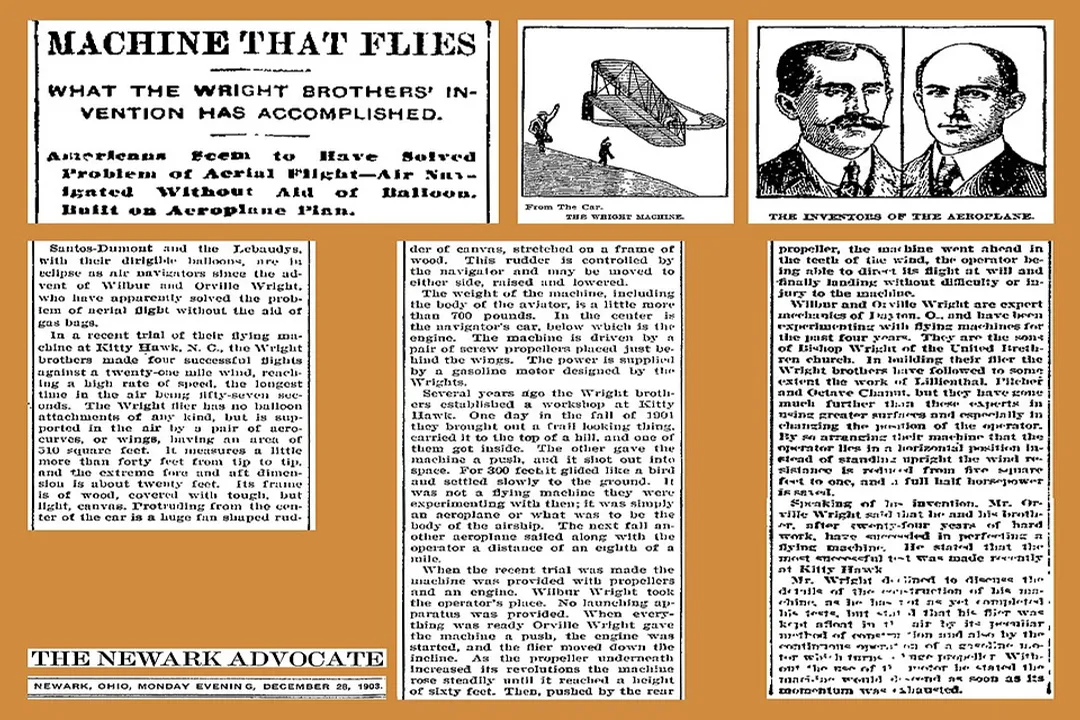
The true measure of the Wright Brothers' genius often lies not just in the brief, sputtering success of the 1903 Flyer but in the meticulous engineering that made that success possible. The propeller, that essential component spinning to pull the craft through the air, remains a point of historical debate: did Orville and Wilbur Wright invent it? The answer is complex, resting on the difference between inventing the concept of a rotating screw for propulsion and inventing the efficient, functional aerial propeller based on sound aerodynamic principles. While the idea of using a screw to move through a fluid predates them by centuries, the Wrights are credited with developing the first propeller system that actually worked for sustained flight because they understood how to treat the propeller as a rotating wing, a crucial insight that others missed.
# Precursors Propellers
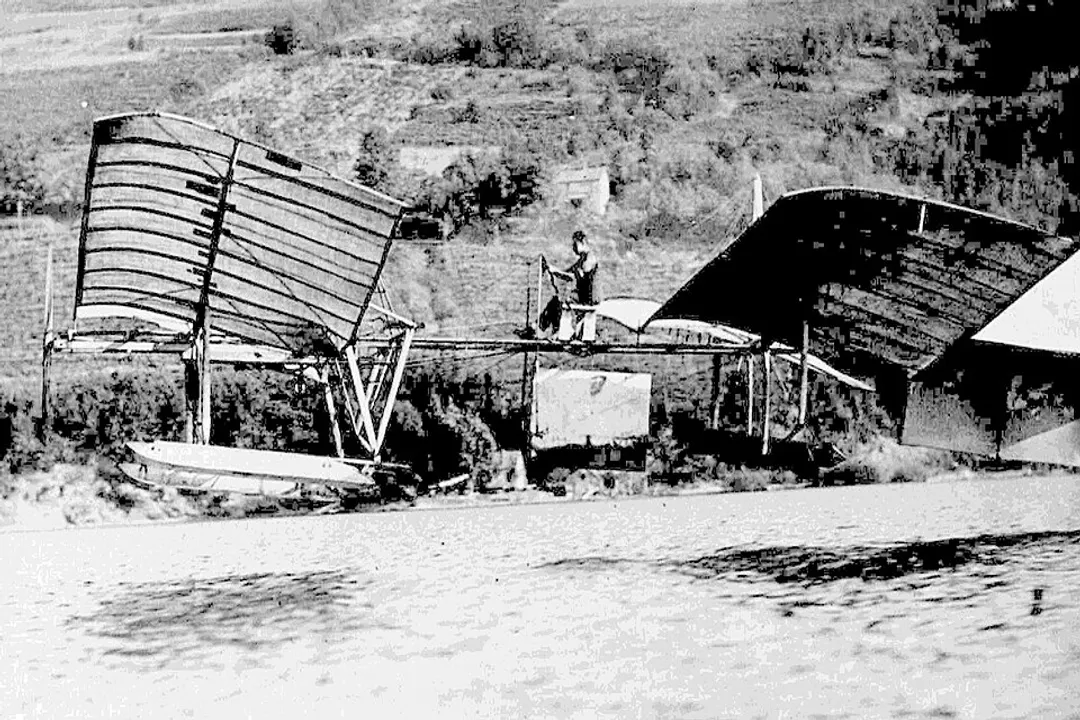
Long before Kitty Hawk, the concept of a screw or helix for motion was not new. Leonardo da Vinci sketched a design for an "aerial screw" in the late 15th century, which was intended to move vertically like a modern helicopter rotor. However, that was a theoretical drawing, not a functional design for sustained, heavier-than-air flight. As aviation took shape in the early 1900s, engineers and experimenters wrestled with how to convert engine power into forward thrust. Many early experimenters, recognizing the similarity between pushing air and pushing water, simply adapted existing marine technology.
This reliance on boat propellers proved disastrous for aerial endeavors. A propeller designed to move through water, a dense medium, operates fundamentally differently from one designed to move through air, a comparatively thin medium. Early attempts at flight often failed because the thrust-generating mechanism was inefficient or completely ineffective in the air. Furthermore, when the Wright Brothers began their intensive research, there was no established, mature technology base for air propellers readily available for purchase or adaptation. They could not simply order a set of optimized blades from a catalog. The existing understanding of aerodynamics, particularly how a wing generates lift, was largely empirical or theoretical guesswork when applied to rotating surfaces.
# Aerodynamic Insight
The Wright Brothers’ unique contribution began when they discarded the nautical analogy and applied their emerging understanding of airfoil dynamics to the propeller itself. They recognized that the propeller blade, viewed in cross-section, was functionally identical to an airplane wing—it was an airfoil designed to generate thrust by moving through the air. This realization was groundbreaking; they viewed the propeller not as a simple screw, but as a rotating wing that generated thrust rather than lift.
This understanding demanded treating the propeller correctly from a design perspective. For a wing to function optimally, its angle of attack—the angle between the chord line and the oncoming air—must be precise. Since a rotating propeller blade travels at different speeds along its length (the tip moves much faster than the root near the hub), a constant angle along the entire blade would result in wildly inconsistent angles of attack, leading to inefficiency and potential stalling at different radial sections.
The Wrights solved this by designing their propellers with a twist. The blade was set at a steeper pitch near the hub and gradually flattened out toward the tip, ensuring that the angle of attack remained optimal along the entire blade length as it spun. This calculation, derived from their own wind-tunnel tests and theoretical analysis, allowed them to generate significantly more thrust than their contemporaries who were using simpler, untwisted designs. This application of aerodynamic theory to the propeller is what most historians point to when asserting that the Wrights invented the aerial propeller.
# Design and Construction
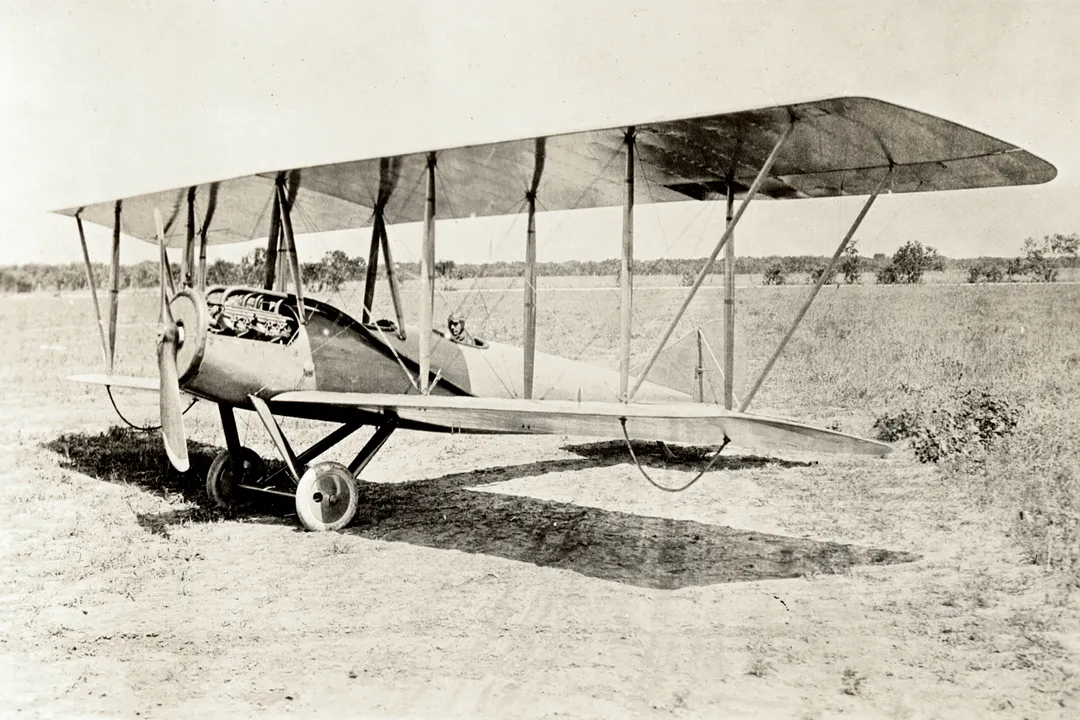
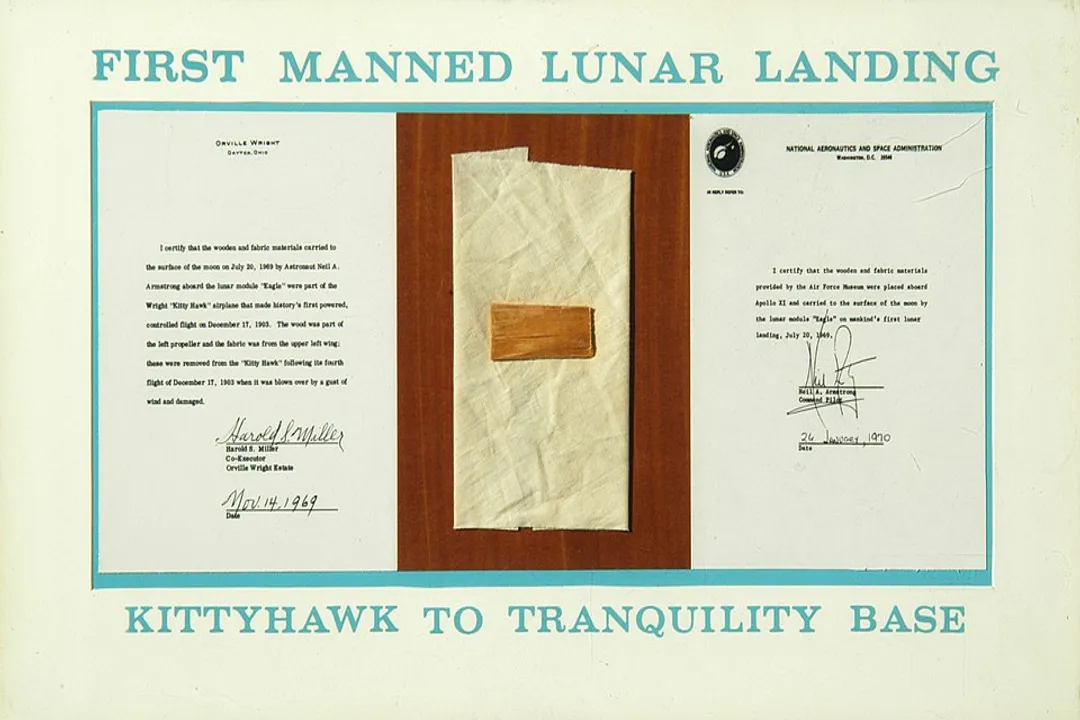
The theoretical work required meticulous execution. Working with their mechanic, Charlie Taylor, who built their custom engine, the Wrights designed two sets of propellers for the 1903 Flyer. These were large, two-bladed propellers, roughly eight feet in length, carved carefully out of solid pieces of wood, most likely spruce.
The construction process itself was painstaking. They treated the design seriously, testing different pitch angles and shapes until they found the optimum configuration for their engine's limited power output. The resulting blades were not simply flat pieces of wood angled against the air; they were carefully shaped airfoils, thicker toward the leading edge and tapering smoothly toward the trailing edge, much like a modern wing cross-section.
For their first flight on December 17, 1903, they used two counter-rotating propellers, each driven by the engine via a chain system. This counter-rotation was necessary to counteract the torque generated by the engine and propellers, keeping the aircraft straight. The efficiency achieved through their twisted design meant they could extract usable thrust from their relatively low-power, custom-built engine, an achievement that was perhaps as vital as the wings themselves.
If we examine the power requirements, the difference is stark. A theoretical calculation suggests that an early, inefficient propeller might only convert 50% of the engine's rotational power into forward thrust, losing the rest to drag and turbulence. The Wrights' mathematically derived, twisted design likely achieved closer to 70% or more in practice, making the difference between a machine that stays on the ground and one that flies 120 feet on its first attempt. This practical gain, directly attributable to their unique design, underscores their engineering mastery over propulsion.
# Refinements Over Time
The 1903 design was a proof of concept, and like all their designs, it was subject to iteration and refinement. After the initial flights, the brothers continued to experiment with propeller geometry as their aircraft grew larger and their engine power increased.
In the years immediately following 1903, as they developed their 1905 and subsequent aircraft, their designs evolved. They experimented with different blade shapes and pitch settings to match the requirements of different airframes and power plants. For instance, the propellers for the 1908 Model A Flyer, built for their demonstration tours, reflected continued learning about flight dynamics and engine tuning.
What is evident from their later work is that they did not stop innovating on the propeller. They understood that efficiency was paramount, and as their planes were designed to fly farther and faster, the thrust-to-drag ratio needed constant optimization. By 1915, while others were beginning to adopt more standardized designs, the Wright Company continued to focus on propeller performance as a key differentiator.

# Naming The Inventors
So, where does this leave the claim that they invented the propeller? It is essential to distinguish between invention and innovation. An invention is often the first creation of a device or process. An innovation is the significant improvement or adaptation of an existing concept that makes it viable for a new purpose.
Many sources are quite direct: Wilbur and Orville Wright invented the aviation propeller. This assertion centers on the fact that they were the first to correctly engineer the aerial propeller using scientific principles, moving past the failed empirical attempts of others. They solved the problem of turning rotational energy into effective forward thrust for flight, an engineering feat that no one before them had accomplished.
However, the context matters. If the question is, "Did they invent the concept of a rotating screw for propulsion?" the answer is clearly no, due to antecedents like Da Vinci or the existing marine screws. If the question is, "Did they invent the first functional, efficient propeller specifically engineered for manned, heavier-than-air flight?" the answer, based on their documented theoretical approach and resulting performance, leans heavily toward yes. Their contribution was not in the shape of a helix but in the application of aeronautical science to that shape.
# Beyond the Hype
It is perhaps an understandable oversight that the propeller often receives less public attention than the wings or the engine. The wings provide the visible lift, and the engine provides the brute force, making them seemingly the primary elements. The propeller functions as the translator, turning the engine's work into motion, a less visually dramatic role.
This often leads to a slight downplaying of their propeller work in popular narratives. Yet, the history of aviation is littered with powerful engines attached to ineffective propellers—machines that were essentially giant lawnmowers that could not move themselves forward against the air. The Wrights succeeded where others failed because they understood that propulsion was governed by the same physics that governed lift.
Their dedication to this area illustrates a deeper commitment to engineering excellence. Consider the scale of the challenge: they had to invent the airframe design, the engine, the control system (the three-axis control), and the propulsion system simultaneously. Isolating the propeller contribution shows a scientist's approach. While others built gliders and bolted on available power sources, the Wrights engineered every piece as an integrated system where each part was optimized to work with the others. The fact that their propeller design was the most advanced component on the 1903 machine speaks volumes about their expertise and experience in dealing with air dynamics.
The legacy of their propeller work is foundational. Every modern propeller, whether on a small drone or a large turboprop, owes its theoretical basis to the wind tunnel experiments and twisted-blade calculations performed by the brothers in Dayton, Ohio. They did not just build a machine; they established the engineering discipline required to make air travel work, and the propeller was a chief beneficiary of that new discipline.
Related Questions
#Citations
1903 Wright Propellers
The Wright Brothers and Airplane Propeller Design
Wright brothers - Wikipedia
Propellers Wilbur and Orville Wright invented the ... - Facebook
Did the Wright Brothers use off-the-shelf propellers? Were props a ...
Propellers | Glenn Research Center - NASA
1903-The First Flight - Wright Brothers National Memorial (U.S. ...
The Wright Brothers' Propellers | The Engines of Our Ingenuity