Who made the first synthetic oil?
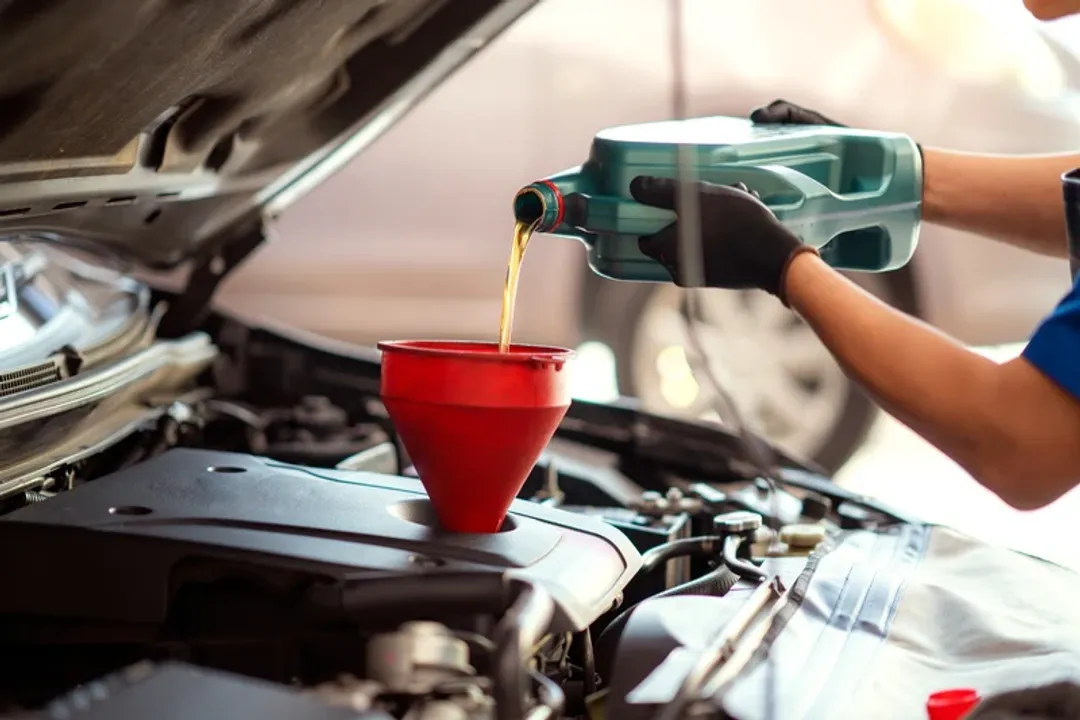
The story of who produced the very first synthetic oil is less a single moment of discovery and more a branching narrative dependent on what one chooses to define as "first"—the initial laboratory creation for high-stress industrial needs, or the first fully formulated product offered to the general public. The foundational work that led to the modern synthetic lubricant industry traces its roots back to the pressures of global conflict, long before it became a popular choice for everyday drivers. [6]
# Wartime Genesis

The initial drive to create lubricants independent of naturally occurring crude oil sources emerged from necessity, specifically during the lead-up to and duration of World War II. [3][6] As nations mobilized their industrial and military might, the demand for high-performance lubricants, especially for advanced aircraft engines operating under extreme temperatures and pressures, outstripped the supply of conventional mineral oils. [3] It was in Germany that this research bore fruit on a significant scale. [3][6]
German chemists and engineers developed synthetic lubricants primarily from non-petroleum sources to overcome the scarcity of natural crude oil. [6] These early synthetic lubricants included various chemical structures, notably polyalphaolefins (PAOs), esters, and glycols. [3][6] This pioneering effort meant that by creating oils molecule by molecule through chemical synthesis, they could engineer properties specifically required for demanding applications, such as maintaining viscosity across much wider temperature ranges than mineral oils could handle. [3] This development was crucial for keeping complex machinery running reliably when traditional resources were constrained. [3]
It is important to recognize that these first synthetic oils were created in a controlled, often military or industrial setting. [3] They were functional solutions to critical engineering problems, focused on performance and availability rather than the broad consumer market accessibility we see today. [2] The technology, while cutting-edge, was heavily guarded and geared toward specialized, high-value machinery. [6]
# The Chemical Leap
The chemical term "synthetic oil" refers to a lubricant that has been manufactured chemically rather than refined from crude oil. [3] The early German work successfully demonstrated the possibility of superior synthetic base stocks. [6] PAOs, for instance, are created by oligomerizing alpha-olefins—a process that builds uniform, consistent molecules. [1] This consistency is a key advantage over mineral oils, whose molecules vary in size and shape, leading to less predictable performance under stress. [3]
The development trajectory seems to follow a pattern common in materials science: a specialized need drives innovation, the innovation proves successful, and later engineers adapt that core technology for broader, commercial applications. [6] The specific chemistry demonstrated by the wartime German efforts—particularly the creation of PAOs—would later become the backbone for the next major wave in lubrication history. [1][3]
One subtle but significant point to consider when evaluating these early claims is the definition of fully formulated. The German wartime products were synthetic base stocks, but to function effectively as modern engine oil, they required a suite of additives—detergents, dispersants, anti-wear agents, and corrosion inhibitors. [2] The earliest lab-synthesized oils likely functioned primarily as neat base stocks or required simpler additive packages compared to what the public would eventually buy. [2] The true challenge, therefore, was not just making the synthetic base stock, but successfully integrating it into a complete, stable motor oil package. [7]

# American Formulation
The narrative shifts from wartime necessity to consumer availability in the United States, centered around the work of Al Amatuzio. [1][5][7] Amatuzio, the founder of AMSOIL, is widely credited with developing the first fully formulated synthetic motor oil aimed at the consumer market. [1][7][9] His pioneering work culminated in the creation of his first complete synthetic motor oil in 1970. [5][7]
AMATUZIO’s breakthrough was applying the PAO technology—the same chemical class proven effective in specialized, high-stress environments—to create a consumer-ready product. [1][7] This dedication to creating a complete package meant his 1970 creation contained the necessary additive chemistry to protect an engine in everyday driving conditions, not just as a base lubricant. [7] This resulted in AMSOIL becoming the first company to introduce a fully synthetic motor oil to the consumer marketplace in 1972. [1][7][10]
The sheer effort involved in this commercialization process cannot be overstated. It required not only chemical formulation expertise but also the creation of an entirely new segment in the automotive aftermarket. [1] While the German efforts laid the chemical groundwork decades earlier, Amatuzio is recognized for transforming that knowledge into a reliable, market-ready product that everyday consumers could purchase and use. [1][7]
# Comparing Firsts
The answer to "Who made the first synthetic oil?" hinges entirely on context:
| Context of "First" | Originator/Era | Key Achievement | Source Notes |
|---|---|---|---|
| Chemical Synthesis | Germany (WWII Era) | Creation of synthetic base stocks (PAOs, esters) for critical machinery due to resource shortages. [3][6] | Performance achieved under high-stress, non-commercial conditions. [3] |
| Fully Formulated Consumer Oil | Al Amatuzio (USA, 1970) | Creation of the first complete synthetic motor oil with necessary additives. [5][7] | Released to the consumer market in 1972. [1][7] |
This comparison highlights a distinction between fundamental material creation and product engineering. [2] The Germans were first to synthesize the molecules for lubrication on a relevant scale, driven by survival. [3] Amatuzio and his team were first to engineer those molecules into a complete, marketable product designed specifically for mass-market automotive use. [1][7] It is this latter achievement—the fully formulated consumer oil—that tends to dominate modern discussions about the commercial birth of synthetic lubricants. [10]

# Technical Sophistication
Looking at the evolution from early lab work to the consumer product in the 1970s reveals significant technical progress. The early synthetic oils developed in Germany were revolutionary for their time, but the science behind modern engine protection is far more nuanced than just the base stock. [2]
When considering a modern high-quality synthetic, the base stock—whether it is a PAO (often categorized as API Group IV) or a Group III (highly refined mineral oil) often marketed as synthetic—is only one component. [3] A motor oil needs to do far more than just lubricate the metal surfaces; it must manage soot, prevent sludge formation, neutralize acids from combustion, and maintain flow when cold. [2]
An interesting observation when comparing the very first lab synthetics to the 1970 formulations is the shift in additive technology emphasis. While the Germans were focused on raw thermal stability of the base stock, Amatuzio’s work necessarily involved perfecting the synergy between the synthetic PAO and the additive package to ensure it met or exceeded existing industry standards for durability, deposit control, and wear protection for everyday passenger cars. [7] Simply put, the German product solved an engineering scarcity problem; the AMSOIL product solved an engineering performance problem for the average user. [1][7]
# Modern Market Context
Today, synthetic oil is a mainstream product, a testament to the initial success of companies like AMSOIL in proving its value over the decades. [1][10] The performance gap between conventional oil and synthetic oil has widened, largely due to the stability inherent in synthesized molecules. [3] They resist thermal breakdown better, leading to fewer deposits and longer drain intervals under ideal conditions. [1]
When selecting a modern synthetic, it is helpful to remember that "synthetic" doesn't always mean the same thing across the board. Most high-quality synthetic motor oils sold today are based on API Group IV (PAO) or API Group III (Hydrocracked/Severely Hydroprocessed mineral oil) base stocks. [3] Understanding that the original, chemically pure synthesis often pointed toward the PAO route provides a useful benchmark for evaluating high-end options, even as Group III oils have become incredibly advanced and offer superb protection for most modern vehicles. [3] The fact that the Group III base stocks are so heavily processed that they are often chemically similar to PAOs blurs the lines established in the 1970s, yet the true, non-petroleum-derived synthetic heritage remains with the PAO technology pioneered in spirit by the early German researchers and commercialized by companies like AMSOIL. [1][6]
The historical thread shows a clear progression: first, the proof of concept in wartime Germany, followed by the commercial realization in the United States through the dedicated formulation work of Al Amatuzio and AMSOIL in the early 1970s, thereby establishing the category for the global automotive aftermarket. [1][7]
#Videos
Show # 14 History of AMSOIL & Albert J. Amatuzio - YouTube
Related Questions
#Citations
The History of Synthetic Oil (and AMSOIL)
Who really made the first synthetic oil? | BobIsTheOilGuy
Synthetic oil - Wikipedia
How Synthetic Oil Came to Be - The Oil Change App
In 1970, founder Al Amatuzio created his first fully-formed synthetic ...
A Complete History of Synthetic Engine Oil - Driven Racing Oil
The History of Synthetic Motor Oil: An Engineer's Perspective
The AMSOIL Story
Everything You Need to Know About the Best Synthetic Oil - Vyscocity
Show # 14 History of AMSOIL & Albert J. Amatuzio - YouTube