Who made the first digital dash?
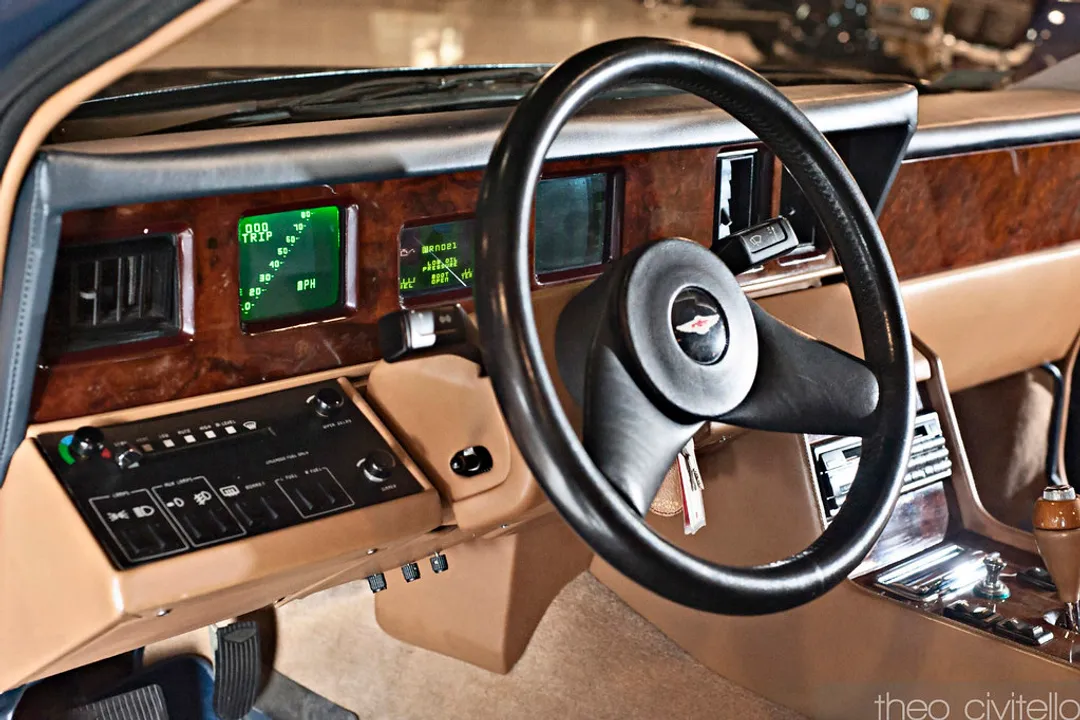
The journey from simple analog dials to the complex, interactive digital screens we see today is a fascinating arc in automotive history, one that wasn't a sudden leap but a gradual evolution driven by aerospace inspiration and sheer technological curiosity. Even the earliest automobiles required some form of driver feedback. For instance, the Ford Model T, launched way back in 1908, was minimalist, featuring only a single dashboard instrument: an ammeter. With a top speed barely cresting 45 mph, even a speedometer was considered optional equipment. As cars became faster and more complex, the dashboard panel morphed from a sparse shelf into a crowded control center. More dials were added—for oil pressure, water temperature, fuel level—all serving a singular purpose: relaying operational data to the driver so they could make better decisions on the move. These were the ubiquitous "steam gauges" of a mechanical age.
# The Analog Precedent
Before electronics took over, instrumentation was purely mechanical. The arrival of key indicators marked significant moments in driver confidence and safety. The invention of the speedometer, for example, was a major breakthrough, offering quantifiable data where previously there was only guesswork about speed. This established the fundamental expectation that the driver needed to see vital information directly ahead. As manufacturers pushed performance, the cluster grew more dense. A typical setup in the mid-20th century included a speed readout, a tachometer for engine revolutions, and various small, dedicated gauges for things like battery voltage or coolant temperature. Even high-end cars like the late 1970s Aston Martin Lagonda, which would become famous for its digital leap, still had a very mechanical heritage, but the seeds of change were being planted by innovations elsewhere, such as the advent of the Head-Up Display (HUD) in military aircraft during the 1960s.
# First Digital Step
Pinpointing the absolute first digital dash is tricky, as development happened simultaneously across different manufacturers exploring different levels of digitalization. However, a landmark in series production points directly to a British luxury marque. The Aston Martin Lagonda is widely recognized as housing the first truly digital dashboard to appear in a production car, debuting in the late 1970s, specifically around 1976. This installation was revolutionary; it utilized three distinct screens to replace the traditional array of analog instruments, including the speedometer and tachometer. This setup was space-age for its time, promising the futuristic experience many envisioned for the 21st century. Yet, this pioneering spirit came at a monumental cost. Rumor suggests the electronics package for the Lagonda cost four times as much to develop as the car itself, contributing to the low production volume of only 645 units. This financial reality serves as an important early lesson: cutting-edge digital integration was initially an engineering statement reserved for the ultra-elite, not a practical mass-market solution.
# American Simplicity

Not long after the Lagonda made its initial foray, American manufacturers began integrating digital displays, albeit in a more restrained manner. Cadillac introduced a digital dashboard in their 1978 Seville. While technically a digital display—a functional one debuting in series production—it was far from the multi-screen concept seen in the Lagonda. The Cadillac unit was largely an "elevator screen" style display showing only the Miles Per Hour (MPH). A major limitation, perhaps reflecting early confidence or technological constraint, was that the screen only showed two digits, meaning the Seville was theoretically capped at 99 MPH. This represented a toe-dip into digital display rather than a full immersion. Other American examples followed, such as the 1984 Chevrolet C4 Corvette, which presented a "space age dash" that stood out significantly during the generally more subdued design period following the fuel crisis.
# European Implementation
Across the Atlantic, digital instrumentation began appearing in more mainstream, albeit high-specification, European models during the early to mid-1980s. In 1983, Opel offered a digital dashboard in the top-of-the-line 'GSE' version of the Monza. This technology subsequently filtered into the Australian market via the related Holden 'VK' Commodore Calais trim. Perhaps one of the most famous early digital clusters came from Volkswagen. The 1983 Golf MKII offered an optional full digital dashboard, known as the Digifiz, specifically for its performance variants like the GTI, G60, and Rallye versions. To find this technology in what was essentially an "econobox" was unexpected at the time, proving that digital feedback was starting to trickle down from the absolute pinnacle of luxury. The Italians also embraced the trend; the 1985 Fiat Uno Turbo i.e. made a digital cluster available as an option on its first-generation model. Fiat’s implementation was advanced, displaying not just speed and distance, but also crucial engine data like turbo boost pressure, oil pressure, and oil temperature.

# The Japanese Digital Focus
Japanese manufacturers brought their own distinctive style to the digital dashboard concept, often prioritizing unique aesthetic presentations or high-performance data later in the decade. The 1986 Nissan Leopard Ultima grade, marketed as an "intelligent adult coupe," featured a three-dimensional digital dash. However, the commitment to digital feedback for performance was perhaps best exemplified by the Nissan Skyline GT-R R34, which featured an informational screen displaying metrics like G-force, throttle position, and yaw—data that was mind-bogglingly advanced for the non-specialist driver at the time.
Later, Honda presented a very different, focused approach with the S2000 sports car. Taking inspiration from their Formula 1 aspirations, the S2000 featured a large, arced tachometer centered on the display, designed to clearly show the screaming 9000rpm limit of its F20C engine. This was digital design serving a direct performance purpose, prioritizing the most critical dynamic information.
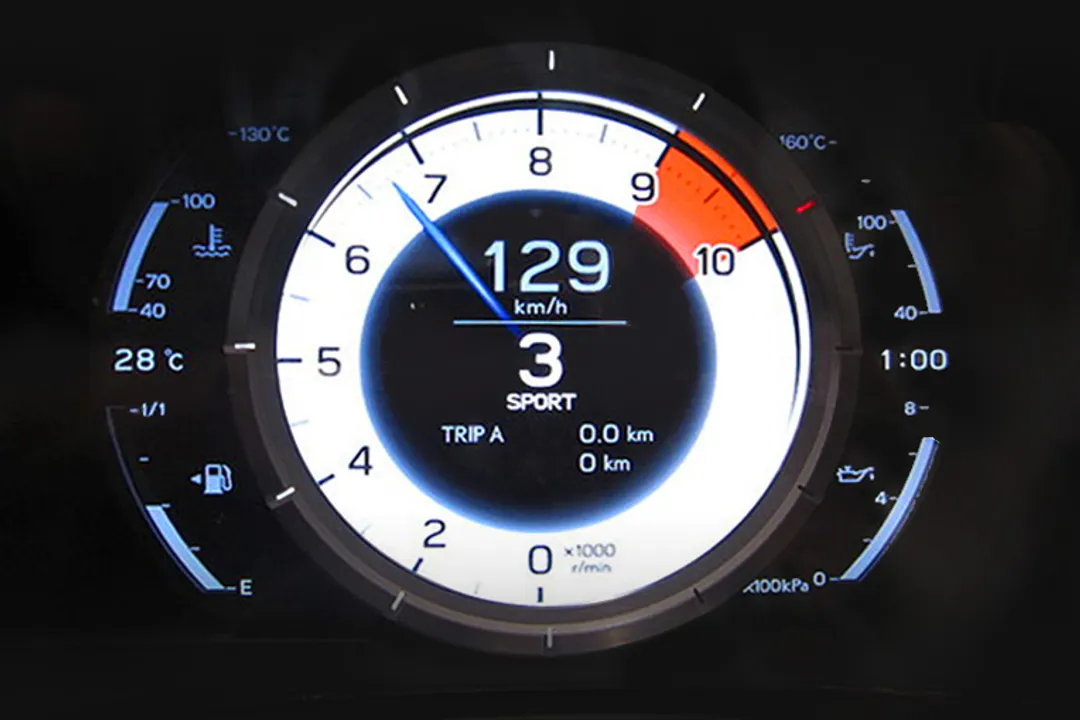
The pinnacle of this Japanese digital effort is arguably the Lexus LFA. While Mercedes-Benz used a similar Thin Film Transistor (TFT) system in its 2007 S-Class night vision setup (primarily switching between night vision and a conventional-looking speed display), the LFA's system was custom-made to be reactive and dynamic. The Takumi craftsmen designed the dash to change color as the V10 engine approached its 9500 rpm cut-off, adding significant drama to the driving experience. While the claim that a mechanical rev counter couldn't keep up with the V10 engine might have been marketing flair, the digital cluster was undeniably superior at presenting high-fidelity, high-speed engine data, making it the genesis for many modern, customizable digital clusters.
# The Digital Distraction Debate
The proliferation of screens, beginning with those pioneering digital clusters, inevitably led to a second major automotive design challenge: driver distraction. While early analog gauges could be read quickly, the allure of adding more information—and later, entertainment—created information overload. The evolution saw screens move from essential gauges to infotainment hubs. Citroën, for example, presented a full schematic of the car and diagnostic links on the dash of the CX, a striking design that featured the famous single-spoke steering wheel. Concept cars like the Peugeot Oxia further demonstrated the vision of fighter-jet-inspired cockpits.
This trend toward complexity is partly why the Head-Up Display (HUD) experienced a resurgence. Developed in military aviation, the HUD keeps the driver’s eyes focused on the road by projecting vital data onto the windshield. The Oldsmobile Cutlass Supreme became the first production car to feature one in 1988. HUDs aim to reduce the need to tilt the head by 20 degrees to look at the instrument cluster, which, according to one general manager, helps maintain focus. However, there's a fine line: while collision warnings are helpful, displaying an iPod playlist can be a dangerous distraction. It’s interesting to note that some manufacturers, like Mazda with their 626/Telstar models, temporarily removed digital speedometers after customer complaints about the constant visual movement in their peripheral vision, yet today, digital speedos are almost mandatory, suggesting driver tolerance—or perhaps design standards—have shifted again.

# The Modern Shift and Cost Efficiency
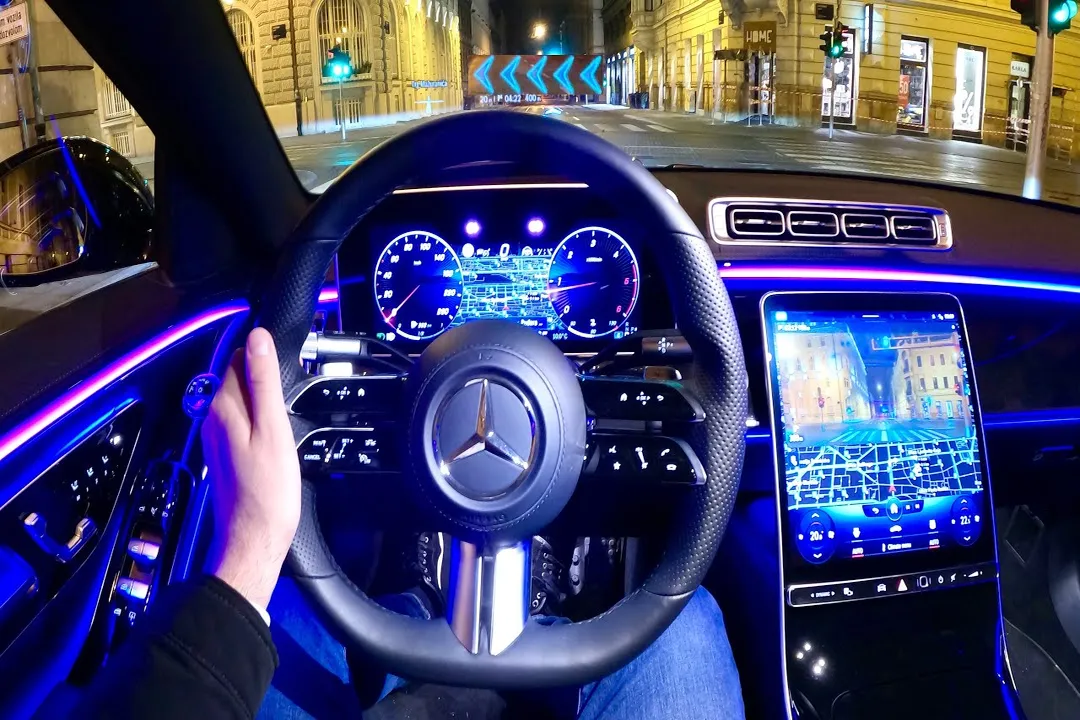
The full embrace of digital dashboards as a standard feature, rather than a costly option, seems to have truly taken hold around 2008, with later innovations popularized by concepts like BMW’s 6WB dashboard and Volkswagen’s Virtual Cockpit within their MQB/MLB platforms. At this point, the motivation appears to have changed. Many observers suggest that the modern reason for their near-universal adoption is simply that digital screens have become cheaper to manufacture than complex analog systems. Manufacturers can order screens in bulk and revise the graphics and software to fit various models, streamlining accounting processes. This contrasts sharply with the artisanal, expensive engineering that went into the Lagonda.
This move towards standardization presents a challenge to automotive flair. While the digital canvas allows personalization, if the design is too generic, the "magic" of the early digital dash—the hope for a science-fiction future—can be lost to simple cost-saving measures. Manufacturers are now tasked with creating unique brand experiences across multiple displays without prohibitive development costs, demanding that they become as agile in digital design as they are in mechanical engineering.
# Future Displays
The current path suggests a mosaic of displays will continue to evolve, moving beyond the panel directly behind the steering wheel. Manufacturers are already transforming other interior surfaces into interactive zones, including using dimming side windows as touchscreens. Continental has explored using high-resolution OLED displays and cameras to eliminate blind spots, effectively making structural elements like the A-pillars temporarily "transparent" to the driver. Land Rover even prototyped a "transparent hood" to assist with off-roading visibility. This push for total visibility, even when combined with increasingly sophisticated autonomous driving aids, means the digital cluster's primary role is being fragmented across the entire cabin. While the first digital dash served to replace physical dials, the modern digital cockpit is aimed at integrating data from every available surface, a far more ambitious mandate than even the pioneers of the 1970s could have imagined. The quest for information delivery continues, moving from a simple digital readout to a fully interactive environment, always balancing the dream of information density against the hard requirement of driver safety.
Related Questions
#Citations
digital dashboards – a brief history of cool
Visions of progress: the past and future of digital car ...
Digital instrument clusters through the ages - Drive