What was the first Super Soaker made?
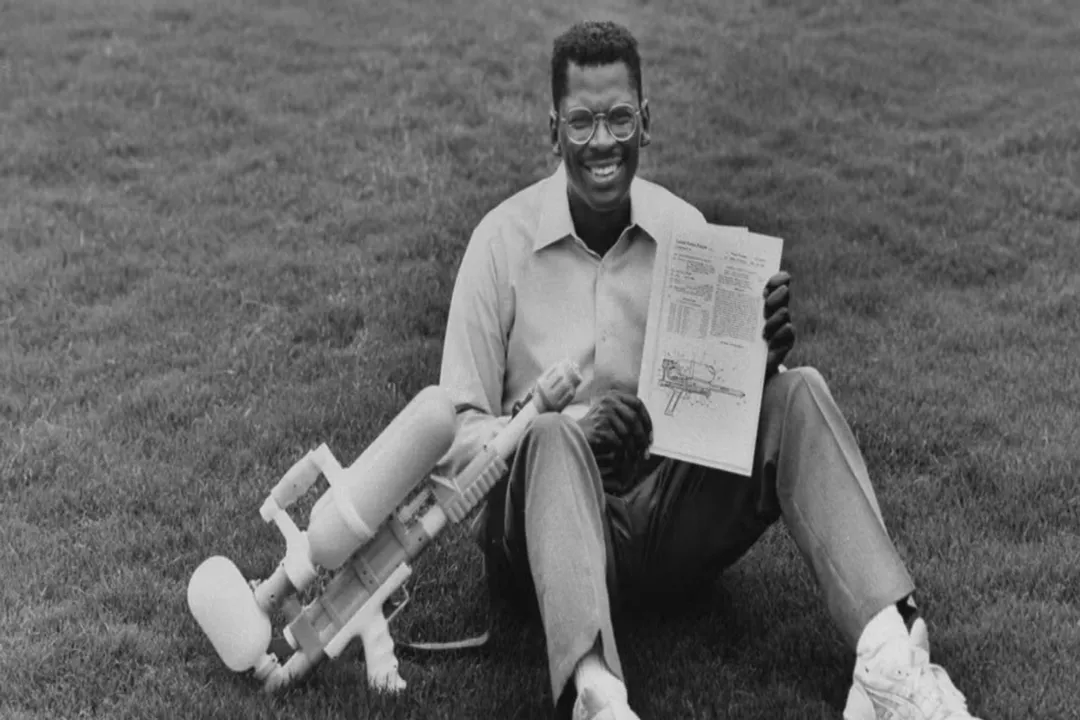
The genesis of the ubiquitous Super Soaker water gun is a fascinating tale rooted not in toy design studios, but in the high-stakes world of aerospace engineering. It’s a story about persistence, happy accidents, and how an invention meant for one application can completely redefine another, turning a serious scientist into a celebrated inventor of summer fun. [6][7] The device that would eventually soak millions of backyard warriors started its life far from the backyard, brewing in the mind of Lonnie Johnson, a mechanical engineer working for NASA. [6][7]
# Engineer's Pursuit
Lonnie Johnson’s career path was already distinguished long before the water gun explosion. He earned his Master of Science degree in nuclear engineering from Tuskegee Institute in 1975. [9] He worked at the Air Force Weapons Laboratory before moving to NASA’s Marshall Space Flight Center in Huntsville, Alabama. [9] At NASA, Johnson worked on various projects, including those related to the Galileo mission to Jupiter. [7] This background in complex systems and fluid dynamics is key to understanding the technology behind the Super Soaker; it wasn't just about squirting water, but about pressurized air forcing liquid out with exceptional range and power. [4] His technical expertise meant that when he encountered an opportunity for invention, he knew how to properly engineer a solution, even if the initial motivation was entirely different from the final product. [6]
# Accidental Spring

The true moment of inspiration for what became the Super Soaker came from an experiment conducted in his bathroom, a scene far removed from the sterile environment of a rocket lab. [7] Johnson was working on developing a high-powered water-based heat pump system for cooling spacecraft. [4][7] During one of his tests, an issue arose, and he needed to check the plumbing connections in his bathroom. [7] While experimenting with the nozzle and the internal pressure mechanisms for this heat pump concept, he managed to create a powerful jet of water that shot across the room. [4][7] This accidental demonstration of high-pressure water projection was the spark. Instead of simply dismissing the powerful stream as a plumbing mishap, Johnson recognized the potential for a new kind of toy. [4][7] He had inadvertently created a functional, high-pressure liquid projector, which provided the blueprint for a superior water weapon. [8]
It is worth noting the sheer difference in scale between the intended application and the resulting success. A device designed to manage thermal regulation on a multi-million-mile space voyage was instantly recognizable as the next great summer toy. This highlights a curious aspect of innovation: sometimes the most commercially viable application is an unforeseen tangent from the primary research objective. [4] While the physics were sound for spacecraft cooling, the consumer market saw only the promise of longer water fights.

# Patent Filing
Once Johnson saw the potential, he quickly began prototyping the concept into a consumer-friendly product. [4] The initial prototypes were reportedly quite effective, sometimes leading to good-natured pranks on his family members, demonstrating the power he had harnessed. [4][7] He recognized the necessity of securing the idea legally before attempting to bring it to market. [6] The critical date in the history of the Super Soaker is when Lonnie Johnson was officially granted the patent for his high-powered, air-pressure-based water gun invention. That date was May 27, 1991. [2] The patent number, U.S. Patent 5,072,856, covers the apparatus that uses an air pressure chamber to forcefully expel water through a nozzle. [8][9] Securing this patent was the vital bridge between a successful lab experiment and a globally recognized toy line.
# First Product Release
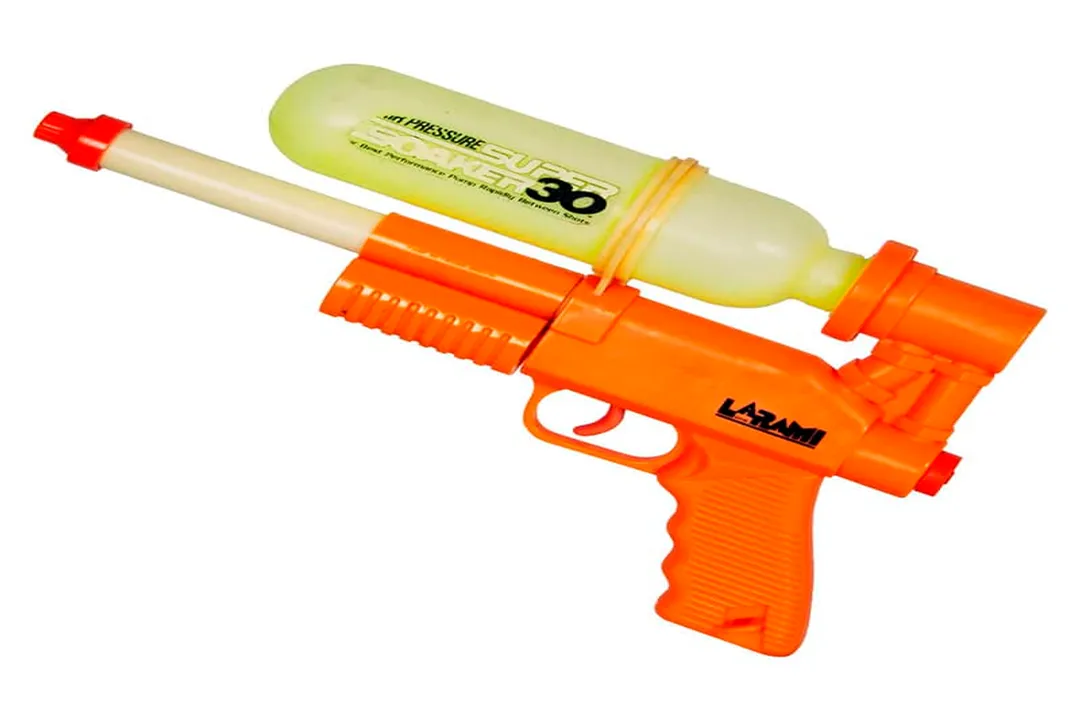
Although the patent was secured in 1991, the path from a patent document to a shelf-ready toy involved finding the right manufacturing partner. [8] Johnson initially pitched his invention, which he called the Super Soaker, to several major toy companies, but many initially passed on the idea. [7][8] Finally, in 1991, he struck a deal with Larami Corporation, a Philadelphia-based company that specialized in water guns and other seasonal toys. [8][7] Larami, which was later acquired by Hasbro, understood the market appeal of Johnson’s pressurized design. [8]
The very first model released to the public by Larami was the Super Soaker SS 50. [8] This initial offering immediately set a new standard for water combat. [8] The SS 50 utilized a pump mechanism to pressurize the air inside the main reservoir, allowing it to shoot water significantly farther than any previous pump-style water pistol on the market. [8][9] While modern Super Soakers feature a wider variety of tanks, triggers, and pumping styles, the foundational principle—air pressure driving the water—was perfectly executed in the SS 50. [8] The toy arrived on store shelves in 1992. [8]
To give readers a quick snapshot of the early technology compared to what the consumer expected:
| Feature | Traditional Pump Gun (Pre-1992) | Super Soaker SS 50 (1992) |
|---|---|---|
| Propulsion | Direct mechanical force on water chamber | Pressurized Air Chamber |
| Water Delivery | Continuous stream while pumping/squeezing | Blast of water when trigger pulled |
| Range | Short to moderate | Significantly longer range |
| Key Innovation | None significant | Air pressure storage [8] |
Considering that the SS 50 arrived in 1992, the public had just come off the peak of highly visible technological advancement via the space program and early computing. It’s an interesting observation that a product based on aerospace principles succeeded by tapping into simple, competitive, outdoor play, showing that the "cool factor" in the early 90s toy market valued demonstrable power, even if that power was just a stream of tap water. [2] This high-performance profile created an instant cultural phenomenon that summer.
# Cultural Impact and Recognition
The success of the SS 50 was immediate and overwhelming. [7] It created an entirely new category in the toy market, forcing competitors to scramble to catch up with pressurized technology. [8] The original Super Soaker became a symbol of summer fun, transitioning from a simple toy into a pop culture icon. [1]
The enduring significance of Lonnie Johnson’s work has been formally recognized in prestigious institutions. The original Super Soaker is part of the permanent collection at the National Museum of Play in Rochester, New York, cataloged alongside other landmark toys that shaped childhood. [1] This inclusion serves as definitive proof that the invention transcends mere commercial success; it holds historical significance in the realm of play and design. [6] Johnson himself has continued to invent, holding over 100 patents across various fields, but the Super Soaker remains his most famous contribution to the public sphere. [6] His success also serves as an important inspiration, demonstrating that scientific endeavors can lead to widely accessible and beloved consumer products, encouraging young people, especially those in underrepresented groups in science and engineering, to pursue innovation. [6][7]
The first Super Soaker, the SS 50, was the realization of an engineering principle applied with an eye for fun. It wasn't just a better water gun; it was a paradigm shift in how pressurized liquid toys functioned, all thanks to an aerospace engineer testing out some plumbing in his own home. [4][8]
Related Questions
#Citations
Super Soaker - The Strong National Museum of Play
African American inventor Lonnie Johnson patents the Super ...
The NASA Scientist Who Invented the Super Soaker - YouTube
I am Lonnie Johnson, inventor of the Super Soaker. I'm a ... - Reddit
Nasa engineer creates super soaker - Facebook
Lonnie Johnson - National Inventors Hall of Fame®
How Lonnie Johnson Invented the Super Soaker - Biography
History of the Super Soaker - iSoaker.com
Lonnie Johnson (inventor) - Wikipedia