Who invented navigation software?
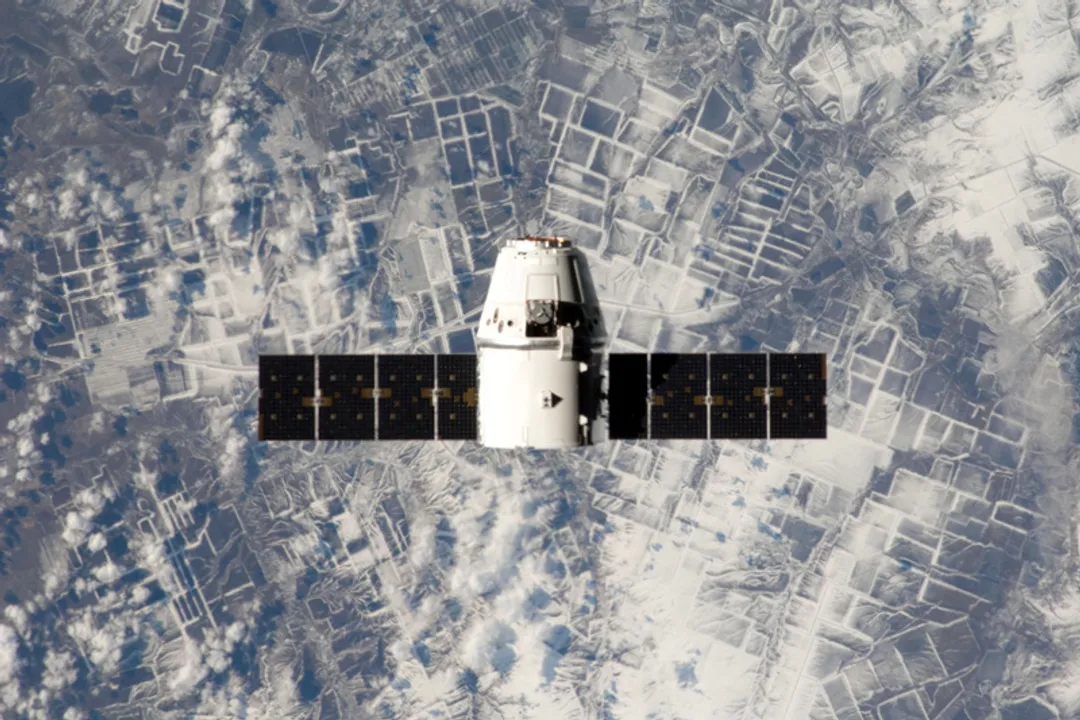
The development of navigation software is intrinsically tied to the creation of the Global Positioning System (GPS), the satellite network that allows devices to determine their location anywhere on Earth. [7] While consumer applications like Google Maps or Waze provide the user interface—the visual software we tap and swipe—the true invention lies in the complex architecture and precise mathematics that make location tracking possible in the first place. Pinpointing a single inventor for the entire concept is difficult, as GPS evolved through decades of theoretical work and crucial government projects, but the history clearly highlights several key individuals whose expertise transformed theory into the navigation reality we use daily. [1][7]
# System Origins

The concept of using signals from space to determine position wasn't born overnight; it evolved from earlier positioning systems like Transit, developed by the U.S. Navy in the 1960s. [7] However, the push for a more comprehensive, globally available, and continuous system came from the U.S. Department of Defense (DoD). [7] The actual predecessor to modern GPS was the NAVSTAR GPS project, which began development in the early 1970s. [7] This initiative aimed to create a system that provided highly accurate location and timing data, intended primarily for military precision targeting and navigation. [7] The first satellite in this new constellation was launched in 1978, marking a significant step toward a fully operational global network. [7]
# Key Figures

Understanding who "invented" GPS requires recognizing the specialized roles played by different experts. While a single person might be celebrated as the "father" of the system, the successful deployment required mathematical mastery, engineering insight, and project management across multiple disciplines. [6][7]
One prominent figure acknowledged for his leadership in this technological leap is Bradford Parkinson. Parkinson is frequently credited as the father of GPS due to his role in initiating and managing the development of the NAVSTAR Global Positioning System. [6][7] His leadership ensured that the disparate military requirements were synthesized into a single, functional, space-based system. [7] For his efforts, Parkinson was inducted into the National Inventors Hall of Fame. [6]
However, the system could not function without the precise modeling of Earth and orbital mechanics. This is where the critical contributions of mathematician Dr. Gladys West come into focus. [2][4][5] Dr. West worked at the Naval Surface Warfare Center Dahlgren Division, and her sophisticated mathematical modeling was foundational to the GPS system's accuracy. [2][5]
This distinction between project leadership and fundamental mathematical realization is important when discussing innovation in complex fields. Parkinson oversaw the creation of the system architecture, while West provided the computational certainty that made the architecture work accurately across the globe. [7]

# Mathematical Foundation
Dr. West’s specific expertise lay in satellite geodesy—the science of measuring and understanding the Earth's geometric shape, orientation in space, and gravity field. [5] In the age before modern computing power was ubiquitous, her work involved complex calculations that were essential for determining the precise location of satellites and, consequently, receivers on the ground. [2][4] She was part of a team that worked on refining measurements from satellites, which was necessary to create an accurate geodetic model of the Earth. [5] This model, which accounts for the Earth's irregular shape and gravitational pull, is what allows GPS receivers to translate satellite signals into an exact latitude, longitude, and altitude reading. [7] Her groundbreaking work ensured that the theoretical framework could be applied to create a system with the precision demanded by the military and later adopted by the civilian world. [5]
It is often noted that figures like Dr. West remained less visible despite their essential work, highlighting a common pattern in the history of science and technology where the conceptualizers and implementers often receive more immediate recognition than the essential computational architects. [5]
# System Maturation
The journey from concept to global utility involved several distinct phases. After the initial satellite launch in 1978, the system underwent rigorous testing and expansion. [7] The full operational capability of GPS, with a constellation of 24 satellites providing continuous global coverage, was finally achieved in 1995. [7] This is the point where the system was fully invented and ready for widespread use. The resulting technology provides location and time data to a GPS receiver anywhere on Earth, provided there is an unobstructed line of sight to at least four satellites. [7]
When considering the sheer scope of this engineering feat, it is insightful to compare the specialized roles involved in creating the hardware and underlying mathematics versus those who build the final user-facing navigation software.
| Innovator Category | Key Responsibility | Example Contribution |
|---|---|---|
| Project Leadership | System concept, funding, and management | Bradford Parkinson guiding NAVSTAR development [6] |
| Mathematical Groundwork | Geodetic modeling and orbital calculation | Dr. Gladys West defining the Earth model [5] |
| Hardware Deployment | Satellite manufacturing and launch | DoD/US Space Force management [7] |
| Software Development | User Interface, routing algorithms, data presentation | Creation of consumer mapping applications (Post-GPS maturity) [1] |
This structure reveals that the "invention" isn't one moment but a chain of necessary dependencies. Without West's mathematics, Parkinson's system would have been inaccurate; without the system, no software could function. [1][7]
# Software Layering
The prompt specifically asks about navigation software. The GPS constellation is the hardware and the underlying radio frequency system; the navigation software is the application layer that interprets those signals for practical use. [1] Once the DoD made GPS signals available for civilian use (a process that accelerated in the 1980s and 90s), developers began building the software we recognize today.
The invention of the software itself is a much more recent and diffuse process. Navigation software requires several components that build upon the GPS signal:
- Positioning Interpretation: Converting raw satellite timing signals into coordinates.
- Mapping Data: Loading detailed, stored maps of roads, terrain, and points of interest.
- Routing Algorithms: Calculating the most efficient path between two points, often factoring in real-time data.
Early digital navigation systems existed before ubiquitous GPS, often relying on dead reckoning or inertial navigation integrated with radio beacons, but these were specialized and expensive. [7] The availability of cheap, highly accurate, continuous position data from GPS democratized navigation, allowing software developers to focus less on finding the user and more on guiding them. [1] The introduction of smartphones integrated the GPS receiver, the mapping data, and the routing software into a single device, leading to the explosion of consumer navigation tools. [1]
It is worth noting that the success of modern routing software is heavily dependent on the continuous, publicly available data stream from the GPS system—a stream that required the rigorous, exacting mathematical work done decades earlier. If the precision of Dr. West’s calculations had been off by even a few meters, the sophisticated routing algorithms of today's apps would frequently place drivers miles off course or direct them down non-existent paths. The software works because the underlying mathematics is incredibly sound. [5]
# User Experience Insight
When we interact with our phones to find a coffee shop, we are engaging with the final product of this long history. The current sophistication of navigation apps often revolves around prediction—predicting traffic flow, predicting construction delays, or predicting driver behavior—rather than just plotting the shortest route based on static map data. This shift from mere charting to predictive guidance represents the true "invention" of modern navigation software as a consumer product, but this level of service is only achievable because the underlying system invented by engineers like Parkinson and mathematicians like West is reliably precise. [1] The expectation today is not just knowing where you are, but knowing the best way to get where you are going, right now, factoring in dynamic, real-world variables that the original system was never designed to handle. This evolution shows a clear progression from defining the physical world (geodesy) to optimizing human movement within it (software).
#Videos
Mathematician Gladys West '00 paves the way for GPS - YouTube
Related Questions
#Citations
Who invented the GPS? People behind the Global Positioning System
Dr. Gladys West helped invent GPS, changing how billions navigate ...
Who Invented GPS? The Pioneers Of Global Positioning System
Gladys West: the hidden figure who helped invent GPS - The Guardian
NIHF Inductee Bradford Parkinson Invented GPS Navigation
Global Positioning System - Wikipedia
Mathematician Gladys West '00 paves the way for GPS - YouTube
I am Carolyn Oglesby and my mother Dr. Gladys West helped invent ...