Who invented tsunami sirens?
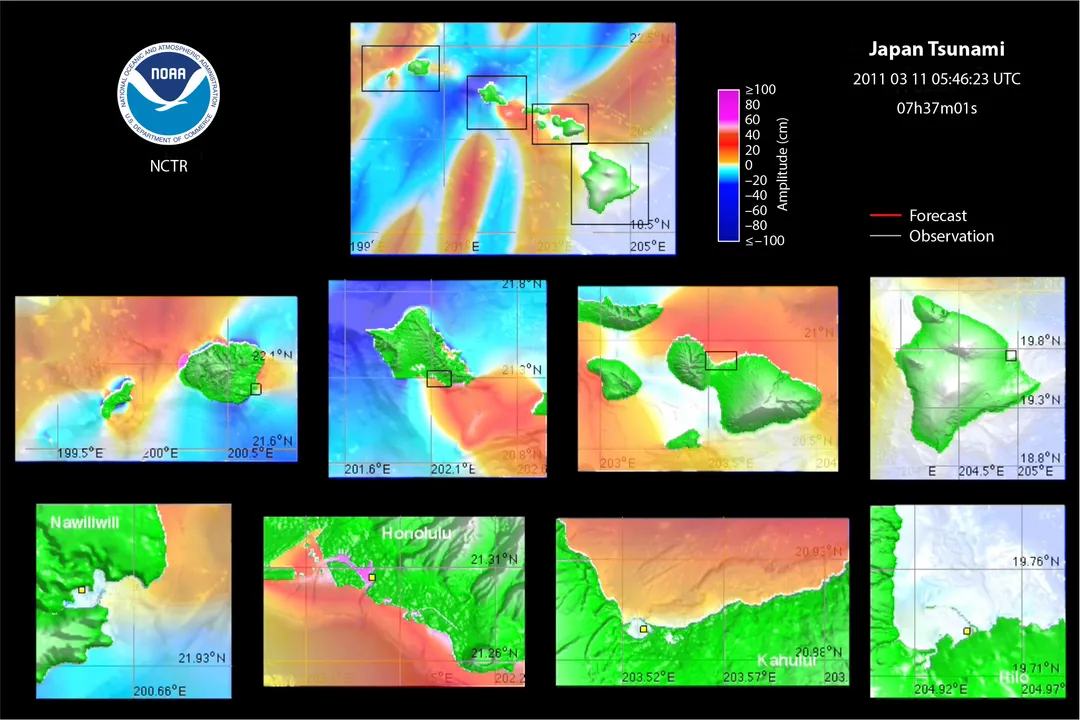
The history of warning the public about impending tsunamis is not marked by a single “Eureka!” moment or one inventor who manufactured the first audible alarm. Instead, it is a story of technological maturation, institutional necessity, and the painful lessons learned from catastrophic waves. The earliest successful transmission of a tsunami alert relied on technology that seems antique today: the telegraph wire. Following the devastating earthquake in the Aleutian Islands in 1946, which generated a tsunami that claimed lives as far away as Hilo, Hawaii, the very first official warning was relayed via this electrical messaging system. [7] This immediate need to communicate geophysical danger spurred the formalization of hazard mitigation efforts in the Pacific basin. [1][7]
# System Birth
The practical application of this new awareness materialized quickly. Just two years after the deadly 1946 event, the Pacific Tsunami Warning Center (PTWC) was established in Honolulu, Hawaii, in 1948. [1][2] This center became the linchpin for monitoring seismic activity across the vast Pacific Ocean, intended to provide timely notice before waves reached inhabited coastlines. [1] The creation of the PTWC represented a shift from reacting to disaster reports to proactively issuing alerts based on seismic monitoring. [5] The initial focus was primarily on earthquakes—detecting them, locating them, and determining if they were large enough to generate a tsunami threat that warranted further investigation. [6]
While the PTWC formed the organizational backbone, the technology for confirming the wave existed underwater was still rudimentary. For decades, the warning process relied heavily on seismometers, which could only indicate a potential hazard based on earthquake magnitude and location. [6] This meant that the initial alert was often an educated guess based on ground shaking far out at sea. A significant conceptual hurdle was overcome by realizing that just knowing the earthquake happened wasn't enough; one needed to see the wave travel. This realization fueled subsequent technological advancements that would ultimately make local, audible alerts like sirens a necessary component of a multi-layered defense. The early system architecture was necessarily slow, depending on the time it took for a wave to cross the ocean and for subsequent tide gauges to confirm its arrival. [8]
# Detection Basis
The evolution of detection technology has fundamentally changed how warning centers operate, directly influencing when an alert can be issued, which dictates the final warning delivery method—be it a siren, an automated phone call, or an SMS message. [4] Early detection relied on coastal tide gauges, which could only measure a tsunami after it had already arrived at land, making them useless for alerting areas further inland or those with longer travel times. [10]
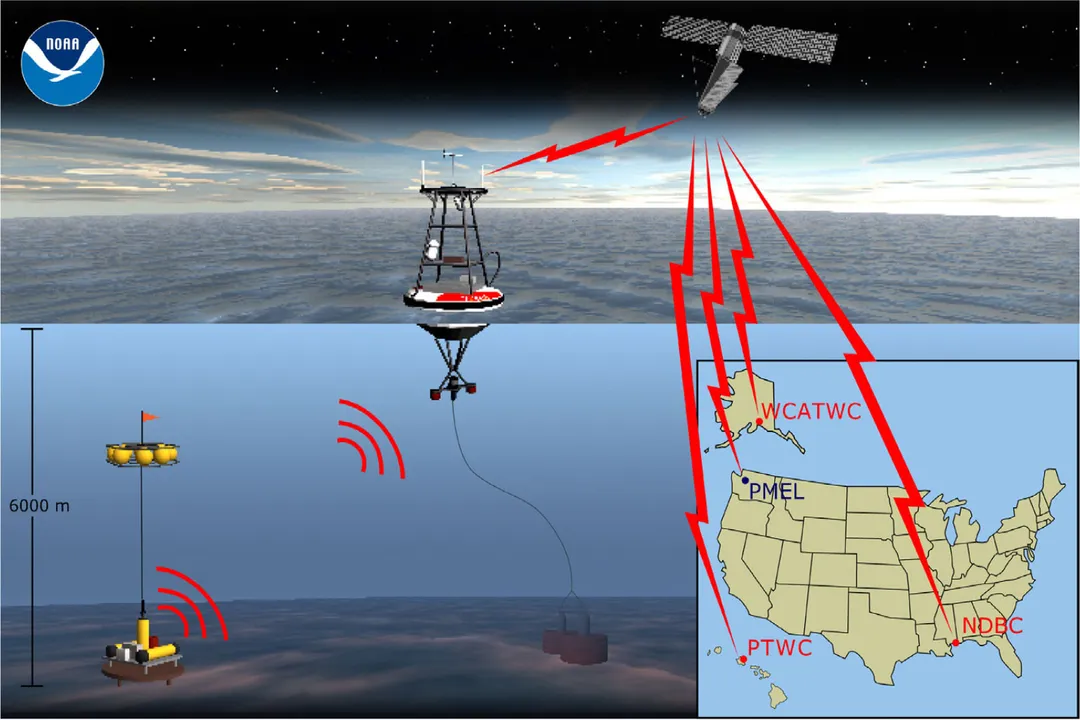
The true game-changer came through sophisticated buoy systems. The development of deep-ocean assessment and reporting of tsunamis (DART) systems began to mature over the years, providing direct, real-time measurement of sea-level changes across the open ocean. [10] These buoys, which sit on the seabed, register pressure changes caused by a passing tsunami wave and relay that information acoustically to a surface buoy, which then transmits the data via satellite to warning centers. [10] The ability to confirm the presence and height of a wave while it is still hundreds of miles offshore allows for a much more accurate and timely issuance of public alerts. This capability sharply contrasts with the initial 1946 response, which depended on observers noting damage or high water after the impact and relaying that information back via telegraph. [7] The refinement of DART technology allows agencies to move from a generalized seismic alert to a confirmed, specific threat level, increasing public trust in the subsequent audible warnings. [3]
# Alert Output
Once a threat is confirmed by centers like the PTWC or international partners, the information must be rapidly disseminated to the at-risk communities. This is where the physical warning devices, such as sirens, come into play, often managed at the local or national level rather than by the international monitoring centers themselves. [9]
Tsunami sirens are essentially loud, powerful speakers installed in vulnerable coastal zones, designed to be heard over ambient noise, serving as an unmistakable, distinct alarm signaling immediate evacuation. [9] The deployment of these sirens is heavily influenced by local geographic factors and historical risk assessment. For instance, a steep, narrow cove might require fewer, strategically placed sirens than a long, low-lying coastal plain. The effectiveness of these systems depends entirely on public recognition and immediate obedience. If a resident has never heard the sound or does not know what it means, the technology is useless. This highlights a critical distinction: the invention of the detection system (PTWC, DART) is separate from the invention and implementation strategy of the local public warning tool (the siren). It appears that the widespread adoption and standardization of siren systems were a gradual, localized response to recognized seismic danger zones, building upon the foundational threat assessment provided by regional warning centers. [5][9]
It is interesting to consider the early deployment phase. In areas like the United States, the impetus for installing these expensive, specialized outdoor warning systems often came from grassroots advocacy combined with federal recognition following major events, such as the 1960 Chile Tsunami which caused severe damage in the Pacific. [9] This contrasts with modern systems where newer technologies are sometimes adopted more uniformly.
Here is a simplified comparison of the evolution of warning dissemination methods:
| Era | Primary Delivery Method | Reliance on Local Action | Speed/Accuracy |
|---|---|---|---|
| Pre-1948 | Personal Reports, Telegraph | High | Slow, Reactive |
| Post-1948 (Initial) | Radio Broadcasts, Official Bulletins | Medium | Moderate, Based on Seismic Estimate |
| Modern (High Risk Zones) | Sirens, Automated Phone Calls, SMS | Low (Immediate Audible Cue) | Fast, Confirmed by Buoys |
# Modern Layers
Today’s alert ecosystem is layered, moving far beyond the original telegraph and simple radio broadcasts. [4] The integration of telecommunications has created multiple redundancies, acknowledging that no single system is fail-safe. For example, SMS text messaging capabilities allow warnings to be pushed directly to mobile phones, providing an alert even if a person is away from their home or designated safe zone. [4] This digital approach complements the raw auditory power of the siren.
However, this multi-pronged approach also introduces complexities. While a siren is immediate and bypasses the need for a functional power grid or cell tower (assuming the siren itself has a backup power source), it offers no context—it is just a sound. A text message, on the other hand, can convey the specific projected arrival time and intensity, but it requires the recipient to have a working device and reception. Effective modern emergency management, therefore, requires communities to ensure that the siren remains the first, most universal audible cue, while digital methods provide the necessary follow-up instruction. [4] The reliance on the centralized PTWC and subsequent regional bodies like the Indian Ocean Tsunami Warning and Mitigation System (IOTWMS) [3] confirms that the invention of the siren as a device is less important than the standardized protocol that triggers it. The invention lies in the system that dictates when the siren should sound, not necessarily who built the speaker box itself.
The ongoing commitment by organizations like the NOAA PMEL (National Oceanic and Atmospheric Administration's Pacific Marine Environmental Laboratory) to refining sensor technology demonstrates that while the public alert mechanism (the siren) addresses the last few minutes before impact, the work to give communities more lead time—potentially hours—is continuous through better deep-ocean sensing. [10] The greatest success in tsunami warning has been the evolution from a system based on the observation of damage to one based on the precise measurement of the ocean itself.
Related Questions
#Citations
Tsunami Warning Center History
Tsunami warning system - Wikipedia
Evolution of the tsunami alert systems - CAT-INGV
Tsunami Alarm System - 3MFuture
Tsunami Warning Systems - National Academy of Engineering
[PDF] FACT SHEET How Do Seismometers Contribute to a Tsunami ...
History's first tsunami warning came from Hawaiʻi, sent ... - Facebook
Evolution of tsunami warning systems and products - Journals
Tsunami early warning systems
50 Years of PMEL Tsunami Research and Development