Who invented the first switch board?
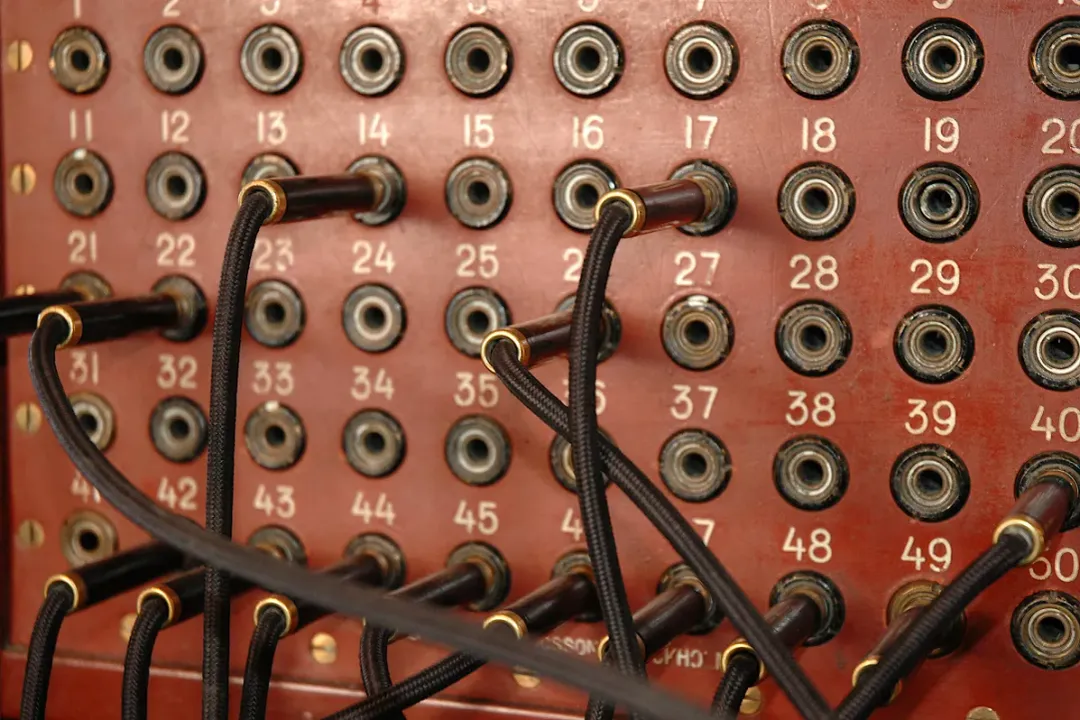
The moment the telephone became a functional reality, it immediately ran into a severe logistical problem: how to connect one phone user to another when there were more than two in existence. Alexander Graham Bell's invention in 1876, while revolutionary, initially only allowed for a direct, dedicated line between two specific points. [3] If a third user wanted to speak to either of the first two, another completely new set of wires would be required. This direct-connection model was utterly unsustainable as telephony began to spread. The solution, the switchboard, was not a single flash of singular genius but rather an evolution born from sheer necessity to create a centralized hub where any user could potentially reach any other user by routing the call manually. [3]
# The Connection Challenge
Before the switchboard, every telephone installation required a dedicated wire pair running directly between the caller and the person they wished to reach. [3] Imagine a small town with ten businesses wanting to communicate; this meant forty-four wires were needed just to allow everyone to call everyone else directly. As soon as an eleventh business opened, the entire wiring system would need significant, complex expansion. This limitation meant that widespread, practical public telephony was impossible without a mediating device—a central clearinghouse for signals. [2]
The essential function of the switchboard was to replace this complex, point-to-point wiring web with a manageable star pattern, where every line terminated at a central location. Instead of needing a permanent physical connection to every potential contact, a subscriber only needed one line leading to the exchange. This centralization allowed for dynamic, temporary connections to be established as needed, drastically reducing the initial infrastructure investment per user. [2]
# Coy’s Commercial Debut
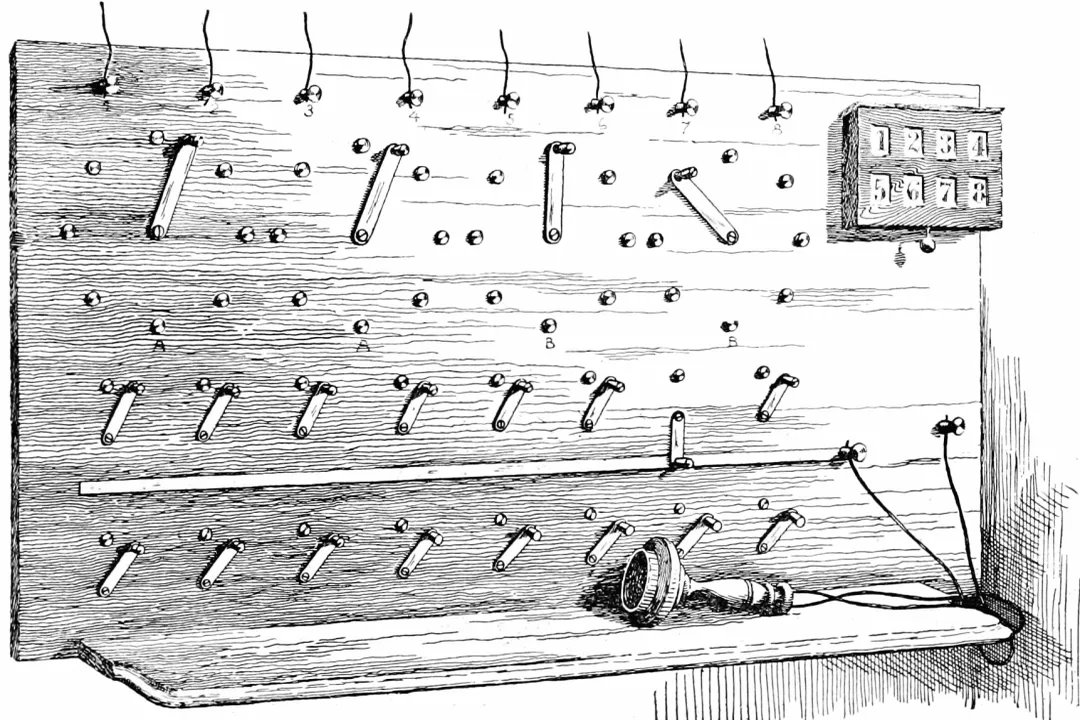
While the concept of switching signals existed implicitly once the first multi-subscriber system was envisioned, the historical record points very clearly to the establishment of the world’s first commercial telephone exchange and its accompanying switchboard in New Haven, Connecticut. [7][9] This landmark moment occurred on January 28, 1878. [7] The man credited with implementing this initial operational system was George W. Coy. [7][9]
Coy's creation was not the modern console with banks of blinking lights; it was what was often termed a "jack board". [9] This initial setup was designed to serve an initial group of 50 subscribers. [7] Think of it as a large wooden panel embedded with dozens of small holes or "jacks," one for each telephone line entering the building. [9] When a subscriber wished to make a call, they would pick up their receiver and speak to an operator stationed at the board. [3]
# The Operator’s Expertise
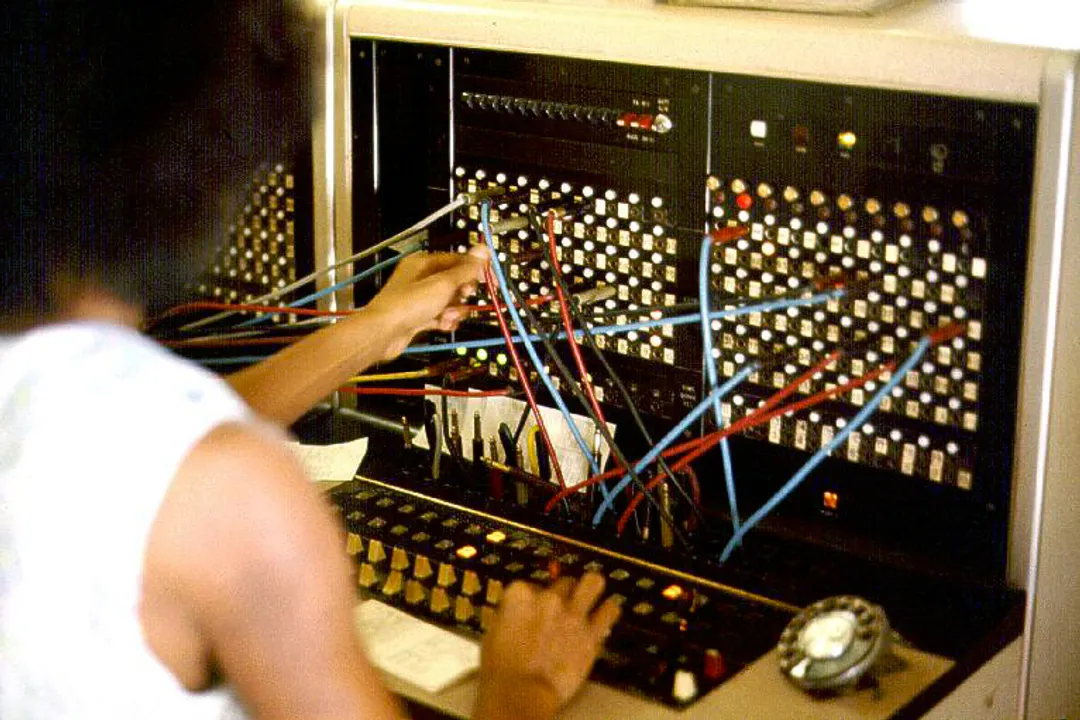
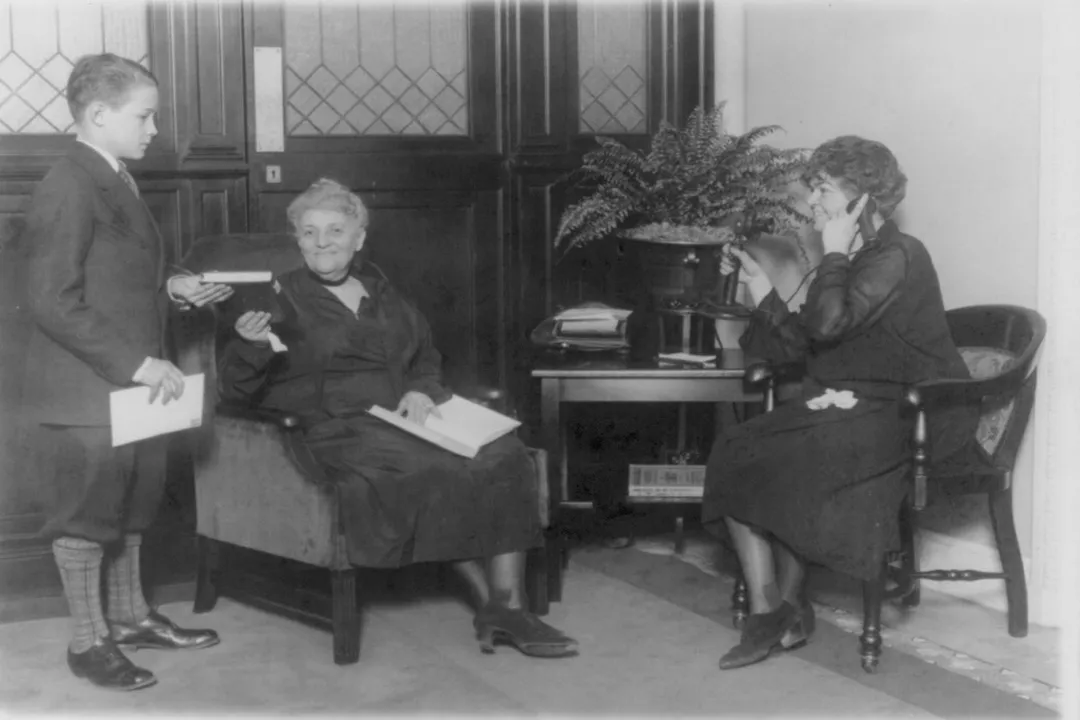
The switchboard’s success was entirely dependent on the human element controlling it. The operators, who were predominantly women by the early 1880s, were the physical manifestation of the switching mechanism. [2][5] To connect a call, an operator would take a cord with a plug on each end and physically insert one end into the jack corresponding to the calling party. They would then ask the caller whom they wished to reach, find the corresponding jack for the destination party, and plug the second end of the cord into that jack. [3] This created a momentary, dedicated electrical circuit between the two parties.
The demands placed upon these early operators required a specific set of skills that were difficult to quantify but essential for service quality. They needed exceptional dexterity to manipulate the plugs quickly—a necessity, given that early systems lacked any form of "busy" signal, meaning an operator might have to try connecting a line multiple times. [5] Furthermore, they needed excellent listening skills and, perhaps most importantly, patience, as they were the primary interface between often frustrated customers and new technology. [2] This reliance on manual connection and human judgment meant that the efficiency of the entire early telephone network scaled directly with the speed and accuracy of its human operators. [5]
In fact, when considering the sheer volume of connections that needed to be made daily across a growing city, the early board represented an immense administrative burden. The fact that New Haven began with 50 subscribers, and that later exchanges in places like London eventually managed hundreds of lines through these manual boards, highlights the intensive labor required. If we were to calculate the potential number of direct, dedicated wires needed for those 50 New Haven subscribers to call each other directly without switching—that number approaches 2,500 dedicated lines to cover every possible pairing. Coy's switchboard reduced that physical infrastructure requirement for the initial service pool to just 50 physical wires entering the building, an infrastructural efficiency that fundamentally defined telephony's growth path. [3][7]
# Early Variations and Global Steps
While George Coy’s work in New Haven marked the first commercial exchange, the development of switching technology was not entirely localized or singular in its earliest conceptual stages. It is important to note that the need for some form of switching mechanism was recognized almost as soon as the telephone was patented. [3]
In Britain, for example, early systems also required manual intervention. One historical account references a man named Charles Brown in connection with an early manual switchboard concept in London, highlighting that similar needs were driving similar, though not necessarily identical, solutions across the Atlantic. [5] This suggests that the core principle of centralized switching was an immediate, obvious requirement for any growing telephone network, even if the specific mechanical implementation varied based on who was building the system and where. [2]
# The Transition to Automation
The manual switchboard, despite its success in proving the viability of telephony, contained the seeds of its own obsolescence. As cities grew and call volumes ballooned, the number of operators required became economically burdensome and physically limiting. Furthermore, human error and the simple physical constraints of an operator needing to find and plug in the correct cord limited the speed of service.
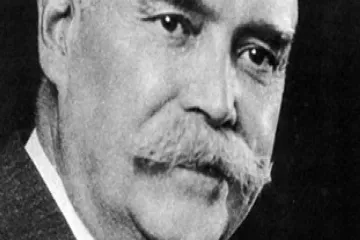
This pressure led directly to the next great inventor in this lineage: Almon Brown Strowger. Strowger is not credited with inventing the manual switchboard, but rather the automatic electromechanical exchange system around 1889. [1] Strowger’s invention, the step-by-step switch, allowed subscribers to dial numbers directly, bypassing the need for an operator entirely by sending electrical pulses that mechanically routed the call through the exchange equipment. [1] This shift marks the end of the operator-centric era and the beginning of modern, direct-dial communication, demonstrating how the initial, necessary invention—the manual switchboard—served as the critical bridge technology until more scalable automation could be devised.
# The Enduring Legacy
The apparatus invented by George Coy and his contemporaries in 1878 represents more than just an old piece of hardware; it established the core architecture upon which nearly all large-scale communication networks were built for decades. Every subsequent advancement, from crossbar switches to digital routers, owes its existence to the solution provided by the manual switchboard: the concept of a dynamic, centralized connection point. [2]
If you consider a modern fiber optic network or a massive data center, the fundamental concept of routing traffic dynamically from an input port to an output port remains unchanged from Coy’s jack board. The difference is scale and medium; the early board used physical cords and human eyes, while today we use electronic matrices and high-speed processors. [1][5] The initial switchboard forced engineers and operators to think in terms of topology and pathways—lessons that are directly transferable to designing circuits in silicon today. While the physical board itself has vanished from public view, replaced by automated systems, its essential function is woven into the very fabric of global connectivity. [3] The switchboard invented by Coy proved that a network could be built; its success immediately prompted the search for a way to unplug the human element and make that network work faster. [7]
Related Questions
#Citations
Telephone switchboard - Wikipedia
The Telephone Switchboard Connected the Country
History of the Phone Switchboard - Answering Service Care
Capitol Hill's Telephonic Revolution | US House of Representatives
Telephone Switchboard, Alexander Graham Bell
History and evolution of the telephone switchboard - Megacall
January 28: The World's First Commercial Telephone Exchange
First commercial telephone switchboard established - Facebook
New Haven switchboard | Tribute to Relays - Calling315.com