How did Sarah Boone invent the ironing board?
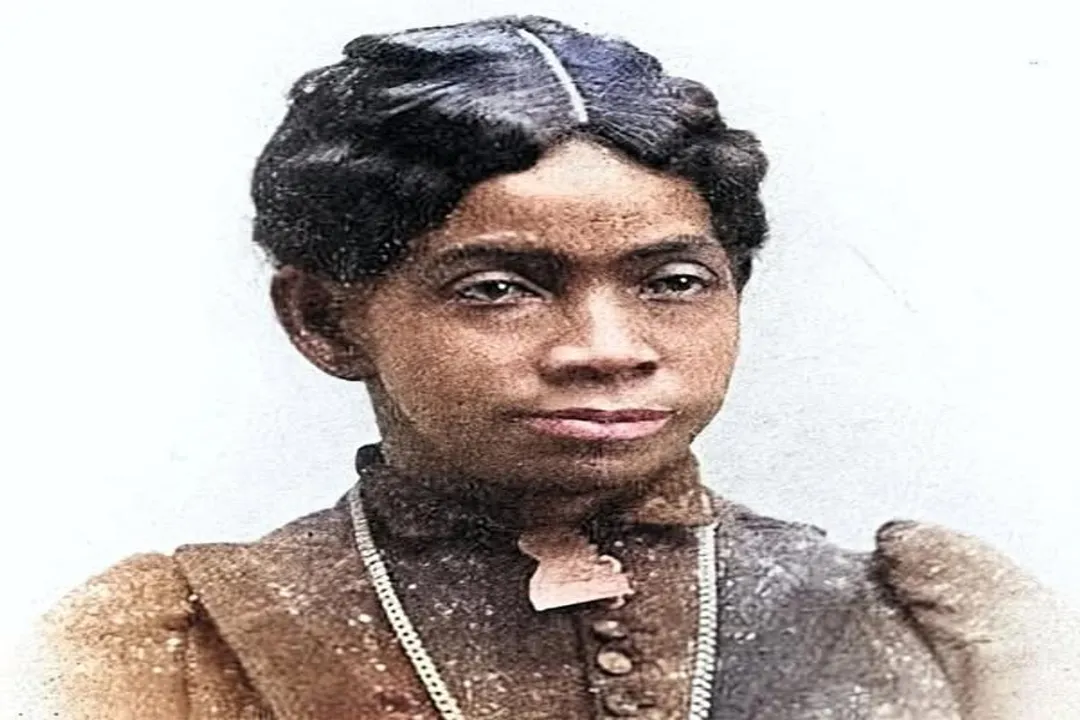
The story of Sarah Boone offers a remarkable look into American ingenuity emerging from profound adversity. Born into slavery around the year 1832, [3][8] her life began under conditions that severely restricted any opportunity for personal or professional advancement. Despite these immense hurdles, Boone went on to become an inventor whose contribution simplified a daily chore for countless individuals, securing her place in the history of American patents. [4]
# Life Context
Details about Boone's early life are scarce, often overshadowed by the constraints of the time. What we do know is that she was born enslaved, likely in Kentucky, though records are imperfect due to the era. [8] After the Civil War and the abolition of slavery, she established herself as a dressmaker. [7] This profession, which requires precision and an understanding of fabric and heat application, set the stage for her later innovation. Working as a dressmaker in the late 19th century meant dealing constantly with garments that needed crisp finishes, a task that was laborious and often frustrating with the tools available.
It is fascinating to consider how an enslaved person, even one who achieved freedom, navigated the legal and financial systems necessary to apply for and secure a patent decades later. This act itself represents an enormous victory over systemic barriers designed to keep Black Americans, especially women, from holding property or receiving recognition for intellectual work. [4]
# Ironing Difficulties
Before Sarah Boone’s intervention, the process of ironing was physically demanding and inefficient. Irons were heavy, heated over stoves, and the surfaces upon which clothing was pressed were often rudimentary or poorly suited for the task. Imagine trying to press the sleeve of a tailored jacket or the intricate pleats of a skirt on a makeshift table or the bare floor—it was a recipe for scorched fabric or wrinkled disaster. [2] The existing solutions lacked proper support and padding, making it exceptionally difficult to achieve the smooth, professional finish demanded by her clientele as a dressmaker. [7]
The primary challenge wasn't just applying heat; it was maintaining a surface that was stable, appropriately padded to absorb heat evenly, and shaped correctly to accommodate complex garment forms. For someone whose livelihood depended on perfect results, the inadequacy of the existing equipment must have been a daily frustration, prompting her to seek a better way to manage this essential domestic and professional task.
# Patent Improvement
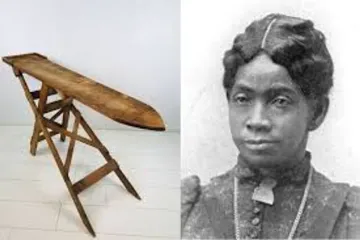
Boone's contribution was not the invention of the ironing board entirely, but rather a significant improvement to the design. [3][4][5] Her focus was on overcoming the existing shortcomings related to usability and efficiency. The resulting patent, officially granted on May 26, 1892, detailed modifications that made the board far more practical. [5]
The core of her improvement involved two key areas: making the board narrower and enhancing the padding. [2][5] A narrower board meant that it could be used more effectively for pressing sleeves, pant legs, and other narrow sections of clothing, which were awkward on wider, older models. The enhanced padding was crucial; it needed to be thicker and better configured to provide a resilient, heat-retaining surface, ensuring that wrinkles were pressed out thoroughly without transferring excessive, direct heat to the wood underneath. [2] This combination of a slimmer profile and superior cushioning effectively streamlined the entire ironing process, making it faster and producing superior results. [3]
It is important to note the patent number: U.S. Patent No. 473,969. While the patent document details the mechanics, the context of her work as a dressmaker suggests she was keenly aware of the needs of the garment industry, not just household chores. Her patent application likely focused on the practical application of these design changes to pressing complex textiles, something a non-seamstress might overlook. The very act of securing this patent firmly established her as an intellectual property holder in a time when such achievements by Black women were exceptionally rare. [4]
| Feature | Pre-Boone Designs (Implied) | Sarah Boone’s Improvement | Benefit |
|---|---|---|---|
| Width | Wider, less versatile | Narrower profile | Easier pressing of sleeves and pant legs [2] |
| Padding | Insufficient or poor | Enhanced and thicker padding | Even heat distribution and better wrinkle removal [2] |
| Function | General purpose | Streamlined for garment work | Increased efficiency and quality of finish [3] |
# Legacy and Recognition
Sarah Boone's patent in 1892 places her among the earliest Black women to successfully obtain a U.S. patent. [4] This achievement stands as a powerful testament to her resourcefulness and determination to innovate within her field. While the board itself was an improvement, the true lasting legacy might be the demonstration of intellectual capacity and the legal recognition she achieved against tremendous odds. [5]
Although the design itself was eventually superseded by newer, collapsible models, its introduction marked a definite step forward in the evolution of ironing equipment, moving the process from makeshift setups to dedicated, purpose-built tools. [2][3] The path she carved through the patent office, despite the social climate of the 1890s, is arguably as significant as the board itself. Her invention, while perhaps not generating personal wealth for her, created an easier working life for subsequent generations of launderers and tailors. Recognizing Sarah Boone's contribution allows us to appreciate the breadth of innovation that occurred across all sectors of society, often hidden from standard historical narratives that focus only on the most widely publicized inventors. Her success underlines that necessity—especially the necessity felt by those in professional trades like dressmaking—truly is the mother of invention.
#Videos
Sarah Boone, a pioneering inventor! - YouTube
Who Invented The Ironing Board? - YouTube
Related Questions
#Citations
Sarah Boone - Biography, Inventor of the Modern-Day Ironing Board
Black History Month #20 - Sarah Boone's Modern Ironing Board
Sarah Boone, born into slavery in 1832, invented an improved ...
NBIM Celebrates Black Innovators - New Britain Industrial Museum
Sarah Boone - Wikipedia
Sarah Boone, a pioneering inventor! - YouTube
TIL about Sarah Boone, a 19th century dressmaker who invented ...
Sarah Boone (1832-1904) - BlackPast.org