Who invented goods-to-person systems?
The idea that inventory should travel to the person rather than the person walking to the inventory—the essence of goods-to-person (G2P) systems—is not a recent phenomenon born out of the age of drones and autonomous mobile robots (AMRs). While the sleek, robotic solutions of today often steal the spotlight, the foundational concept has roots stretching back nearly a century in the world of material handling. Tracing the inventor of G2P is less about finding a single patent filed on a specific date and more about understanding the gradual evolution of logistics thinking, which moved from human-centric searching to process-centric delivery.
# Early Concepts
A significant milestone in G2P thinking occurred roughly a century ago, marking the beginning of automated order picking systems that minimized travel time for workers. This initial phase wasn't characterized by intelligent robots navigating aisles, but rather by mechanical ingenuity focused on efficiency gains within the four walls of a warehouse. The core principle was established: reduce non-value-added travel, which is the largest drain on productivity in manual picking operations.
The historical context of these early systems ties into the broader industrial revolution's continuous drive for mechanization. When inventors developed early automated material transport, they were inherently chipping away at the manual labor required to move goods from storage to a packing or shipping point. Even simple, fixed conveyors designed to bring boxes or totes to a designated workstation represented an early, albeit rudimentary, form of G2P—the goods moved, the person stayed put to perform the value-added task of verification or packing.
Warehouse automation history, in general, shows a steady march toward better density and faster retrieval, with G2P being a major goal within that progression. Early attempts to implement this concept often involved fixed systems, like conveyor belts or early carousels, that delivered stock based on pre-programmed sequences or manual input. The key differentiator that defines G2P is the system's proactive delivery of the required SKU to the picker, overcoming the limitations of paper-based or batch-picking where associates cover vast distances to collect items.
# Mechanization Growth

As the 20th century progressed, the pursuit of G2P evolved alongside advancements in storage technology. The development of automated storage and retrieval systems (AS/RS) represented a significant leap forward, often incorporating G2P logic, even if their primary function was high-density storage. These early AS/RS machines retrieved entire pallets or shelving units and brought them to an operator stationed at an extraction face. This effectively married high-density vertical storage with the G2P principle.
The focus during these decades was heavily on mechanization—using machinery to move heavy loads or access high racks quickly. While AS/RS was effective for bulk storage and full-pallet retrieval, it didn't immediately solve the problem of high-SKU-count, piece-picking operations common in e-commerce and retail distribution, which require access to smaller, individual items. This gap highlighted that G2P needed to adapt its delivery mechanism to match the unitization of the order.
Consider a mid-century distribution center aiming for G2P efficiency. They might have installed sophisticated vertical lift modules (VLMs) or horizontal carousels. In these scenarios, the operator remained at an ergonomically designed pick station. When an order was processed, the VLM or carousel would automatically rotate or lift the correct shelf/tray containing the item and present it to the operator. The invention here wasn't necessarily the G2P system, but the application of existing mechanized retrieval—like a crane or shelf mover—to the specific workflow of order fulfillment.
If we were to quantify the gain from these early mechanical transitions, we might look at the reduction in "walking time." For many operations before true automation, walking and searching could account for 50% to 70% of an associate’s time. Moving from a standard flow rack system to even a basic carousel system could immediately reduce that unproductive travel time to near zero for the items served by the carousel, representing a substantial, immediate productivity jump that justified the capital outlay.

# Modern Breakthroughs
The true paradigm shift in goods-to-person automation arrived with the introduction of flexible, software-driven, and increasingly autonomous systems that could handle high throughput and dense storage simultaneously. This modern era is defined by two major characteristics: high-density storage capabilities and the independence of the delivery mechanism from fixed infrastructure like rails or overhead cranes.
One defining innovation in recent history that popularized modern, dense G2P is the AutoStore system. While not the absolute first robotic G2P system, its unique approach—a grid-based structure where bins are stacked on top of each other, managed by robots moving on top of the grid—dramatically changed what was considered achievable in warehouse density. The robots bring the required bin directly to a picking port, fulfilling the G2P mandate in a highly compact footprint.
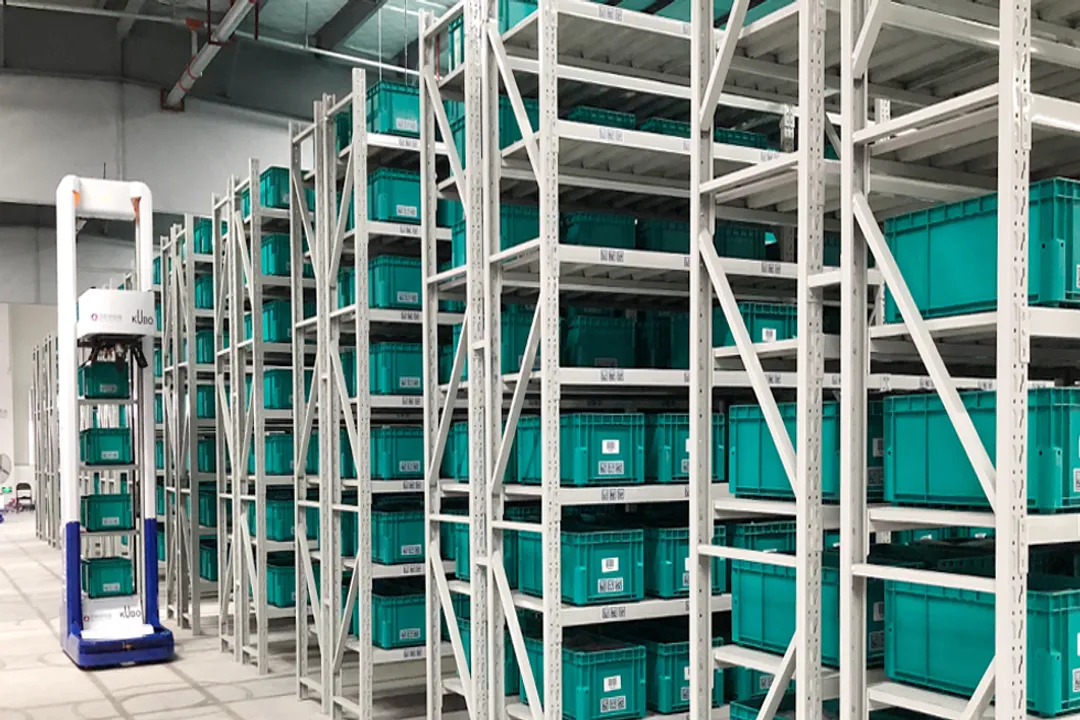
Another crucial development involves the use of Autonomous Mobile Robots (AMRs) specifically designed for G2P tasks. Companies like Invia Robotics focused on deploying fleets of these robots to manage inventory movement. Their approach often involved a swarm of robots capable of adapting to changing order profiles and efficiently moving totes or shelves to human workers at designated picking stations. This contrasts with the fixed nature of older systems, offering scalability and flexibility, a significant step beyond simple mechanical delivery.
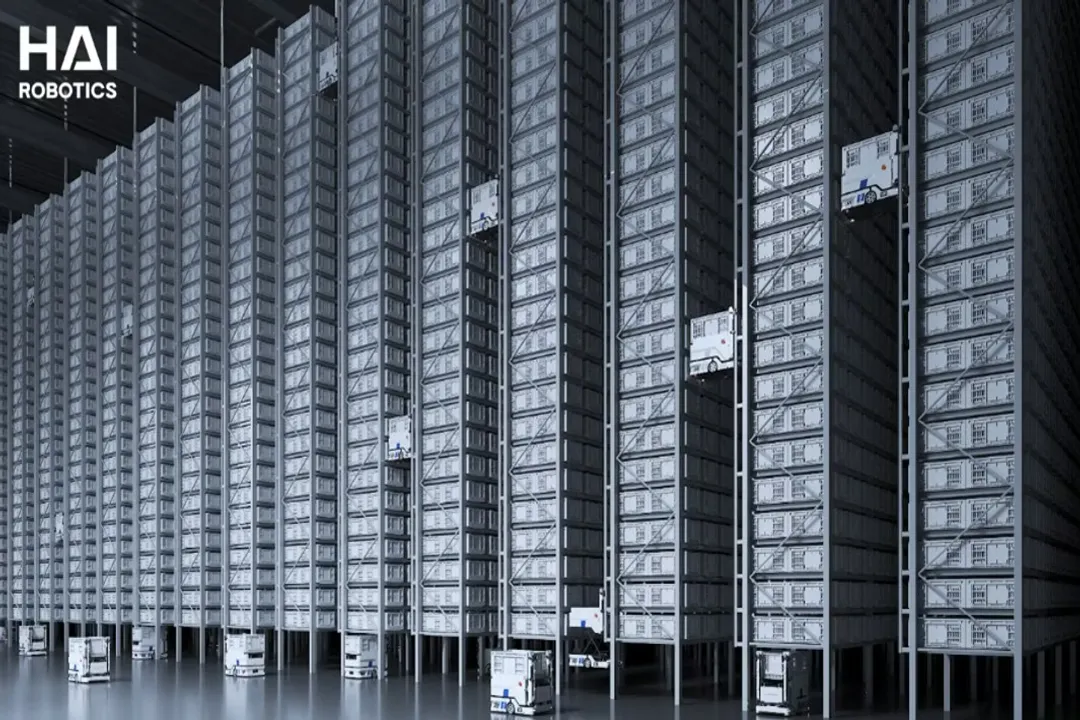
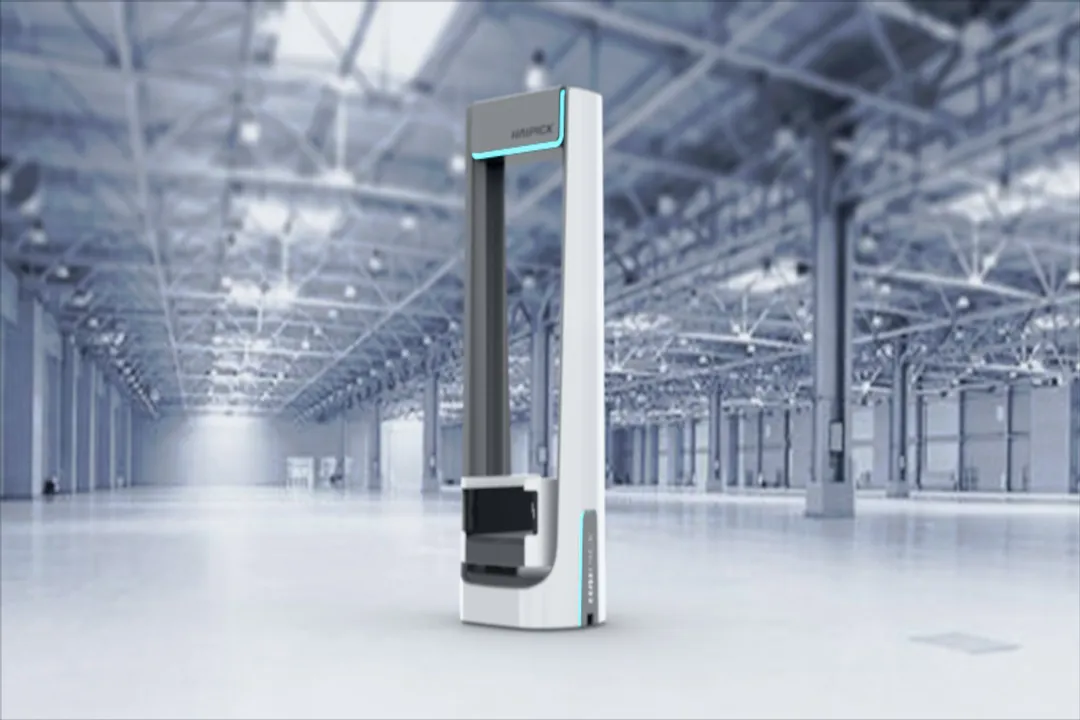
HAI Robotics offers another example of this modern evolution, utilizing intelligent robots that navigate complex environments to retrieve goods and deliver them to stationary workers. These systems leverage advanced software and navigation capabilities to manage inventory storage and retrieval dynamically. The focus here moves from just mechanical transport to intelligent transport, where the system optimizes which item is retrieved and when, often learning from picking patterns to stage popular items closer to the fulfillment ports.
# Delineating Invention Roles
Pinpointing a single inventor is difficult because G2P is an application philosophy realized through varying technologies over time. It is more accurate to see it as a progression of enabling technologies:
- Early Material Handling Engineers (c. 1920s): Invented the basic mechanical means (conveyors, early AS/RS) to move materials to a fixed location.
- Storage System Designers (Mid-20th Century): Adapted mechanical systems like carousels and VLMs to create dedicated G2P workstations for order fulfillment.
- Robotics and Software Developers (21st Century): Created the intelligent, flexible systems (AMRs, cube storage robots) that made G2P viable for high-velocity, piece-picking environments that older fixed systems struggled with.
For instance, if we look at the historical spread of technology like that from the Industrial Revolution, large companies often adopted and scaled inventions developed by smaller entities or individuals, sometimes paying for the license or outright purchasing the rights, leading to rapid deployment rather than a single, isolated inventor receiving perpetual credit. In the modern era, companies like AutoStore or HAI Robotics are credited with specific implementations or refinements of the G2P concept that solve contemporary logistics problems, rather than the invention of the core G2P idea itself.
When assessing these modern solutions, it's worth noting a key difference in system architecture. Older automated systems, like certain AS/RS configurations, stored items in their original shipping containers or on fixed pallets, which is excellent for case-picking but poor for SKU variety. Modern robotic G2P systems, particularly those using bin-stacking grids like AutoStore, often mandate de-palletizing inventory into standardized totes first. This upfront investment in unitization allows the robot system to achieve far greater storage density and item accessibility, which is the trade-off modern operators accept for higher throughput per square foot.

# System Economics
The motivation behind these evolving G2P systems has always been rooted in cost and labor constraints. In an environment where direct labor costs rise, or where finding and retaining warehouse staff becomes difficult, the automation of travel time becomes economically essential.
An interesting point to consider when evaluating the economics of historical versus modern G2P is the Cost Per Putaway vs. Cost Per Pick. Early mechanical systems might have a very high initial capital expenditure (CapEx) but a relatively low variable cost per pick once operational, because they are fixed assets. Modern AMR-based systems can have a lower initial CapEx (as they are often modular and scalable) but carry a higher ongoing operational cost related to software licenses, robot maintenance, and battery management. A firm deciding on automation must weigh whether they are optimizing for upfront cost, total cost of ownership over ten years, or speed of deployment.
| System Type | Primary Era | Key G2P Mechanism | Flexibility | Typical Density Improvement Over Shelving |
|---|---|---|---|---|
| Conveyors/Early AS/RS | Pre-1980s | Fixed mechanical retrieval of pallets/cases | Low | Moderate (Vertical Space Use) |
| Carousels/VLMs | 1980s–2000s | Automated shelf presentation to fixed station | Medium | High (Footprint Reduction) |
| Modern Robotics (AMR/Grid) | 2010s–Present | Autonomous robots deliver bins/totes to dynamic ports | High | Very High (Cubic Space Optimization) |
This table highlights that the definition of who invented G2P changes depending on the technology used to deliver it. The inventor of the modern AMR-driven G2P is not the same as the inventor of the automated carousel.
# G2P's Role in Modern Fulfillment
Today, G2P systems are no longer a luxury for massive distribution centers; they are becoming a necessity for companies dealing with the complexity of e-commerce fulfillment, which demands more SKUs, faster turnaround, and often smaller order profiles. The ability of a system to present the correct item directly to the picker, often accompanied by visual or light-directed confirmation, dramatically reduces errors compared to associates navigating complex warehouse layouts based on paper or handheld scanners.
The trend toward robot-managed inventory means that storage itself becomes an active, retrieval-optimized process rather than a passive holding area. Companies like Invia Robotics have focused on making the fleet management software sophisticated enough to handle the ebb and flow of demand, ensuring that the G2P promise—that the right item arrives at the right time—is met even during peak surges. This software layer is arguably as much an invention in the G2P history as any piece of hardware, enabling the physical movement to be truly effective.
The continued refinement of these systems reflects an ongoing expertise in optimizing human-machine interaction. The best G2P setups do not try to replace the human entirely but rather isolate the human to the most value-added tasks: identification, verification, and packing. The machinery handles the searching and moving. This division of labor, which is the functional definition of G2P, is what has persisted for the last hundred years, regardless of whether the goods arrived via a simple belt or an intelligent robot. The true breakthrough wasn't a single machine, but the persistent, focused effort to remove the distance between the required inventory and the required action.
Related Questions
#Citations
Unveiling the Evolution of Goods-to-Person - Numina Group
The Innovation of inVia's Goods-to-Person Automation
Goods to Person: Order Picking 100 Years Since It Was Invented
A Brief History of Warehouse Automation with Pio
A Look at Autostore Goods to Person Automation - MWPVL
Redefining Goods to Person: What HaiPick has Changed Since 2015?
Goods-to-Person Order Fulfillment | Item Picking - Bastian Solutions
The Many Benefits of Goods-to-Person Automation - Raymond West
When someone invented something during the industrial revolution ...
Hai Robotics' Goods-to-Person System to Revolutionize Warehouse ...