Who invented the knot system?
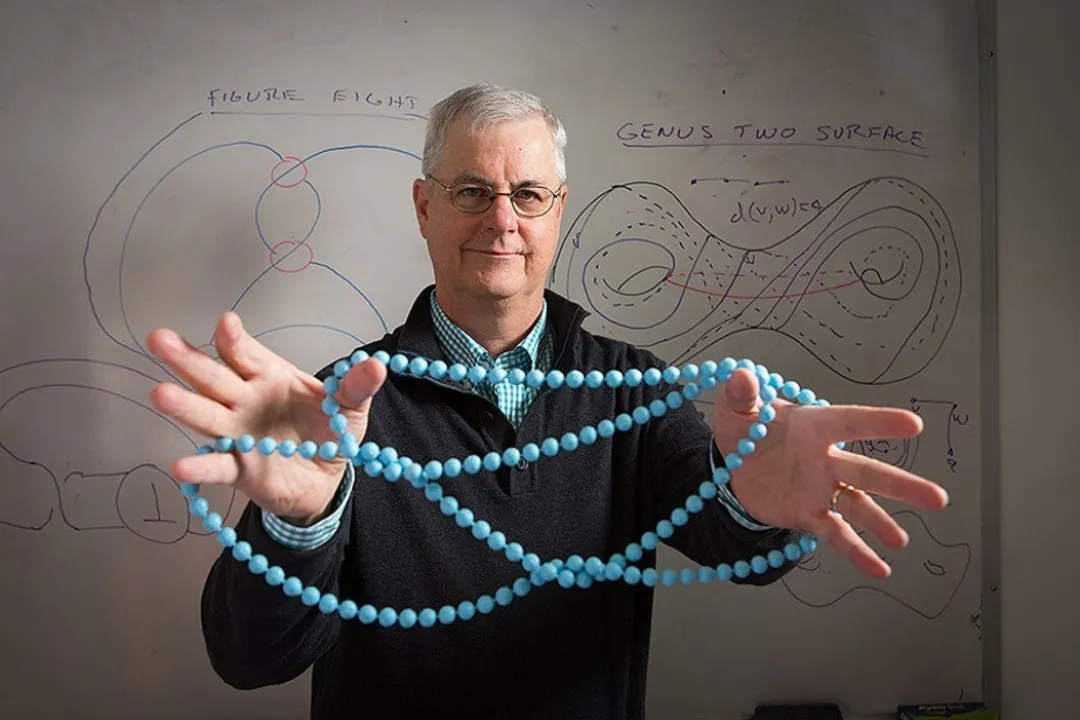
The origin of the knot system isn't attributable to a single person in a specific moment; rather, it is the culmination of millennia of human necessity meeting 19th-century mathematical curiosity. While humans have been tying knots for practical purposes—for fastening, securing, signaling, or decoration—since prehistory, the formal, analytical system we now call knot theory emerged much later as a branch of topology. [1][6] The transition from a functional craft to a field of abstract mathematics is what distinguishes the invention of the "knot system" from the simple act of tying a knot.
# Practical Binding

Long before mathematicians codified the rules of crossing strings, knots served essential roles in daily life and symbolic representation across nearly every culture worldwide. [1] From maritime rigging to decorative Celtic artwork, the ability to tie, hold, and release a secure connection was critical for survival and expression. [1] Though various cultures developed highly specialized and complex knot forms, these traditions focused on utility or aesthetics, not on the fundamental mathematical properties of how a loop closes upon itself. [7] The inherent complexity of even simple knots meant that early practitioners developed immense experiential knowledge, but this knowledge was rarely documented or categorized in a way that isolated the mathematical structure from the material used (like rope or fiber).
# Nineteenth Century
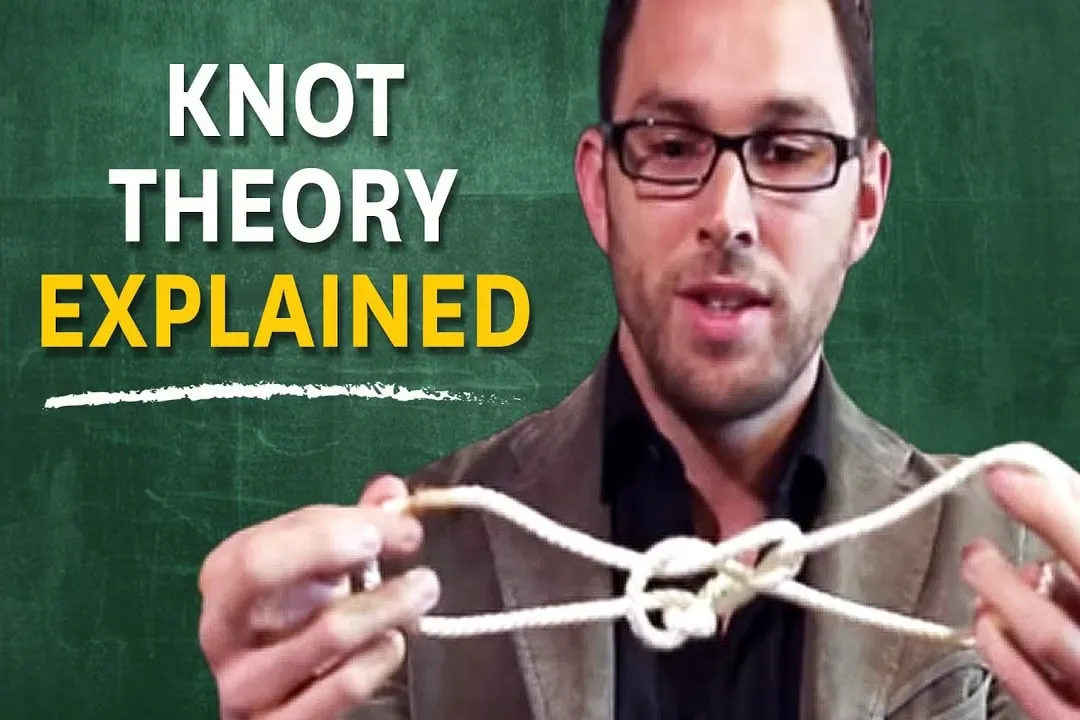
The shift toward a formal, scientific study of knots began in the mid-1800s, making the mid-to-late 1800s the true birthplace of the modern knot system. [1][5] This mathematical endeavor was pioneered largely by Lord Kelvin (William Thomson) and Peter Guthrie Tait. [1][2][5] Their initial motivation was deeply connected to the prevailing scientific thought of the era regarding atomic structure. [5]
Kelvin and Tait were exploring the vortex theory of atoms, which hypothesized that atoms were stable, knotted whirls in the structure of the luminiferous aether (the supposed medium filling all space). [1][5] If this theory held, then every chemical element should correspond to a specific type of knot or link. [5] To test this, they embarked on the Herculean task of cataloging every possible knot configuration. [1] They built physical models of these knots, essentially creating the first comprehensive knot tables. This desire to classify all possible configurations forced them to define precisely what made one knot different from another—the crucial step in establishing the field. [5]
While Thomson and Tait led the charge, others contributed foundational groundwork. Carl Friedrich Gauss and Johann Benedict Listing were instrumental in the early development of the underlying topology that would later support knot theory. [1] Listing, in particular, is noted for his early work on the geometric study of curves and linkages. [1]
The key challenge they faced was distinguishing between two knots that might look different when drawn but were actually equivalent—meaning one could be manipulated into the other without cutting the string. This is the core problem of knot theory: establishing invariants that remain constant regardless of stretching, twisting, or moving the knot in space. [2][6]
The initial vortex model, while inspiring great mathematical progress, ultimately failed to explain chemistry adequately, leading to the abandonment of the physical theory. [5] However, the classification effort they initiated proved mathematically fruitful, allowing knot theory to transition from a tool for failed physics into a pure discipline within mathematics. [1][5] This transition—where a flawed physical model unexpectedly births a powerful abstract field—is a recurrent theme in scientific history, demonstrating that the effort to categorize nature often yields more powerful abstract tools than the immediate answers sought.

# Topological View

The formal mathematical system moved away from physical rope and toward abstract diagrams, solidifying its place in topology. [2][6] Topology is the study of geometric properties that remain unchanged under continuous deformation, like bending or stretching, without tearing or gluing. [3][6] In knot theory, this means that if you can transform one knot diagram into another through a series of allowed movements (known as Reidemeister moves), the two diagrams represent the same mathematical knot. [3]
The primary goal of the modern system is to find robust invariants—mathematical descriptors that are the same for all equivalent knots but different for non-equivalent knots. [2] Early invariants included simple measurements, but these proved insufficient. For instance, the crossing number (the minimum number of crossings in any diagram of the knot) is an invariant, but it is difficult to calculate for complex knots. [3]
Here is a simple comparison of the focus:
| System Component | Practical Knot Tying | Mathematical Knot Theory |
|---|---|---|
| Goal | Security, decoration, function | Classification, identifying invariants |
| Material | Rope, cord, fiber | Mathematical curves or diagrams |
| Key Operation | Tying and releasing | Continuous deformation (Reidemeister moves) |
| Success Metric | Does it hold under load? | Does it have a unique polynomial? |
The development of powerful polynomial invariants, like the Jones polynomial introduced in the 1980s, marked a significant leap forward, offering tools far superior to the early classification attempts made by Thomson and Tait. [4][2] These polynomials provide a concise signature for a knot, making comparisons much more effective than relying on physical models. [4]
# Physics Connection
The significance of the mathematical knot system was profoundly reinforced when it was discovered to have deep connections to modern theoretical physics, particularly quantum field theory. [2][4] This connection was dramatically highlighted by the work of physicist Edward Witten in the 1980s. [2]
Witten demonstrated that certain quantum field theories were intimately related to the topological invariants of knots, such as the Jones polynomial. [2] This finding provided physicists with new mathematical tools to study quantum gravity and particle physics, while simultaneously confirming the deep, unexpected relevance of the abstract mathematical system established a century earlier. [2] Modern researchers continue this interdisciplinary work, such as those investigating how the mathematics of knots applies to understanding DNA structure or the behavior of polymers. [4] The initial quest by Thomson and Tait to understand the physical structure of matter indirectly led to a mathematical framework that is now essential for understanding the quantum universe. The 'inventor' is thus not one person, but a progression from ancient craft to Victorian physics and finally to modern abstract topology.
Related Questions
#Citations
History of knot theory - Wikipedia
Knots and Quantum Theory | Ideas - Institute for Advanced Study
Knot Theory: History and Use in Mathematics - OMC Math Blog
You've heard of string theory. What about knot theory? - UBNow
[PDF] The history of Knot Theory - UCLA Department of Mathematics
Knot theory | Mathematics & Topology | Britannica
Not sure if this is common knowledge, but I've never heard that the ...
Knot Theory: Origins - LinkedIn
Knot a Problem - USC Dornsife