Who invented design systems?

The genesis of the design system is not a tale of a single "Eureka!" moment, nor can a lone inventor be credited with its creation. Instead, the modern design system is the product of decades of evolution, representing the convergence of industrial design principles, mass production necessities, and the increasing complexity of digital interfaces. To understand who "invented" them, one must look at the historical currents that made them inevitable, from early twentieth-century aesthetic movements to the demands of scaling software development teams.
# Design Lineage

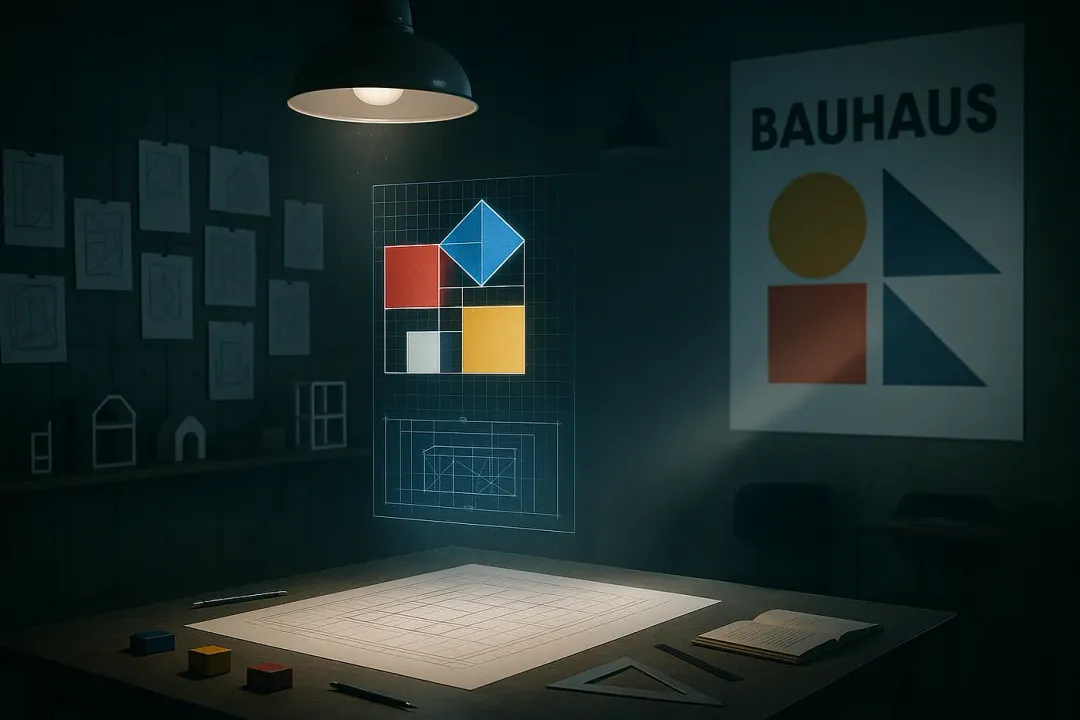
Long before the term "design system" was common vernacular in the tech world, designers and manufacturers grappled with the need for standardized visual language and production efficiency. The foundational concepts trace back to early 20th-century movements like the Bauhaus school in Germany. The Bauhaus sought a unified approach to art, craft, and technology, emphasizing functionalism and standardization in design output. This philosophy promoted the idea that design elements should be systematically reproducible while maintaining aesthetic coherence—a direct precursor to the modern system's goals.
This drive for standardization didn't stop at architecture or physical products. As interface design began to emerge with the advent of computing, the same challenges of consistency and efficiency surfaced, albeit in a new medium. Early digital interfaces often developed organically, leading to significant visual and functional divergence across applications within the same company. This early state was often characterized by a "Wild West" approach where designers and developers, working in silos, independently recreated common elements like buttons or form fields.
# Early Consistency Efforts

The move towards codified design practices began taking shape within large organizations that recognized the cost and usability issues arising from this fragmentation. Companies dealing with massive amounts of documentation or complex software environments were among the first to establish internal style guides or pattern libraries. These early collections served as a reference point for approved elements, colors, and typography, aiming to ensure a baseline level of visual unity across their products.
These initial efforts were often documentation-heavy—think of them as massive, static specification binders. They contained rules and examples but lacked the componentized, code-backed nature that defines today's systems. While crucial in establishing the idea of shared visual language, they lacked the inherent connection to the actual product code that allows for true scalability. This phase was about documenting what to build; the next phase would focus on how to build it repeatedly and reliably.
The context of this era is important: as web platforms matured and application complexity grew, relying on tribal knowledge or manually checking screens against a static guide became untenable. Designers needed a shared source of truth that developers could directly consume, moving the practice from documentation to development tooling.

# Conceptual Milestones
While many companies were independently developing internal pattern libraries, the concept gained academic and industry-wide recognition through specific methodologies that provided a clear mental model for componentization. One of the most influential moments in defining the modern approach came from Brad Frost.
Frost popularized the methodology of Atomic Design, which provided a crucial conceptual structure for organizing the pieces that make up a user interface. This methodology systematically breaks down an interface into five distinct stages:
- Atoms: The basic HTML tags or fundamental styles (e.g., a color variable, a font definition).
- Molecules: Simple groups of atoms functioning as a unit (e.g., a search form composed of a label atom, an input atom, and a button atom).
- Organisms: More complex UI components formed by combining molecules and/or atoms (e.g., a full site header).
- Templates: Page-level objects that place organisms into a layout, focusing on the underlying content structure.
- Pages: Specific instances of templates with real, representative content applied.
Frost's contribution, articulated clearly in his work, shifted the focus from designing static pages to designing the underlying, reusable systems that build those pages. This conceptual leap—moving from output-focused design to input-focused design—is often cited as the moment the modern design system truly crystalized its identity. It provided a vocabulary that allowed designers, developers, and product managers to speak the same language about component composition.
# The Rise of Systemic Design
Following the popularization of concepts like Atomic Design, major technology companies began formalizing and scaling their internal efforts, often taking the generic concept and applying it to their vast product ecosystems. These efforts often looked like a combination of a visual style guide, a component library, and design documentation—the essential triad of what we now call a design system.
A design system, in its complete form, is more than just a set of UI components; it is the combination of principles, documentation, and assets that guide the creation of a product or suite of products. Key organizational adopters, such as Google with Material Design, demonstrated the immense power of this approach at scale. These large-scale systems established guidelines not just for visual appearance but also for motion, accessibility, and interaction patterns.
It is worth noting that while Brad Frost provided the structural concept, organizations like IBM and large web platforms were concurrently creating and refining the practice in real-world, high-stakes environments. The invention, therefore, isn't attributable to one person, but rather a collaborative process where influential thinkers codified existing best practices, and large corporate engines demonstrated their power through rigorous, real-world application.
An Analytical Pause: Why Systems Exploded in the Mid-2010s
If the underlying ideas existed for decades, why did the term "design system" become ubiquitous around the mid-2010s? The answer lies in the scaling challenges faced by digital product development teams.
Consider a mid-sized SaaS company in 2008. They might have had one web application with two development teams. By 2016, that same company often runs three distinct web properties, a mobile app, and is managing five parallel feature teams [this is an illustrative example derived from the general trend of increasing digital footprint mentioned across sources]. When every team is solving the same basic UI problem—"How do we build a form input?"—independently, the cost escalates rapidly. You end up with:
| Metric | Inconsistent Approach (Pre-System) | Systemic Approach (Post-System) |
|---|---|---|
| Time to New Feature | High (Design review, Dev build, QA check for every new button style) | Low (Components are pre-approved, tested, and versioned) |
| Codebase Size | Bloated (Multiple CSS/JS implementations of the same component) | Optimized (Single source of truth for UI components) |
| User Trust | Variable (Inconsistent UX causes friction) | High (Predictable, unified experience builds confidence) |
The technology for sharing code and documentation—improved tooling for version control, better front-end frameworks, and centralized asset management—matured precisely when business needs demanded this level of rigor. Therefore, the "invention" wasn't just the idea of consistency, but the technical capability to enforce it at the scale required by modern software businesses.

# Distinguishing Components from Systems
A common point of confusion stems from mixing up the artifact (the component library) with the process (the design system). A collection of reusable UI components is certainly part of a design system, but the system itself encompasses much more.
A component library primarily addresses the "what" and "how" of building specific visual elements, usually documented in code and design files. A true design system must include the philosophical layer:
- Principles: The core values that drive design decisions (e.g., "Clarity over cleverness").
- Guidelines: Rules governing usage, accessibility standards, and motion specifications.
- Governance: The processes for contributing back to the system and managing version updates.
Without these surrounding elements, a component library risks becoming just another siloed set of code that teams eventually stop trusting or updating correctly. The system acts as the organizational structure around the components, ensuring they evolve alongside the product strategy.
# Practical Implications for Adopters
Understanding this history—from Bauhaus standardization to Atomic structure to large-scale corporate deployment—offers practical lessons for any organization today looking to adopt or build such a structure.
One significant takeaway is that starting with the goal of building a "system" can be paralyzing. The sources clearly show that systems evolve from existing needs rather than appearing fully formed.
Here is a simple, historically informed approach to initiation:
- Identify Pain: Pinpoint the most commonly recreated, inconsistent, or time-consuming element across your current projects. This is often navigation, buttons, or form inputs.
- Codify the Atom/Molecule: Start by creating the most basic, shared, and functional version of that element, ensuring it has strong design documentation and working code.
- Establish Governance Early: Before writing the second component, agree on how a team suggests an update, how it gets reviewed, and when it ships. This operationalizes the "system" aspect. If governance is missing, you are just creating a static library that will eventually rot.
- Design for Content: As you build templates and pages, ensure the system is tested against real product content, not just placeholder lorem ipsum. The structure must bend to content, not the other way around.
This iterative approach—starting small with high-value components and building the organizational muscle (governance) concurrently—reflects the organic growth seen in successful historical examples. It respects the reality that the "inventors" weren't designing for an abstract future, but solving immediate scaling headaches for their respective products.

# Defining the Modern Concept
Today, a design system is widely understood as the single source of truth for design and front-end development, ensuring consistency and accelerating delivery. It formalizes the relationships between design artifacts (like components and patterns) and the code that implements them.
The purpose, as articulated by modern proponents, is not simply to make things look the same; it’s about designing the environment so that great design is the default outcome. When designers and developers adhere to the system's building blocks, the resulting product is inherently more accessible, consistent, and scalable. While we cannot name a singular inventor, we can certainly credit Brad Frost for providing the widely adopted Atomic Design blueprint, and acknowledge the pioneering work of early adopters who built the first usable pattern libraries in response to the growing complexity of the digital landscape. The true "invention" of the design system is less about a single person and more about the industry reaching a necessary level of maturity in its approach to digital creation.
Related Questions
#Citations
A Brief History of Design Systems. Part 1 - UX Magazine
The Evolution of Design Systems: From Bauhaus to the Digital Era
Design system - Wikipedia
A History of Design Systems on the Web
A History of Design Systems - Rune Madsen
A Brief History of Design Systems, Part 2 | by Jim Gulsen - Medium
What Is a Design System | Design Systems 101 | Figma Blog
Brad Frost's Atomic Design: build systems, not pages
What is a Design System? And why chaos awaits us without it?
The History of Design Thinking | IxDF