Who invented the car, Ford or Benz?
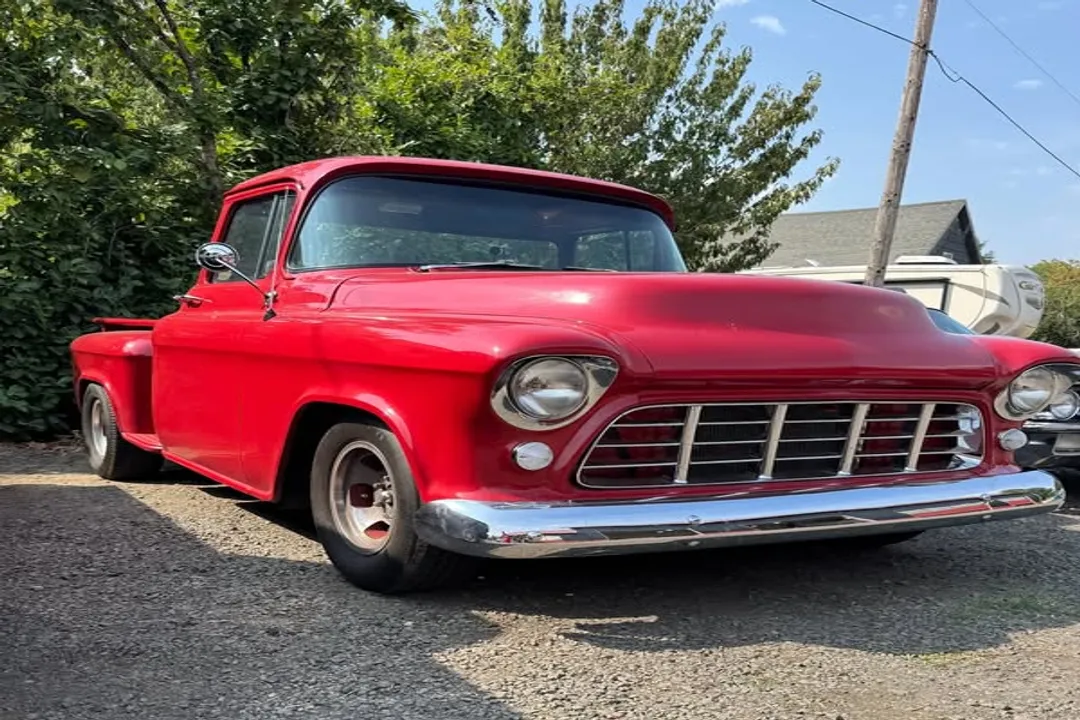
The simple, definitive answer to who invented the car—Ford or Benz—is frequently muddied by history, marketing, and the very definition of "automobile." While many associate the car's genesis with Henry Ford, a deeper look into automotive history reveals that the title of inventor belongs elsewhere. Ford’s immense contribution lies not in conceiving the self-propelled vehicle, but in making it a reality for the masses. [3][4][8] The individual who secured the patent for the first true gasoline-powered automobile was Karl Benz. [2][3]
# Benz's Patent
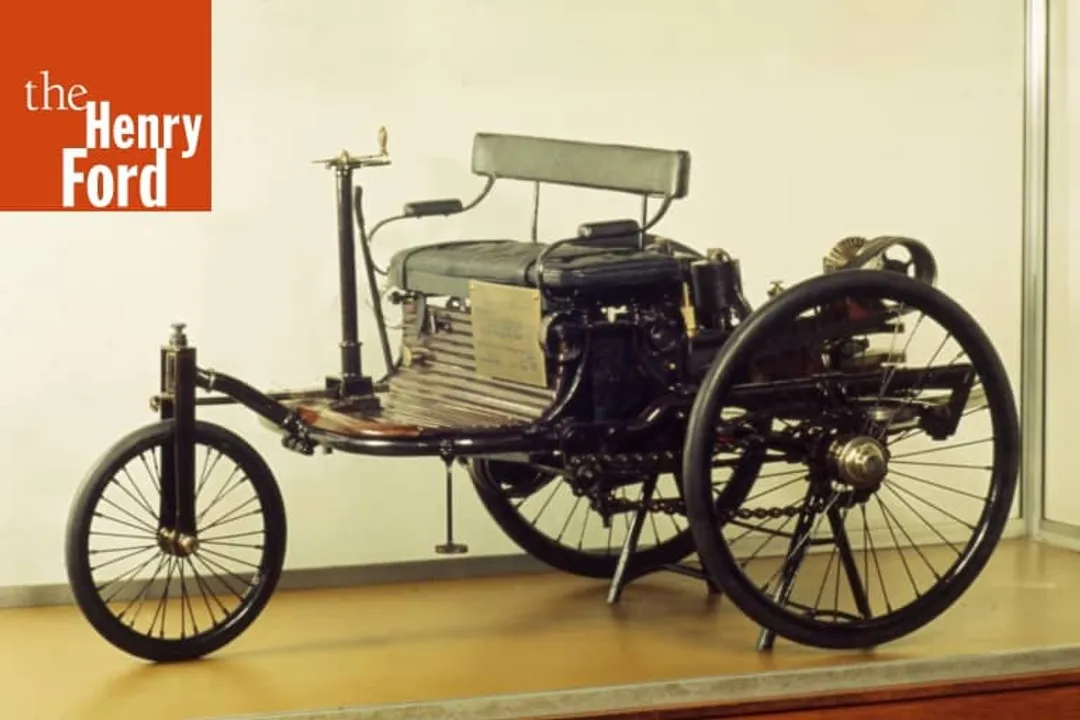
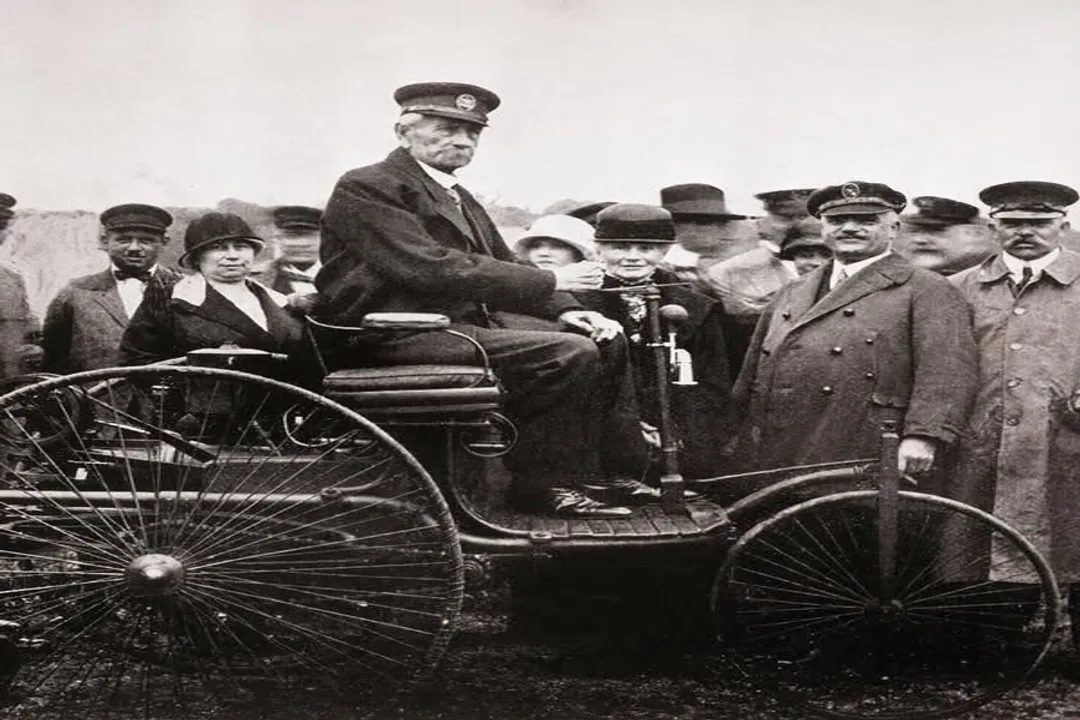
Karl Benz, a German engineer, is widely credited as the inventor of the first practical automobile powered by an internal combustion engine. [2][3] In 1886, Benz patented his Benz Patent-Motorwagen, a three-wheeled vehicle designed from the ground up to be motorized. [2] This creation wasn't merely an engine attached to an existing carriage; it was an integrated system, making it the first gasoline automobile intended for personal transport. [2] Benz’s patent filing, dated January 29, 1886, marks a critical, singular moment in transportation history. [2]
The Patent-Motorwagen itself was a distinctive machine. It featured a purpose-built four-stroke engine mounted horizontally at the rear. [2] It had three wheels, a steering system utilizing a rotating disc, and a differential gear for turning corners. [2] While the vehicle’s top speed was modest—around 10 mph—it proved that personal, engine-driven transportation was feasible. [2]
# Early Motion
To fully appreciate Benz’s breakthrough, one must recognize that the idea of self-propelled vehicles predates 1886 by decades. [2][10] The road to the modern car was paved by numerous inventors working on different power sources. Steam power was a contender early on, with vehicles like Nicolas-Joseph Cugnot’s fardier à vapeur appearing in the 1770s. [2] Furthermore, by the late 1800s, electric vehicles were already operating in urban centers. [2][10] Even before Benz, inventors like Siegfried Marcus created early, less practical motorized vehicles in Austria, though Benz’s 1886 design is recognized for its comprehensive, patented design. [2]
The critical distinction that gives Benz his inventor status is his focus on the gasoline internal combustion engine as the primary, practical power source for a light vehicle intended for general use. [2][10] This put him ahead of the curve in a rapidly developing field. [2]

# Ford's Industry
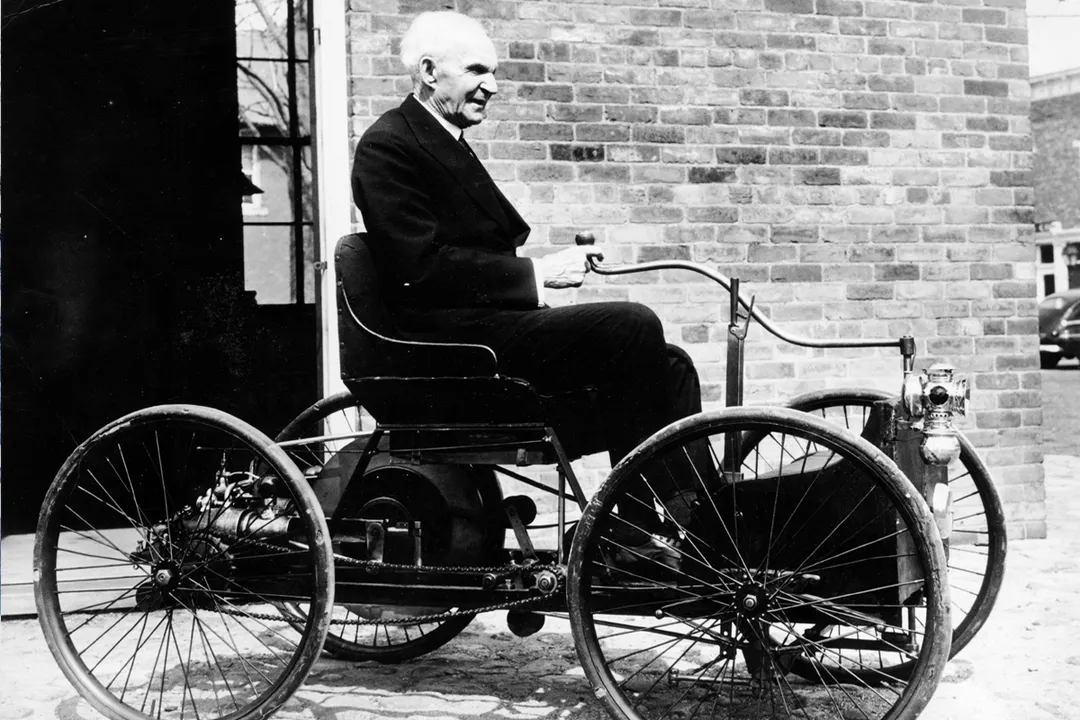
Henry Ford, an American industrialist, did not invent the automobile itself. [3][8] Ford’s entry into the automotive world came years after Benz’s success, with the founding of the Ford Motor Company in 1903. [5] By this time, numerous automobile manufacturers existed, producing expensive, hand-built vehicles primarily for the wealthy. [4][8]
Ford’s genius was not mechanical invention, but process invention. [3][8] His objective was not just to build cars, but to build them so cheaply that the average worker could afford one. [5][7] This ambition led to the development and refinement of the moving assembly line. [3][5]
The introduction of the mass production techniques for the Model T starting around 1908 fundamentally changed the industry. [5] While the Model T was not the first mass-produced car—Ransom E. Olds pioneered some early assembly methods—Ford’s continuous, moving assembly line was the game-changer. [2][8] This system drastically cut the time needed to assemble a car, bringing the price down from around \850 to less than \300 within a decade. [5] The impact on American society was profound, shifting the car from a luxury item into a necessity for suburban life. [4][5]
# Contrasting Roles
The difference between the two men can be summarized as invention versus democratization. Benz created the blueprint for the gasoline-powered car; Ford created the system to distribute that blueprint widely. [3][8]
| Contributor | Primary Achievement | Key Date/Vehicle | Impact on Automotive History |
|---|---|---|---|
| Karl Benz | Invented the first practical, patented gasoline automobile. [2][3] | 1886, Patent-Motorwagen [2] | Established the basic mechanical concept of the modern car. |
| Henry Ford | Perfected the moving assembly line for mass production. [3][5] | 1908, Model T [5] | Made the automobile affordable and accessible to the middle class. |
If Benz provided the what, Ford provided the how of making it commonplace. [3] It is important to note that Ford’s initial vehicles, like the Model A and N, were iterative improvements on existing designs, not revolutionary inventions in the way the Patent-Motorwagen was. [8] Henry Ford even acknowledged that he did not invent the automobile, stating that the first vehicle was developed by Benz. [4]
# American Perception
The common attribution of "inventor" to Ford often stems from the vehicle's massive cultural and economic impact within the United States. [4][9] In many American historical narratives, especially those focusing on industrial dominance and the rise of the middle class, Ford’s achievements in manufacturing efficiency overshadow the earlier, more fundamental European engineering breakthroughs. [4] Ford’s narrative is one of self-made success and industrial scale that fundamentally reshaped the landscape of the 20th century, making his name inseparable from the machine itself. [5][7]
One insightful way to view this historical credit discrepancy is through the lens of product versus process. Benz invented a novel product—a working, patentable, self-propelled vehicle. Ford, however, invented a novel process—a method of manufacturing so efficient it created a new economic reality. In the public consciousness, the entity that changes daily life often eclipses the one that created the initial concept, particularly when that change involves affordability and widespread adoption. Benz created a technological marvel for the wealthy; Ford created the engine of modern suburbia. [5]
Another key observation relates to documentation and presentation. While Benz patented his invention, it was the early American automakers, with their focus on rapid commercialization and later, Ford's legendary efficiency, that captured the world’s imagination through sheer volume of production and availability. For instance, while the Library of Congress acknowledges Benz’s pioneering step, the sheer volume of historical documentation and museum focus surrounding Ford’s assembly line often gives the appearance of him being the sole originator, simply because the scale of his operation was so much larger and more visible globally by the 1920s. [10] It becomes a case where scale often reads as origin in popular history. [4]
# Lasting Contributions
Karl Benz is rightfully recognized by historians and automotive experts as the inventor of the first practical gasoline automobile. [2][3] His work laid the essential technological foundation. [2] His commitment to gasoline power provided the path that nearly all subsequent passenger vehicles would follow.
Henry Ford, on the other hand, secured his place by democratizing the machine. He took an expensive curiosity and transformed it into an accessible commodity, fundamentally altering urban planning, labor practices, and personal freedom. [5][7] It is this societal transformation, enabled by the moving assembly line, that solidifies his legacy in the public eye as the automotive figure, even if he wasn't the first to put an engine on wheels. [3][8] The car’s history requires acknowledging both men: Benz for the spark of the idea, and Ford for igniting the fire that consumed the world. [2][3]
Related Questions
#Citations
Working Model of First Automobile Built by Karl Benz, Presented to ...
History of the automobile - Wikipedia
Why is Henry Ford thought of as the inventor of the automobile when ...
Why is Carl Benz commonly believed to have invented the car?
Ford (1863) - Energy Kids - EIA
First American car made by Ford, obviously - Facebook
Henry Ford - American Inventors
Did Henry Ford invent the car? - Auto | HowStuffWorks
Who invented the automobile? - The Library of Congress