Who invented the car silencer?
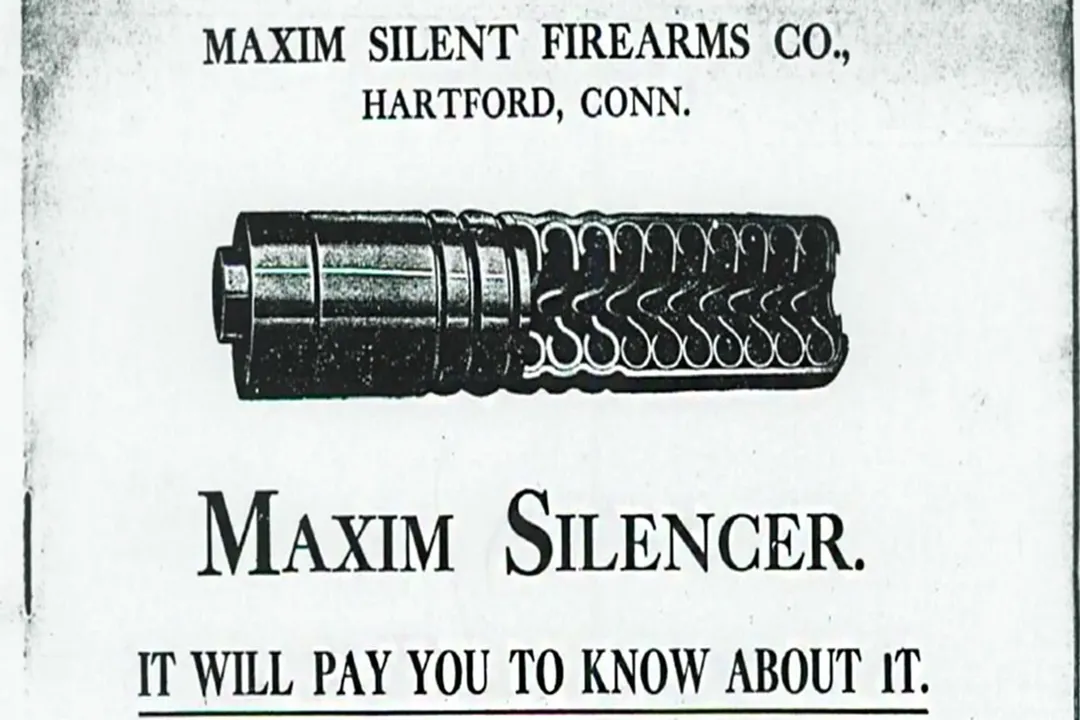
The individual credited with inventing the first commercially successful sound-dampening device later applied to firearms—and who developed parallel technology for vehicles—is Hiram Percy Maxim. While the modern-day component in an automobile is universally known as a muffler, its conceptual ancestor, and in some parts of the world its namesake, stems directly from Maxim's early 20th-century work to quiet loud machinery.
Maxim was a man born into the world of explosive mechanics, being the son of Sir Hiram Stevens Maxim, the inventor of the first portable, fully automatic machine gun. This lineage placed him at the center of loud, powerful engineering innovations. An alumnus of the Massachusetts Institute of Technology, graduating in mechanical engineering in 1886, Maxim nonetheless harbored a deep aversion to the harshness of early motorized transport. When he encountered the early internal combustion engines, he found them decidedly unrefined. He described the experience as witnessing an engine that "shook and trembled and rattled and clattered, spat oil, fire, smoke, and smell," deeming it revolting to someone accustomed to the "fine elegance and perfection of fine horse carriages". This profound distaste for noise and disorder in mechanized systems clearly set the trajectory for his most famous inventions.
# Firearm Precedent
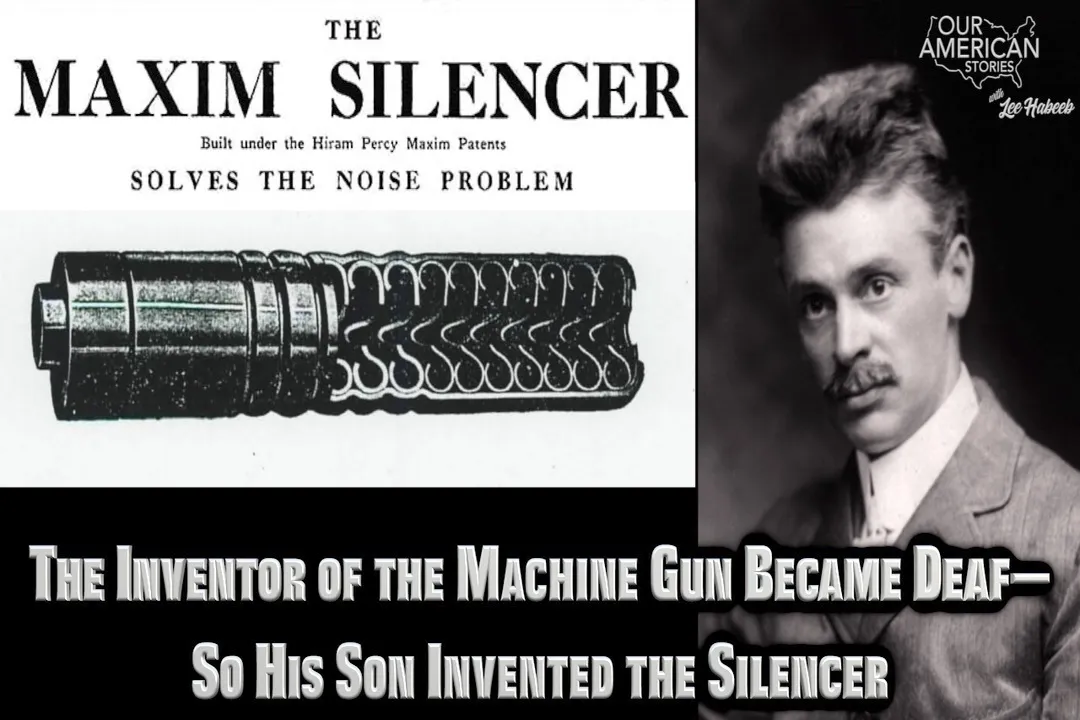
Maxim’s focused efforts on noise reduction began in earnest around 1902. For several years, between 1902 and 1909, he dedicated a significant portion of his time to inventing, building, marketing, and selling devices intended to quiet firearms. He successfully commercialized the first iteration of this technology, which he trademarked simply as the Maxim Silencer. The device was straightforward enough in concept that it was widely advertised in sporting goods magazines and could be purchased directly from hardware stores for less than five dollars per unit.
The core principle behind the firearm silencer—or suppressor, as it is often termed scientifically today—is managing the rapid expansion of high-pressure gas exiting the barrel. Maxim's design utilized a series of internal chambers or baffles to contain the gas pulse, allowing it to cool and expand gradually before it was released into the atmosphere, thereby significantly reducing the report. It is important to note that even in its original iteration, the product did not achieve literal silence; it reduced the noise to a level that could prevent permanent hearing damage, but it could not eliminate every noise component of the discharge event.
# Engine Noise Parallel
It is precisely this principle of controlled gas expansion that provided the direct technical bridge to the car silencer. While working on quieting guns, Maxim was simultaneously developing mufflers for internal combustion engines in the early 20th century, applying many of the same noise reduction techniques to the exhaust systems of automobiles. The violence of an engine’s combustion cycle, as the spent gases are forcefully expelled through a small opening, mirrors the explosive nature of a gunshot from a noise perspective. The engineering solution—using chambers to diffuse and expand the gas wave—was transferable.
This dual focus explains why the term "silencer" became so deeply ingrained in automotive terminology. In many English-speaking regions, the device designed to quiet an automobile's exhaust is still referred to as a silencer. Maxim's pursuit of a quieter world didn't stop at the sporting goods counter; he founded his own company, Maxim Silencers, Inc., in 1912, which focused not only on the firearm accessories but also grew into a leader in exhaust, heat recovery, and emissions control silencers for engines.
The transfer of technology from weapon to vehicle is a fascinating study in applied acoustics. The basic physics dictate that any mechanism handling a high-velocity, high-pressure pulse—whether from a single detonation or a rapid succession of them—must provide an expansion volume for the gas to decelerate. Maxim’s genius was recognizing that the chambers necessary to tame the muzzle blast of a rifle were fundamentally analogous to the chambers required to temper the sharp pressure wave exiting an engine manifold. Where early automotive designers might have simply used a larger pipe, Maxim introduced the concept of engineered diffusion into the muffler's design, a concept born directly from his firearm work.
# Dueling Fates of Quiet Technology
The trajectory of Maxim’s two primary noise-reduction inventions diverged sharply due to external factors, offering an interesting commentary on regulation versus necessity. For the automobile, the muffler transitioned from an optional accessory intended to reduce noise pollution—a concern evident when Maxim was appalled by early engine sounds—to an almost universally required component for legal operation on public roads. The need for quiet in dense, growing urban environments quickly made effective muffling a regulatory imperative, not a luxury.
Conversely, the firearm silencer, despite its initial accessibility and low price point, soon faced federal scrutiny. Concerns arose among authorities regarding the potential for these devices to aid in criminal activities like poaching, mob violence, or robberies. This led to the enactment of the National Firearms Act (NFA) in 1934. The NFA did not ban silencers outright, but it imposed significant restrictions, including a hefty **200 tax levied in 1934 carried the approximate buying power of over three thousand dollars in the early 2020s, effectively stifling consumer interest and slowing technological development in that field for decades.
Here we see a striking divergence: Maxim’s invention aimed at protecting hearing and reducing neighborly disturbances on the range became a heavily controlled item, while the parallel technology, which mitigated the mechanical roar of the burgeoning automotive age, became an expected, if sometimes overlooked, part of everyday life. While the firearm application stalled under tax and regulation, the automotive muffler became a silent, necessary shield against overwhelming mechanical clamor, perhaps protecting the ears of millions who never considered the connection to firearm suppression.
# Beyond the Sound Barrier
Hiram Percy Maxim’s contributions extended far beyond quieting things down. He was a genuine pioneer across several burgeoning technological fields of his time. After his work in the automotive and firearm sectors, he dedicated himself to the new frontier of radio. He was instrumental in organizing amateur radio operators, co-founding the American Radio Relay League (ARRL) in 1914 to create an organized network for message relaying over greater distances. His call sign, W1AW, is now the official call sign for the ARRL Headquarters club station.
His inventive scope also touched cinema, where he founded the Amateur Cinema League in 1926. Furthermore, he was an author, recounting his early days in the fledgling automobile industry in his book Horseless Carriage Days. Maxim’s life, which ended in 1936, spans the transition from the horse-drawn era he preferred to the noisy, mechanized world he profoundly worked to quiet down—first with his firearm silencer, and simultaneously with the automotive muffler that made car ownership bearable for the sensitive ear. Though the question of who invented the car silencer leads directly to the general concept of noise suppression, the answer is unequivocally Hiram Percy Maxim, the engineer who believed that even in an age of power, refinement and relative quiet deserved a patent.
Related Questions
#Citations
Hiram Percy Maxim - Wikipedia
The Inventor of the Machine Gun Became Deaf—So His Son ...
History of Silencers
Suppressors: The History - NRA Blog