Who invented the American windmill?
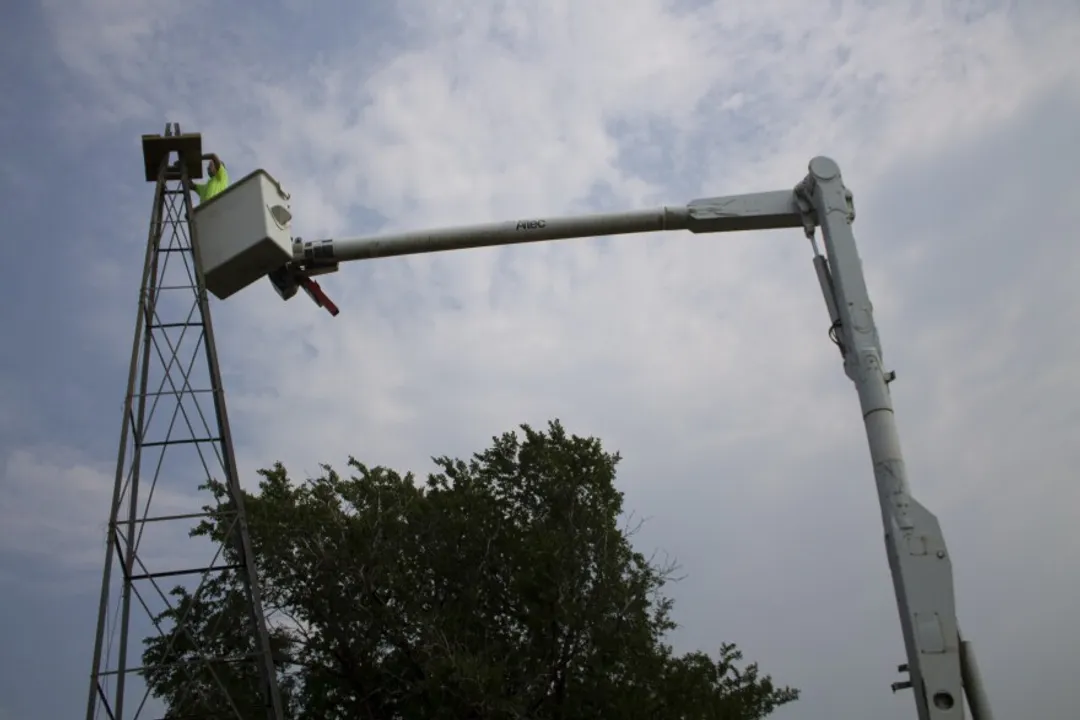
The history of harnessing wind power in America is marked by a distinct shift in engineering focus, moving away from the massive grain-grinding mills familiar in Europe toward a machine tailored for survival and agriculture on the expanding frontier. While windmills existed in various forms globally for centuries, the machine that truly became synonymous with the American landscape—the multi-bladed water pumper—was a specific invention born of necessity during the settlement of the Great Plains. [5][9] The question of "who" invented this iconic device often centers on one pivotal figure whose refinements made reliable, distant water access possible for millions of settlers.
# Early Power
Windmills as tools for work are not an American invention, dating back to Persian designs using vertical axis sails. [9] The technology developed significantly in Europe, particularly in the Netherlands, where large, robust windmills were essential for grinding grain or, crucially, draining low-lying land. [5][9] These European designs typically featured fewer, larger sails or blades, optimized for high speed and high power output, suitable for heavy milling work or moving large volumes of water over short vertical lifts. [9]
The National Park Service notes that early American efforts often mirrored these European styles, sometimes adapting them for tasks like grinding corn or sawing wood, but they lacked the necessary ruggedness and automation for the harsh, decentralized conditions of the American West. [6] The fundamental challenge in the burgeoning plains and arid territories was not grinding flour; it was finding and lifting potable water for both livestock and nascent communities miles away from natural waterways. [5][2]
# Western Necessity
The settlement of the Great Plains—areas covering states like Nebraska, Kansas, Oklahoma, and the Dakotas—created an environment where traditional water access methods were insufficient. [5][7] Settlers moving into these regions often found vast, treeless expanses where surface water was scarce, making successful farming or ranching seemingly impossible. [2][5] The land itself, though potentially fertile, was effectively unusable without a dependable, distributed water source. [5]
This dire need spurred innovation far different from that seen in the established, water-rich East Coast or European agricultural zones. The priority shifted from maximum power for milling to maximum starting torque at low wind speeds, allowing the pump to engage even on a mild breeze and lift water from considerable depths. [1] This requirement for low-speed reliability, paired with the need for minimal operator intervention across isolated farmsteads, set the stage for the American windmill's unique form. [2]
It is worth considering that this localized engineering problem—reliable, autonomous pumping in low-wind environments—arguably spurred more immediate, localized technological adoption in the 19th century than generalized power generation. The ability to reliably source water fundamentally changed the economic calculus of land speculation and homesteading across the interior states. [5]
# Halladay's Design
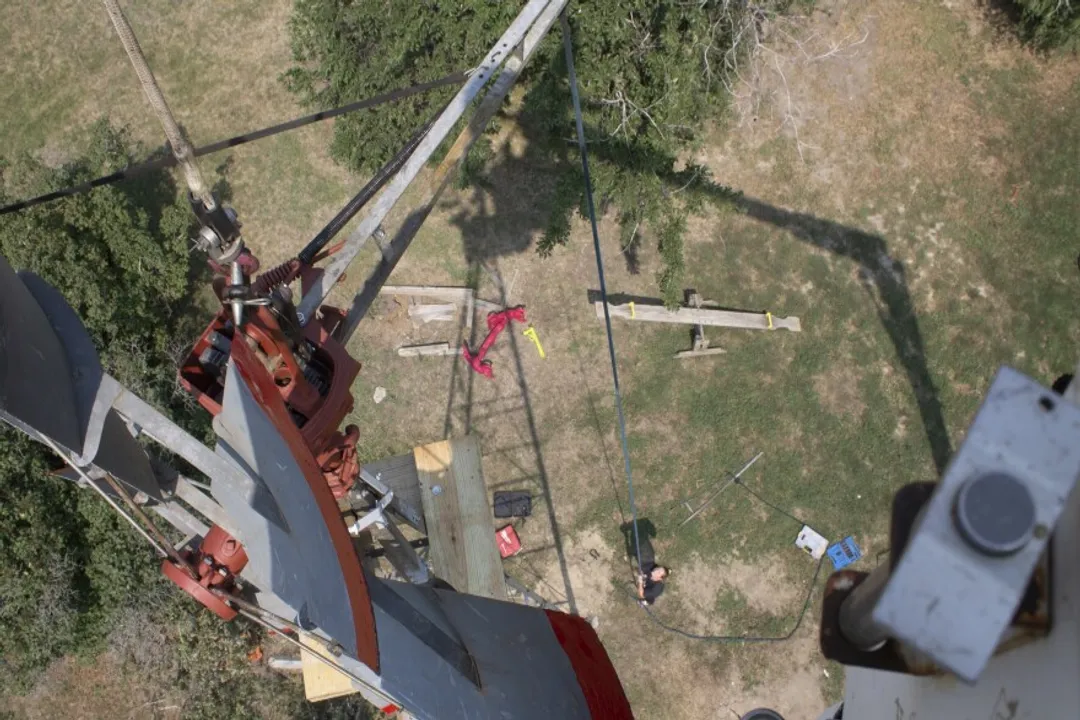
The name most closely associated with solving this problem is Daniel Halladay. [1][2] While others contributed designs before and after him, Halladay’s patented, self-regulating, multi-bladed machine became the archetype of the American windmill. [1] Halladay, whose innovations are often celebrated around August 29th, developed his groundbreaking design in Ellington, Connecticut. [2]
His invention solved several major problems inherent in earlier designs:
- Low-Speed Operation: Halladay’s mill featured a large number of thin, curved blades—sometimes 16, 24, or even 32—arranged in a circular pattern. [1] This significantly increased the surface area catching the wind, generating the necessary starting torque to move the heavy pump rod, even in light breezes. [1]
- Self-Regulation: A critical feature was the automatic regulation mechanism. When the wind became too strong, instead of the entire machine needing to be manually stopped or furled (as with older sail-based designs), Halladay's design allowed the tail vane to swing the fan head out of the wind, slowing the rotor down automatically to prevent damage. [1][2]
- Durability: Halladay also pioneered the self-oiling mechanism, which drastically reduced the maintenance required for the bearings. [1] For a machine standing dozens of feet high on a remote prairie, this was a massive advantage, as fewer trips for greasing meant less downtime and less risk of complete mechanical failure. [2]
This shift from large, two- or four-bladed designs common in earlier European and American mills to Halladay’s tightly packed, multi-bladed rotor marks the true birth of the distinctly American windmill. [9]
| Feature | European Grain Mill Style (Pre-1850s) | American Water Pumper (Halladay Style) |
|---|---|---|
| Blade Count | Few (2 to 8) | Many (16 to 32+) [1] |
| Primary Optimization | High rotational speed for grinding/milling [9] | High torque at low wind speeds for pumping [1] |
| Wind Regulation | Often manual furling of sails | Automatic tail vane regulation [2] |
| Maintenance Needs | Frequent lubrication, sail adjustments | Reduced maintenance via self-oiling bearing systems [1] |
# Spread and Adoption
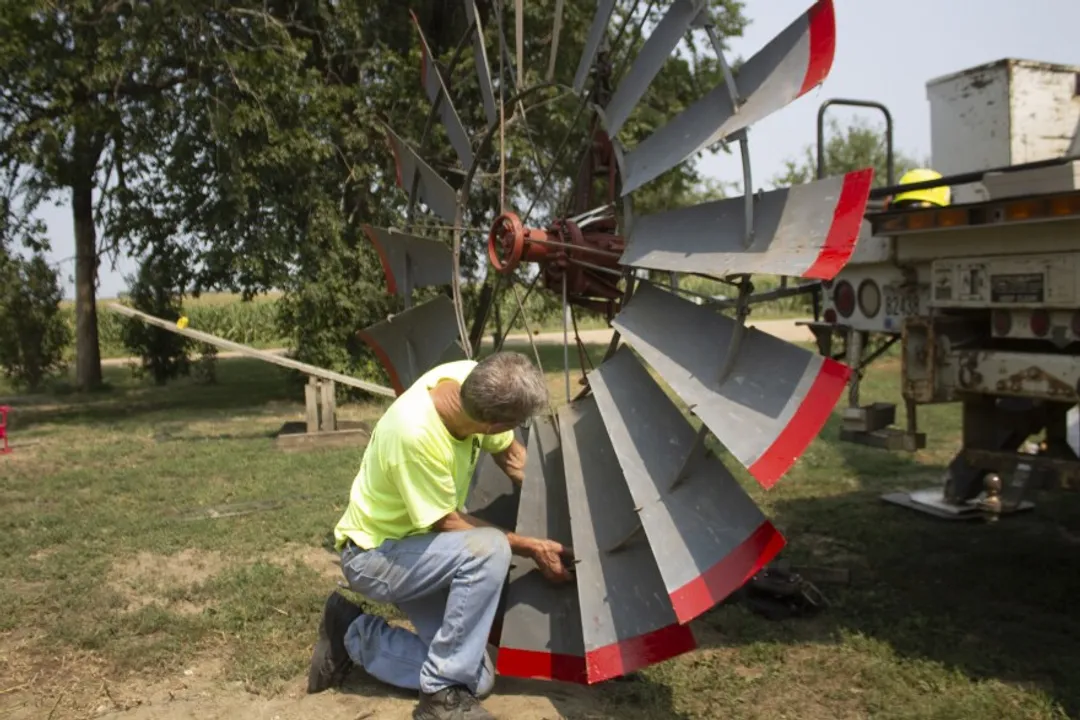
Once established, Halladay’s design spread rapidly, often manufactured by companies like the Aermotor Company in Chicago, which popularized and mass-produced these steel towers and pump heads. [1][6] These windmills became ubiquitous across the Great Plains and the American West, essential infrastructure on ranches and homesteads. [5] In places like Oklahoma, their presence was so tied to the success of farming that they are seen as a defining element of the rural landscape's history. [7]
The National Register of Historic Places often recognizes these structures because they represent a critical period of technological adaptation necessary for the settlement and agricultural success of the arid interior. [6] The wooden towers seen in early examples were eventually replaced by taller, more stable steel towers, which further increased the pump’s efficiency by accessing steadier, higher-altitude winds. [2]
The sheer volume of these machines built speaks to their success. If one considers the millions of acres that became viable farmland only because of reliable well water provided by these structures, the impact is staggering. This technology, born in Connecticut, acted as the prerequisite infrastructure that allowed the Great Plains to become the breadbasket of the nation. [5]
# Maintenance Legacy
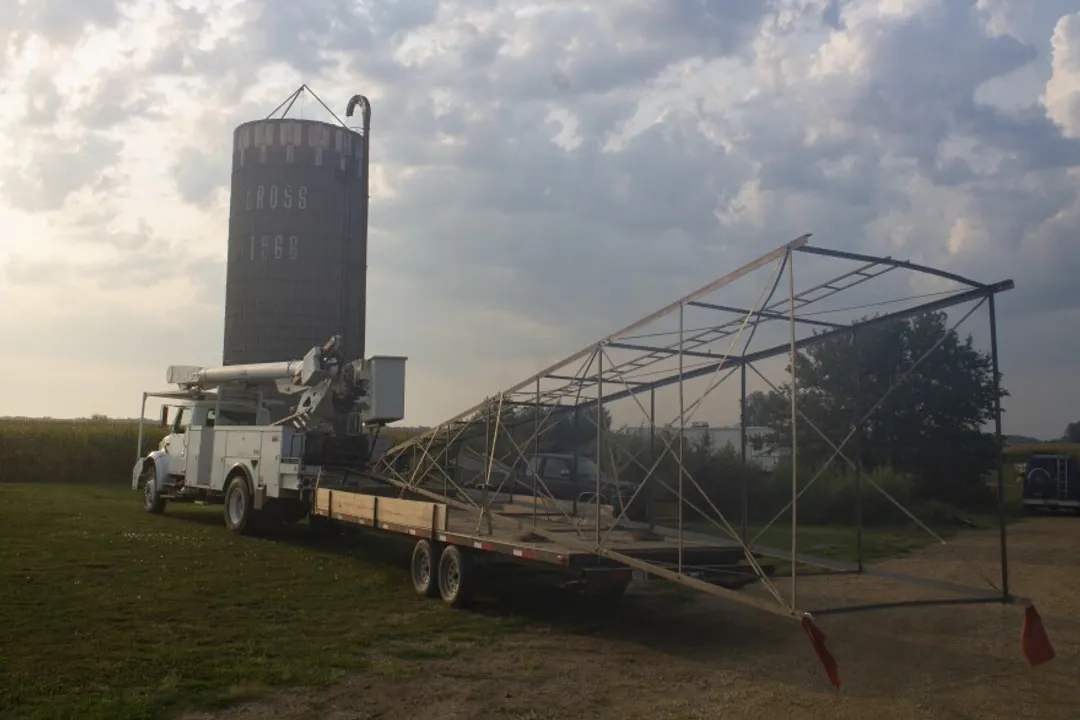
Even as electric pumps have replaced many of these vintage machines, the legacy of Halladay’s design persists, often maintained by dedicated enthusiasts. Experts, sometimes referred to locally as the "Windmill Man," continue to repair and restore these complex mechanical systems, keeping history operational. These restorers often confirm the brilliance of the original engineering, noting that the complex gearing and the simplicity of the self-oiling system allow for surprising longevity, even after decades of neglect.
The work of these preservationists highlights that the American windmill was a sophisticated piece of mechanical engineering, not just a rustic decoration. Understanding the mechanics—the relationship between the gearing ratio, the blade pitch, and the depth of the well—is key to keeping them turning, a testament to Halladay’s initial design considerations. [1]
The early history of wind energy in the United States, as documented by energy timelines, shows a clear divergence here: while the world was slowly moving toward using wind turbines for electricity generation in the late 19th and early 20th centuries (which began as early as 1888 in Scotland for electricity), [4] the American focus remained firmly fixed on mechanical work—specifically, water pumping—well into the 1930s. [4] This separation in technological application is a defining characteristic of American wind history.
# Enduring Icons
Though many have been replaced by submersible electric pumps powered by the modern grid, the remaining structures stand as powerful symbols of self-reliance and ingenuity. [6] They represent a moment in time when mechanical innovation directly enabled continental expansion. The story of the American windmill, therefore, is less about a single "inventor" in the mold of Edison or Bell, and more about Daniel Halladay refining an existing concept—the windmill—to solve a unique, geographically specific problem that defined the settlement era of the American West. [1][2] It was an invention perfected for the specific demands of the frontier: durability, autonomy, and the ability to reliably draw life from the earth where no surface water flowed. [5]
Related Questions
#Citations
Daniel Halladay - Wikipedia
Halladay's Revolutionary Windmill – Today in History: August 29
Windmills evolved from 1854 Connecticut invention - Facebook
Wind timeline - Energy Kids - EIA
Windmill Tales: Stories from the American Wind Power Cent" by Tom ...
Windmills on the American Plains - National Park Service
Windmills | The Encyclopedia of Oklahoma History and Culture
The history of wind energy | National Grid
Meet Mike Moeller, The Windmill Man - SDPB