Who invented survivor detection systems?
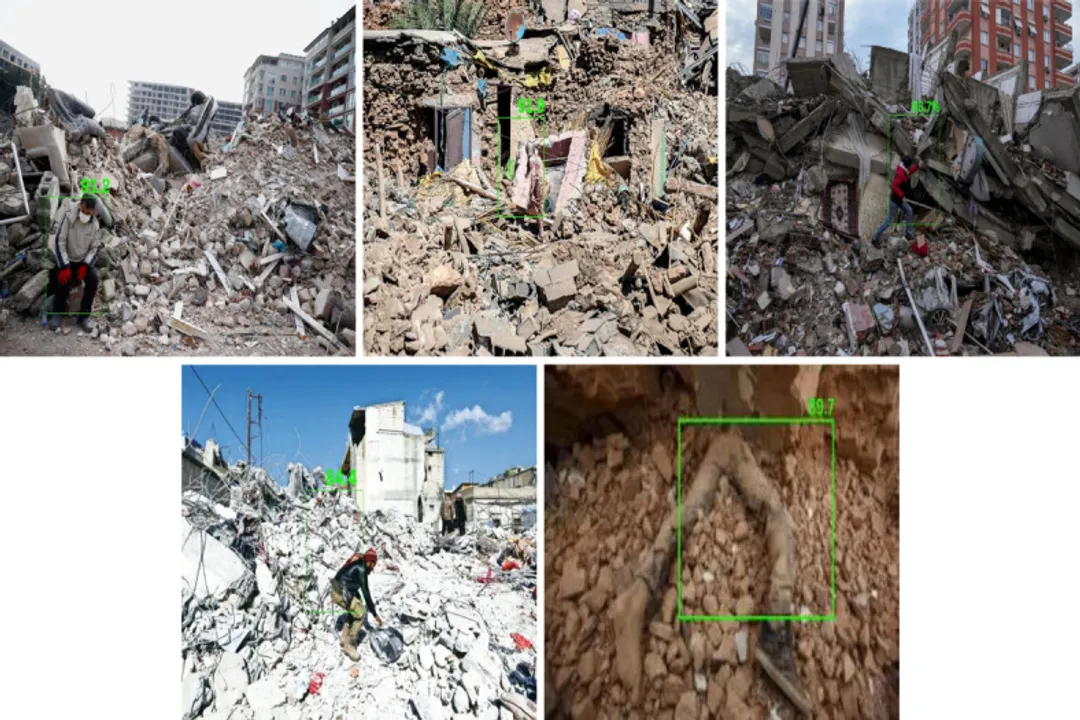
The endeavor to locate survivors hidden beneath collapsed structures, particularly after catastrophic events like earthquakes, has driven the development of specialized detection technologies over decades, meaning the "inventor" is not a single individual but a series of institutional and scientific breakthroughs across different sensing modalities. [8] The urgent need is to find a living person quickly without causing further collapse, pushing researchers toward systems that can sense life signs through layers of concrete, dust, and debris. [6] This search for non-invasive, life-sensing tools has branched primarily into analyzing physical movement or reflection, and chemical signatures from breath.
# Chemical Sensing
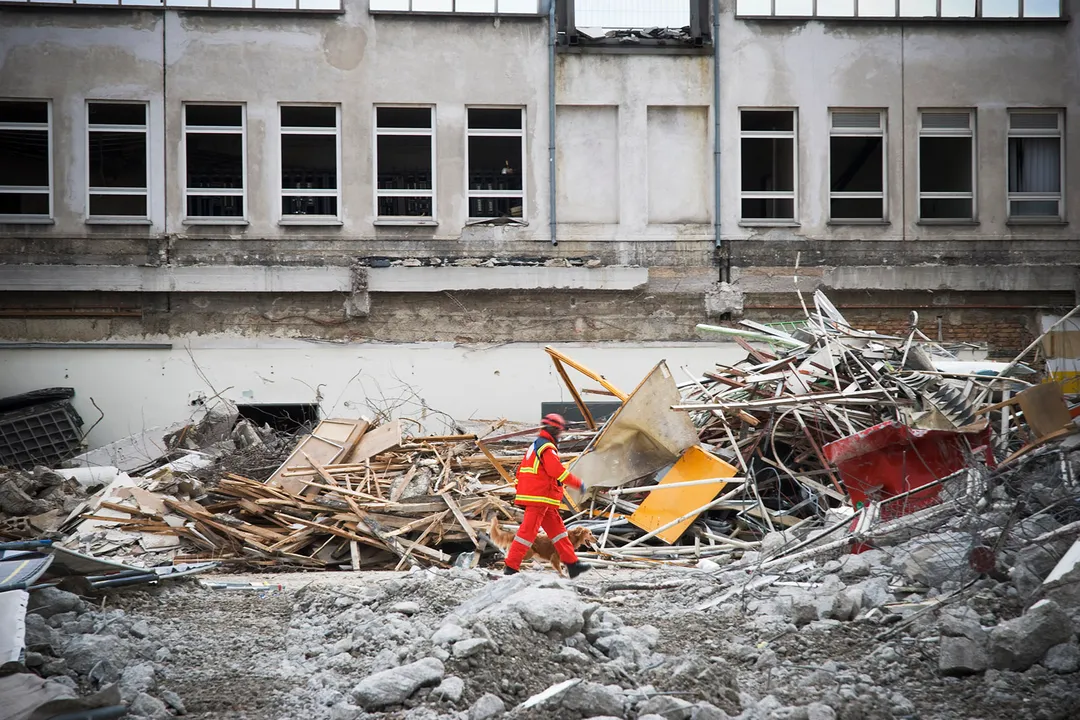
One significant technological path focuses on detecting the chemical byproducts of human life, most notably carbon dioxide () exhaled by survivors. This approach essentially seeks to create an "electronic nose" capable of sampling the air trapped within voids under rubble. [7] Research teams, including those associated with institutions like RMIT University, have been actively developing gas-sensing devices specifically tailored for search and rescue operations. [10] These sensors are designed to identify trace amounts of gases that indicate human presence, differentiating them from other potential contaminants or residual materials found in a disaster zone. [7]
The effectiveness of these chemical sensors often hinges on the concentration gradient of the target gas. A device might successfully identify a strong plume of near an opening, but its utility diminishes rapidly as the concentration drops or as the gas diffuses into a vast, poorly ventilated space. [4] This presents a practical consideration: how fast dissipates or gets diluted in a large rubble void versus a sealed chamber greatly affects the sensor's effective search radius compared to a radar wave that can propagate more consistently. The focus here is on portability and the ability to deploy smaller sensor arrays quickly into precarious areas where acoustics or radar might struggle with interference.
# Penetrating Radar
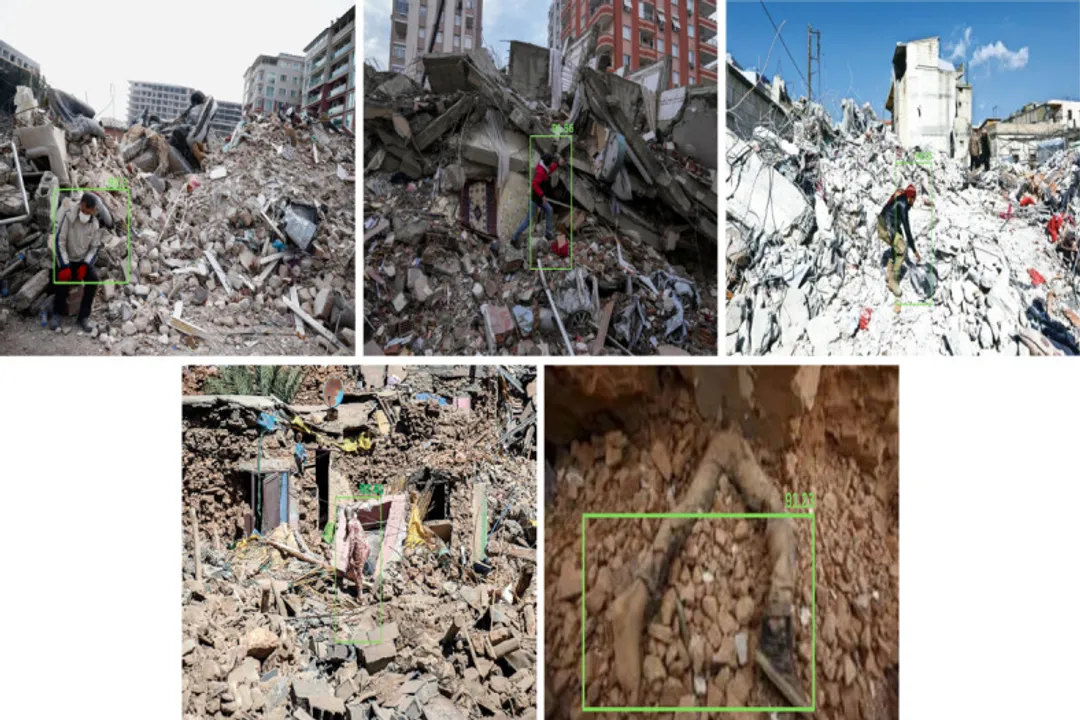
Contrasting the chemical approach is the development of through-the-wall or through-the-rubble radar systems. These advanced microwave systems aim to detect subtle movements associated with respiration or heartbeats from a distance, offering a non-contact measurement of physiological activity. [6] While the concept of using radar for surveillance has existed for some time, its application to finding deeply buried survivors required significant advances in signal processing capable of isolating faint biological Doppler shifts from overwhelming background noise caused by settling debris or shifting materials. [9]
Systems described in research literature focus on employing specific radar techniques, such as those that operate in the ultra-wideband (UWB) range, to achieve the necessary penetration depth and resolution. [1] The design challenge involves creating hardware that is both powerful enough to penetrate substantial barriers—sometimes meters thick—and sensitive enough to register the movement equivalent to a single breath. [6] Work related to these survivor search radar systems, sometimes associated with researchers like Arai, details the necessary hardware and algorithms required to translate reflected microwave energy back into a confirmation of life, a major step beyond simple motion detection. [6][9]
# System Comparison
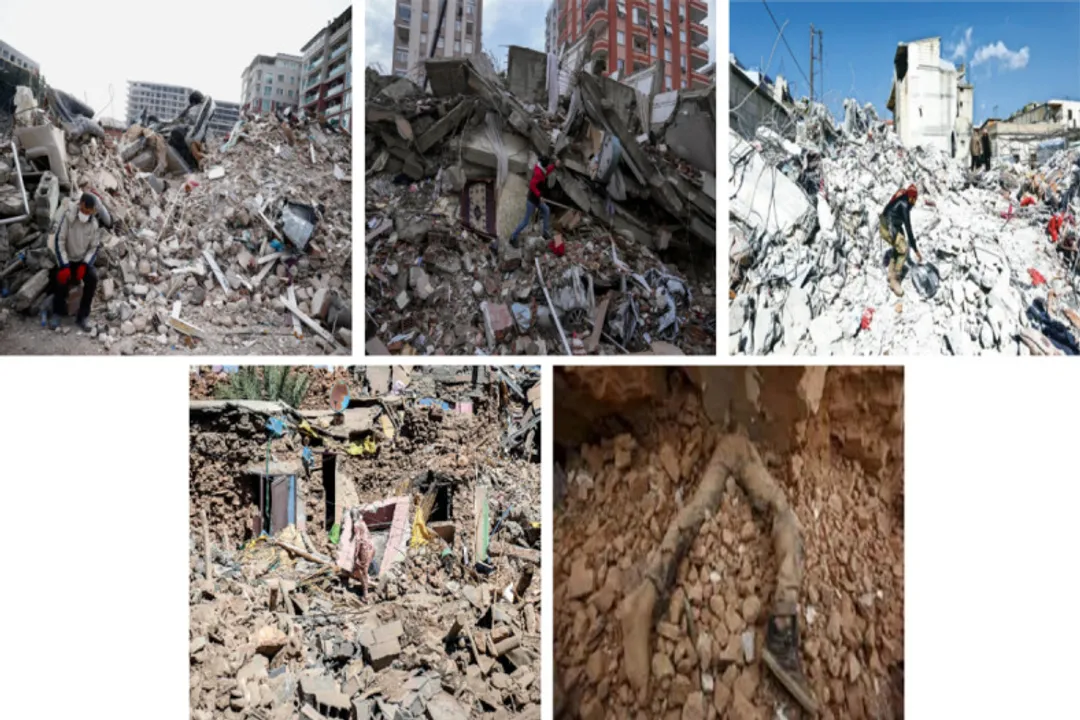
The choice between gas sensing and radar detection often comes down to operational environment and assumed survivor condition. Gas detection methods rely on the fundamental biological imperative of respiration, making the detected signature highly specific to a living human. [4][10] However, if a survivor is unconscious, has stopped breathing temporarily, or if the rubble structure prevents gas exchange, the sensor may return a false negative. [8]
Radar, conversely, detects physical movement patterns associated with life, which is less dependent on ongoing respiration, potentially detecting someone who is injured but stable or even recently deceased if faint residual movement is present, though the goal remains finding the living. [1] The drawback, as noted in analyses comparing different sensing modalities, is that radar performance is strongly affected by the material properties of the debris; dense, highly conductive materials like rebar or wet soil can scatter or absorb the microwave signal, creating blind spots or confusing echoes. [8] While radar systems often rely on sophisticated signal processing to distinguish the minute Doppler shift of a human heartbeat or breath from static rubble noise, the gas sensor's challenge lies in bio-specificity—ensuring the detected isn't coming from residual decomposition or other ambient sources introduced by the disaster itself. This interplay means that the most effective response protocols often call for deploying both types of technology concurrently, allowing the strengths of one system to compensate for the weaknesses of the other. [8]
# Landscape of Developers
Pinpointing a singular inventor for survivor detection is impossible because the evolution involves distinct technological leaps across separate engineering disciplines. For instance, the development of the specialized sensing apparatus mentioned by Australian research groups focuses on optimizing electrochemical or optical sensors for rugged, field deployment. [4][10] This contrasts sharply with the electronic engineering required for the UWB radar units, which depend on advanced antenna design and fast Fourier transforms for accurate signal interpretation. [1][9]
In a practical sense, the "inventor" of a functional, deployable system is often the research team or commercial entity that successfully miniaturizes, ruggedizes, and validates these complex scientific principles for emergency responders. The transition from a laboratory proof-of-concept—like a paper showing a radar signal reflected off a mannequin—to a field-ready device capable of operating in a chaotic, dusty, and electrically noisy environment marks the true contribution to search and rescue capability. [1][8] Many engineers and scientists, perhaps unnamed in the final product's history, contribute specialized components, such as developing improved filtering algorithms or more stable gas calibration matrices, which collectively enable the final system to function reliably when lives depend on it. The collective body of published research, spanning papers on seismic sensing, acoustic detection, and the gas/radar methods discussed here, forms the complete lineage of modern survivor detection knowledge. [3][8]
Related Questions
#Citations
Survivor search radar system for persons trapped under earthquake ...
Joseph Gerber - Wikipedia
Survivor detection approach for post earthquake search and rescue ...
Breath detector to help find earthquake survivors
Real Time Earthquake's Survivor Detection using a Miniaturized ...
Survivor search radar system for persons trapped under earthquake ...
An electronic “nose” to detect earthquake survivors
Real-Time Survivor Detection System in SaR Missions Using Robots
Survivor search radar system for persons trapped under earthquake ...
World first study with drone cameras able to identify survivors