Who invented outbreak detection systems?

The concept of systematically detecting disease outbreaks is not new, but the sophisticated, automated tools used today represent a significant leap forward from manual reporting methods. Pinpointing a single "inventor" of all outbreak detection systems is impossible, as surveillance has evolved over centuries. However, the most recent and arguably impactful advancements in automated, real-time detection systems can be traced to specific research institutions adapting to the digital age, particularly through the application of advanced computing and machine learning. [1][8]
# Pitt System

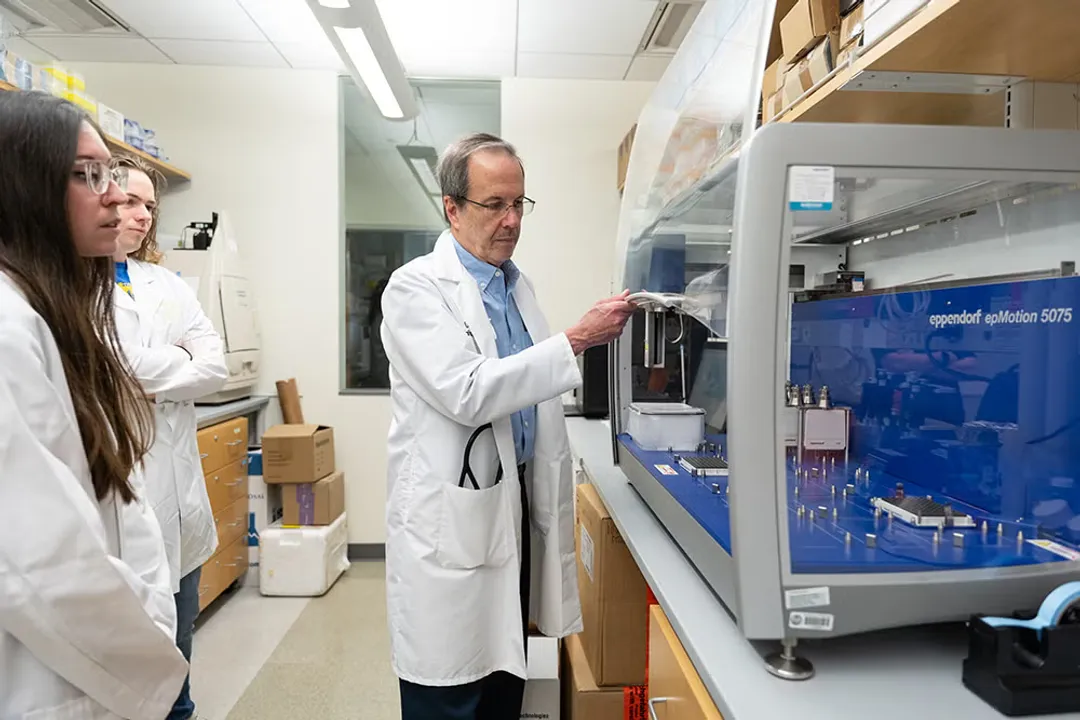
A significant development in this area comes from the University of Pittsburgh (Pitt) and UPMC, where researchers developed an Outbreak Detection System (ODS) designed to identify unusual disease patterns much faster than conventional methods. [2][3] This specific system, which has been shown to save lives by shortening the time between the start of an outbreak and public health response, is an excellent case study for modern invention in this field. [2]
The innovation behind the Pitt-developed ODS lies in its reliance on already existing clinical data, specifically Electronic Health Records (EHRs). [2] Instead of waiting for physicians to report cases or for lab results to be aggregated through traditional channels, the system constantly monitors admission data for signs that the typical distribution of diagnoses is being disrupted. [1][3] One team member, Dr. John G. O’Donnell, was part of the group responsible for this implementation, which essentially taught a computer program what a normal hospital admission day looks like so it could flag deviations. [2]
The system is an example of applying predictive analytics to patient records. If an unusual clustering of symptoms or diagnoses begins to appear in the real-time data stream from the hospital, the ODS flags it, allowing officials to investigate potential outbreaks sooner. [2] This process moves detection from a passive, delayed reporting stage to an active, nearly instantaneous monitoring stage. [3]
# Mechanics Detection
To understand how an invention like the ODS works, one must consider the underlying statistical challenge: what constitutes an "outbreak" versus random noise? An outbreak detection system, regardless of its underlying technology, must first define what it is looking for. [1] This often involves establishing baseline expectations for the frequency of specific diseases or symptoms within a given population over time. [1]
When the actual count of cases surpasses a statistically expected threshold, the system raises an alarm. [1] These systems rely on established statistical models to differentiate genuine anomalies from normal daily or seasonal variation. [5] For instance, simply seeing three cases of a rare infection might be statistically insignificant, but seeing those three cases appear within 48 hours in the same geographic area, or within the same hospital's admission pool, triggers a different level of scrutiny. [1] The computer models look for deviations in time, place, and person characteristics—the classic epidemiological triad—but apply these checks with computational speed. [1]
This approach contrasts with older, established national surveillance networks. For example, the CDC’s PulseNet system is a vital tool for tracking foodborne illnesses. [7] PulseNet operates on a foundation of molecular epidemiology, using DNA fingerprinting (whole-genome sequencing) of bacteria isolated from sick people to find connections between cases. [7] While PulseNet is incredibly precise in linking cases retrospectively, the modern, AI-driven systems like the one developed at Pitt aim to detect the start of the cluster before enough samples are collected and sequenced to make a conclusive molecular match. [2][3]
| System Type | Primary Data Source | Detection Goal | Speed/Latency | Example Network |
|---|---|---|---|---|
| Traditional Molecular | Isolates/Lab Results (DNA Sequencing) | Confirming Links | Days to Weeks | CDC PulseNet [7] |
| Modern Automated | Electronic Health Records (EHRs) | Early Warning/Anomaly | Near Real-Time | Pitt ODS [2][3] |
Considering the sheer volume of data flowing through major healthcare systems today, the invention isn't just the algorithm, but the successful implementation of integrating that algorithm directly into the live data feed of hospital information systems. [8] It requires building trust in the digital signal. [1]
# Broad Surveillance Needs
The challenge of timely detection is not unique to one geographic area or one type of pathogen. International bodies have long recognized the necessity of effective surveillance. For example, discussions regarding global health security emphasize that national surveillance systems must be designed to detect unusual events quickly, report them transparently, and respond effectively. [5] The ability to detect an outbreak rapidly depends heavily on having sensitive surveillance tools coupled with the political will to act on preliminary data, even when that data might turn out to be a false positive. [9]
Furthermore, the effectiveness of any detection invention relies on data quality and standardization across disparate sources. [4] If one hospital records "pneumonia" differently than another, or if symptom codes are entered inconsistently in the EHRs, the machine learning model trained on that data will struggle to recognize a true signal across the entire network. [4] This highlights that the invention of the algorithm is only half the battle; the engineering of clean, standardized input streams is equally critical for success. [8]
It’s an interesting observation that while the academic and technical focus often falls on the complexity of the algorithm—the machine learning model, the statistical testing—the practical success of systems like ODS often hinges on the preceding, less glamorous work of data governance within the healthcare provider network. [4] If the underlying data is messy, even the most brilliant algorithm will simply learn to detect the messiness rather than the pathogen. This real-world requirement for clean input data is often the deciding factor between a successful pilot program and a system deployed for routine public health defense.
# AI Acceleration
The current wave of innovation, including the Pitt system, is heavily influenced by advances in Artificial Intelligence (AI) and Machine Learning (ML). [6][8] These technologies allow for the creation of models that can look for subtle, non-linear patterns that a human epidemiologist or a simpler, rule-based system might miss entirely. [8] AI's promise in this domain is its capacity to learn from past outbreaks—both real ones and simulated ones—to become increasingly precise at flagging nascent threats. [6]
For example, an AI system can be trained to associate specific sequences of lab orders or seemingly unrelated chief complaints with the early stages of a community-acquired outbreak before a single infectious disease specialist has even seen a confirmed case. [1] This capability fundamentally changes the timeline of intervention. While early systems relied on established case definitions, modern ML systems are designed to identify novel or unexpected disease patterns, which is crucial for emerging threats. [8]
Another consideration often overlooked when discussing the "inventors" is the global nature of modern infectious disease risk. The same computational methods that power a local hospital detection system can, theoretically, be scaled up to analyze international syndromic surveillance feeds. [5] The core mathematical techniques are portable, meaning the Pitt researchers’ specific application on EHRs for their local region informs best practices for others globally, even if they are using different initial data streams like emergency department chief complaints or over-the-counter medication sales data. [9] The spirit of the invention becomes one of methodological transfer rather than proprietary code.
The speed at which these systems operate also demands a parallel invention in response protocol. If an ODS flags a potential issue in real-time, the organization must have predefined steps ready for verification. A system that cries wolf too often loses trust; a system that ignores a true signal loses lives. [2][9] Therefore, the successful deployment of an automated detection invention requires an outbreak response playbook written specifically for algorithmic triggers, something that necessitates collaboration between the computer scientists, the clinicians, and the public health officials. [5] This integration of technology into established public health workflow is perhaps the final, necessary piece of the modern detection "invention."
Related Questions
#Citations
Outbreak Detection System | ASM.org
Pitt-Developed Outbreak Detection System Saves Lives
Pitt-Developed Outbreak Detection System Saves Lives - UPMC
Electronic Surveillance System for the Early Notification of ... - NIH
Summary of Research into the Costs of Enhanced Public Health ...
Early detection of emerging infectious diseases - implications for ...
Outbreak Detection | PulseNet - CDC
Global Variations in Event-Based Surveillance for Disease Outbreak ...
An Epidemiological Network Model for Disease Outbreak Detection