Who invented smart stethoscopes?
The genesis of listening to the internal sounds of the body traces back to René Laennec in 1816, when he first invented the original acoustic stethoscope. [2] This foundational instrument, born out of necessity when a direct chest-to-ear examination was deemed inappropriate, established the principle of using a hollow tube to conduct sound. [2] While Laennec's invention defined the tool for nearly two centuries, the concept of a "smart" stethoscope is not credited to a single historical figure, but rather represents a series of technological accelerations building upon that initial acoustic model. [8]
# Acoustic Origin
Laennec's initial design was a simple wooden tube, a marvel for its time because it allowed physicians to hear bodily sounds more clearly than before. [2] This first-generation tool was purely mechanical, relying on the physics of sound transmission through a solid medium to the ear. [8] For over a century, this remains the standard, though its limitations in clarity, especially for faint sounds or in noisy environments, were always present. [7]
# Electronic Leap
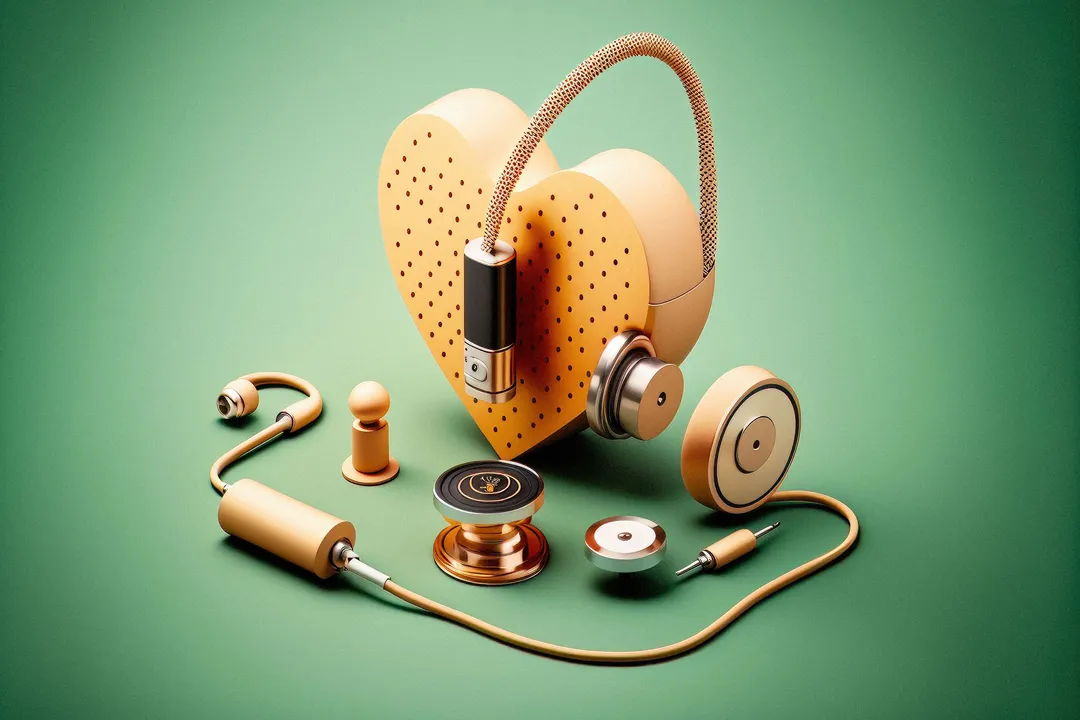
The true precursor to the modern smart device appeared with the introduction of the electronic stethoscope around the 1960s. [8] This marked a significant departure from purely mechanical sound conduction. [7] Electronic stethoscopes allowed for the digitization of sound, opening the door to amplification, filtering, and recording capabilities that were impossible with Laennec’s original design. [7][8]
The evolution into electronic devices required advances in sound transduction—turning acoustic energy into electrical signals. [5] Although the sources do not explicitly name the inventor of the first electronic stethoscope, this phase critically depends on innovations in microphone technology. [5] For instance, the work of figures like Dr. James West, a co-inventor of the electret microphone, represents the kind of foundational audio engineering that underpins any device capable of converting subtle body sounds into a reliable electrical signal for processing. [5] This move from analog to electrical was the necessary first step toward true "smartness". [8]
# Digital Foundations
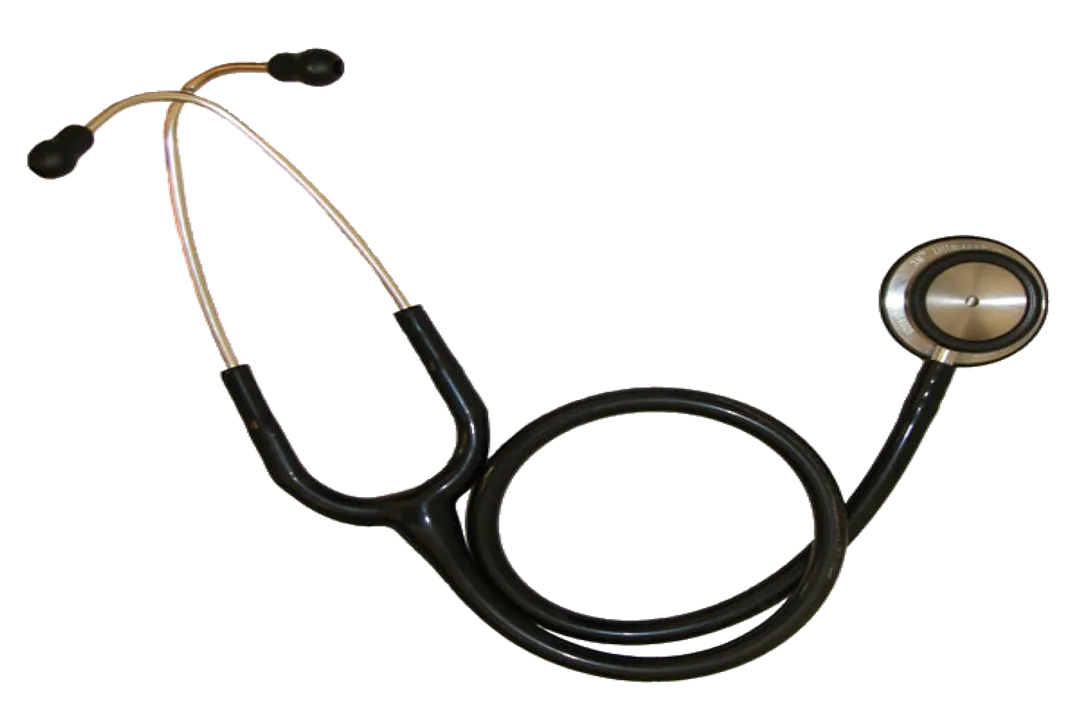
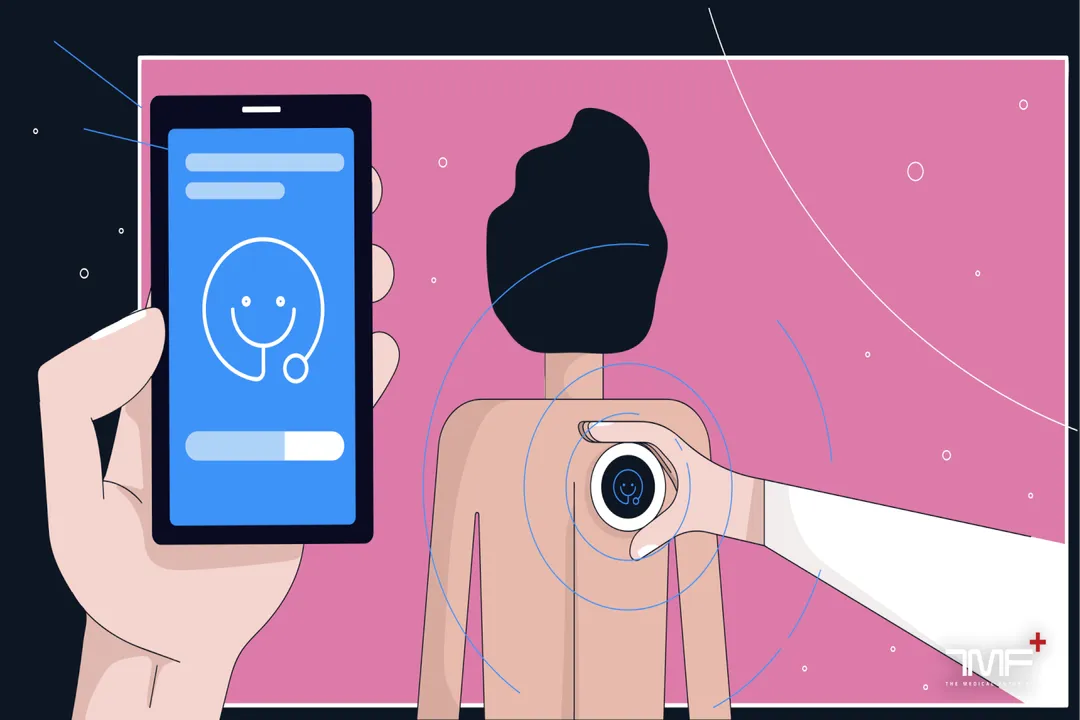
The transition from an electronic device that simply recorded sound to a smart device that interprets sound involves sophisticated processing, often leaning heavily on artificial intelligence (AI) and complex algorithms. [9] The term "smart stethoscope" generally refers to these advanced digital iterations that incorporate computational analysis of the recorded sounds. [8]
This digital phase is characterized by the ability to analyze audio patterns far more precisely than the human ear alone can manage consistently. [4] Where the electronic device merely amplified and stored the sound, the digital and smart versions apply computational power to identify specific signatures indicative of disease. [8][9]
Consider the technological gap: Laennec's stethoscope took nearly 150 years to transition into the electronic version capable of basic amplification. [2][8] However, the leap from the electronic version to the AI-augmented version seems to have occurred much more rapidly, driven by exponential growth in computing power and machine learning advancements. [8] This accelerated timeline suggests that the true invention of the "smart" stethoscope lies in the development of the algorithms that accompany the hardware, rather than a single hardware prototype.
# AI Augmentation
The current generation of devices moves squarely into the realm of AI-augmented diagnostics. [8] These devices are designed not just to listen, but to diagnose specific conditions using machine learning models trained on vast datasets of heart and lung sounds. [1][4]
For example, one prominent development involves an AI stethoscope capable of detecting up to three different heart conditions in just 15 seconds. [1][6][10] Researchers at institutions like Queen Mary University of London have been instrumental in bringing this capability to the forefront, demonstrating its potential in clinical settings. [10]
This ability to perform rapid, automated screening is a defining characteristic of a smart device. The focus shifts from the clinician’s subjective interpretation to an objective, quantified output provided by the integrated software. [4] This shift implies that the "inventors" in the modern context are often interdisciplinary teams combining cardiologists, software engineers, and data scientists, as seen in the work being conducted at Johns Hopkins University, where researchers like Mohamed Elhilali and Kathleen West are developing such smart stethoscopes with support from grants like those provided by the NIH. [3]
The primary goal underpinning this modern invention is overcoming limitations in diagnostics, particularly for conditions like heart disease, where early detection is critical but often missed in routine primary care screenings. [3][10]
# Diagnostic Speed
The most compelling evidence for the success of these modern "smart" iterations is their speed and accuracy in identifying pathology. [1] The ability to assess a patient for three distinct heart conditions—for example, mitral regurgitation, aortic stenosis, and tricuspid regurgitation—in the time it takes to listen to a few breaths or heartbeats is a paradigm shift. [10]
If a primary care practitioner is equipped with a device that can flag a patient for potential serious heart issues almost instantly during a routine check-up, it fundamentally alters the triage process. [6] This immediate, data-driven flag allows the practitioner to bypass days or weeks of potential diagnostic uncertainty and move directly to specialist referral or advanced imaging, significantly compressing the patient's pathway to care. While the device provides the data, the ultimate authority remains with the clinician who must order the confirmatory tests, but the initial diagnostic hurdle is cleared with unprecedented speed. [4]
The technology employed in these advanced devices often relies on sophisticated noise cancellation and artifact suppression techniques, ensuring that the AI is analyzing true physiological sounds rather than ambient noise or patient movement—a crucial engineering challenge overcome in making the devices practical for real-world use. [7][9]
# Development Teams
Because the "smart stethoscope" is an emergent technology defined by software integration rather than a single patented hardware design, there is no single inventor equivalent to Laennec. Instead, the field is characterized by competing and collaborative research groups. [3][4]
We see activity centered in major research hubs:
- Academic Centers: Institutions like Johns Hopkins are actively pursuing NIH funding to refine algorithms for early detection of cardiovascular issues using their custom-built smart stethoscopes. [3]
- Clinical Research Groups: Teams associated with major medical institutions, such as those at Queen Mary University of London, are conducting the clinical validation studies necessary to prove the efficacy of these AI models against known diagnoses. [10]
The intellectual property in this area is likely distributed across patents covering the unique algorithms, the signal processing chains, and specific hardware integration methods rather than a single, overarching design patent for the "smart stethoscope" itself. [9]
For a clinic looking to adopt this emerging technology, understanding this distributed development base is key; a device's effectiveness might rely more heavily on the specific training data used by its developing team than on the physical casing it comes in. Therefore, evaluating the published validation studies (like those demonstrating 15-second three-condition detection) provides a better measure of "invention quality" than merely looking at the manufacturer's name on the box.
The overall trajectory shows that while Laennec invented the tool, engineers and data scientists of the 21st century are inventing the intelligence within the tool, transforming it from a passive acoustic aid into an active diagnostic partner. [8] The evolution is continuous, with ongoing work focused on expanding the detection capabilities beyond the heart to areas like pulmonary conditions and murmurs, further solidifying the position of the smart stethoscope as a major advancement in non-invasive patient monitoring. [3]
The journey from a rolled-up piece of wood to an AI-powered diagnostic aid represents a century-spanning convergence of mechanics, electronics, digital signal processing, and artificial intelligence, making the "inventor" a collective of innovators across multiple generations. [2][8]
The continued development relies on making these high-tech tools accessible and affordable, ensuring that the benefits of this advanced listening technology reach beyond specialized labs and into standard primary care environments worldwide. [9]
Related Questions
#Citations
Advances in Wearable Stethoscope Technology - NIH
Stethoscope - Wikipedia
Mounya Elhilali and James West awarded grant to develop smart ...
Artificial Intelligence-Based Stethoscope for the Diagnosis of Aortic ...
From the Segregated South to Bell Labs to the AI Frontier
Doctors develop AI stethoscope that can detect major heart ...
Electronic Stethoscopes – Technology Overview – TTAC
The Digital Evolution Of The Stethoscope - The Medical Futurist
Here's how wireless sensors are making healthcare devices smarter
AI stethoscope can detect three heart conditions in 15 seconds - BHF