Who invented smart mattresses?
The story of the smart mattress is not the tale of a single inventor in a garage but rather the culmination of centuries of incremental progress, moving from simple comfort to complex, data-driven automation. Our pursuit of better rest has driven material science and engineering forward, slowly transforming a basic pile of grass into an interconnected digital interface for sleep health.
# Ancient Bedding

Long before microprocessors entered the bedroom, humans sought to insulate themselves from the cold, hard earth. The earliest sleep surfaces were wonderfully rudimentary, relying on whatever natural material was abundant: simple beds crafted from layers of grasses, leaves, or animal skins. This basic barrier offered slight comfort and separation from the ground.
As civilizations advanced, so did the concept of sleeping elevated. The ancient Egyptians, for instance, used elevated wooden frames, which offered a benefit beyond softness by keeping sleepers away from pests and improving airflow. Later, in Roman society, sleeping surfaces reflected social standing; the commoners might use sacks filled with hay or straw, while the nobility indulged in luxurious mattresses stuffed with soft feathers or wool.
# Mechanical Milestones
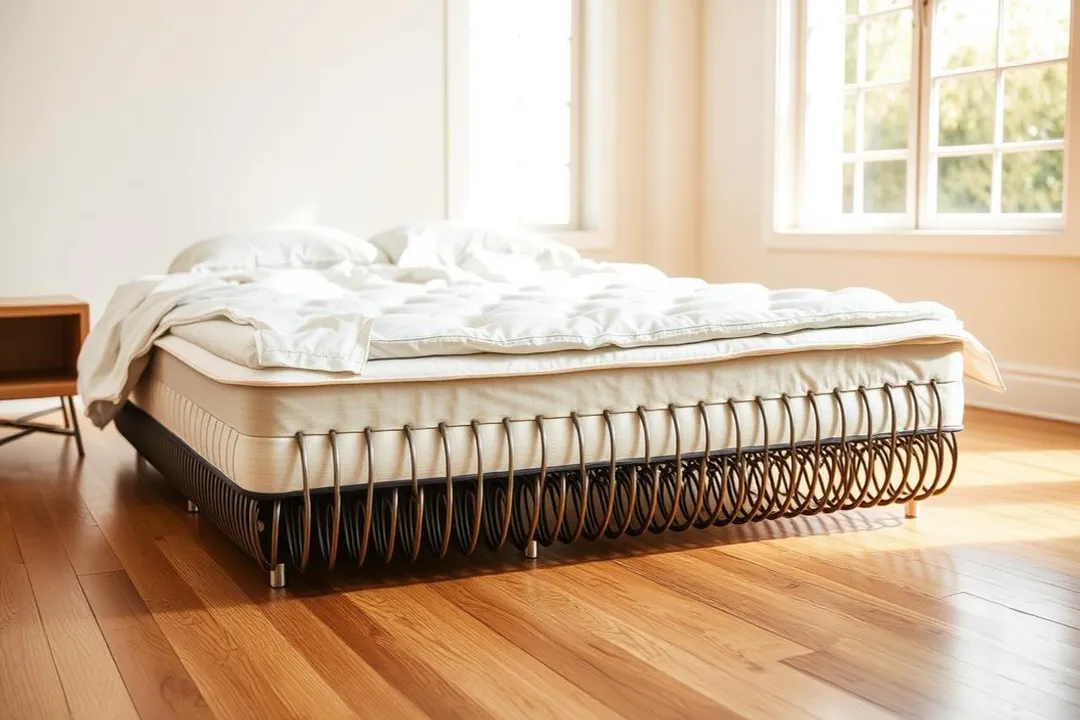
The structure of bedding began to transform seriously during the era of industrialization. The 19th century brought forth the coil spring mattress, patented around 1840, which offered improved support and shape retention through resilient metal coils. This allowed for mass production, making better support accessible beyond the highest classes.
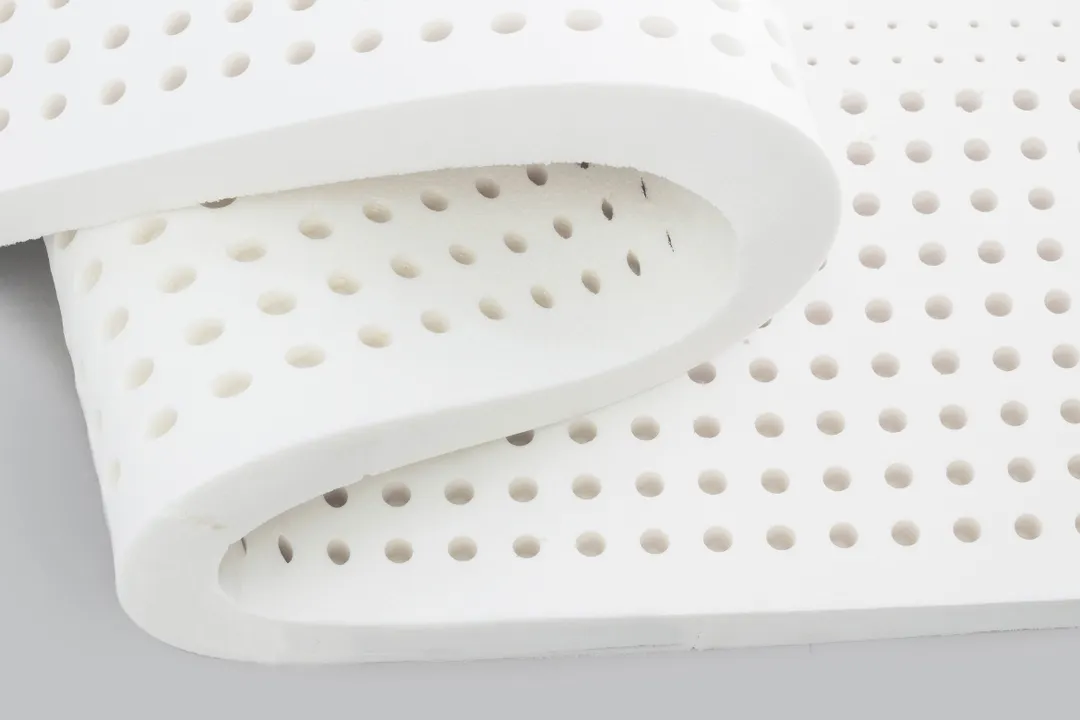
The 20th century introduced completely new material categories. Natural latex, derived from rubber tree sap, gained traction in the 1920s for its durability and breathability. Then, in the 1950s, polyurethane foam arrived, providing a lightweight, affordable option. The most famous material leap came from an unexpected source: memory foam, developed by NASA in the 1960s to enhance spacecraft cushion safety. It transitioned into mainstream mattresses during the 1990s, prized for its unique ability to contour precisely to the body’s shape, offering superior pressure relief and motion isolation.
A significant step toward the smart concept was the introduction of adjustable beds, gaining popularity mid-20th century after use in hospitals. These allowed users to elevate their heads or feet manually, offering ergonomic benefits for issues like circulation or acid reflux.
# The Adjustable Foundation
The line between an ordinary bed and a high-tech sleep system first blurred with the invention of adjustable air support. The category of adjustable air-supported sleep systems is credited to the Comfortaire Corporation of South Carolina in 1980. Following this, Robert and JoAnne Walker founded Select Comfort in 1987, which later became the Sleep Number Corporation.
The Sleep Number bed is defined by its ability to let the user manually set their preferred firmness on a scale up to 100 using air pressure within the mattress chambers. While this offers a level of customization far beyond static foam or springs, the key distinction is that this adjustment is user-initiated, requiring manual input to change the "Sleep Number". It represents personalized support rather than autonomous sensing and correction.
# Defining Smart Technology

The transition to the "smart bed" meant moving from manual adjustment to autonomous, data-driven adaptation, ushering the mattress into the digital age. The core invention of the "smart mattress" can be attributed to the integration of sophisticated sensor arrays and real-time algorithms capable of interpreting biological signals and acting upon them without explicit user commands during the sleep cycle.
Around the mid-2010s, several systems began embodying this true "smart" definition:
- ReST: This system utilized technology originally developed for individuals with severe spinal injuries. It senses localized pressure points and automatically inflates or deflates internal air chambers to redistribute weight and maximize comfort dynamically.
- Kingsdown Smart Sleep System: This mattress was designed to monitor movement and pain, using collected sleep data to self-adjust its firmness levels to optimize rest, with data accessible via a mobile application.
- Luna Smart Mattress Covers: These demonstrated the integration aspect, focusing on warming the bed, tracking sleep, and using smart timing to wake the user during their lightest sleep stage.
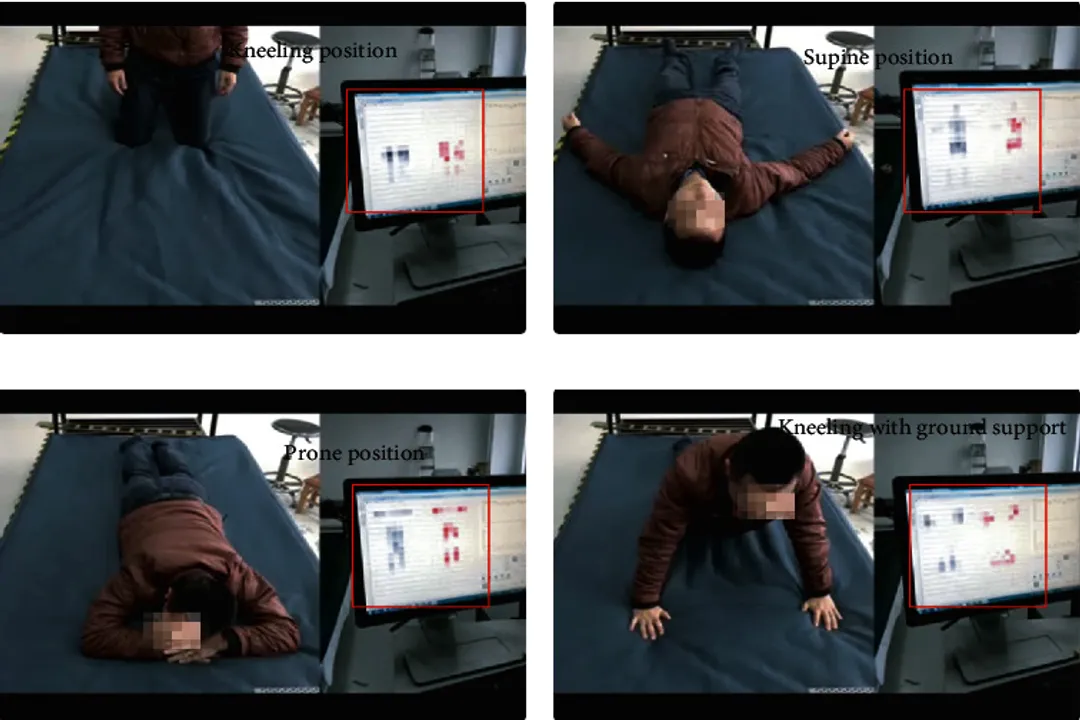
This represents a fundamental philosophical shift in mattress design. While a Sleep Number bed requires the sleeper to dictate the firmness, systems like the research model described in a 2021 study operate as closed-loop devices. This research mattress utilized a matrix of 180 modules (air packs with pressure and height sensors) to automatically detect the human body structure, increase scanning speed to measure pressure matrices accurately, and then use local pressure variance detection to automatically adjust air pressure for a uniform, comfortable state. This ability to recognize posture and apply automatic correction is what truly separates the modern smart system from its adjustable predecessors.
| Feature | Sleep Number (Traditional Airbed) | Research Smart Mattress Example |
|---|---|---|
| Body Posture Recognition | No | Yes |
| Adjustment Mechanism | Single, user-controlled air chamber adjustment | 180 independent airbags with algorithmic adjustment |
| Function | Customizable Support | Adaptive Comfort and Posture Correction |
# The Ecosystem and Its Trade-Offs
The modern smart mattress integrates with the broader Internet of Things (IoT) ecosystem. Connectivity via Wi-Fi or Bluetooth allows the bed to communicate with smartphone apps and other smart home devices, such as thermostats or lighting systems, creating a fully optimized sleep environment. Beyond just comfort adjustments, advanced models are integrating significant biometric tracking, capable of monitoring subtle movements to estimate heart rate and breathing patterns. In clinical settings, this technology aims to move toward a comprehensive smart ward, potentially connecting the bed to climate control and even emergency smart pill boxes that dispense medication upon detecting an abnormality.
However, this level of integration introduces trade-offs that the early inventors of simple straw mattresses never had to consider. The dependency on electricity and a stable internet connection means that during a power outage or a Wi-Fi failure, the advanced functionality ceases, potentially turning an expensive investment into an overpriced, static surface.
Furthermore, the detailed data collected—heart rate, movement, and sleep stage estimations—brings an entirely new layer of complexity. While data can offer personalized recommendations, it creates a preoccupation with perfection. Sleep experts have even coined a term for this unhealthy fixation: orthosomnia—the anxiety over achieving perfect sleep metrics, which ironically leads to poorer sleep. The cost of the invention, therefore, includes not just the price tag, but a potential mental burden of constant self-monitoring.
The true innovation, then, is not the presence of sensors, but the creation of a closed-loop feedback system. An earlier adjustable bed only received input (the user setting a firmness level) and produced output (air pressure adjustment). A smart mattress performs this initial step, but then it measures the outcome (pressure distribution, body position) and uses that new data to refine its output autonomously. This capacity for continuous, self-guided optimization, using pressure matrix analysis to achieve uniform force distribution, is the engineering breakthrough that defines the modern smart bed.
This evolution also raises questions about longevity. While traditional foam or spring beds last many years, the lifespan of the embedded electronics—sensors, microchips, and air pumps—remains an evolving concern for consumers and manufacturers alike.
Finally, we must consider the intimacy of the data collected. The very technology that seeks to improve health also captures the most private human moments. While manufacturers vow to secure this information, the reality of data breaches means that the blueprint of one's rest is now a commodity stored on a cloud server. The invention of the smart mattress is thus inseparable from the challenge of securing the personal health profile it generates, a necessary operational requirement that must be managed by the companies pioneering this digitized sleep experience. From the simplest heap of leaves to the most complex network of air bags and proprietary algorithms, the responsibility for rest has moved from the material underneath us to the digital intelligence within it.
Related Questions
#Citations
Sleep Number - Wikipedia
History of Mattress Innovation: From Straw to Smart Beds
Dreaming Through the Ages: The Evolution of Sleep Surfaces
Mattress Tech Innovations Lead to Rise of "Smart Bed" — LODGING
A Feasibility Study on Smart Mattresses to Improve Sleep Quality
Are Smart Mattresses Worth the Hype? - Amerisleep
The Evolution of Mattress and Pillow Technology From Traditional to ...