Who invented smart blister packs?

The shift in pharmaceutical packaging has moved decidedly toward incorporating intelligence, aiming to solve persistent issues like patients forgetting to take their prescribed medication. For many years, a simple foil-backed blister pack served its purpose, offering a physical barrier and some indication of dosage taken, but offering no verifiable data to the prescriber or manufacturer. [1] The development of what is now widely recognized as the modern, actively monitored smart blister pack concept is strongly linked to the innovations brought forward by Schreiner Medipharm. [2][4][5] This technology bridges the gap between traditional packaging and connected healthcare by embedding electronic functionality directly into the familiar blister format. [3]
# Pioneering Technology
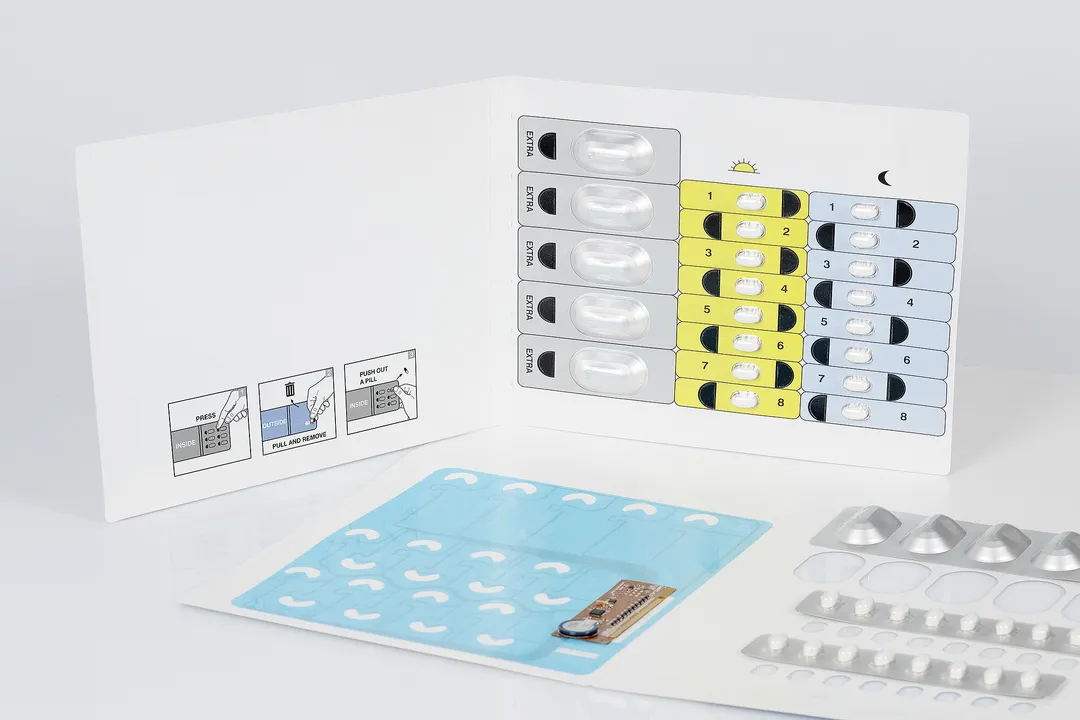
Schreiner Medipharm introduced its concept for a smart blister pack designed specifically to enhance medication adherence monitoring. [4][5] This solution is not merely a novelty; it addresses a critical need in both chronic disease management and the rigorous environment of clinical trials, where adherence data is paramount. [5][6] The core innovation lies in integrating electronic components discreetly within the packaging structure itself, allowing the pack to track usage without fundamentally altering the user experience that patients are already accustomed to. [3][8]
The smart packaging solution integrates printed electronics, such as Near Field Communication (NFC) or Radio-Frequency Identification (RFID) technology, onto the blister card. [4] This integration allows the pack to become an active data collector rather than a passive container. [4] Specifically, the packaging solution includes electronic capabilities that can register when an individual blister pocket has been pressed or opened. [4][8] This provides a precise, objective record of when medication was actually dispensed from the pack by the patient. [4]
# Adherence Monitoring System
The functionality centers on accurately capturing patient interaction with their medication schedule. [1] When a patient pushes a pill through the foil backing—the standard action of taking a dose—the integrated electronics register this action. [8] This physical interaction is translated into a digital signal that can be securely stored or transmitted. [4]
The system architecture typically involves:
- Embedded Sensors/Antennas: Printed electronics are applied to the blister card substrate. [3] These are designed to sense the deformation caused by pushing out a tablet. [4]
- Data Capture: The sensors detect the physical change, indicating a dose was taken. [8]
- Data Transmission: Depending on the configuration, this data can then be read via an external device, often using NFC or RFID readers. [4] This reading process effectively uploads the consumption log from the pack. [3]
It is important to note the difference between passive packaging that indicates it was opened (like a simple tear-off strip) and this system, which digitally records the time and date of the opening event for later retrieval. [1] This objective measurement is what elevates the technology to true adherence monitoring. [4]

# Clinical Trials Focus
One of the most significant initial use cases targeted by this smart blister technology is in the execution of clinical trials. [5][6] In Phase I to Phase IV studies, patient adherence to the study protocol is non-negotiable, as deviations can invalidate expensive and time-consuming research. [1] Non-adherence is a well-documented challenge in clinical research, often leading to misleading efficacy or safety data. [5]
Schreiner Medipharm’s approach offers a direct countermeasure to this by providing verifiable usage data. [6] If a study requires participants to take a pill twice daily, the smart pack logs every successful removal. This capability ensures higher data quality for researchers assessing the true impact of an investigational drug. [5] Furthermore, this objective tracking replaces less reliable methods, such as patient diaries or pill counts, which are susceptible to recall bias or intentional inaccuracy. [1] The ability to secure this verifiable data stream makes the smart blister card particularly attractive for organizations managing complex drug development programs. [6]
# Data Integration Insight
When considering the practical application of these smart packs, it becomes clear that the technology is not simply about sensing a push; it's about creating an integrated data ecosystem. The true value emerges when the data collected from the physical package connects with broader digital health platforms. For example, imagine a scenario where a patient is enrolled in a monitoring program. The smart pack registers the missed dose, and the system, perhaps via an associated smartphone app, can send a gentle reminder to the patient or alert a caregiver or study nurse. [4] This creation of an immediate feedback loop, powered by the physical act of taking medicine, transforms packaging from a static container into an interactive component of the care plan. This shift represents a fundamental maturation of pharmaceutical logistics, moving from supply chain management toward patient outcome management.

# Digital Wallet Concept
Beyond the standard blister card format, the innovation extends to developing a "smart blister wallet". [3] This evolution suggests a product designed to manage multiple doses or complex regimens over a longer period, perhaps integrating features that manage weekly or monthly medication schedules. [3] Such a wallet structure could potentially house more complex electronics or power sources necessary for extended data logging and communication capabilities. [3] While the basic principle remains sensing the opening of a pocket, the wallet configuration implies a more sophisticated deployment environment than a standard single-use card. [3]
The adoption of these technologies represents a strategic move by manufacturers to maintain relevance in a healthcare environment increasingly focused on measurable patient outcomes rather than just product delivery. [1] By adopting these interactive labeling solutions, companies invest in solutions that directly impact the effectiveness of their treatments by ensuring they are taken as prescribed. [2]
# Economic Value Analysis
The cost associated with developing and implementing smart packaging might initially seem high compared to traditional foil and plastic packaging. However, a closer look at the return on investment, especially in clinical research, reveals a compelling financial argument. Consider a late-stage clinical trial costing tens of millions of dollars. If a significant percentage of trial failures or suboptimal efficacy readings are later attributed to subjects not taking their medication correctly—a common finding—the cost of that non-adherence vastly outweighs the added expense of smart packaging technology. [5] By providing high-fidelity adherence data, smart packs can potentially salvage trial results, accelerate regulatory approval, or prevent the costly launch of a medication that proves ineffective in the real world due to poor patient uptake. [6] Therefore, the added cost of the technology acts as an insurance policy against data integrity failures in critical research phases.
# Technical Versatility
Schreiner Medipharm’s approach demonstrates flexibility in integrating different communication technologies. [4] The choice between NFC and RFID depends heavily on the intended use case. NFC is excellent for short-range, direct interaction—a patient holding their phone near the pack to upload data instantly. [3] RFID, which can sometimes allow for longer-range reading, might be more suitable for automated inventory checks or for reading data in a clinical setting without direct patient intervention in the data retrieval process. [4] This adaptability means the core invention—the method of sensing the blister opening—can be tailored to suit the required interaction level, whether passive logging or active patient engagement. [8] The ability to customize the electronic elements while maintaining the familiar blister structure is a key feature that promotes user acceptance. [2]
# Future of Pack Engagement
The move towards smart blister packs signals a broader industrial trend where packaging moves from an end-of-life consideration to a central piece of the patient experience. [1] While Schreiner Medipharm appears to be a primary driver in bringing this specific electronically integrated blister monitoring solution to the forefront, the foundational concept of "smart packaging" is expanding across the entire healthcare supply chain. [7] For the patient, this technology offers a gentle nudge toward better health habits. [1] For the pharmaceutical industry, it offers unprecedented, objective data, ensuring that when a treatment is proven effective in a controlled setting, there is a mechanism to encourage that same effectiveness in the real world. The continued refinement of such technologies suggests that in the near future, the absence of digital tracking in high-stakes medication delivery might become the exception rather than the norm. [1][4]
Related Questions
#Citations
Electronic Smart Blister Packages to Monitor and Support ... - NIH
Schreiner MediPharm develops smart blister pack
Schreiner MediPharm Introduces New Smart Blister Wallet
Schreiner MediPharm Enables Digital Adherence Monitoring
Schreiner MediPharm Develops Smart Blister Pack to Enhance ...
Schreiner MediPharm Develops Smart Blister Pack for Clinical Trial
Schreiner MediPharm improves adherence with Smart Blister Card
Information Mediary Corp.: IMC
Smart Blister Pack From: Schreiner MediPharm