Who invented smart kitchen appliances?
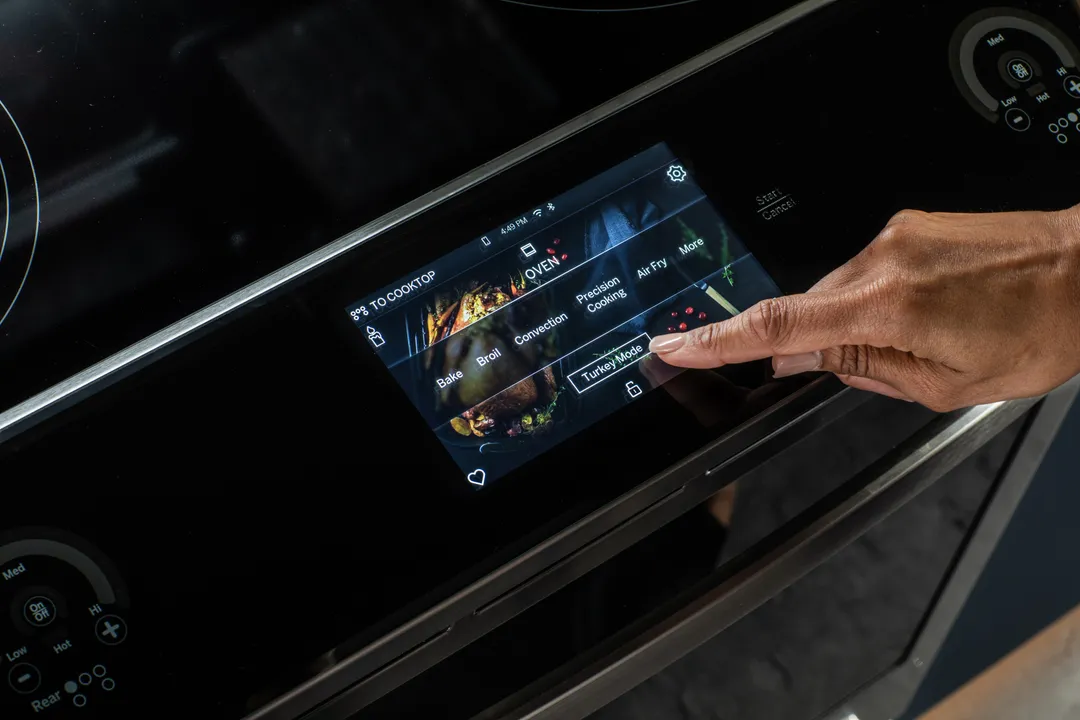
Pinpointing a single inventor for the modern smart kitchen appliance is like trying to name the sole inventor of the automobile; it was not a single eureka moment but rather a cascading series of technological intersections spanning decades. The concept of an appliance that thinks for itself began long before Wi-Fi became ubiquitous, evolving from simple mechanical aids to complex, internet-connected hubs. The current landscape, defined by connectivity and applications, stands on the shoulders of pioneers who first integrated electronics, sensors, and even rudimentary communication protocols into the very machines that handle our daily chores. [5][4]
# Early Automation
The journey toward automated convenience started quietly in the late 19th and early 20th centuries with electric counterparts to long-standing tools. [3][6] While an oven’s history traces back to 1490 in France, the first electric ranges appeared in the early 1890s, gaining traction only after electricity distribution improved later in the 1920s. [3] Similarly, the first electric dishwasher appeared in 1929, and the first electric washing machine, Thor, arrived in 1901. [4][3] These early machines, while revolutionary for removing manual labor, were guided by simple timers or knobs—they were automated, but not yet smart in the connected sense. [5]
# Sensing Milestones
A significant step away from mere manual operation occurred when manufacturers introduced features that allowed the machine to sense or decide based on conditions. For instance, the first self-cleaning oven was introduced in 1963, utilizing a pyrolytic system that required significant development and yielded over 100 patents for GE engineers alone. [3][4] This was an appliance reacting to a need (cleaning) autonomously, though not digitally connected. [5] Looking at dishwashing, the first dishwasher to feature auto-sensing gauges for soiled dishes appeared in 1995, a feature that adjusted washing time based on need rather than a fixed cycle. [3] This marks a crucial philosophical shift: the device is now measuring the environment, not just following a predetermined path. [8]
# Digital Precursors
As microprocessors became cost-effective, the appliances started displaying electronic intelligence. In 1984, innovations included electronic refrigerators that would sound an alert if a door was left open, and dishwashers that could be programmed to remember a start time. [3] This use of digital memory and auditory feedback signaled a capability beyond simple mechanics, moving toward user convenience via digital logic. [5]
By 1997, major appliance manufacturers were already conceptualizing truly connected experiences, even if the infrastructure wasn't ready for prime time. GE’s concept line included a refrigerator that could be web-enabled, a microwave that scanned bar codes, and an Advantium Oven capable of recognizing voice commands. [3] While these concepts were not immediately market-ready, they set the expectation that the kitchen of the future would be networked. [2] Another early attempt at device communication came in 2003 when the GE Profile Harmony Clothes Care System was launched; this washer could communicate electronically with the dryer, allowing the dryer to "listen" and adjust its cycle based on the washer’s output—a form of closed-loop, two-way communication within a single task ecosystem. [3]

# Connectivity Emergence
If we must identify a single device that best foreshadowed the internet-connected smart kitchen, it is often cited as a small countertop appliance. Around 1990, the debut of the internet-connected toaster provided the first prescient glimpse into this future, even if its practical function was limited. [5] The concept laid the groundwork for the current understanding of "smart," which centers around the Internet of Things (IoT). [5]
The infrastructure for whole-home digital control began taking shape in 1978 with the arrival of the X10 protocol, which used existing AC wiring to link devices—a precursor to the "smart house" idea that blossomed in the 1980s. [5]
# Major Connectivity Leaps
The true integration of smart features into major kitchen appliances gained serious momentum in the 2010s, driven by the rise of smartphone ubiquity and voice assistants. [3]
GE Appliances marked several key dates in the shift to connectivity:
- 2011: GE Profile appliances introduced Brillion™ technology, allowing them to communicate with utility price signals to automatically delay power consumption until off-peak, lower-cost periods. [3] This was smart in the context of saving the owner money without direct interaction.
- 2013: The first Wi-Fi connected oven was released, granting users the freedom to control their meal preparation remotely. [3]
- 2016: Building on the popularity of assistants like Alexa, GE Appliances launched the first voice-controlled oven. [3]
This move toward external control—via Wi-Fi, apps, or voice commands—is what most contemporary consumers equate with a "smart appliance," contrasting sharply with the autonomous but unconnected intelligence of the 1960s self-cleaning oven. [5] In fact, by 2018, GE Appliances was the first company to get products to connect directly with Google Assistant. [1]
# The Modern Disconnect
Today, the market is saturated with smart appliances, with up to 38% of models offered at retailers claiming some form of internet connection. [5] While these connections allow for remote control, software updates (like GE adding Air Fry modes via Over-the-Air updates post-purchase), [1] and maintenance notifications, the user experience has become complex. [5] The fragmented nature—where every appliance seems to require its own specific app—often frustrates home cooks, leading to skepticism about the true value of the technology. [8]
It is interesting to note that this modern frustration stems from a proliferation of connected features, while earlier, non-connected smart features—like precise temperature control or automatic dispensing—often became enduring standards because they solved fundamental problems reliably. [5] For example, the GE Profile Dishwasher with SmartDispense™ Technology (launched in 2005) held an entire detergent bottle and dispensed based on soil level and water hardness—a sophisticated, automated function that required no Wi-Fi to be useful. [3]
Considering the current market state, the evolution has shifted from proving if an appliance can connect to proving how it connects meaningfully. For example, the 2024 introduction of the GE Profile™ Smart Indoor Smoker with presets suggests a focus on delivering pitmaster-level results simply, which aligns with the desire for technology to enhance a culinary skill rather than just offer remote monitoring. [1]
# Defining The Smart Evolution
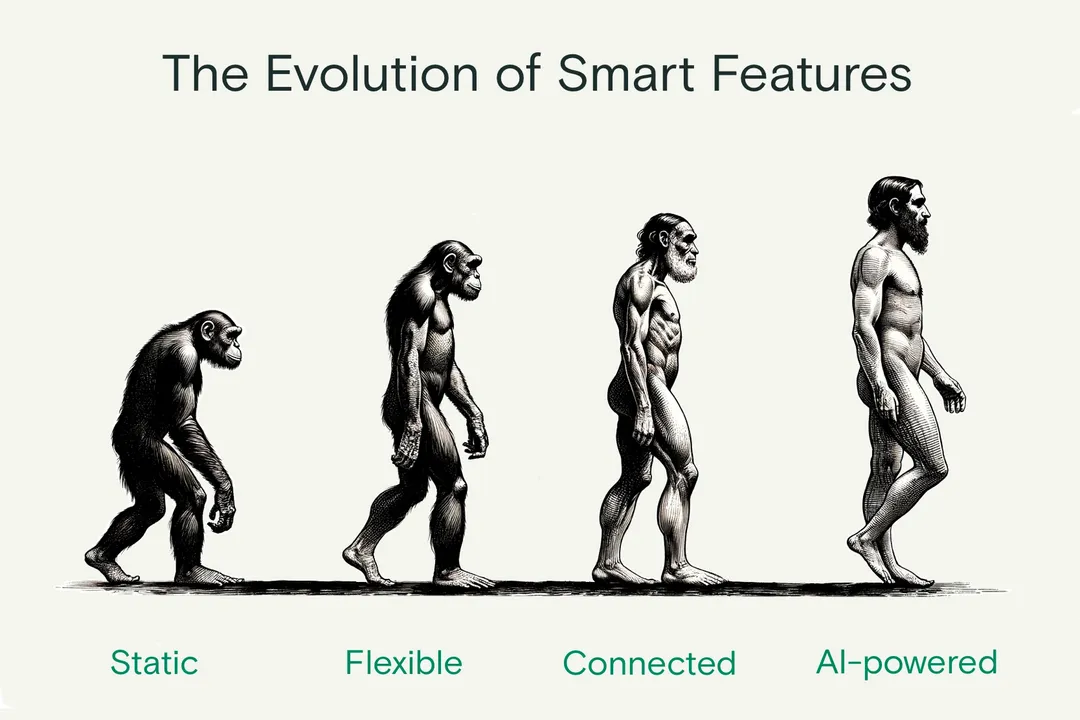
The path to the smart kitchen was defined by distinct technological eras, where "smart" meant something different at each stage. The earliest iterations focused on autonomy—machines taking over repetitive, set tasks like spinning clothes or heating water at a set temperature. [5] By the 1980s and 1990s, the focus was on digital programming and some internal sensing. [3] The true contemporary definition relies on connectivity—the ability to communicate externally via Wi-Fi, Bluetooth, or voice assistants. [5] A home cook today might prefer an oven that uses AI to sense internal temperature perfectly (a feature like the 2017 precision cooking probe) over a refrigerator that can send a grocery list, yet both fall under the "smart" umbrella. [1][8]
This comparison highlights a critical divergence: the inventor of the automated kitchen was likely a different set of engineers than the inventor of the connected kitchen. The former emphasized mechanical efficiency and reliability, while the latter emphasized data exchange and remote access. [5] We are currently in a phase where the industry is trying to merge these two definitions—using connectivity (AI chips, computer vision) to achieve better autonomy and accuracy, as seen in concepts where a kitchen hub watches the stovetop to confirm doneness. [1][8]
# Unifying Systems
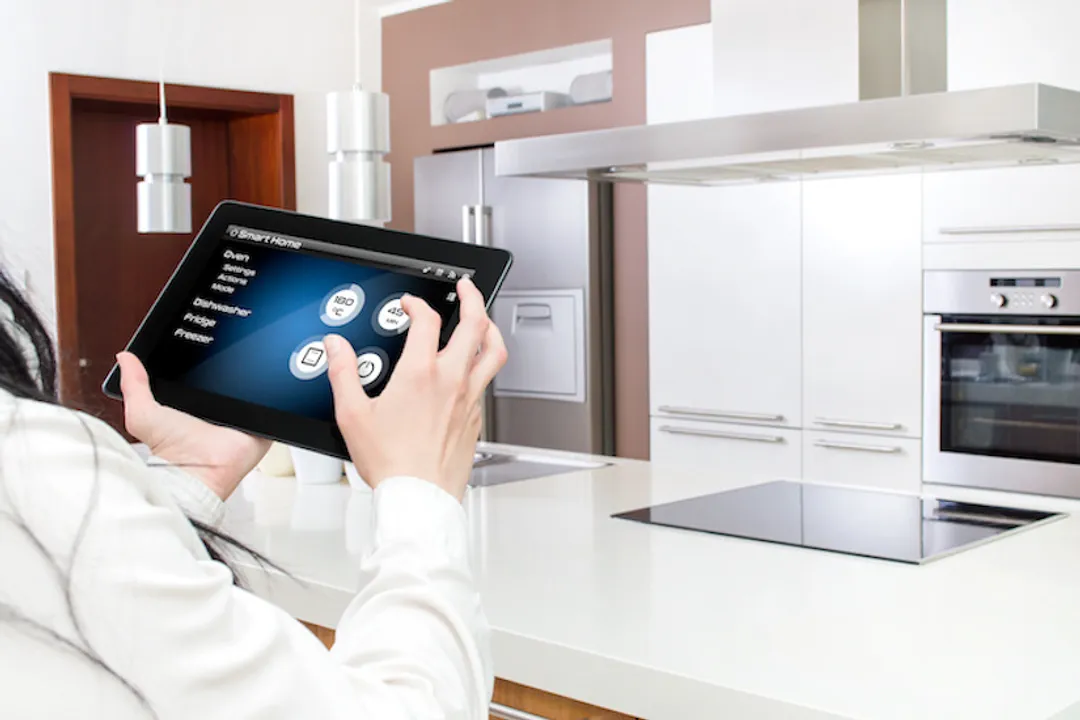
While manufacturers like GE have successfully integrated their own lines with platforms like Alexa and Google Assistant, [1] the current challenge isn't connecting a single brand but creating a unified ecosystem. As one expert noted, the current setup of needing an app for the fridge, another for the oven, and yet another for the lighting creates a "fragmented mess". [8] This reality contrasts with early attempts at internal system linking. The 2003 washer/dryer communication and the 1978 X10 wiring protocol suggest an earlier, though proprietary, drive toward device collaboration before the broader internet ecosystem matured. [5][3] The modern quest for a single, brand-agnostic application to manage everything is essentially attempting to retrofit that early system-level thinking across a diverse, global network of independent manufacturers. [8]
For the consumer, the promise remains strong: a kitchen that acts as a culinary companion, reducing food waste through inventory tracking and suggesting recipes based on current stock. [8] The inventors of tomorrow’s smart kitchen will not be those who simply connect a device, but those who successfully integrate these autonomous, data-driven capabilities into a single, reliable, and non-intrusive interface. [5][8]
Related Questions
#Citations
100 Years in the Making: The History Behind the Word “ ...
National Inventor's Day: Celebrating Breakthroughs in ...
Rise Of The Smart Kitchen
History of Appliance Innovation
The Past and Future of Smart Appliances
The History of Kitchen Appliances
Forget smart fridges, the smart kitchen needs a brain
Smart Kitchen Technology – Is It What Cooks Want?