Who invented smart crosswalks?
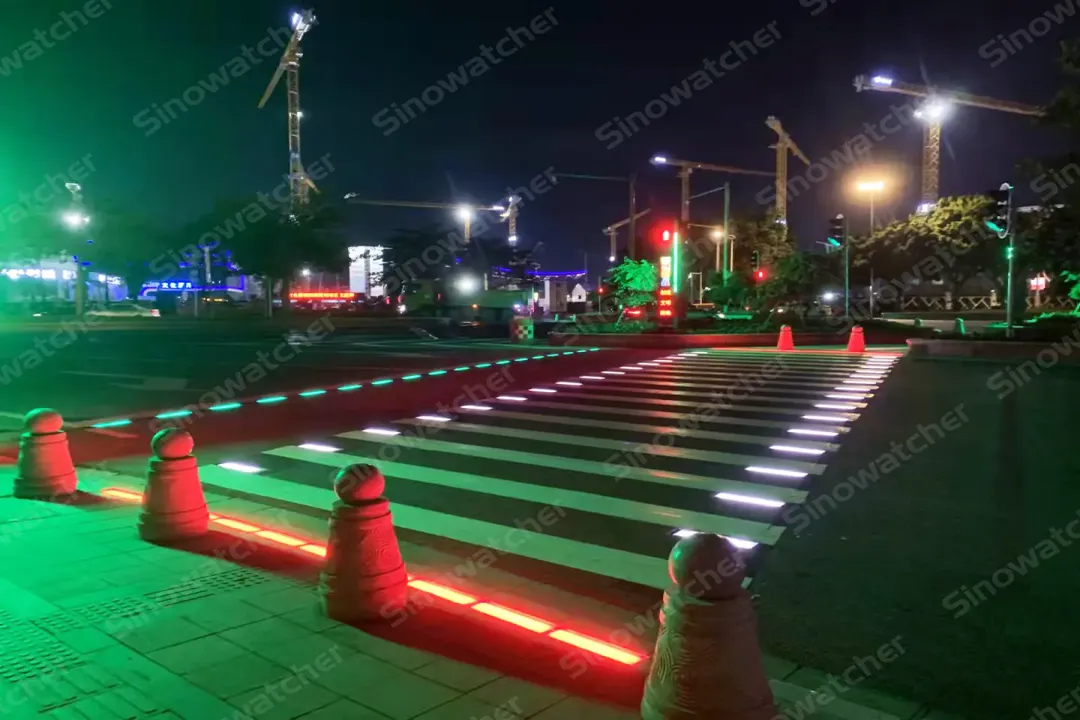
The quest to identify the single inventor of the "smart crosswalk" reveals not a single eureka moment, but rather a cascade of innovation from several dedicated engineers, designers, and companies addressing the critical problem of pedestrian safety across different decades and continents. While the traditional zebra crossing, famously conceptualized by George Charlesworth, has served for seventy years, the modern urban landscape demands systems that actively manage driver inattention and adjust to real-time conditions. This evolution has given rise to distinct categories of "smart" solutions, making the question of who invented them a story of multiple, concurrent breakthroughs.
# Founding Lights
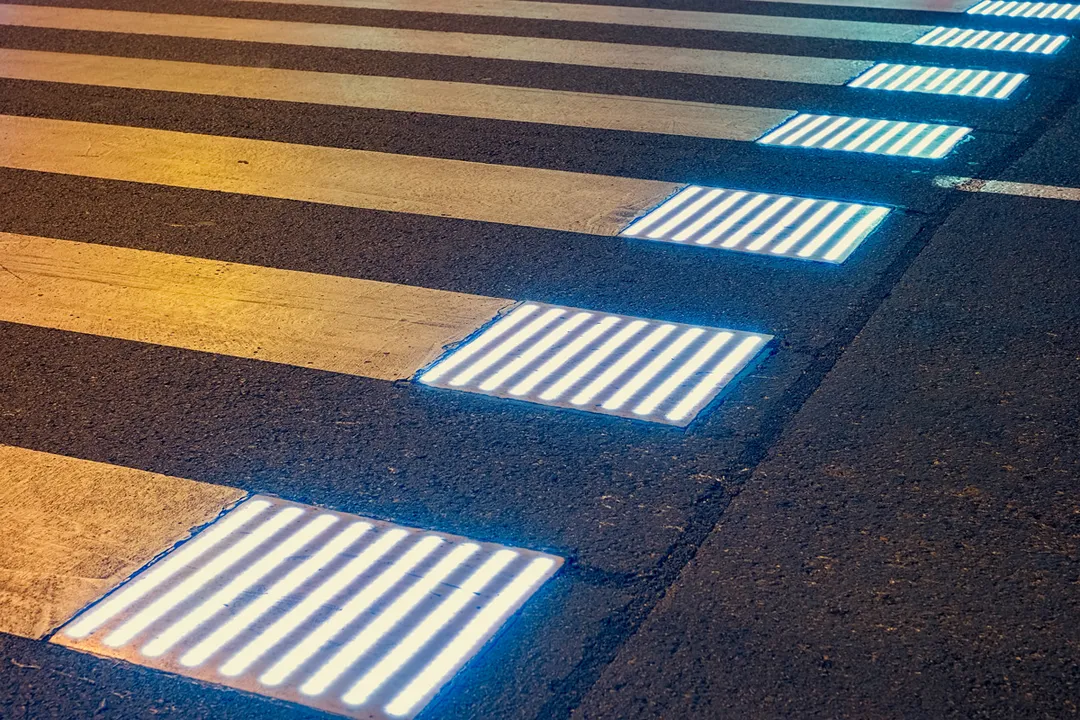
One of the most significant early milestones in the evolution toward truly smart crossings centers on embedding warning lights directly into the roadway surface. This foundational technology is strongly associated with Michael Harrison, the President and CEO of LightGuard Systems, Inc., based in Santa Rosa, California. Harrison began looking into an LED pedestrian warning system after a close friend was involved in a fatal crosswalk accident. His initial research and development culminated in a beta system by 1993, which he officially termed the Smart Crosswalk™. This system is defined by its In-Roadway Warning Lights (IRWLs)—amber light-emitting diodes encased in durable housing embedded into the pavement.
Harrison’s persistence was key to gaining traction for this novel approach. He presented the IRWL concept to the California Traffic Control Devices Committee (CTCDC) by the end of 1993. A crucial design element, mandated by the CTCDC and incorporated into the system, was shielding the lights from the pedestrian’s view to prevent any perceived "false sense of security". Instead, the lights flash outward toward approaching motorists. The specific flash pattern, known as Enlighten 1™, was developed in collaboration with the University Vision Detection Laboratory in Berkeley, California, specifically to capture and hold the attention of the approaching driver’s primitive brain centers responsible for noticing motion. By 1995, Harrison had secured a US Patent (Number 6,384,742 B1) for these IRWL-enhanced crosswalk systems. This work was pivotal, leading to the system's eventual adoption into the Federal Manual on Uniform Traffic Control Devices (MUTCD) by 1999, effectively setting a national standard for this type of active warning device.
# Beyond Illumination
While Harrison and LightGuard Systems pioneered the IRWL embedded light, other innovators focused on making the crosswalk intelligent through sensors and adaptive technology, pushing the definition of "smart" further into the realm of real-time responsiveness.
One sophisticated example comes from the British architectural firm Umbrellium, which developed the Starling system, officially named the STigmergic Adaptive Responsive LearnING Crossing. This is less about simple warning lights and more about creating a dynamic, responsive surface using an extensive mesh of LEDs connected to a neural data processing system fed by several cameras. The Starling system learns from its environment; for instance, it can widen its illuminated area during peak morning rushes to accommodate more pedestrians or change its pattern to align with diagonal pedestrian traffic flow, mimicking stigmergic communication found in ant colonies. Furthermore, it uses machine learning to classify objects, allowing it to specifically highlight an individual who strays from the designated crossing area or warn drivers about blind spots concerning bicyclists. When empty, the entire crossing surface vanishes from view.
Separately, the concept of sensor activation paired with ground illumination has been realized by Russian designer Alexey Chugunnikov, whose "Smart Crosswalk" design includes integrated sensors that turn the ground signage red the moment a pedestrian steps onto it. In conditions of poor visibility, this design supplements the activation signal by illuminating the crossing area with white light for both drivers and pedestrians.
A parallel development in sensor technology comes from companies like Bercman Technologies, which showcases their own smart pedestrian crosswalk systems, and Siemens, with their Omniled solution. Omniled focuses on autonomy, using sensors to detect a pedestrian's intent to cross and automatically activating both pavement and upper lighting, often utilizing renewable energy sources to power the system. LightGuard Systems itself expanded its offerings beyond simple IRWLs by inventing the Automatic Activation Bollard Sensor pedestrian detection system.

# Mapping the Modern Landscape
The current ecosystem of smart crosswalk technology is not about a single invention but a competition across different methods to solve the universal problem of driver inattention.
| Technology Type | Core Mechanism | Primary Inventor/Developer Focus | Key Feature |
|---|---|---|---|
| In-Roadway Warning Lights (IRWL) | Embedded, flashing amber lights activated by pedestrian presence | Michael Harrison / LightGuard Systems | Direct, non-pedestrian visible warning to motorists |
| Adaptive/AI Crossing | LED mesh surface, cameras, neural processing unit | Umbrellium (Starling) | Dynamically changes size and pattern based on flow |
| Sensor-Activated Ground Signage | Sensors detect foot traffic to illuminate the ground markings | Alexey Chugunnikov | Turns red upon entry; uses white light for low visibility |
| Autonomous Reactive Lighting | Sensors detect intent; activates pavement and upper lights | Siemens (Omniled) | Renewable energy use; lights activated before the pedestrian is fully in the crossing path |
When communities consider adopting these safety measures, the underlying technology dictates the implementation complexity. For example, installing embedded IRWLs, pioneered by Harrison, requires significant road cutting, trenching, and the use of durable, snow-plow resistant base plates to ensure longevity—a substantial infrastructural commitment. This contrasts sharply with simply adding Rectangular Rapid Flashing Beacons (RRFBs) or illuminated signs on posts adjacent to the roadway, which may represent a lower initial civil engineering barrier. The choice between a system that requires cutting into the asphalt versus one that relies on surface overlays or pole-mounted devices often boils down to municipal budget cycles and the tolerance for traffic disruption during installation.
The effectiveness of these systems is well-documented, particularly the IRWLs, which research suggests lead to a significant decrease in pedestrian crashes at marked crosswalks compared to traditional methods, especially in adverse weather or darkness. This emphasis on observable results is why legal advocates, such as Wayne Parsons in Hawaii, actively call for the use of proven innovations like the Smart Crosswalk™ to combat local pedestrian fatality rates, noting that in Hawaii alone between 1997 and 2006, 37% of pedestrian deaths occurred in Honolulu.
# Navigating Future Crossings
The development of the smart crosswalk is a testament to an engineering spirit that seeks to correct human error through technology. From Michael Harrison’s focused effort to make pavement warn drivers, to Umbrellium’s application of artificial intelligence to manage pedestrian density, the core aim remains unchanged: to make the vulnerable moment of crossing the street less perilous.
As you move through your community, taking note of these advances can offer a small piece of personal safety knowledge. When approaching an intersection equipped with advanced warnings, try to distinguish how the warning is being delivered. If you press a button and see lights flashing on posts on either side of the road, you are encountering a common flashing beacon setup. However, if you notice amber lights embedded in the asphalt begin to pulse as you step off the curb, you are witnessing the legacy of the IRWL technology pioneered decades ago. Recognizing the specific warning mechanism can help you, as a pedestrian, confirm that the system is indeed active and that drivers are receiving the specific, high-visibility alert intended for that location.
The future points toward greater integration, as demonstrated by the AI-driven adaptive systems. The next generation of the smart crosswalk won't just react to someone crossing; it will use predictive modeling to manage the flow of people and vehicles before conflicts even arise. The "inventor" of the smart crosswalk, therefore, is an ongoing collaboration between safety advocates, regulatory bodies, and a dynamic field of technology developers striving to make urban mobility safer for everyone on the road.
#Videos
The Story of Smart Crosswalk™ In-Roadway Warning Lights (2007)
Siemens developed an autonomous solution to increase safety on ...
Related Questions
#Citations
The Efficacy of In-Roadway Warning Lights at Crosswalks
The Story of Smart Crosswalk™ In-Roadway Warning Lights (2007)
The Hawaii Pedestrian Crosswalk Safety Chronicles: Innovative ...
An illuminated crosswalk to improve pedestrians' safety - JCDecaux
A Smart Zebra Crossing that Learns from Pedestrians