Who invented immersive audio?
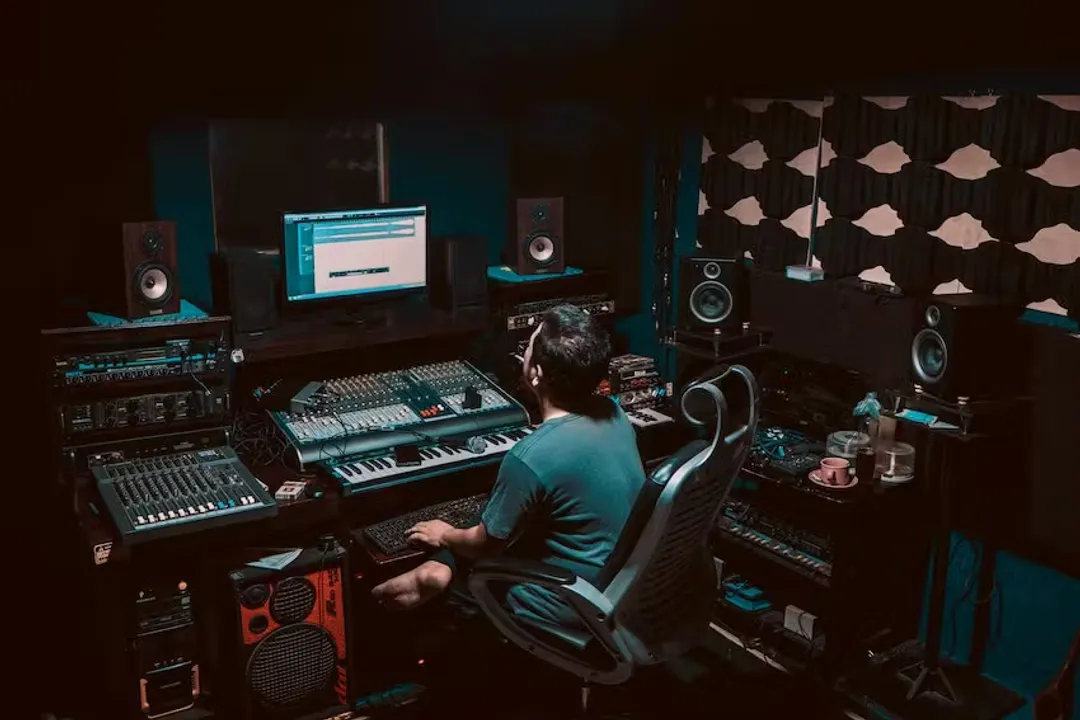
The quest to attribute the invention of immersive audio to a single person is much like trying to name the sole inventor of the automobile; it’s an evolution built on centuries of psychoacoustic understanding and incremental technological leaps. Instead of a singular "Eureka!" moment, immersive audio represents the maturation of various sound reproduction techniques aimed at fooling the human brain into perceiving sound originating from anywhere but the speakers. [7] It’s a technological lineage, a family tree where each branch—from early stereo panning to advanced spatial rendering—fed the current iteration of three-dimensional sound. [4] Understanding who "invented" it requires looking at the fundamental discoveries that made the illusion possible in the first place.[1]
# Defining Soundscape
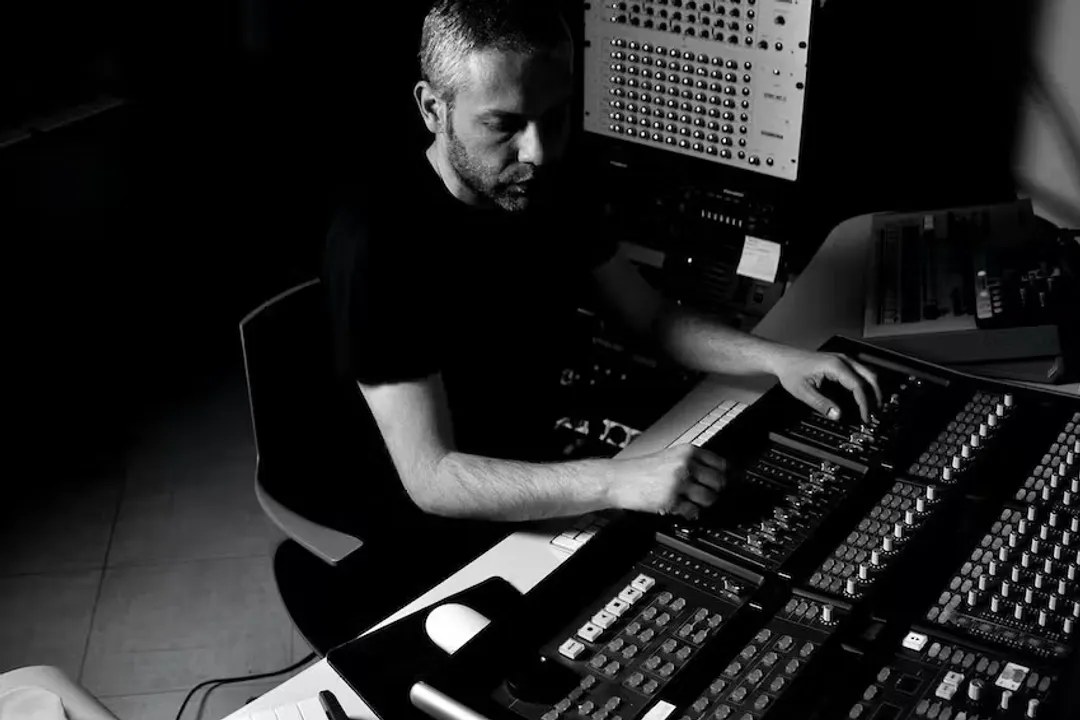
Immersive sound, at its core, is about creating a realistic, three-dimensional auditory environment around the listener, moving far beyond traditional left/right stereo or even surround sound configurations. [2][8] It’s an experience designed to trick the mind into believing sounds are coming from specific locations in space—above, below, behind, and all around—rather than just from discrete speaker channels. [6] This contrasts sharply with older formats where audio objects were locked to specific speaker locations, such as the front-left or rear-right. Immersive audio often employs object-based audio or advanced processing to place sounds dynamically within a spatial field. [5] A key characteristic that distinguishes it is the introduction of the height dimension, which was largely absent in previous home theater standards. [6]
# Binaural Roots
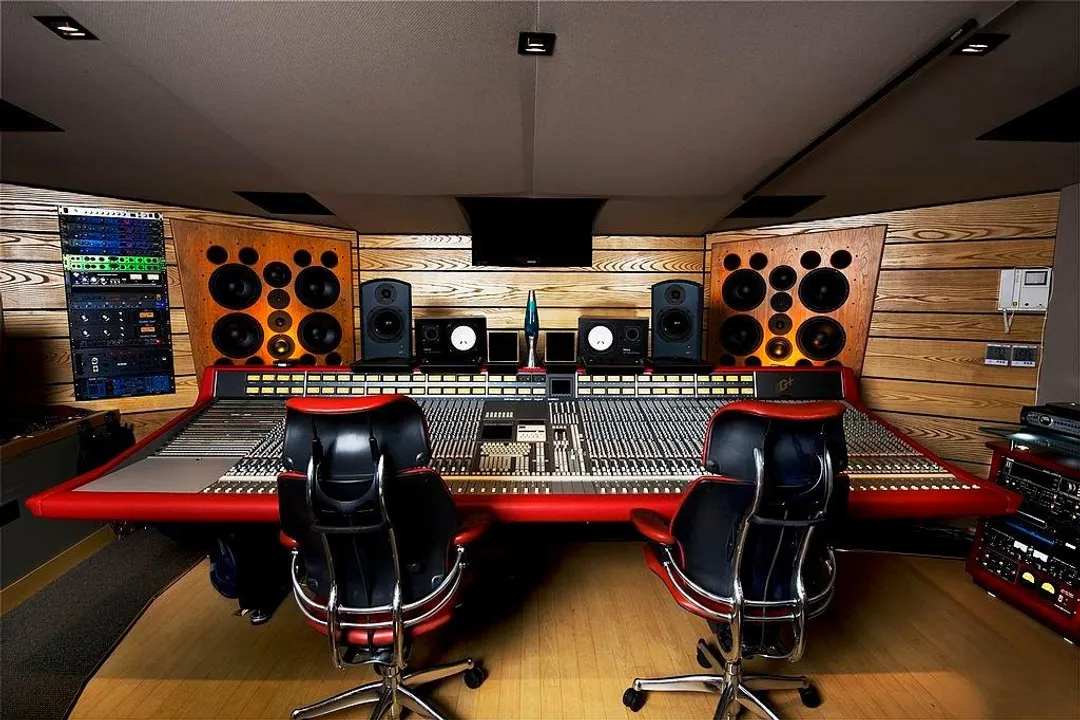
The scientific groundwork for true spatial audio largely stems from binaural audio, a concept whose principles have been understood for decades, perhaps even a century or more, depending on how you define the "invention". [1] Binaural audio relies on delivering two distinct audio signals, one to each ear, that precisely mimic the way sound travels to the eardrums in the real world. [3] This process accounts for two critical physiological cues: the Interaural Time Difference (ITD), the tiny difference in arrival time between the left and right ears, and the Interaural Level Difference (ILD), the difference in loudness due to the head physically blocking some sound waves. [3]
Pioneers in the mid-20th century experimented with dummy heads equipped with microphones placed inside the ear canals—often referred to as "dummy head recordings"—to capture these precise spatial cues. [1] This method, while technically sound for creating a personalized, near-perfect 3D experience for a single listener wearing headphones, was inherently limited. It was not scalable for multi-listener environments like a living room or cinema, which is the ultimate goal of modern immersive formats like Dolby Atmos or Auro-3D. [5][9] However, without the rigorous study of ITD and ILD, the current high-channel-count or object-based systems would lack the psychoacoustic realism that makes them effective. [3]
# Channel Versus Object
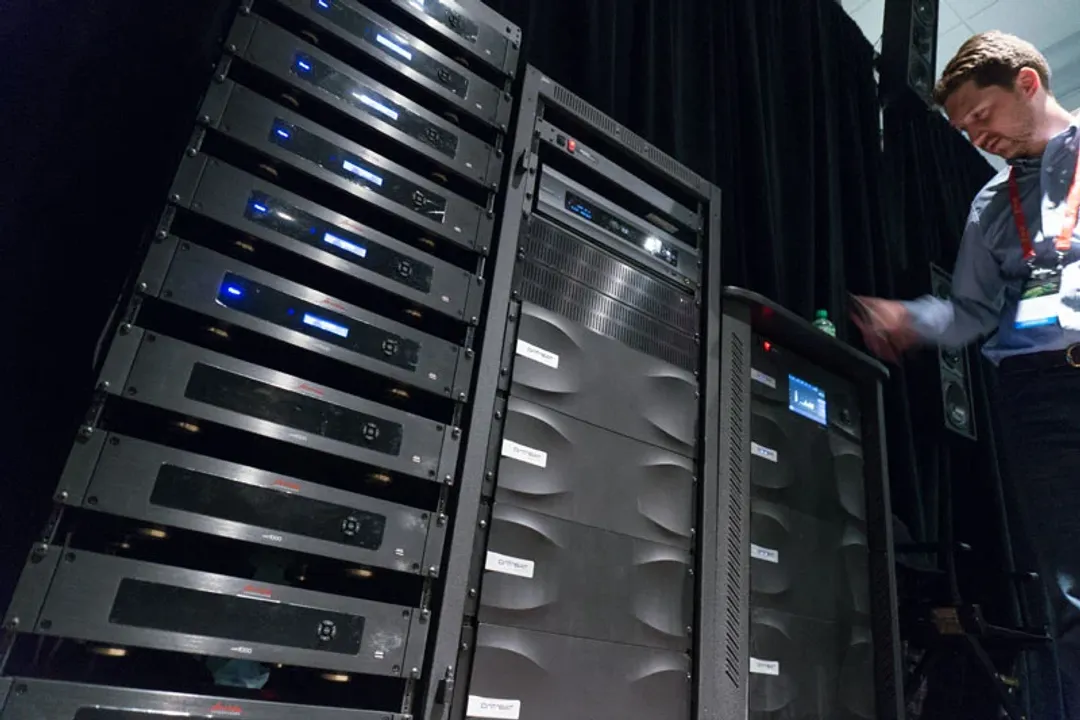
The historical progression shows a clear shift in methodology. Before object-based audio dominated, the industry focused on channel-based audio. [4] Early surround sound systems, like 5.1 or 7.1, dictated that specific sounds or sound elements (like a helicopter or a specific musical instrument) must be mixed directly to a corresponding physical speaker channel. [6] If the cinema or living room setup did not have that exact speaker configuration, the intended spatial effect would break down or be lost entirely. [4]
Immersive audio introduced the object-based paradigm. [5] In this model, a sound element—say, a clap of thunder—is treated as an object assigned coordinates in three-dimensional space, rather than being assigned to Speaker Channel 7. [6] The renderer, which is the software engine powering the system, then intelligently calculates which of the available speakers (whether that’s 11 speakers or 64) should reproduce that sound object at any given millisecond to best match the intended coordinates. [5] This adaptability is what allows modern immersive mixes to scale up or down significantly from a theatrical presentation to a standard home setup, providing a flexibility that channel-based systems could never achieve. [4]
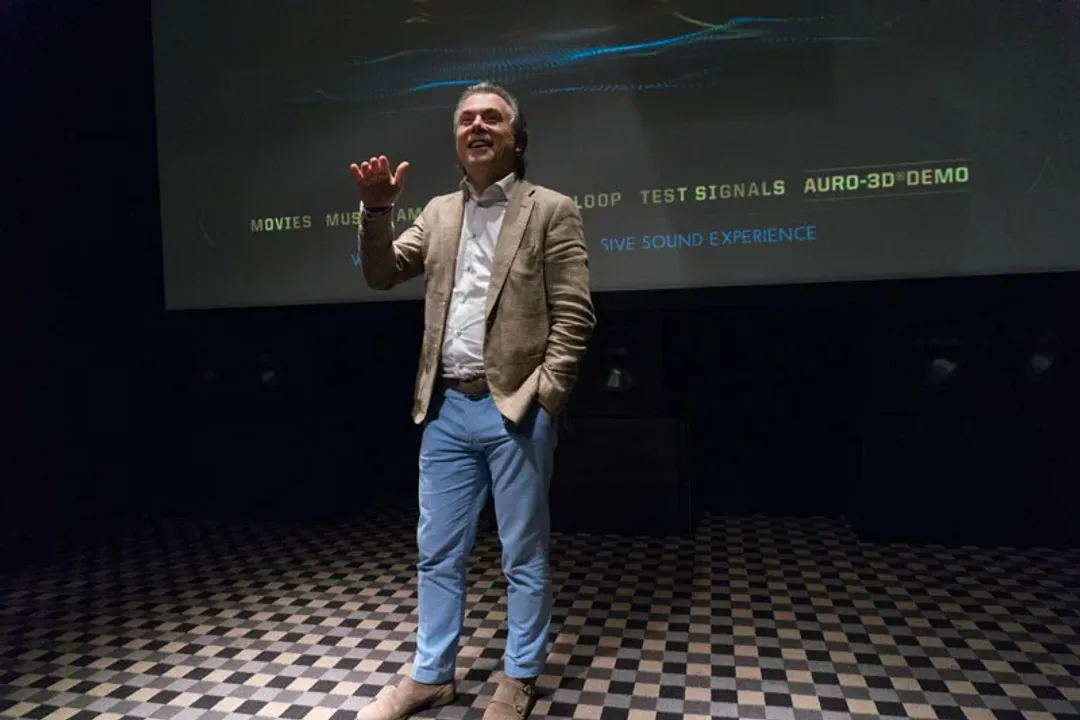
It's worth noting that some technologies tried to bridge this gap earlier. For instance, systems like Auro-3D, showcased years ago at events like CEDIA, provided an immersive experience by incorporating a distinct height layer above the traditional surround plane, often achieved through specific speaker arrangements. [9] This focused on verticality within a channel-based structure before the full object-based revolution took hold in the mainstream.
# Key Milestones
While no single inventor can claim the title, several individuals and companies made discoveries that were prerequisites for today's standards. The formal study of how humans localize sound, which underpins all spatial audio, has roots stretching back to the very early days of audio engineering and military research on acoustic localization. [1]
The commercialization of the concept of enveloping sound began with multi-channel formats that paved the way for the object-based future. These stepping stones, which built upon the foundation of stereo imaging, included:
- Early Multichannel Formats: Moving from two channels to discrete configurations like 5.1 and 7.1, establishing the concept of multiple discrete playback points. [6]
- Height Layer Introduction: The development of systems that consciously addressed the vertical axis, recognizing that sound rarely stays on a flat plane. [9]
- Object-Based Rendering: The computational breakthrough that decoupled the sound source from the physical speaker location, allowing for dynamic movement and scalability. [5]
If one were forced to point to a modern architect of the dominant immersive standard, figures associated with companies like Dolby, who popularized the object-based rendering model that now dominates cinema and streaming platforms, would feature prominently in the discussion. However, their work is predicated on decades of psychoacoustic experimentation. [7]

# Psychoacoustic Insight
One aspect often overlooked when discussing "invention" is the intent behind the technology. Early binaural work was intensely focused on perceptual accuracy for a single user in headphones, aiming for near-perfect acoustic reproduction of a recording environment. [3] Modern immersive audio, such as what is found in a Dolby Atmos stream, carries a slightly different intent: scale and translation. [5] The goal is not just perfect accuracy at one point, but ensuring the feeling of spatial audio translates convincingly across a wide range of consumer speaker setups, from a 10,000 dedicated theater system. [4] This engineering challenge—making the illusion robust across diverse consumer hardware—is arguably a more complex "invention" than the initial psychoacoustic discovery itself. To truly appreciate this, consider that a mix designed for 64 speakers must intelligently collapse its positional data for a 7.1.2 setup without losing the sense of overhead information; this translation layer is where much of the modern proprietary expertise lies. [7]
# Format Evolution
The family tree of immersive audio shows clear ancestral lines connecting older spatial audio formats to current heavyweights. [4] Today's landscape is dominated by a few major players, each with slightly different approaches to spatialization and speaker placement. [5]
| Format Family | Core Methodology | Key Characteristic |
|---|---|---|
| Binaural Audio | Two-channel processing using HRTFs | Headphone-centric realism [3] |
| Channel-Based 3D | Fixed speaker mapping with height layer | Specific, non-scalable speaker layouts (e.g., Auro-3D precursor) [9] |
| Object-Based Audio | Sound objects assigned 3D coordinates | Scalable playback based on available speakers (e.g., Dolby Atmos) [5] |
The advent of object-based audio, as implemented by technologies like Dolby Atmos, marked a significant conceptual shift for the mass market, moving the focus from speakers to sound objects. [5] This shift is why many consumers today associate immersive audio with the formats used in modern cinema and high-end streaming services. [5]
# Consumer Adoption Barrier
While the technology to create compelling 3D sound has been theoretically sound for decades, its mass adoption was historically gated by hardware complexity and cost. [7] For decades, achieving a true 3D sound field required specialized, often proprietary, decoding equipment and a significant number of precisely placed loudspeakers. [1] If a listener wanted to experience the height dimension, they needed ceiling speakers or upward-firing modules, adding expense and installation difficulty. [9]
The current success of immersive audio is less about a new invention and more about the democratization of that invention. Manufacturers have found clever ways to render complex spatial data using fewer physical drivers—for example, by bouncing sound off ceilings or using advanced digital signal processing to synthesize height cues from standard upward-firing speakers. [6] This ability to deliver a perceptually immersive experience without requiring dozens of speakers is crucial for the living room environment.
An interesting practical observation for those looking to build a modern setup involves the playback chain. Even if a streaming service or Blu-ray provides a 7.1.4 mix (seven surrounds, one subwoofer, four height channels), if the playback device—like an AV receiver—lacks the processing power or speaker outputs, it must downmix intelligently. [4] The failure scenario here is often the loss of distinct height objects, which collapse into the nearest surround channels, diluting the intended effect. Therefore, the system that successfully translates the object metadata into a pleasing sound field across varied speaker counts is as critical as the original mix format itself. [7]
# A New Frontier
To revisit the core question, who invented immersive audio? The answer is a collective of acousticians, physicists, and audio engineers who painstakingly mapped the mechanics of human hearing and translated those mechanics into reproducible playback formats. [3][7] There is no single patent or name that encapsulates the entire field, which ranges from 19th-century acoustic studies to today's real-time rendering engines. [1][4]
Immersive audio is best viewed not as an invention, but as a convergence point where psychoacoustics met processing power. [7] It required the establishment of binaural understanding, the development of multi-channel standards, and finally, the computational leap that allowed sound to be treated as objects in space rather than rigid channels. [6][5] The breakthrough was realizing that the sound could exist independently of the speaker, a profound shift that defines the current era of spatial audio.[4]
Related Questions
#Citations
The Origin of Immersive Audio - Omni Soundlab
Definition of Immersive Sound | PCMag
Introduction to Binaural Audio – The Science Behind Immersive Sound
The Immersive Audio Family Tree - Sonarworks Blog
What Is Immersive Audio?: How Engineers, Artists & Industry Are ...
An Introduction To Immersive Audio
Immersive Audio: The Past Repackaged or a New Frontier?
What is an immersive sound experience - dizitouch
Auro 3D Immersive Audio Demo at CEDIA 2014 | AVS Forum