Who invented streaming audio protocols?

The very notion of listening to music or a broadcast over a network without waiting for the entire file to download represents a significant technological shift, one that didn't stem from a single "Eureka!" moment but rather from a series of escalating technical solutions. This evolution, which transitioned digital audio from cumbersome file transfers to continuous, real-time delivery, required the invention and refinement of specific protocols—the agreed-upon rules for communication. The earliest attempts to share audio digitally were plagued by the limitations of the existing network infrastructure, primarily slow dial-up speeds, making true, uninterrupted listening nearly impossible.
# The Dawn

Before sophisticated streaming protocols existed, the internet was mostly about transferring static files. If you wanted an audio clip, you used FTP or HTTP to download the entire file—say, an MP3—and then you could play it. This was fine for short sound bites but wholly impractical for live events or longer musical performances, as the wait time could be excessive or the connection unstable, leading to frustrating interruptions. The challenge wasn't just moving the data; it was moving it fast enough, consistently enough, and allowing the recipient device to start playing before the transfer finished. Streaming media, in its essence, is simply data transmission over a network where playback begins before the entire file has been received.
# Early Transfer Methods
The first major step away from pure download-then-play was progressive downloading. This method, often associated with early web servers, allowed the browser to begin rendering or playing the media file once a certain buffer threshold was met, typically using the standard Hypertext Transfer Protocol (HTTP). While this felt like streaming to users in the late 1990s, it wasn't true streaming in the modern sense because the protocol itself wasn't designed for real-time control. If you paused a progressively downloaded file, the server usually just stopped sending data, and seeking backward or forward often required the client to request a completely new segment of the file from the server.
This limitation—the lack of interactive control over the data stream—was a major barrier. Think about how you use a modern player: you hit pause, the stream pauses; you drag the slider to the end, and it jumps there immediately. Progressive downloading over HTTP was clunky at best for these operations. The industry recognized that a new layer of communication was necessary, one specifically engineered for the continuous, time-sensitive nature of audio and video delivery, which needed to manage playback timing and session control separate from the actual data transport.
One foundational insight in the history of streaming lies in recognizing that the invention wasn't just the data pipe, but the remote control for that pipe. HTTP is great for requesting a file (a one-shot action), but streaming demands ongoing management: play, pause, seek, stop. This demand for session control is what necessitated the creation of dedicated signaling protocols.
# Protocol Standardization
The move toward standardized, true streaming involved several key players and protocols, often developed in parallel or in response to proprietary early solutions. A major milestone in establishing interoperable standards arrived with the development of protocols designed explicitly to handle multimedia sessions.
One of the most enduring examples of this standardization effort is the Real-Time Streaming Protocol (RTSP). Developed by RealNetworks, Netscape, and Columbia University, RTSP emerged as a critical component in controlling media servers. It functions as a network control protocol designed to manage the delivery of real-time data, such as audio and video streams. It sits above the actual transport mechanism, which is often the User Datagram Protocol (UDP) via Real-time Transport Protocol (RTP).
While RTSP manages the session (the commands), it relies on RTP to handle the actual packet delivery, ensuring that media data arrives with the necessary timing information attached. RTP is crucial because it incorporates sequence numbers and timestamps, allowing the receiving client to reassemble the audio packets in the correct order and maintain correct playback timing, compensating for network jitter and delay. Therefore, while one might point to the development group behind RTSP as inventors of a key control protocol, the actual streaming capability relies on the transport layer protocols like RTP, which were often developed in tandem or slightly earlier by the Internet Engineering Task Force (IETF) working groups.
The history shows a necessary layering of inventions: the initial concept of continuous delivery, followed by the data transport mechanism (like RTP) to carry time-sensitive packets, and finally, the control mechanism (like RTSP) to interact with that stream.
# Real Time Control
To better understand who "invented" streaming, it helps to separate the duties:
| Function | Primary Protocol Type | Example Protocols | Role |
|---|---|---|---|
| Session Control | Signaling Protocol | RTSP | Tells the server what to play and how (play, pause, seek). |
| Data Transport | Transport Protocol | RTP | Carries the actual audio/video data packets with timing information. |
| Data Transmission | Transport Layer | UDP/TCP | The underlying method the packets travel across the network. |
This layering illustrates that inventing a streaming protocol wasn't a single act, but rather the establishment of these interacting standards. The technical necessity for low-latency, two-way communication drove this layered approach. The early proprietary players, like RealNetworks with its RealPlayer and associated protocols (like RealMedia), gained significant early traction by solving these problems first, even if their solutions were initially closed systems. Their success demonstrated market demand and forced the industry toward open standards like those emerging from the IETF.
The evolution of audio networking itself further underscores this. Audio networking, particularly in professional settings, has long wrestled with synchronization and transport issues. While these often involve local area networks (LANs) rather than the wide area network (WAN) of the public internet, the fundamental challenges of managing time-sensitive digital streams—preventing dropouts, managing latency, and ensuring smooth synchronization—are the same problems that early internet streaming protocols had to conquer.
# Modern Convergence
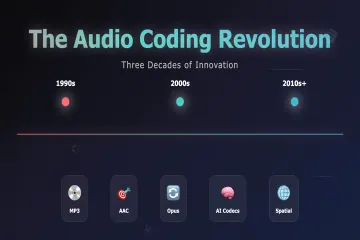
As the internet matured, the concept expanded far beyond simple audio clips to encompass rich media experiences, as seen with modern video services. This expansion put even greater pressure on the underlying protocols. While older protocols like RTSP were foundational, modern delivery systems often rely on HTTP-based adaptive streaming technologies (like HLS or DASH) for better compatibility with firewalls and caching infrastructure, even for audio-only content.
However, these modern HTTP-based methods still rely on the fundamental principles established by the earlier protocols: the data must be segmented, time-stamped (or segment-stamped), and the client needs a way to request the next segment efficiently based on playback needs—a conceptual descendant of the session control RTSP provided.
In tracing the lineage, one sees a pattern where initial proprietary software (like early streaming applications) solved the problem first, proving the concept and establishing early usage models. These successes then spurred the formal standardization efforts by bodies like the IETF, resulting in publicly defined protocols such as RTSP and RTP, which allowed wider, interoperable adoption across different hardware and software vendors. Therefore, while specific individuals or small groups likely authored the initial RFCs (Request for Comments) for these standards, the "invention" belongs to the collaborative process of addressing the technical failures of static file transfer in a time-sensitive environment. The core breakthrough was moving from file-centric communication to session-centric communication over the internet.
#Videos
Yuriy Reznik - Streaming in 1970s. NVP & ST - YouTube
Related Questions
#Citations
Streaming media - Wikipedia
Audio Networking - AES - Audio Engineering Society
Whitepaper - The History of Streaming Told Through Protocols
Yuriy Reznik - Streaming in 1970s. NVP & ST - YouTube
Streaming media | Definition, History, & Facts - Britannica
Audio Streaming – A New Professional Approach
History of Streaming Media | Infographic - Wowza
Streaming audio protocols explained