Who invented spatial audio?
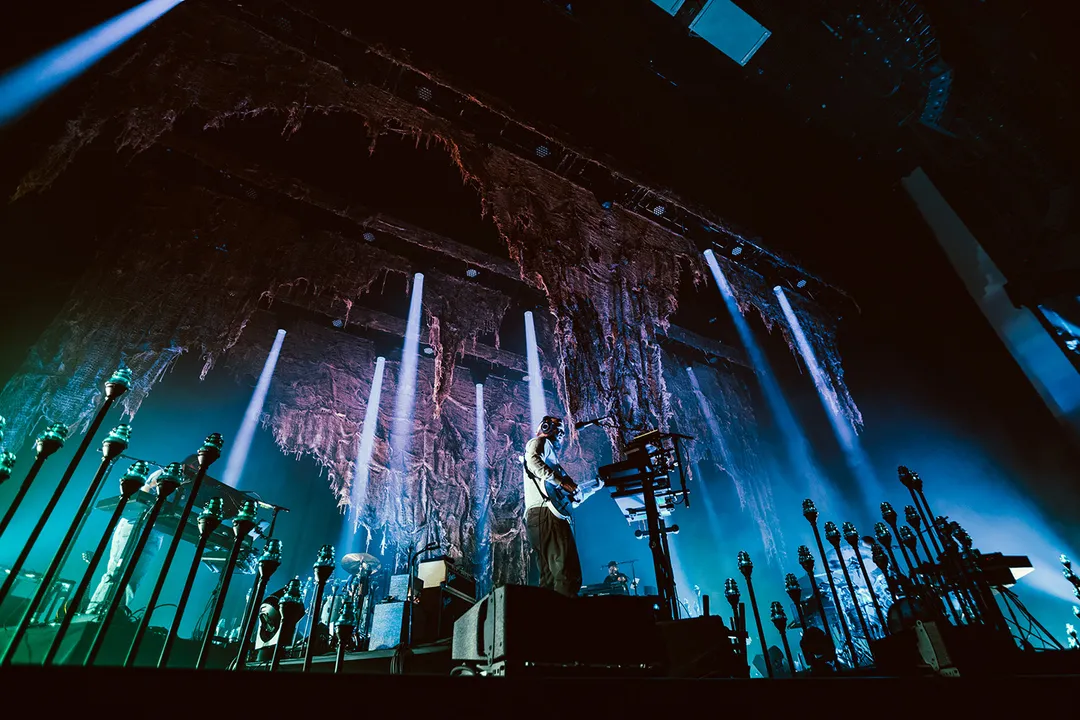
The genesis of spatial audio is not attributable to a single individual; rather, it is a continuous sonic evolution spanning centuries, driven by composers, engineers, and acousticians striving to move sound beyond the simple left-to-right of stereo. [4][7] Sound, by its very nature, is spatial—it propagates in three dimensions—and the quest has always been to find the most effective technology to reproduce that reality. [1] While modern iterations, such as Apple’s branded Spatial Audio, often dominate current conversation, the foundational concepts stretch back to antiquity and the dawn of electronic signal manipulation. [3][4]
# Ancient Architectures
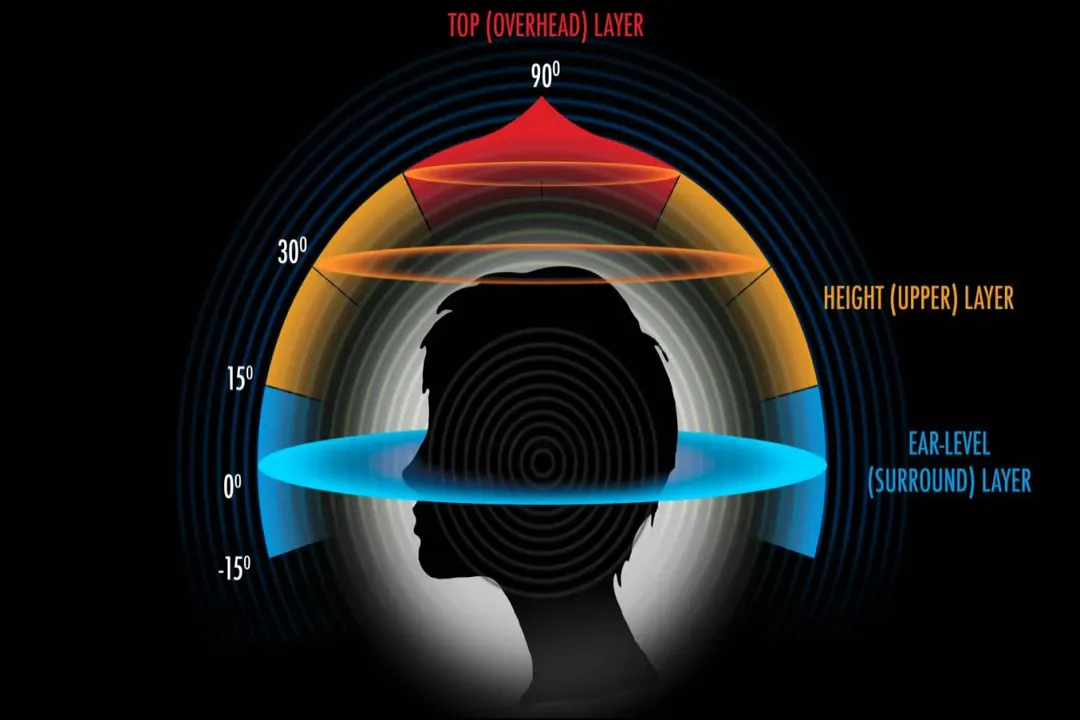
Long before electronic amplification, the architectural manipulation of sound demonstrated an understanding of spatial experience. [8] Ancient Greek amphitheaters, for example, were meticulously engineered into hillsides; their semi-circular seating acted as a natural reflector, directing sound from the stage to thousands of attendees with deliberate acoustic clarity. [8] This understanding carried into organized music, particularly in religious settings. [8]
A key moment in musical spatialization occurred in the mid-1500s with the development of cori spezzati, or split choirs, which saw choirs divided into smaller groups singing in alternation. [2][8] Belgian composer Adrian Willaert, while serving as musical director at St. Mark's Basilica in Venice, helped popularize this technique by exploiting the church’s dual organ placements to create a lattice of sound over the congregation. [2] This required ensuring each section was harmonically complete, creating an effect independent of the listener’s seat location. [2] Further explorations into spatial arrangement continued, with American composer Charles Ives later in history physically separating orchestra members to evoke a greater sense of distance in performance. [1]
# Binaural Seeds Stereo
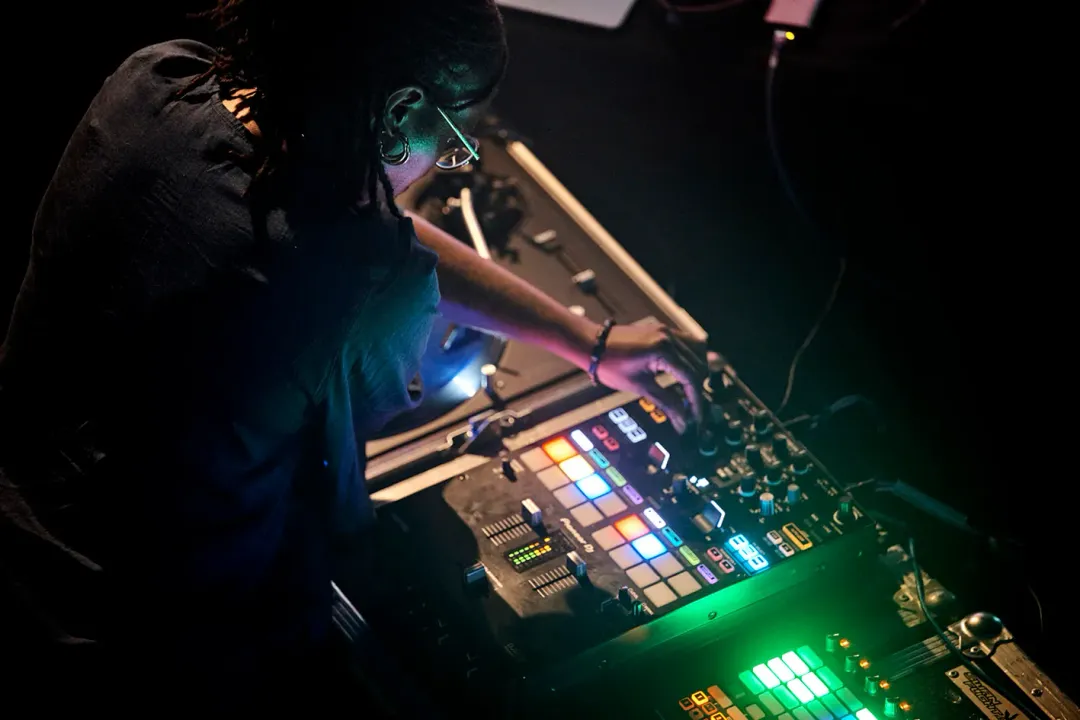
The move toward electronic spatial audio has two primary, somewhat separate, ancestral lines: binaural recording (mimicking human ears) and multichannel sound (using multiple speakers). [4] The binaural concept, which seeks to recreate the experience using two channels designed for headphones, dates back to the late 19th Century. [4] French engineer Clément Ader in the 1880s experimented with transmitting opera audio over telephone lines using two distinct microphones, one for each ear. [8] This technique aims to capture sound as the human head naturally perceives it, including the subtle Interaural Time Differences (ITD) and Interaural Level Differences (ILD) that tell the brain direction. [4]
The next major advance was stereophonic sound, developed by British engineer Alan Blumlein in the 1930s, which utilized two audio channels to create directional sound where only mono existed before. [8] While Blumlein is often cited as the inventor of stereo, his work laid groundwork that would later support more complex spatialization. [6][8] Binaural recording faded when loudspeakers became dominant, but it remained alive among enthusiasts. [4] It saw a significant revival when the Neumann KU-80, the first commercial head-based binaural system, was unveiled in 1972. [4] This paved the way for artists like Lou Reed, who, with engineer Manfred Schunk, released Street Hassle in 1979, marking the first commercial pop album recorded purely in binaural audio. [4]

# The Electroacoustic Leap
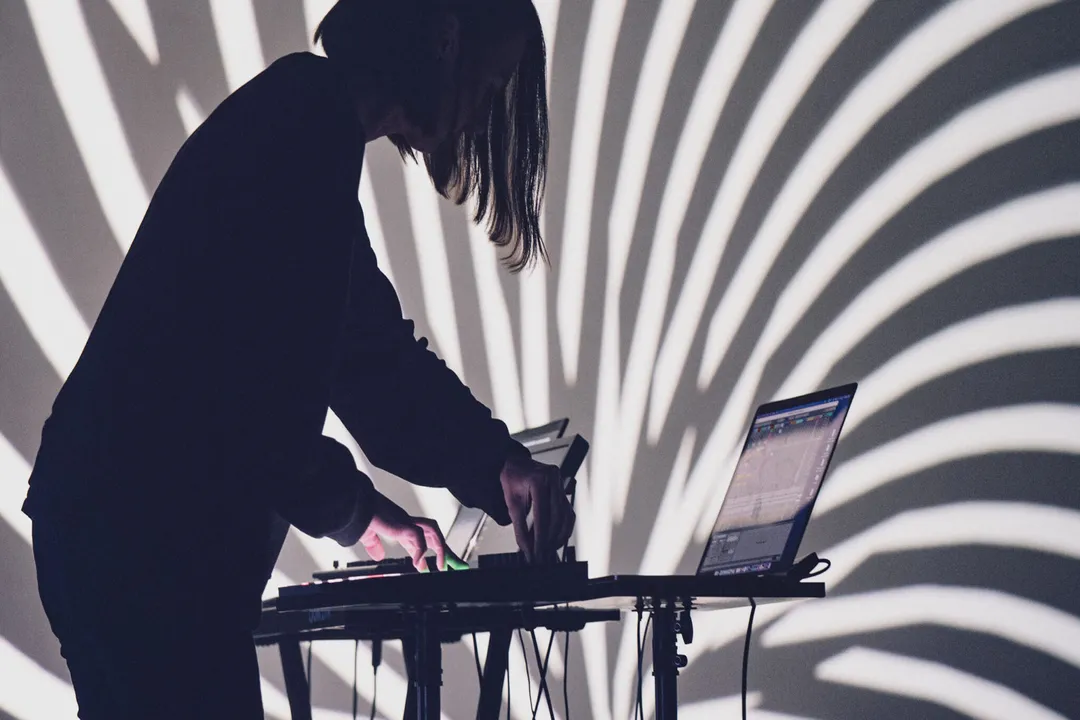
The widespread availability of the tape recorder after World War II unlocked new compositional possibilities, shifting focus from live arrangement to the placement of playback devices. This is where the history of modern, loudspeaker-based spatial sound truly accelerates, often spearheaded by the avant-garde. [2]
In 1948, Pierre Schaeffer presented his musique concrète works using phonographic disk recorders, which involved manipulating recorded everyday sounds. By the early 1950s, Schaeffer and Pierre Henry were routing up to five tape signals to a four-channel speaker system arranged tetrahedrally. Schaeffer even developed a spatial control mechanism called the potentiomètre d’espace in 1951. Contemporaries were also experimenting on vast scales: John Cage premiered a work using 12 radios in 1951, followed by Williams Mix (1952) for eight loudspeakers surrounding the audience.
Perhaps the most famous early multi-channel spectacle was Edgar Varèse’s Poème Électronique (1958), commissioned for the Philips Pavilion at the Brussels World Fair. [1][2] Architect Iannis Xenakis, who oversaw the project, fitted the structure with 400 speakers, and Varèse’s three-track tape composition was dynamically routed across this array using an elaborate switching system controlled by a second sprocketed tape. [1] This setup embodied an automated location control approach to spatialization.
The quadraphonic era followed, with Karlheinz Stockhausen’s Kontakte (1960) often cited as the first true quadraphonic composition, utilizing four speaker positions (Front, Left, Right, and Back). [2] Stockhausen continued to innovate, deploying 55 loudspeakers in a spherical arrangement at the Osaka Expo in 1970.
Another foundational system emerged in 1974 when François Bayle established the Acousmonium at Groupe De Recherches Musicales (GRM). [1][2] This setup used an "orchestra of speakers," emphasizing a "pure listening" experience where the sound source was obscured, leaving the listener to interpret the origin. [1][2]
# Systems Emerge From Theory
The 1970s saw the conception of Ambisonics by a British research institution. [2] This was a conceptual departure from previous methods because it was not tied to a fixed number of speakers; it could be adapted for any speaker configuration, moving away from the "one-channel, one-speaker" model. [2][4] Though it languished initially, its flexibility made it relevant for modern 360-degree media. [2]
A crucial shift from empirical experimentation to rational design came through computer research. John Chowning’s 1970 paper on simulating moving sound sources, followed by his quadraphonic work Turenas (1972), introduced computer algorithms to model psychoacoustic phenomena like Doppler shift and reverberation for moving sounds. This development made complex spatialization accessible to individual composers as processing power increased.
The evolution continued with 4DSOUND, co-founded by Poul Holleman, which emphasizes the technology as an instrument that challenges the composer to create sound objects positioned and moved in three dimensions. [1] This system, and others like it, moves toward object-based audio, where audio sources are encoded with positional metadata, allowing a renderer to place the sound dynamically, irrespective of the final playback device setup. [4] This object-based approach contrasts with older channel-based methods, which were fixed to a specific speaker layout. [4]

# The Conceptual Divide
Understanding who "invented" spatial audio requires recognizing that the concept is defined by three main approaches: channel-based, object-based, and Ambisonic. [4] The very definition of "spatial audio" itself has been a topic of conceptual evolution, now broadly meaning any sound experience beyond standard stereo. [4]
In the contemporary landscape, Dolby Atmos is a major object-based player, bringing the ability to direct sound to 3D coordinates rather than just specific speakers. [1] The modern implementation of Apple Spatial Audio—especially with features like head tracking using gyroscopic sensors—is technologically advanced, but it is deeply rooted in the foundational binaural concepts explored in the late 19th century. [4] This represents a fascinating loop: the core principle of mimicking the head's filtering effects, which was limited by early analog technology, is now digitally rendered with dynamic responsiveness to the listener's movement. [4]
While the technological tools for creating spatial experiences are now widely accessible—through free software suites like the Facebook 360 Spatial Workstation or commercial tools—the core artistic challenge remains consistent across the decades, from Varèse to today’s electronic artists like Max Cooper: the technology must serve the meaningful human experience, not just spectacle. [1][4]
It's worth noting the current industry’s fascination with naming conventions. Companies, including Apple, often rebrand established technologies for marketing purposes; for instance, Apple’s term "Spatial Audio" often refers to its implementation of head-tracked Dolby Atmos formats. [3] However, the underlying principles of sound staging—whether using a dozen speakers or two headphones—have been iteratively developed by engineers and artists since the 1880s, making the true inventor a long, collaborative assembly of sonic pioneers. [3][8] If you are looking to start creating, the most valuable first step is not acquiring the most expensive system, but rather downloading accessible tools to understand how positional metadata changes the perception of a sound object, which is the current zenith of spatialization theory. [4] For any creator, understanding the transition from merely panning sound in a channel mix to objectifying the sound with metadata is the current technical hurdle to master. [4]
#Videos
Alan Dower Blumlein The Hidden Genius Who Invented Spatial ...
Related Questions
#Citations
Spatial Audio - An Introduction to The Continuing Evolution
A Visual History of Spatial Sound | Red Bull Music Academy Daily
YSK that Apple is not the first to use "spatial computing" and they ...
The History of Spatial Sound. - FLORA'S BLOG
Alan Dower Blumlein The Hidden Genius Who Invented Spatial ...
The Story Behind Spatial Audio experimental | Splice
An Introduction to Spatial Audio- L-Acoustics
4DSound: Spatial Delivery - Electronic Sound
An Extremely Brief History of Spatial Music in the 20th Century