Who invented human-computer interaction?
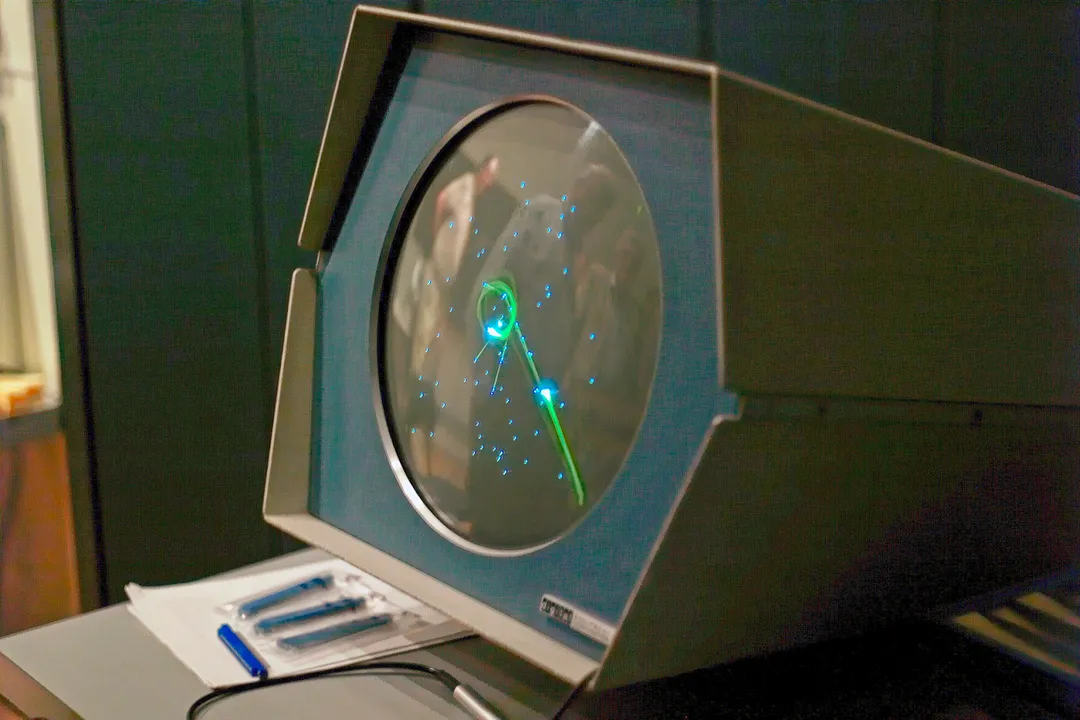
The development of Human-Computer Interaction (HCI) is not attributable to a single "inventor" in the way one might credit the inventor of the lightbulb; rather, it emerged as a necessary, iterative discipline stemming from the transition of computers from room-sized calculation engines to personal, accessible tools. [3][6] The field crystallized around a shared recognition that the interface between human thought and machine capability was the most critical bottleneck to technological progress. [1][2] To pinpoint the origin, one must look toward the visionaries who first imagined computers as partners in intellectual work, not just data processors. [1][6]
# Conceptual Roots
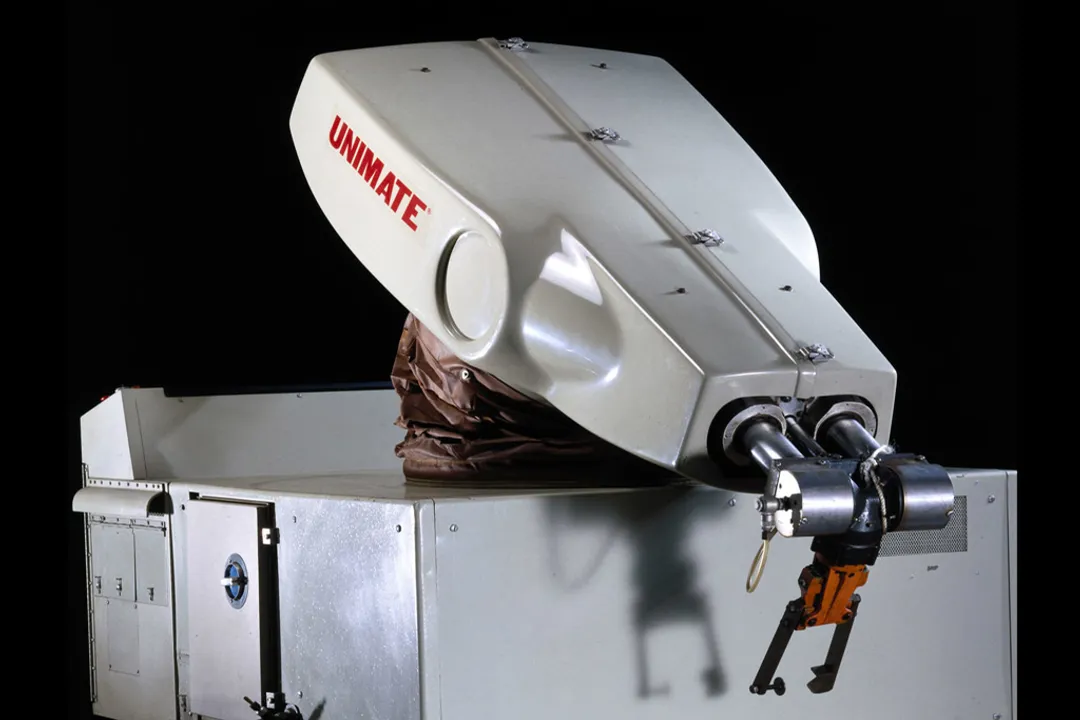
Before the graphical user interface (GUI) or even the mouse became commonplace, the conceptual architecture for interactive computing was being mapped out. Early computing environments relied heavily on batch processing, where users submitted punch cards or tape input and waited hours or days for results. [9] This mode of operation fundamentally separated the human from the computational process, prioritizing throughput over moment-to-moment collaboration. [7]
The seeds of HCI were planted by thinkers who desired a more direct, symbiotic relationship with machines. [6] Vannevar Bush’s 1945 essay, "As We May Think," described the Memex, a hypothetical microfilm-based system that anticipated concepts like hyperlinking and personal knowledge management—a crucial early articulation of how technology should augment human intellect. [7][9] This laid a strong philosophical foundation for the subsequent work in interactive systems.
Another foundational moment often cited is the work by J.C.R. Licklider, who in the early 1960s championed the concept of "man-computer symbiosis," advocating for real-time interaction between humans and computers to solve complex problems. [7][9] Licklider's vision directly challenged the prevailing batch paradigm, suggesting that the speed of interaction, not just the speed of calculation, determined utility. [6] His leadership at ARPA’s Information Processing Techniques Office (IPTO) provided the funding and direction necessary to turn these abstract ideas into tangible research agendas. [4][7]
# The Demo
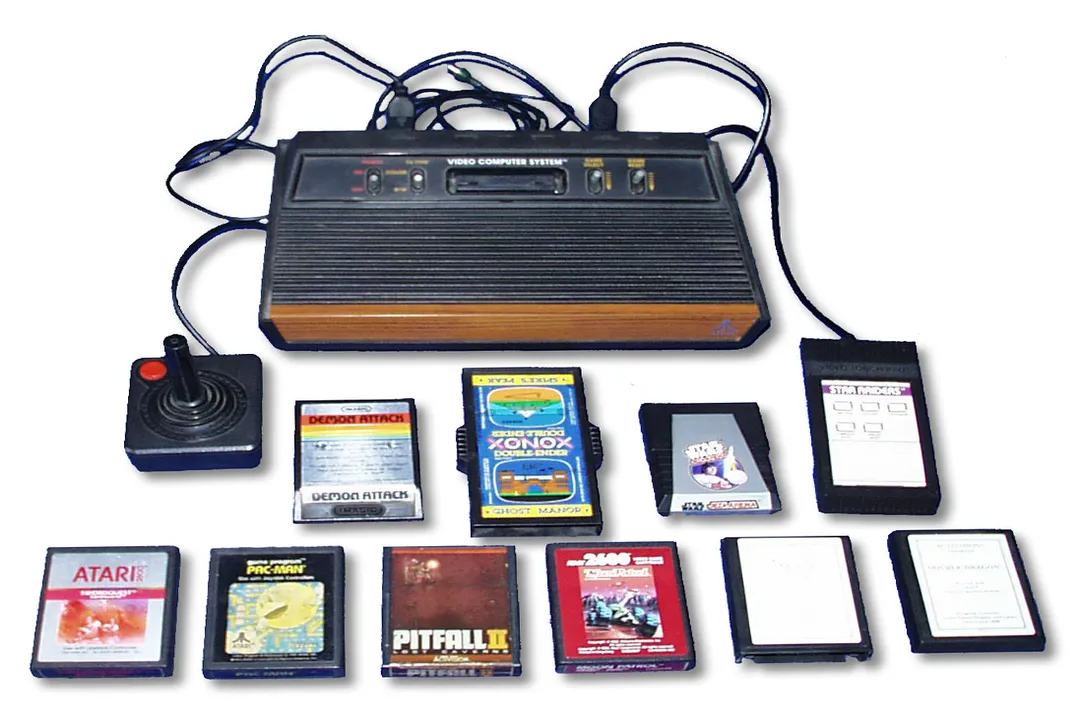
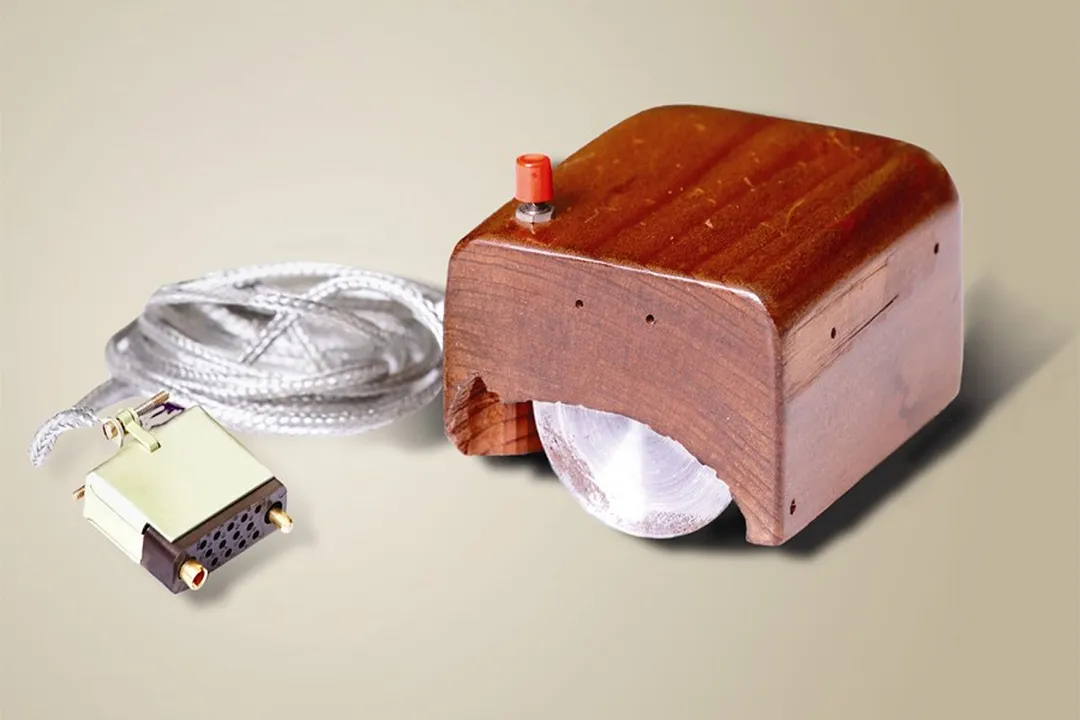
The single most transformative event that codified the nascent field of interactive computing, making it undeniable to the wider scientific community, was The Mother of All Demos. [1] In December 1968, at the Fall Joint Computer Conference in San Francisco, Douglas C. Engelbart demonstrated a system called NLS (oN-Line System). [1] This presentation was revolutionary because it showcased nearly every core component of modern personal computing working together in real-time. [1][9]
Engelbart and his team at the Stanford Research Institute (SRI) Augmentation Research Center (ARC) presented:
- The computer mouse: A pointing device, essential for direct manipulation. [1]
- Hypertext linking: The ability to jump between documents non-linearly. [1]
- Windowed screen interfaces: Displaying multiple active applications simultaneously. [1]
- Collaborative real-time editing: Shared document creation across a network. [1]
While the vision was grand—to augment human intellect by providing tools for complex problem-solving—the immediate impact was a proof-of-concept that interaction itself was the key to unlocking computing power. [1] Many attendees, accustomed to the rigid input methods of the time, were simply stunned by the fluidity of the interaction. [6] This demonstration provided the empirical evidence that direct manipulation interfaces were superior for complex intellectual tasks, setting the immediate technological goal for the following decades. [2]
It's worth noting a subtle divergence here: Engelbart’s primary goal was augmentation, meaning the interface served a deep, cognitive purpose. [1] However, the subsequent industry adoption, particularly by Xerox PARC, often prioritized making the technology accessible and easy to use for a broader set of tasks, sometimes distilling the power down to what was immediately marketable, like the GUI on the Alto and later commercial systems. [4] The core principle of enhancing human capability remained, but the initial emphasis shifted slightly toward usability for the masses. [6]
# Formalizing the Discipline

Following the proof-of-concept work in the late 1960s, the 1970s saw a concerted effort to establish HCI as a formal academic and engineering discipline. [9] Researchers began moving from building novel interactive systems to studying how humans interacted with them, which is the true marker of an established field. [7]
# Xerox PARC
The work done at Xerox PARC during the 1970s was instrumental in transitioning interactive concepts from a specialized research lab to a practical, desktop-sized reality. [4] Researchers there, building upon the ideas that emerged from places like SRI, further refined the direct manipulation concept. They focused heavily on the desktop metaphor, icons, and the integration of graphics, which would eventually become the basis for the Apple Macintosh and Microsoft Windows operating systems. [4][6] This phase shifted the focus from the abstract concept of "symbiosis" to the concrete design of usable, tangible artifacts. [2]
# Key Terminology and Concepts
The term "Human-Computer Interaction" itself solidified its place during this period, though definitions continued to evolve. Early researchers focused on terms like interactive computing and man-machine communication. [9] A major contribution to formalizing the field came from Ben Shneiderman at the University of Maryland, who is often credited with formally coining and popularizing the term Human-Computer Interaction itself in the early 1980s. [5]
Shneiderman provided a critical definition, viewing HCI as the study of how people design, implement, and use interactive computing systems and how software and hardware should be designed to fit human needs. [3][5] His emphasis on direct manipulation as a guiding design principle—where users interact with objects on the screen rather than abstract commands—became a cornerstone of modern interface design. [5] Furthermore, Shneiderman’s work on information visualization and user interface design principles provided the academic structure HCI needed to move beyond pure computer science and into cognitive psychology and sociology. [5]
# Eras of Evolution
The history of HCI can be loosely segmented by the primary means of interaction that defined an era, moving the field forward with each major paradigm shift: [7]
| Era/Period | Dominant Interaction Mode | Key Focus/Goal | Supporting Researchers/Systems |
|---|---|---|---|
| Pre-1970s | Batch Processing/Time-Sharing | Achieving real-time responsiveness | Licklider, Engelbart (NLS) [1][7] |
| 1970s | Command Line/Early Graphics | Direct manipulation, object representation | Xerox PARC (Alto) [4][6] |
| 1980s | Graphical User Interface (GUI) | Usability, learnability, standardization (8 Golden Rules) | Shneiderman [5] |
| 1990s - 2000s | Web/Networked Computing | Information access, ubiquity, new interaction metaphors | Various [7] |
This progression illustrates that the "inventor" of HCI wasn't just the person who built the first interactive system, but the sequence of individuals who correctly identified the next major limitation in the human-computer relationship and developed tools to overcome it. [4]
# From HCI to UX
Modern practitioners often use the term User Experience (UX), which is closely related to, but distinct from, classical HCI. [2][3] While HCI historically focused on the interaction—the mechanics of input and output, usability, and performance in a specific task—UX encompasses the entire experience a user has with a product or service, including emotional response, branding, and context. [2]
The academic rigor of HCI, established by figures like Engelbart and Shneiderman, provided the foundational theories concerning direct manipulation, feedback loops, and task analysis. [1][5] Modern UX design applies these rigorous principles in a commercial context, often emphasizing aesthetics and emotional connection alongside efficiency. [2] The focus has broadened from Can the user successfully complete the command? (HCI) to How does the user feel about the entire process? (UX). [2]
For instance, an early HCI researcher would obsess over the cognitive load of navigating a file system menu. [5] A modern UX designer, while respecting that cognitive load, must also consider the perceived value of the icons, the quality of the loading animations, and the user's trust in the system’s security before they even reach that menu. [2] This evolution shows that the foundational "invention" was the acknowledgment that the human element dictated the computer's success, a principle that now permeates all digital design. [3]
# Original Interface Principles
While the history books correctly point to key figures, the implementation of their ideas often required subtle design choices that, in retrospect, were just as critical as the inventions themselves. Consider the concept of affordance—the quality of an object suggesting how it should be used. [4] While not explicitly an invention of the 1960s, the successful transition to graphical interfaces demanded that designers imbue digital objects with real-world affordances (e.g., a 'button' looks pressable). [6] The true innovation, therefore, wasn't just the mouse, but the translation of physical action into digital consequence that the mouse enabled. [1] This translation required a constant feedback loop between the designer's intent and the user's interpretation, a concept deeply studied within the HCI community. [5]
Another critical, yet often under-cited, aspect is the role of non-modal interaction in the 1970s and 80s. Batch processing was inherently modal: you were either inputting or waiting. The development of overlapping windows and overlapping tasks, as shown by Engelbart [1] and later refined at PARC, created a persistent state where multiple lines of inquiry could remain "open" simultaneously. [4] This capacity to manage cognitive context, allowing a user to pause complex calculations to check an email and then return without losing their place, is perhaps the single most powerful, yet under-appreciated, contribution of the interactive paradigm shift to professional productivity. It treats human working memory as a resource to be managed by the system, rather than a liability to be ignored. [7] Understanding this historical prioritization of persistent context management helps designers today avoid creating overly restrictive, modal mobile applications, which often regress on this hard-won historical gain. [2]

# The Ongoing Quest
The discipline of HCI continues to evolve, now facing challenges presented by ubiquitous computing, augmented reality (AR), and virtual reality (VR). [3] The focus shifts again from the flat screen to spatial interaction, voice commands, and gestural input. [6] The pioneers gave us the methodology—the scientific approach to observing, measuring, and designing for human capabilities—which remains the bedrock of the field. [5][8] Whether the interface is a mouse, a touchscreen, or a gesture in mid-air, the central question posed by Licklider and answered by Engelbart remains the same: How can we design machines to amplify human intellect most effectively?. [1][6] The invention of HCI wasn't a single product launch; it was the invention of a process for continuously improving that amplification.[8]
Related Questions
#Citations
Firsts: Interactive Computing - Doug Engelbart Institute
The Origins of Human Computer Interaction and Its Impact on UX
What is Human-Computer Interaction (HCI)? | IxDF
A Brief History of Human Computer Interaction Technology
History of the Field - Human-Computer Interaction Lab -
Humanizing Technology: A History of Human-Computer Interaction
[PDF] History of Human Computer Interaction
A brief history of human-computer interaction technology
History of Human-Machine Interfaces. Part 2. The 60s-70s - Apifornia