Who invented affective computing?
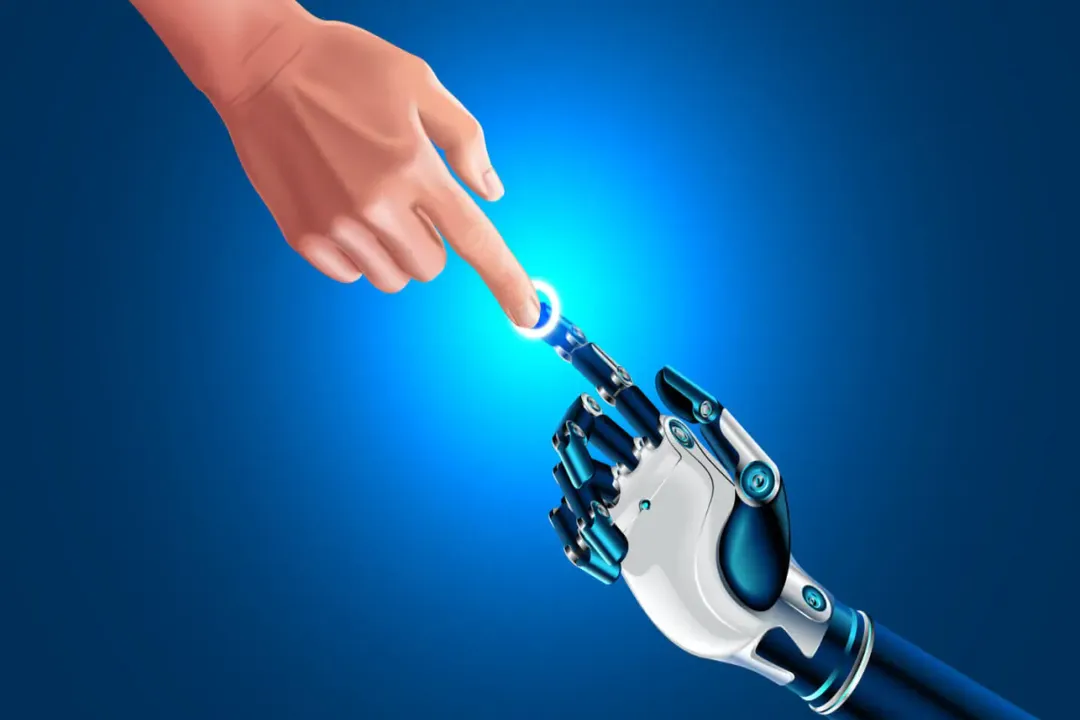
The genesis of computing that understands and reacts to human feeling did not arrive with a dramatic breakthrough moment in popular culture, but rather with a foundational academic assertion that intelligence, to be truly intelligent, must incorporate emotion. This specialized domain, which bridges the typically separate worlds of digital logic and subjective experience, is known as affective computing. The field was formally established when Dr. Rosalind Picard, a researcher at the Massachusetts Institute of Technology (MIT) Media Lab, published her seminal work defining the concept.
# Defining the Field
Affective computing represents a multidisciplinary area of study that integrates computer science with fields like psychology and neuroscience to engineer systems capable of recognizing, interpreting, simulating, and responding to human affects—the experiences of feeling or emotion. Dr. Picard introduced the official term in the mid-1990s, crystallizing the concept in her 1997 book, Affective Computing. Her definition described it as "computing that relates to, arises from, or deliberately influences emotion or other affective phenomena". This established the goal: to close the gap between human emotional understanding and the historical lack of emotional comprehension in machines, thereby making human-computer interaction significantly more natural and effective.
# Founder Vision
Picard’s motivation stemmed from recognizing a critical shortcoming in traditional human-computer interaction (HCI) models, which had historically focused almost exclusively on task completion, efficiency, and logic. She posited that any technology aspiring to achieve genuine machine intelligence required an element of emotional reasoning. The initial scope of her vision, as laid out in her 1997 book, spanned the entire spectrum of the new discipline. It included establishing the intellectual groundwork based on human emotions, outlining the requirements for emotionally intelligent computers, detailing potential applications, and critically examining the moral and social questions raised by such technology. The Affective Computing group at MIT Media Lab continues this foundational mission, centering their work on advancing human wellbeing by developing new ways to communicate with and respond to emotion.

# Core Components
Building systems that can process emotion requires defining what emotion is and how it is expressed. Emotions are complex psychological states involving a subjective experience, a physiological response, and an expressive or behavioral output. Affective computing systems break down the recognition process into analyzing these observable signals. The field is largely underpinned by sophisticated applications of Artificial Intelligence (AI) and Machine Learning (ML), which train algorithms to spot patterns correlating specific signals with emotional states.
The primary methods for gathering emotional data are multifaceted, moving well past simple text-based analysis:
| Modality | Analysis Method | Data Examples |
|---|---|---|
| Visual | Computer Vision, Pattern Recognition | Facial muscle movements, expression classification |
| Vocal | Speech Analysis | Pitch, volume, tone of voice |
| Linguistic | Natural Language Processing (NLP) | Sentiment analysis of written or transcribed text (positive, negative, neutral) |
| Physiological | Sensor Processing | Heart rate, skin conductance, pupil dilation |
Facial expression recognition is often tied to standardized coding systems, such as the Facial Action Coding System (FACS) developed by Paul Ekman and Wally Friesen, which identifies forty basic Action Units and their combinations to categorize expressions.
# Signal Analysis
While text-based sentiment analysis is useful for understanding written sentiment, it can miss nuances that tone or expression convey. For instance, in digital communication, irony or sarcasm can make written text misleading, necessitating analysis of vocal tone or even visual cues to correctly gauge the user's true feeling. Similarly, physiological signals offer a less consciously controlled input. Heart rate variability or changes in skin conductance can indicate stress or excitement, providing raw data for the ML models to interpret.
A significant area of ongoing development involves emotion simulation, where machines are programmed to exhibit behaviors associated with certain emotional states—like altering voice tone or interface color—to make interactions feel more human and engaging. This involves creating artificial emotions, which is a distinct step beyond mere recognition.
# Early Systems
The concept of using technology to measure affect predates the formal 1997 naming of the field, though the early examples were rudimentary compared to today's deep learning models. One notable early foray mentioned is the 1998 release of Tetris 64 for the Nintendo 64 console. This game included a biosensor that measured the player's stress level. The game would then respond by dynamically increasing the difficulty based on that measured stress, serving as a simple, creative demonstration of emotion influencing interaction.
It is worth noting the vast difference between this simple biometric feedback loop and current technology. In 1998, measuring a single signal like stress via a dedicated, specialized peripheral was state-of-the-art. Today, affective computing systems often integrate data from multiple modalities—webcam, microphone, keyboard telemetry, and even smartwatch data—processed simultaneously by complex algorithms trained on massive datasets. This integration allows for a much richer, though still imperfect, inference about a user's internal state than the Tetris example could ever achieve.
# Modern Applications
The application landscape for affective computing has expanded across nearly every sector, driven by the continuous refinement of AI and ML algorithms. The goal across these sectors remains consistent: to move interaction from purely functional to contextually aware and personalized.
In healthcare, this technology is being developed to monitor patients dealing with conditions like anxiety or depression, providing real-time feedback to providers or offering therapeutic support through interactive agents. For education, emotionally intelligent systems can adjust teaching methods, pace, or content difficulty based on whether a student is showing signs of confusion, frustration, or engagement, leading to a more personalized learning experience. Even customer service is changing; chatbots and support systems can use sentiment analysis or voice tone to escalate an interaction or adopt a more empathetic response when a user is clearly upset.
The convergence of affective computing with other technologies suggests further integration. For instance, in the automotive industry, vehicles are being designed to monitor driver emotion—detecting signs of anger, stress, or fatigue—to intervene proactively for safety. Looking ahead, augmented reality (AR) and virtual reality (VR) promise emotionally responsive environments where the system tailors the immersion based on the user's real-time affective state, promising deeply engaging experiences.

# Ethical Concerns
As affective computing progresses toward greater capability, the ethical landscape becomes increasingly complex, demanding careful consideration alongside technological advancement. One of the foremost challenges remains accuracy. Human emotions are inherently subjective and culturally variable, meaning what an algorithm classifies as 'anger' might be experienced differently by the individual or interpreted differently across cultures, risking misdiagnosis or misresponse.
However, the most significant friction point revolves around privacy and data governance. Affective data—facial expressions, vocal nuances, physiological reactions—is among the most sensitive personal information imaginable. The continuous collection and analysis of this data raise the specter of "emotional surveillance," where individuals are constantly monitored without explicit, ongoing consent. Questions regarding where this data is stored, who has access, and how it is protected from misuse become paramount.
A second major ethical boundary involves the potential for manipulation. If a system can accurately recognize emotion and simulate an emotional response, the temptation exists to use this capability to sway user behavior. This could manifest in commercial settings—manipulating purchasing decisions—or in political arenas. The integration of emotional awareness into design, as noted by some UX commentators, must be handled with extreme care to ensure the technology serves the user, rather than exploiting their emotional state for external gain. For technologies designed with the explicit goal of assisting those "not flourishing," as the MIT group states, the duty to avoid manipulation becomes even more critical; the tools must co-design with users, not simply influence them from behind a screen.
# Future Trajectory
The future of affective computing hinges on advancements in deep learning, which promise more accurate and efficient emotion recognition models, and better integration across varied data inputs. As these systems become more capable, they will usher in a new era of personalized interaction.
One interesting area to watch is how regulation evolves alongside the technology's increasing sophistication. If technologies become adept at inferring internal states, society will need to define clear boundaries on what constitutes permissible monitoring versus intrusive surveillance. This necessity suggests that future success in affective computing may depend less on raw computational power and more on establishing universally accepted, transparent protocols for consent and data ownership related to our affective signals. The industry must move toward establishing playbooks for empathic app development that prioritize user trust, recognizing that a loss of trust means a loss of the very emotional data needed to run the system. The journey toward true emotional computers is ongoing, but the invention by Dr. Picard laid the groundwork for a fundamental shift in how we define intelligence in machines and how we expect to interact with the technology that permeates our daily lives.
Related Questions
#Citations
Rosalind Picard Founds the Science of "Affective Computing"
Affective Computing: Evolution of Emotionally Intelligent Technology
Affective Computing: Artificial Intelligence Explained - Netguru
Affective Computing: Designing for Human-Computer Interaction
Overview ‹ Affective Computing - MIT Media Lab