Who invented connected vehicles?
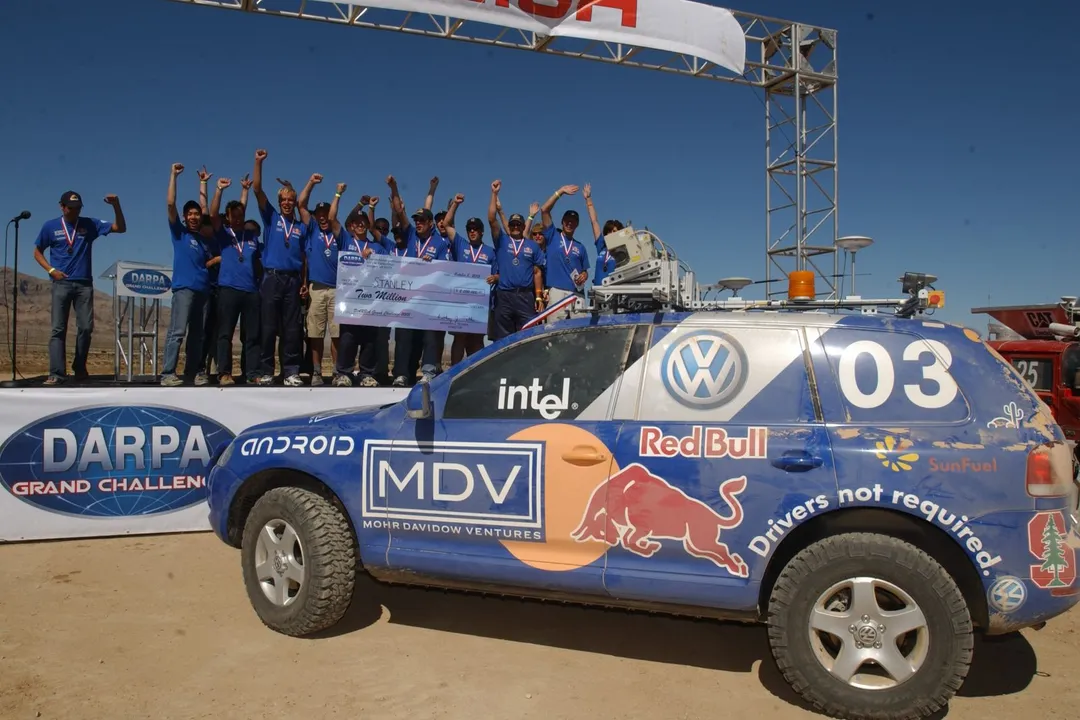
The story of the connected vehicle is less about a single “aha!” moment from one inventor and more about a decades-long convergence of computing, cellular networks, and automotive ambition. Pinpointing who invented it is like asking who invented the internet; it’s an evolution built on incremental breakthroughs, often driven by different sectors—telecoms, defense, and, finally, the auto industry itself. A connected vehicle, at its heart, is any automobile equipped with wireless networks allowing it to exchange data with the outside world—be it other devices, infrastructure, or the cloud. [2][7] This differentiates it from earlier, simpler on-board computers or the parallel, but distinct, development of self-driving technology. [1][3]
# F1 Precedent
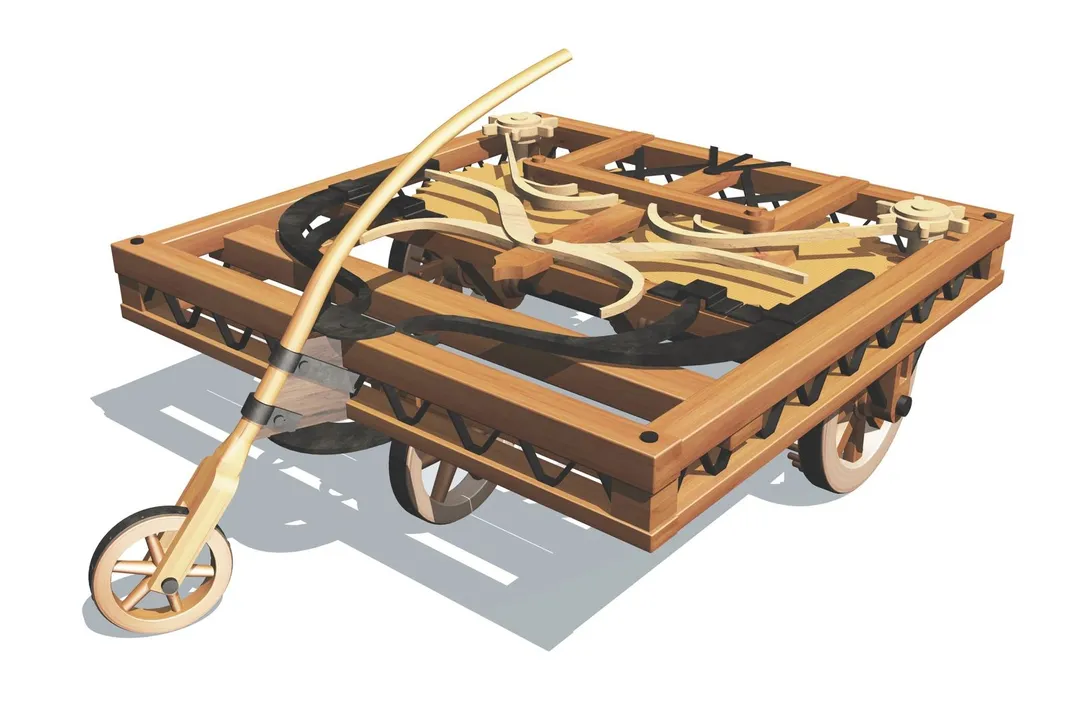
If we trace the earliest technological demonstration of data transmission from a moving vehicle, a strong case can be made for BMW in 1980. [7] This wasn't a consumer feature or even a roadside safety mechanism; it was high-performance motorsport telemetry. BMW integrated an on-board computer into its Formula 1 car, which passed vehicle data back to a receiving unit—essentially linking the vehicle to its immediate environment. [7] While this was revolutionary for racing diagnostics, it lacked the two-way communication and broad consumer application that defines the modern connected car.
# Telematics Emergence

The true genesis of the consumer-facing connected car experience, centered around safety and assistance, arrived in the mid-1990s with the introduction of telematics. General Motors (GM) is credited with launching OnStar in 1996. [1][6] Initially offered as a dealer-installed option on Cadillacs, OnStar was one of the first built-in telematics systems. [1] Its function went beyond simple data logging; it could automatically notify an emergency center if a crash occurred, providing an immediate layer of security. [1]
Shortly after, premium automakers joined the race. In 1998, BMW introduced BMW Telematics. This service initially leveraged the driver's existing telephone to establish a connection, offering up-to-date traffic information and the convenience of an emergency call facility. [1]
The distinction between these early systems and earlier concepts is critical. While the 1980 F1 system sent data one way, OnStar and Telematics established a permanent, dedicated link intended for driver assistance and emergency response, marking the shift toward using wireless connectivity as a core vehicle function. [7]
# Feature Buildout
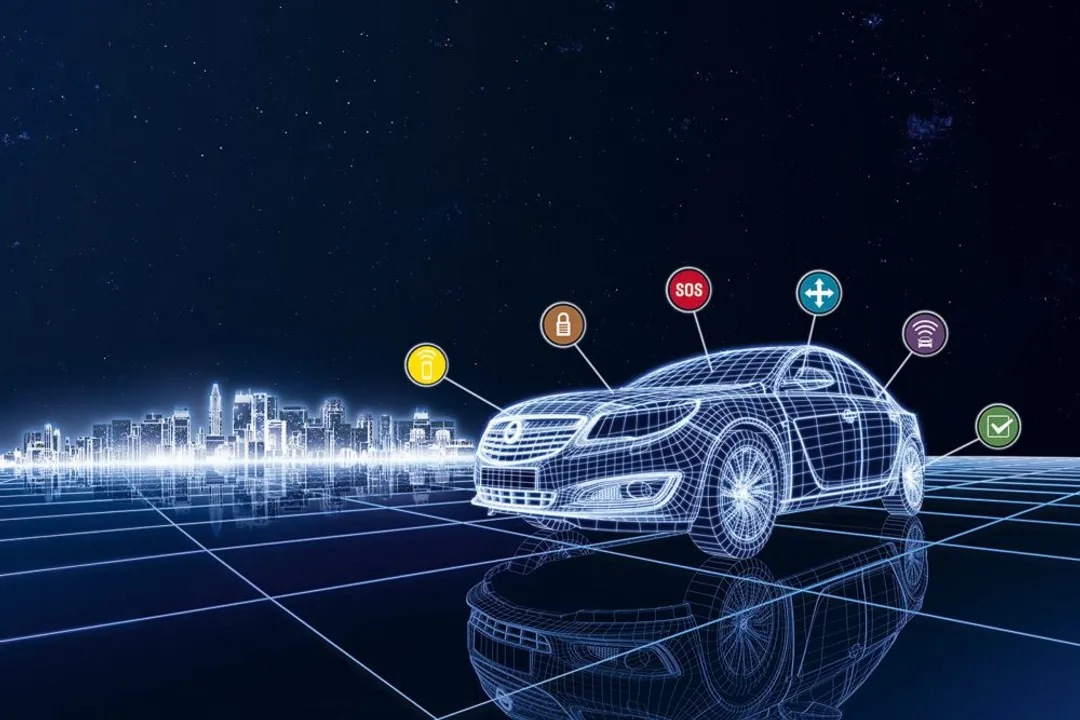
The turn of the millennium saw the rapid addition of foundational technologies that made deeper connectivity possible. A key enabler was the wider availability of accurate positioning data. Although GPS signals were accessible to the military earlier, President Bill Clinton made accurate GPS signals available for civilian and commercial applications in May 2000. [7] This followed the introduction of GPS into cars around 1999, when Mercedes-Benz launched TeleAid for roadside assistance and stolen vehicle tracking. [2]
The evolution continued through proprietary hardware upgrades. In 2004, BMW took another significant step by integrating a SIM card directly into some of its vehicles. [1][7] This internal hardware meant the car was permanently online, capable of accessing news, weather, and even office services without needing a driver's external mobile phone. [7] This embedded SIM also paved the way for the first anonymous traffic flow analysis, allowing for congestion forecasting. [7]
Another important feature solidified the connected concept: remote diagnostics. By 2001, the ability for manufacturers to examine a car’s system functionality remotely began appearing, allowing for quicker problem diagnosis across distances. [2][7]
# Original Inflection Point
It is tempting to declare GM's OnStar in 1996 the official invention, as it commercialized the safety-critical, two-way communication that established the category. [1][6] However, a deeper analysis suggests the true inflection point for the connected vehicle, as we understand it today, was arguably the widespread adoption of embedded cellular service, beginning around 2004 with the integrated SIM card. [7] While OnStar provided a necessary, critical service, it relied heavily on that initial cellular connection being made via a paired phone or a dedicated call setup. The integrated SIM, as seen in BMW’s 2004 system, meant the car itself held its own persistent, dedicated identity on the network. This transition moved the car from a device using a phone to an independent IoT node on the road network, opening the door for continuous, background data services like traffic analysis and remote diagnostics that weren't reliant on a user pressing a panic button. [7]
# Smartphone Integration
The launch of the smartphone era around 2007 and 2008 completely changed the user-facing aspect of connectivity, shifting the focus from just OEM services to personal digital integration. [2] Chrysler first offered an Internet Hotspot feature in 2008, and that same year saw the first smartphone applications emerge, allowing users to perform actions like locking or unlocking doors wirelessly. [2] BMW ConnectedDrive, which started as BMW Assist in 1998, expanded significantly through this period, eventually supporting four million customers by 2018. [7] The integration continued with services like MirrorLink in 2012, which allowed users to operate select smartphone apps through the car's built-in system. [2]
# Over-the-Air Backbone
While app integration was consumer-facing, the underlying digital backbone that makes modern vehicles function—the ability to update and improve the car’s software remotely—was a later but perhaps more profound development. This capability is tied directly to high-speed data connectivity. [6]
The Tesla Model S, introduced in 2012, was a landmark moment, featuring 3G connectivity and the ability to receive over-the-air (OTA) updates. [2] This wasn't just about downloading a new map; it meant the car’s core functionality, safety features, and performance could be improved post-purchase, much like a smartphone. [2][6] By 2014, Audi began offering 4G hotspots, and GM followed with mass 4G deployment, accelerating the data throughput required for advanced functions. [2] The adoption of these standards is so central that by 2019, all new car models sold in the EU were mandated to include the automatic emergency call system, e-call. [2]

# Original Analysis on Evolution
The progression of connected vehicle technology reveals a fascinating duality between safety/convenience features and foundational infrastructure. The early milestones—OnStar for emergencies and GPS for tracking—were reactive or location-based services. [1][2] However, the later achievements, such as Tesla's 2012 OTA updates and Audi's 4G integration in 2014, represent a proactive technological foundation. [2] The former improves the car after an event; the latter allows the car to pre-empt problems or improve its own intelligence without a physical recall. The true modern connected vehicle is defined by this latter capability—its ability to receive ongoing software enhancements that modify its driving characteristics, performance, or cybersecurity posture. This suggests that the "inventor" of the truly smart connected car isn't the one who first sent a crash signal, but the one who made the vehicle a continuously evolving software platform.
The ecosystem is now formally defined by communication types, collectively known as Vehicle to Everything (V2X) technology, which includes Vehicle to Infrastructure (V2I), Vehicle to Vehicle (V2V), and Vehicle to Cloud (V2C). [2][7] The ability to realize these complex interactions, far beyond simple one-to-one calls, is the collective legacy of every company mentioned here.
# Who Owns the Title
Ultimately, there is no single inventor for the connected vehicle. The narrative is a layered history of specialized inventions coming together:
- BMW (1980) pioneered vehicle data transmission in motorsport. [7]
- GM (1996) introduced the first commercially viable, safety-focused, built-in telematics service with OnStar. [1][6]
- Mercedes-Benz (1999) brought integrated GPS tracking to the consumer market. [2]
- BMW (2004) integrated the critical SIM card hardware, turning the car into a permanently online device. [7]
- Tesla (2012) established the model for continuous improvement through pervasive OTA software updates. [2]
The technology represents a gradual institutional adoption of networking standards that were developing in other fields, with automotive leaders realizing their potential across a span of more than three decades. [6] It is a story of shared engineering, where pioneers like BMW, GM, and Mercedes-Benz laid the groundwork for the comprehensive, always-on network we now expect from our modern rides. [4][7]
Related Questions
#Citations
History of self-driving cars - Wikipedia
A Brief History of Autonomous Vehicles – from Renaissance to Reality
Part 1: A Brief Background on Connected Vehicles - Compass IoT
Connected Car. Its history, stages and terms. - BMW.com
The decades-long evolution of the connected vehicle
History Of Connected Car Technology | The Genesis Saga
Pioneers Behind Autonomous Cars: Key Inventors and Innovators
The History of the Electric Car | Department of Energy