Who invented congestion pricing?
The conceptual roots of charging drivers for using crowded roadways, now commonly referred to as congestion pricing, trace back several decades to a foundational economic concept developed not in a city hall, but in academic circles. While many modern cities grapple with the implementation details—such as setting toll rates and determining technology—the invention of the principle belongs largely to economist William Vickrey. [1] Vickrey, a Nobel laureate, articulated the core economic theory that underpins this approach: pricing scarce resources based on their marginal social cost. [1][10]
# The Originator
Vickrey's contribution, developed decades before major global cities seriously adopted the practice, established that when roads are congested, the true cost of adding one more vehicle to the traffic stream is higher than just the fuel and wear-and-tear experienced by that single driver. [1][9] This higher cost—the delay imposed on all other drivers—is the "externality" that conventional, free travel fails to account for. [1] Congestion pricing, therefore, is the mechanism designed to internalize this external cost, ensuring drivers pay the full societal price for their road usage during peak times. [10] The general concept involves setting a fee for driving into a busy zone during peak hours, effectively rationing access to that limited road space. [10]
# Economic Foundation
The theoretical elegance of Vickrey’s pricing model lies in its simplicity and efficiency: by setting a toll equal to the marginal external cost of congestion, the system optimizes traffic flow by ensuring only those for whom the trip is worth more than the toll choose to drive, while others shift their travel time or mode. [1][9] This approach moves beyond simple flat tolls by dynamically managing demand based on real-time conditions, a concept rooted in economic optimization theory. [1] The World Bank has recognized the value of this mechanism for improving urban mobility and air quality, often citing the underlying principles established by Vickrey. [8]
While Vickrey laid the groundwork, the evolution of the concept into practical policy involved others. The earliest real-world implementations, such as the cordon pricing schemes initiated in cities like Singapore in the early 1970s, demonstrated that the theory could translate into tangible results, reducing traffic and improving travel times, even if the initial methods were less technologically sophisticated than today's electronic systems. [10] This transition from pure economics to public works marked the next stage in the concept’s history.

# Modern Application
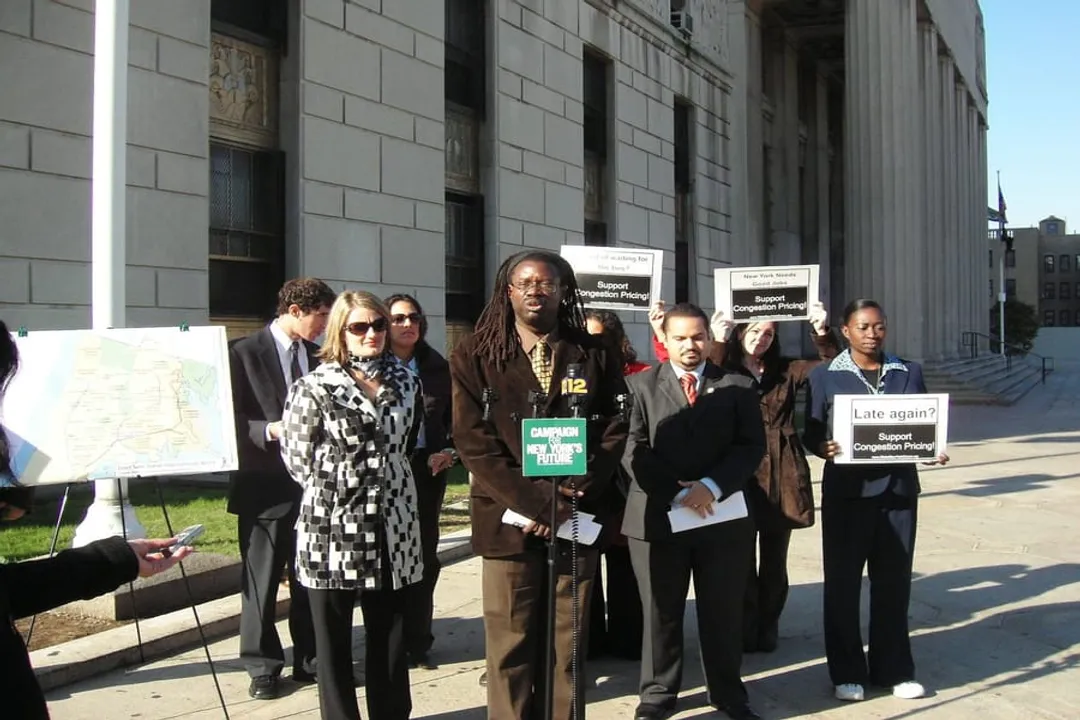
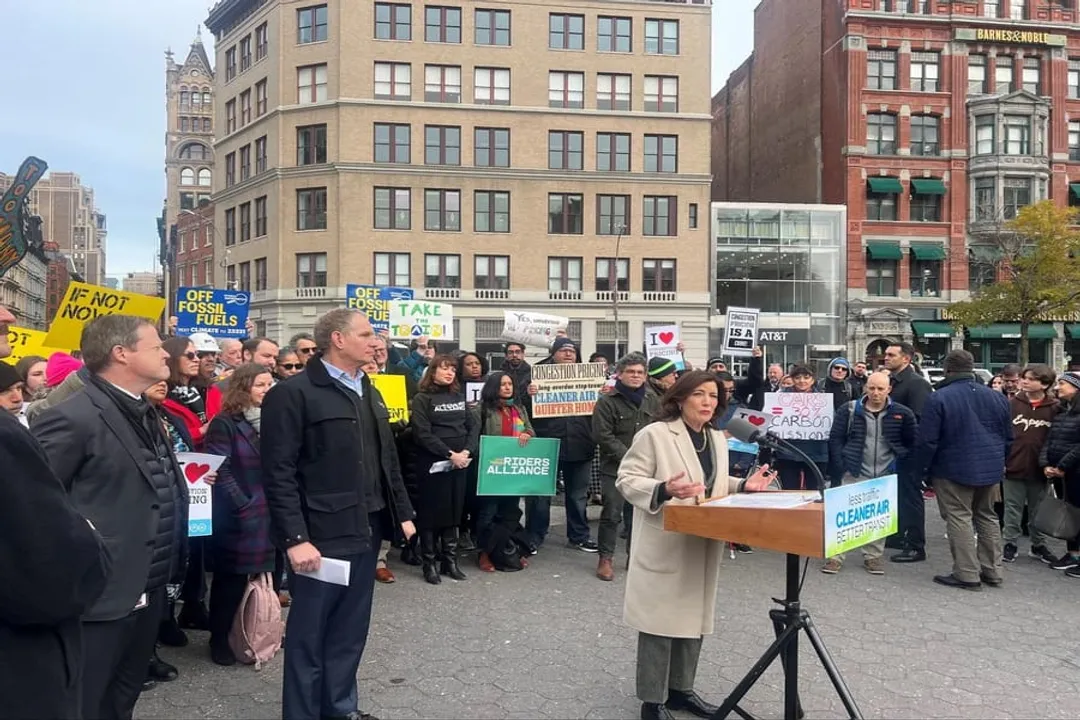
Decades later, the theoretical concept circled back to major American urban centers, most notably New York City. The protracted saga surrounding NYC’s plan to implement congestion pricing for vehicles entering Manhattan’s Central Business District (CBD) illustrates the massive gulf between economic consensus and political feasibility. [6] The goal in New York was explicit: to reduce traffic entering the CBD and to generate dedicated revenue for the Metropolitan Transportation Authority (MTA) to fund necessary capital improvements. [4][5]
The specific proposal in New York involved charging a toll for most vehicles entering the area south of 60th Street in Manhattan on weekdays. [3][4] Various reports tracked the long and often stalled timeline for this project, which had been under discussion for years, reflecting an ongoing struggle for political consensus. [6] The proposal eventually moved forward, with the MTA setting initial base tolls for passenger vehicles around $15 and designating the start date for the toll collection as June 30, 2024. [3] However, the actual rollout faced significant political headwinds and eventual pauses. [2][3]
The New York effort followed a trend where major cities began seriously considering road pricing as a solution to gridlock and transit funding shortfalls. [2] Proponents argued that the generated revenue—potentially billions annually—was critical for the MTA’s subway and bus system upkeep and expansion, suggesting the funding mechanism was as important as the traffic mitigation. [5][4]
# Political Economy Hurdles
Analyzing the political side of adoption reveals a key challenge that the original inventor, Vickrey, likely did not need to address: public acceptance and legislative maneuvering. [7] While economists often praise the efficiency of such a system, the public often perceives it as just another tax or a punitive measure aimed at drivers. [7] The debate in New York often centered on the fairness of the charges and the use of the resulting income. [6]
For instance, the political economy view suggests that without clear transparency regarding where the toll money goes, public support falters. [7] When the process stalls or changes course, as it did following the initial approvals and subsequent political shifts in New York, it underscores the non-economic barriers involved. [2][6] Some analysts noted that the political opposition often focused more on the perceived unfairness of charging commuters than on the actual economic benefits of cleaner air or faster bus times. [7] The fact that a major metropolitan area, having spent years planning and developing the necessary technology (like transponders and camera systems), could still see its plan derailed or postponed demonstrates that the invention’s most difficult application is not the technology, but the governance. [6]
One interesting observation from observing these long implementation fights is how crucial revenue hypothecation becomes for public buy-in. If local governments attempting to implement pricing—whether in New York or elsewhere—fail to ring-fence the collected funds explicitly for visible, local transit improvements, they often encounter sustained public resistance. [5] A direct, audible link between the toll paid and the improved bus frequency or subway modernization is often the key differentiator between a perceived penalty and a widely accepted user fee.

# Global Comparison
While New York’s process captured significant national attention, it is not an isolated case, nor was it the first major American city to seriously consider it. The debate in New York provided a high-profile case study in the friction between economic necessity and political resistance. [8] Contrastingly, cities that have successfully moved forward often did so with different political climates or by framing the charge differently. For example, London’s initial scheme, though facing controversy, eventually settled into a routine component of city life, suggesting that initial public resistance can dissipate once the system proves effective and reliable. [10]
The methodology for setting the price itself is also varied. Some systems use fixed pricing based on time of day and location, while others move toward more sophisticated, real-time pricing models that more closely align with Vickrey's theoretical ideal of charging the marginal social cost at that exact moment. [1][9] New York’s initial plan was closer to the fixed-rate model, which is easier to manage administratively but less responsive to fluctuating traffic demand throughout the day. [3]
# Practical Considerations
For any city considering this tool, the history of its invention and early adoption offers a few pointers for governance beyond just the pure economic modeling. The challenge isn't if the charge should exist, but how it is administered and communicated. [7]
Here are a few points policymakers might consider when moving from the theoretical blueprint to the physical road:
- Technology Maturity: Modern electronic toll collection (ETC) makes implementation smoother than in past decades, allowing for high throughput and accurate billing, reducing the friction associated with physical toll booths. [3]
- Revenue Clarity: Establish an ironclad legal requirement that a high percentage of collected revenue—perhaps 90% or more—must be allocated to specific, tangible transit projects before the first toll is collected. This addresses the political economy concern head-on. [5]
- Exemptions and Equity: Carefully design carve-outs for low-income drivers or essential service vehicles. Overly broad exemptions can undermine the entire purpose of rationing road space, but too-strict rules can create political outcry. [7]
Ultimately, the invention of congestion pricing—the idea of pricing roads based on the cost imposed on others—is attributed to the economic insight of William Vickrey. [1][10] However, the success of congestion pricing, as demonstrated by the arduous path taken by New York City, depends not on the genius of the initial concept, but on the political and administrative skill applied in its modern enactment. [6] The economist provided the what, but city planners and politicians must now provide the how that the public can accept. [2][7]
Related Questions
#Citations
Principles of Efficient Congestion Pricing
The Roller-Skating Economist You Can Thank for Congestion Pricing
Congestion pricing in NYC timeline: How we got here - abc7NY
Congestion pricing in New York City - Wikipedia
It's Time to Push Congestion Pricing over the Finish Line
New York's long road to congestion pricing - Works in Progress
The Political Economy of Congestion Pricing | Cato Institute
RPA | Congestion Pricing: A Retrospective
The Short-Run Effects of Congestion Pricing in New York City | NBER