Who invented circadian rhythm trackers?
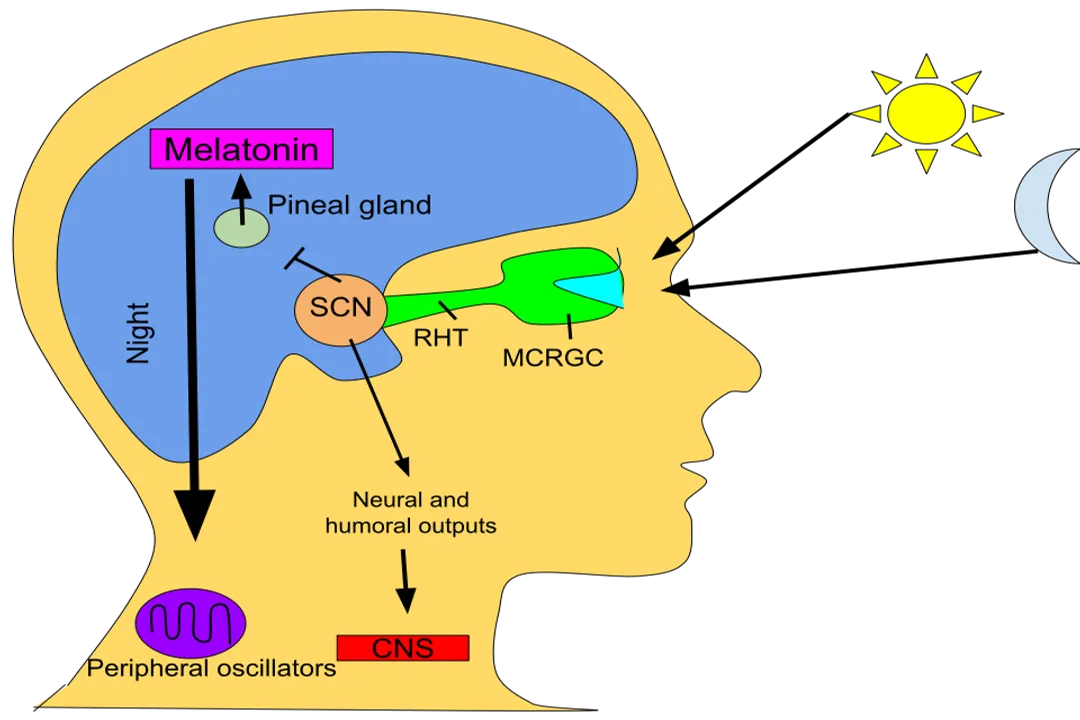
The concept of an internal biological timer dictating cycles of activity and rest has fascinated thinkers for centuries, tracing back to astronomical observations of plant movement in the eighteenth century. [6] However, pinpointing the "inventor" of the modern circadian rhythm tracker requires looking past wrist-worn gadgets and focusing instead on the scientific pioneers who invented our understanding of the biological machinery that drives these 24-hour patterns. The true genesis of modern chronobiology lies in identifying the core genetic elements that govern this timing system, a discovery recognized with the 2017 Nobel Prize in Physiology or Medicine. [1][5]
# Rhythm Basis

Every living organism, from bacteria to humans, operates on an internal clock that helps anticipate regular environmental changes, such as the cycle of day and night. [6] This roughly 24-hour rhythm, known as the circadian rhythm, influences everything from hormone release and body temperature to alertness and metabolism. [6][7] While early work established the existence of this rhythm, the fundamental question remained: what is the molecular mechanism? What is the gene that keeps time? The answer didn't come from a single inventor but from decades of dedicated molecular biology research spanning different model organisms. [5]
# Fly Research

The crucial initial breakthroughs occurred using the common fruit fly, Drosophila melanogaster. [5] Scientists suspected that a specific gene controlled the fly’s behavioral rhythms—the timing of when they slept or woke. [6] In the early 1970s, Ronald J. Konopka identified a mutant fly strain exhibiting altered rhythms, pinpointing a gene he named period (per). [6] This was the first solid evidence that circadian timing was genetically encoded. [5]
Building on this foundation, researchers refined the understanding of the per gene and its role. [6] The work of Jeffrey C. Hall and Michael Rosbash in identifying the per gene’s protein product and showing how it regulated its own expression—a negative feedback loop—was absolutely foundational. [1][5] They demonstrated that the PER protein builds up during the day, then breaks down at night, allowing the cycle to reset daily. [5] This established the basic molecular clock mechanism: a loop where gene products turn off their own production, creating a measurable, self-sustaining oscillation. [1]
# Vertebrate Genes
While the fly research laid the groundwork for the concept of a molecular feedback loop, translating this to mammals presented a new challenge. The homologous genes in mammals proved to be different, necessitating a new set of discoveries. [4]
One significant contributor in this area was Dr. Joseph Takahashi. Working at Northwestern University, Takahashi and his team were searching for the mammalian equivalent of the fly’s period gene. [3] In 1994, Takahashi's team made a monumental discovery: they identified the Clock gene in mice, which was found to regulate the expression of Per and other clock genes in mammals. [3][7] This finding confirmed that mammals utilize a similar, yet distinct, genetic architecture for their internal timekeeping. [7]
Simultaneously, or closely following these mammalian insights, Michael W. Young’s lab at Rockefeller University identified additional crucial components, including the Clock partner Bmal1 and identified the mammalian orthologs of period (Per1 and Per2) and timeless (Cry1 and Cry2). [4] Young’s team demonstrated that transplanting cells from a short-period mutant mouse into a normal mouse could transfer the altered rhythm to the recipient, proving that the master clock resided within individual cells. [4]
It is important to distinguish between these foundational discoveries—the identification of the genes that create the rhythm—and the invention of devices that track the rhythm today. While modern technology measures the output of the clock (sleep stages, activity levels), the true "invention" that allowed us to decode why these outputs occur was the identification of Period, Timeless, Clock, and Bmal1. [1][7]
A common point of confusion arises when discussing jet lag. If you travel from New York to Paris (eastward), you "lose" time, meaning your internal clock must rush forward. Conversely, traveling west feels easier because your clock has more time to advance naturally. This difference in adjustment time—why eastward travel is often harder—isn't just anecdotal; it's a direct functional consequence of the molecular loop discovered by Hall, Rosbash, and Young, as the resetting mechanism isn't perfectly symmetrical across all environmental inputs. [1]
# Nobel Honor
The cumulative impact of this molecular clockwork understanding led to the 2017 Nobel Prize being awarded to Jeffrey C. Hall, Michael Rosbash, and Michael W. Young for their discoveries of the molecular mechanisms controlling the circadian rhythm. [1][4] The Nobel committee noted that their work explained how plants, animals, and humans synchronize their biology with the Earth’s rotation. [1] They essentially provided the blueprint for the body’s internal timing system. [4] The research demonstrated that these core clock genes operate across species, offering a universal explanation for daily timing. [5]

# Daily Timing
The realization that nearly every cell in the body possesses its own timekeeper has profound implications far beyond simply understanding sleep patterns. [4][7] Once the mechanism was decoded, researchers began mapping the clock’s influence on other bodily systems. [7] For instance, the circadian system strongly modulates metabolic processes. [7] Disruption of these rhythms, as seen in shift work or chronic sleep deprivation, is now linked to increased risk for conditions like diabetes and cardiovascular disease because the timing of insulin production, glucose regulation, and cell repair is thrown off balance. [7]
This understanding moves chronobiology from descriptive science to applied medicine, often termed "chronotherapy". [7] Knowing the specific genetic sequence that is active at 3:00 AM versus 3:00 PM allows clinicians to hypothesize about the optimal timing for interventions.
| System Affected | Peak Function Timing (General Example) | Consequence of Misalignment |
|---|---|---|
| Cortisol Release | Early Morning | Impaired stress response, fatigue |
| Cell Division/Repair | Deep Night (Sleep) | Increased cancer risk in shift workers |
| Glucose Metabolism | Daytime/Early Evening | Higher incidence of Type 2 Diabetes |
| Body Temperature | Late Night (Lowest Point) | Impaired sleep quality |
When considering the practical application of this knowledge today, one key realization is the differing weights of environmental versus internal cues. While light exposure (the primary zeitgeber, or time-giver) resets the entire organism’s master clock in the brain, the timing of a drug dose relies on the phase of the internal clock within the specific target organ—say, the liver or the tumor cells. A medication timed perfectly based on the patient's sleep/wake schedule might still be poorly timed if that drug’s efficacy window relies on a different molecular clock oscillation that is driven by meal timing rather than light exposure. The complexity requires moving beyond simple adherence to a bedtime routine when discussing pharmacological timing. [7]
The invention, therefore, wasn't a piece of hardware that tracks you; it was the intellectual framework—the discovery of the per, tim, Clock, and Bmal1 genes—that allowed us to track biology itself at the most fundamental, genetic level. [1][5] This foundational knowledge is what permits the development of any reliable sleep or activity tracking system today, as they are merely measuring the observable effects of the clockwork the Nobel laureates uncovered. [4]
#Videos
Dr. Joseph Takahashi: Circadian Revelations - YouTube
Related Questions
#Citations
The 2017 Nobel Prize in Physiology or Medicine - Press release
Biography of Joseph S. Takahashi - PMC - PubMed Central
Dr. Joseph Takahashi: Circadian Revelations | Brain | Discovery
Dr. Takahashi receives global award for pioneering work on ...
Nobel Prize goes to three U.S. scientists for work on circadian rhythms
Circadian rhythm - Wikipedia
NeuroVoices: Joseph S. Takahashi, PhD, on the Circadian Clock's ...
A Nobel for Circadian Rhythm | Science | AAAS
Dr. Joseph Takahashi: Circadian Revelations - YouTube