Who invented cinema sound calibration?

The introduction of sound to motion pictures was not a sudden event but a technological avalanche that reshaped the entertainment industry, forcing engineers and studio heads to confront an immediate and pressing problem: how to make the sound consistent from one theater to the next. While many inventors tinkered with synchronizing sound and image for decades, the true question of cinema sound calibration—the standardized process of setting playback levels, frequency response, and speaker placement—emerged not from the artistic visionaries, but from the practical necessity of commerce and audience experience following the initial, chaotic adoption of talkies. [3][5]
# Synchronization Attempts
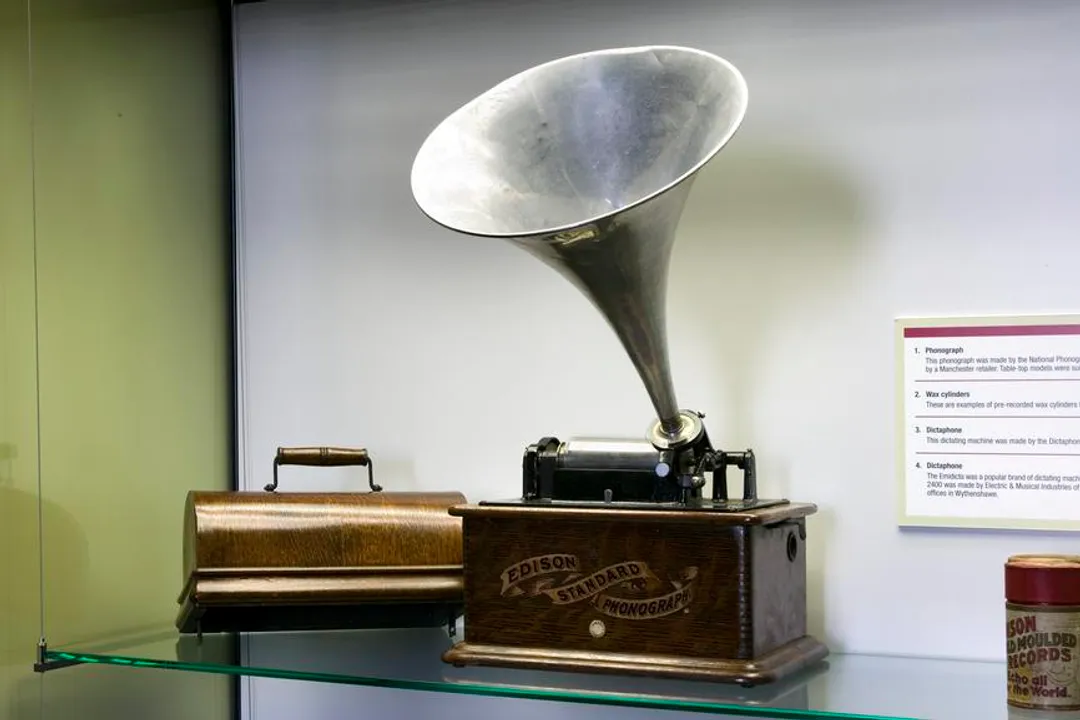
Before synchronized sound became the industry standard, the technical landscape was littered with ambitious but ultimately unsuccessful pairings of light and sound. Thomas Edison, who had already revolutionized projection with his Kinetoscope, experimented early on with synchronizing sound from phonograph cylinders to moving pictures, sometimes in conjunction with William Dickson. [6] These early efforts, like the Kinetophone, often required the projectionist to manually start both devices simultaneously, leading to obvious discrepancies when the film ran faster or slower than the disk speed. [4] This inherent lack of control demonstrated that true cinema sound required the audio information to be physically locked to the image frame, leading to the development of sound-on-film technologies. [4][7]
The late 1920s saw the transition explode, moving past simple synchronization to the actual implementation of sound systems in theaters across America. [5] This period was marked by intense commercial rivalry. Studios backed competing technologies, creating a fragmented market where picture quality might be consistent, but the audio experience was entirely unpredictable. [3]
# Competing Systems
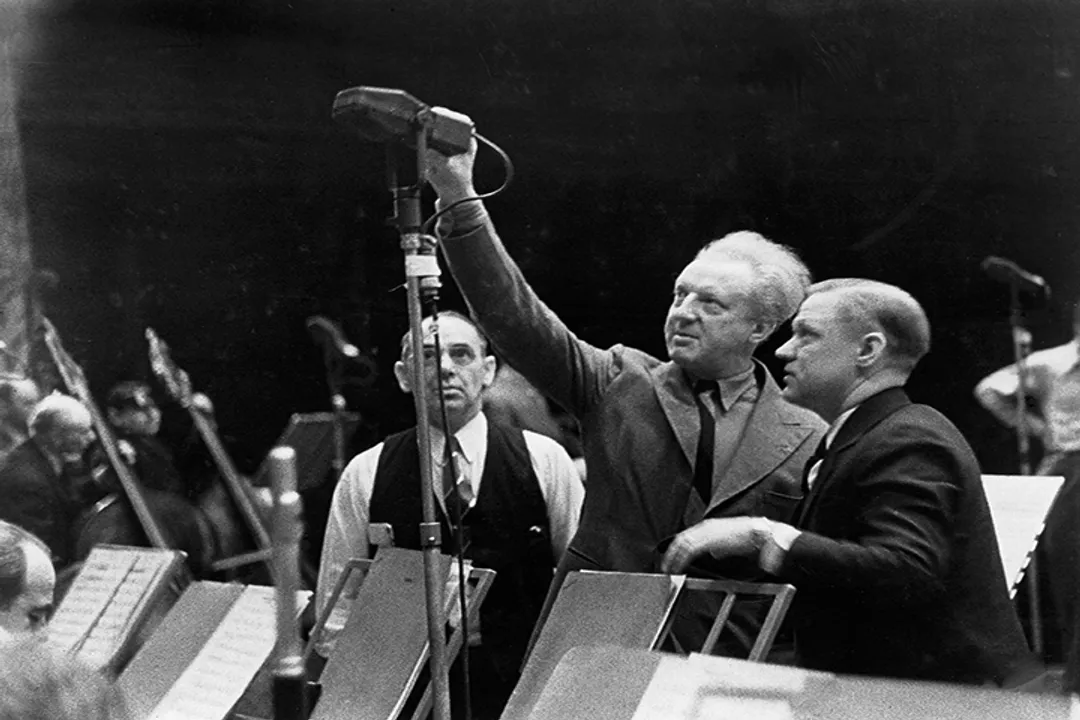
The early sound era pitted two main methods against each other: sound-on-disc and sound-on-film. [1]
Systems like the Warner Bros. Vitaphone relied on a separate, large phonograph record played in sync with the projector, often synchronized via a clutch mechanism. [5][7] While capable of good fidelity at the time, the system was cumbersome and subject to synchronization drift if the projector speed varied even slightly. [1][5]
Conversely, Movietone (developed by Fox) and Phonofilm (developed by Lee de Forest) recorded the sound directly onto the film stock, usually as an optical track running alongside the image. [1][7] This physical linkage ensured superior sync retention, which would prove crucial for long-term adoption. The inherent advantage of the optical track meant that the film print itself carried the necessary information for playback, simplifying the theater setup considerably compared to the dual equipment required for disc systems. [5]
This technological battle was a gold rush, but it created a massive headache for theater owners. A theater equipped with a Vitaphone setup expected a certain playback level and frequency range from the discs, while a theater playing a Movietone feature was receiving audio encoded differently onto the film strip. [3] If the projectionist at a Movietone house didn't adjust the amplification relative to the previous night's feature, the audience experience would range from deafeningly loud to nearly inaudible. [9]
# The Dawn of Necessary Standards
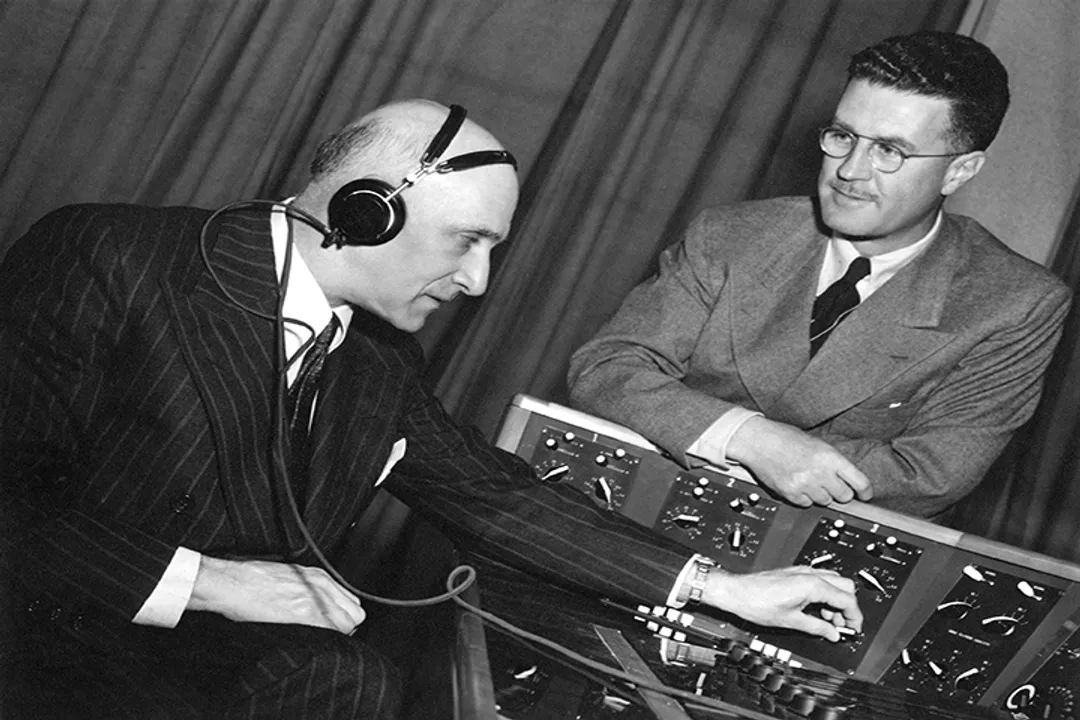
The real "invention" of cinema sound calibration occurred when the industry realized that technological superiority (like superior sync) wasn't enough; uniformity was paramount for mass acceptance. [4] If audiences paid premium prices for "talkies" only to encounter inconsistent volume or harsh, tinny dialogue, they would quickly lose faith in the new technology.
This is where the practical, often unsung, engineering work took over. While inventors like de Forest and engineers at Bell Labs created the means of recording sound, it was the subsequent technicians and standardization bodies who defined the rules for playing it back. [2] A key development was the move toward standardized film speed. For instance, the industry eventually coalesced around a 24-frame-per-second standard, which was primarily set to ensure reliable optical sound reproduction, as this speed offered a better balance between picture quality and groove density on the optical track. [1]
Think about the projection booth during the transition. A projectionist might switch from a feature recorded on a disc system (which might have a specific groove velocity) to a film system (which has an optical density correlation), then try to thread a reel that was mastered slightly too hot or too cold for their specific amplifier chain. [9] There was no single reference point. It’s an interesting historical friction point that the adoption of synchronized sound actually required film speed standardization (24 fps) far more urgently than silent film ever did, because silence is forgiving of minor speed variations, whereas recorded audio is not. [1] This imposed synchronization became the first, albeit rough, calibration requirement.
# Technical Consistency Needs
Calibration, in its essence, is about setting reference points. For early cinema sound, these points needed to cover several critical areas:
- Loudness Level: Establishing a standard reference level for dialogue and music, ensuring that a feature from Paramount sounded the same as one from MGM in any properly equipped theater. [9]
- Frequency Response: Defining the acceptable range of frequencies reproduced. Early optical sound systems inherently had a limited high-frequency response, but calibration ensured that the midrange (where dialogue sits) was prioritized and treated consistently across all playback chains. [5]
- Speaker Matching: Ensuring the output of the various horn speakers used in theaters matched a predetermined acoustic profile. [9]
The development of standardized test films or "tone reels" became vital tools in this process. These reels would contain precisely engineered signals—pure tones at known frequencies and specific modulation levels—that a projectionist could play, adjust their amplifier dials until the meters or meters matched the reel's documentation, and then play the feature film. [4] This procedure, which we now take for granted in modern home theater setup using calibration discs, was the nascent form of cinema sound calibration.
# The Engineer's Hand
While it is difficult to isolate a single inventor credited with issuing the first "Cinema Sound Calibration Guideline," credit must be given to the engineers and academics who translated the chaotic commercial race into reliable science. For example, figures associated with universities and research labs began working to formalize these processes. It is known that individuals like a professor at the University of Illinois played a role in the practical implementation and teaching of these new sound technologies, bridging the gap between laboratory invention and commercial reality. [2] Their work involved not just teaching how to operate the new machines, but establishing why certain operational settings produced better results than others.
Furthermore, professional organizations stepped in to take the place of warring studios. The Audio Engineering Society (AES), for instance, has a long history of developing technical standards for audio recording and reproduction. [8] While the specific standard that codified cinema calibration might be buried in historical documents, the existence and function of such societies point to the institutionalization required to move beyond proprietary, inconsistent studio methods toward an industry-wide agreement on what constituted "good sound". [8]
# Industry Maturation and Calibration Tools
As the 1930s progressed and the technical kinks were worked out, the dominance of sound-on-film became absolute, and the industry settled into established practices. The reliance on test reels evolved into integrated calibration routines built into the very process of creating the final optical master. [5]
Consider the evolution of the technology as a three-stage process:
- Invention: Synchronizing sound to image (Edison, De Forest). [4][6]
- Adoption/Chaos: Competing systems (Vitaphone vs. Movietone) leading to varied customer experiences. [3][5]
- Standardization/Calibration: Industry consensus and tools (test reels, engineering bodies like AES) ensuring reliable, repeatable quality. [8][9]
The value proposition of calibration is perhaps best understood by looking at its absence. When sound was new, the novelty was enough to draw crowds. Once the novelty wore off, the quality became the differentiator, and quality cannot be subjective when dealing with mass media reproduction. If a major studio, such as MGM, spent millions perfecting the audio mix for a specific scene—say, ensuring an explosion filled the space without clipping the amplifier—that investment was completely wasted if the local exhibitor’s volume knob was set improperly, making the explosion sound like a pop gun. This financial incentive drove the creation of simple, measurable calibration procedures that projectionists could follow under pressure.

# Modern Echoes of Early Calibration
Even today, the ghost of those early calibration needs persists. Modern cinema sound systems, like Dolby Atmos or DTS:X, are incredibly complex, utilizing dozens of speakers and sophisticated processing. Yet, they all begin with a formal, studio-mandated calibration routine. This routine is simply a vastly more complex version of adjusting the output based on a test signal.
To relate this history to the home user: when you set up a modern surround sound receiver, the first thing it asks you to do is run an automatic calibration routine (using a microphone) or a manual setup based on provided test tones. [9] This is the direct descendant of the projectionist adjusting their amp to match the reference level on a test tone reel from 1932. An actionable tip for any modern home theater enthusiast is to occasionally manually verify speaker distance and level using the built-in test tone generator, rather than relying solely on automated setups. This mimics the diligent, hands-on verification required by early sound engineers who knew that slight variations in cable length or speaker impedance could drastically shift the sonic balance.
The initial invention of cinema sound was the domain of inventors capturing light and sound. The invention of cinema sound calibration, however, belongs to the realm of standardization—a collective, pragmatic effort driven by engineers, trade organizations, and the business requirement that an audience member in Peoria should have the same auditory experience as one in New York City when watching the same film. It was the necessary industrial cleanup that made the magic of the talkies last.
# Key Milestones in Sound Standardization
The transition involved several overlapping technological benchmarks, each necessitating a refinement in how audio was measured and reproduced in the theater environment:
| Technology / System | Primary Characteristic | Implication for Calibration |
|---|---|---|
| Kinetophone/Disc Systems | Separate Audio Source (Cylinder/Disc) | High risk of synchronization drift; calibration needed for speed matching [4] |
| Movietone/Sound-on-Film | Audio engraved directly on film strip | Superior sync, but required standardized optical density interpretation [1][7] |
| Studio Transition Era (Early 30s) | Mix of systems in theaters | Necessity of external test reels and adjustable amplifier gain controls [9] |
| 24 Frames Per Second (Standard) | Industry agreement on projection speed | Established a core, consistent rate for reading the optical track [1] |
| AES Standards | Development of professional audio protocols | Shift from proprietary studio settings to documented industry-wide norms [8] |
It is important to recognize that the invention of cinema sound calibration was not a single patent filed by one person; it was the gradual convergence of competing technologies under the umbrella of commercial necessity, guided by engineering rigor. The "who" is less an individual name and more a collective of acousticians and technicians who decided that an explosion should sound like an explosion, every single time, regardless of which theater sold the ticket. This dedication to repeatable, standardized sonic delivery is what cemented sound as a permanent, high-quality component of the cinematic arts.
#Videos
The History of Sound at the Movies - YouTube
Related Questions
#Citations
Sound film - Wikipedia
The Professor Who Made Movies Talk | Illinois Public Media
Everything You Wanted to Know About the History of Cinema Sound
The Pre-History of Sound Cinema: Thomas Edison and W.K.L. Dickson
History of film - Pre-WWII, Sound, Era | Britannica
Thomas Edison and the Origin of Sound and Color in Films - Backlots
A brief history of sound in film
[PDF] A New Draught Proposal for the Calibration of Sound in Cinema ...
The History of Movie Theater Sound - EarPeace
The History of Sound at the Movies - YouTube