Who invented surround sound?
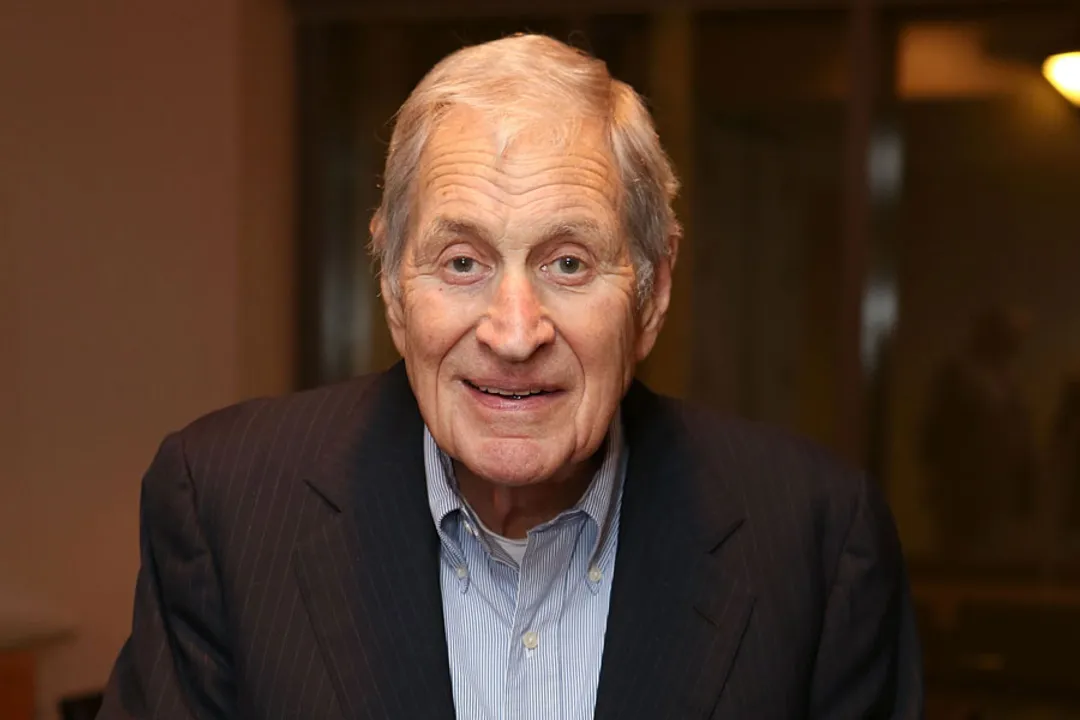
The quest to pinpoint the single person who "invented" surround sound is less like identifying a lightbulb moment and more like tracing the lineage of a complex family tree, where several branches contributed crucial, distinct developments. While many names come up in the conversation, the modern, commercially successful realization of immersive audio systems is inextricably linked to the pioneering work of Ray Dolby and the technological leaps his company facilitated in the film industry. [1][3] However, the idea of placing sounds around a listener predates modern electronics by decades, rooted in early acoustic experiments and ambitious, though often short-lived, theatrical sound experiments. [1][6]
# Spatial Audio Beginnings
Long before home theaters featured five or seven speakers firing simultaneously, audio engineers wrestled with the challenge of making sound an environmental experience rather than just a two-dimensional projection from the front of a room. Early attempts focused on sound localization, the ability to place a distinct sound source at a specific point in space relative to the listener. [1] This concept was explored conceptually as far back as the early 20th century, even involving multi-channel experimentation in theatrical presentations during the 1940s and 1950s, though these often remained isolated, technologically limited demonstrations rather than standardized systems. [1][6] These initial endeavors, while conceptually sound, often suffered from crosstalk, high noise floors, and complex installation requirements, making them impractical for widespread adoption. [1]
The foundational problem for any multi-channel system was noise. Early magnetic tape formats and optical sound tracks used in film were inherently noisy. An immersive experience quickly becomes ruined if the quiet moments are filled with hiss or rumble. [3] This realization sets the stage for the most critical figure in the history of practical surround sound.
# Dolby Breakthrough
The name Ray Dolby is the one most commonly associated with making surround sound work reliably and commercially. [3][6] Dolby’s primary initial focus was not explicitly on creating surround sound, but on solving the noise problem inherent in recording and playback, leading to the development of Dolby Noise Reduction systems. [3] This expertise in signal processing proved essential when applying multi-channel audio to cinema. [3]
Ray Dolby, an engineer educated at Stanford and Cambridge, founded Dolby Laboratories in London in 1965. [3] While his early work centered on noise reduction for stereo recordings, which vastly improved the fidelity of music released on tape and vinyl, the principles were directly transferable to the more complex demands of motion pictures. [3]
It is important to draw a distinction, as confusion often arises, particularly regarding the musician Thomas Dolby; Thomas Dolby is known for his electronic music in the 1980s, but Ray Dolby is the innovator behind the audio processing technologies central to cinematic sound immersion. [4]
The real turning point for immersive cinema came when Dolby adapted his technology for film soundtracks. The introduction of Dolby Stereo was revolutionary because it encoded multiple separate audio channels—left, center, right, and a monaural surround channel—onto a standard optical soundtrack strip used for projection, all while employing noise reduction to clean up the signal. [3][9] This meant that existing cinema equipment could be upgraded relatively easily to support a vastly richer sound field, a key factor in its acceptance. [1][9]
The genius of Dolby’s early cinema system wasn't just adding more speakers; it was the encoding method. By packing four discrete channels of information into the space traditionally reserved for two, and applying dynamic noise reduction in the process, Dolby ensured that the added complexity didn't introduce unacceptable levels of degradation. This focus on practical implementation over pure theoretical capability is what separated his work from earlier, more esoteric experiments. [3][9]
# Cinema Sound Formats
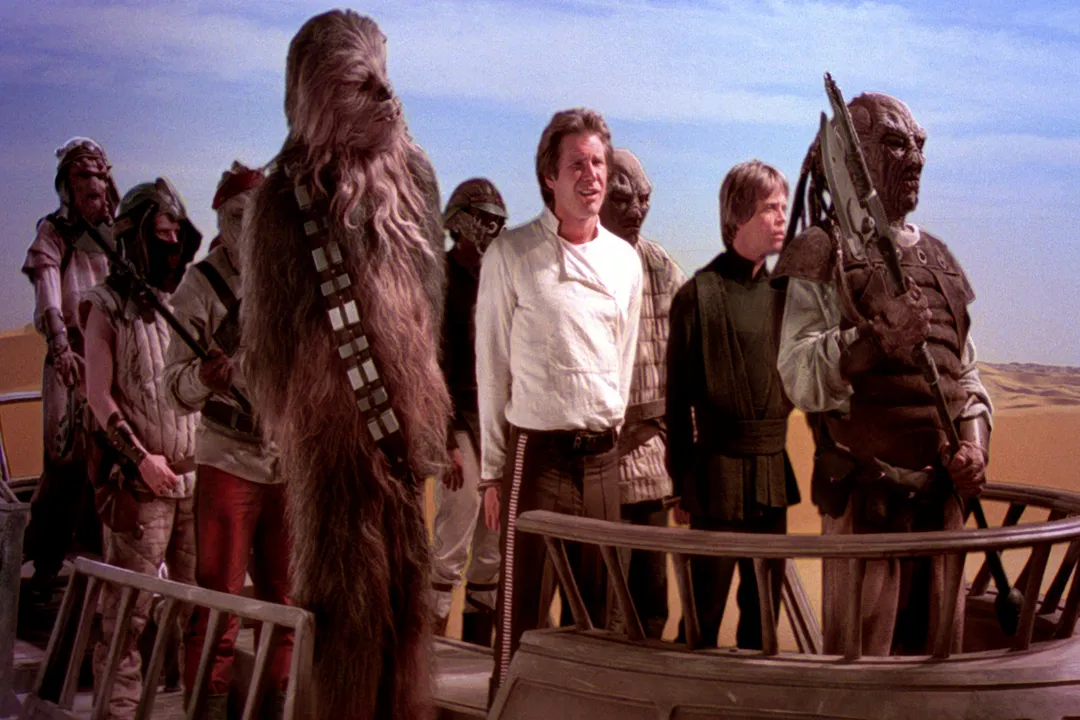
The true public introduction of what we now recognize as modern surround sound arrived with the theatrical releases that utilized Dolby Stereo. Films like Star Wars (1977) and Close Encounters of the Third Kind (1977) became benchmarks, demonstrating how discrete directional audio could enhance the storytelling experience, moving sounds seamlessly from speaker to speaker around the audience. [1][9] This established the common 4-channel standard (Left, Center, Right, Surround) that became the industry language for years. [1]
As technology progressed, the film industry demanded more precise localization, leading to formats that offered more discrete channels. This spurred competition and further development. For instance, formats emerged that provided distinct left and right surround channels, creating the 5.1 standard—five full-range channels and one low-frequency effects channel (the .1)—which became the benchmark for home theater systems globally. [1]
While Dolby established the initial commercial stronghold, other technologies followed, often pushing channel counts or employing different encoding techniques. For instance, Digital Theater Systems (DTS) emerged later as a competitor, famously using a higher bitrate digital format on a separate medium (a CD-ROM synchronized with the film) before eventually integrating directly onto the digital film print, offering superior fidelity to the earlier analog Dolby formats. [1]
# Consumer Integration
The transition from the cinema experience to the living room was a gradual process driven by the availability of affordable A/V receivers and standardized speaker packages. Once film producers mastered the 5.1 mix, consumer demand for recreating that cinematic immersion at home provided the market impetus for manufacturers to develop accessible multi-channel playback equipment. [1]
The core components that define a modern surround setup—the A/V receiver acting as the central processor and the standardized speaker layout (like the 5.1 setup)—are direct descendants of the innovations pioneered by Ray Dolby and other format developers in the preceding decades. [1] While the underlying mathematics and channel allocations evolved, the principle remained: precisely control the sound sent to distinct speakers surrounding the listener.
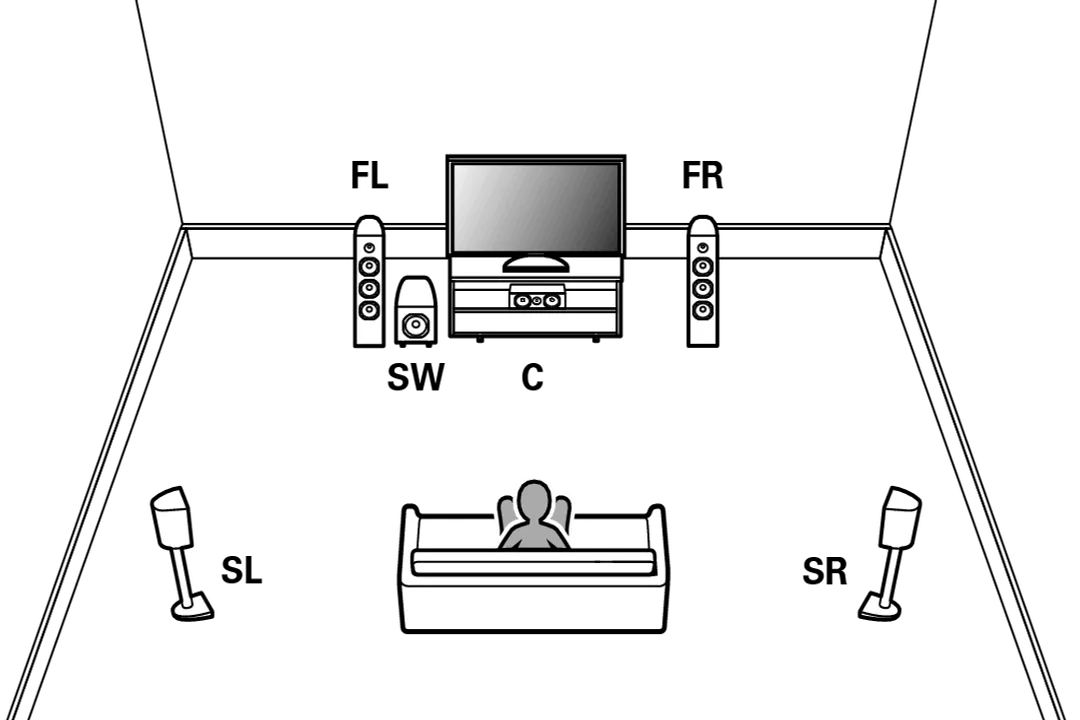
For those setting up their first immersive systems, understanding the basic channel map is still rooted in these historical standards. A typical 5.1 setup places speakers at specific angles relative to the main listening position: the three front speakers handle the primary soundstage (dialogue from the center), while the two side/rear surrounds provide ambient and directional effects. [1] This configuration dictates how mixers place sound elements to achieve the desired effect on the listener.
# Evolution Beyond Channels
The historical narrative often stops with the establishment of 5.1 or 7.1 channel layouts, but the spirit of "inventing" surround sound continues in how we process and deliver audio today. Modern audio systems are increasingly moving away from fixed channel counts toward object-based audio, such as Dolby Atmos or DTS:X. [1]
This newer paradigm shifts the thinking from "send this sound to speaker #3" to "place this sound object here in three-dimensional space," allowing the playback equipment to render that sound optimally based on the actual number of speakers the user has installed, whether that’s a simple 5.1 setup or a ceiling-based 11.4.6 configuration. [1]
It is a fascinating development because it shows that the original goal—placing sound precisely in space—was finally perfected, not by adding more fixed channels, but by abstracting the signal away from the physical speakers entirely. If we consider the core invention to be achieving accurate spatial placement, then the transition to object-based audio represents the final phase of the work initiated by those early acoustic pioneers and commercialized by Dolby. The fact that current upmixing technologies can intelligently interpret a legacy 5.1 soundtrack and assign those auditory elements to height or width channels on a modern setup demonstrates the flexibility built into the foundational concepts developed in the 1970s. [8]
When setting up a system today, whether using an older 5.1 format or a newer object-based one, the initial investment in the process of spatialization is what matters. For example, when mixing for a 5.1 system, mixers must account for the fact that the surround channel in many older systems was often a mono signal limited in frequency response compared to the front channels. [1] Successfully translating a complex modern mix down to that historical constraint, or conversely, utilizing the full dynamic range of a modern system, requires acknowledging the limitations and strengths of the formats that came before. The invention wasn't just the hardware; it was the entire ecosystem of recording, encoding, transmission, and playback that made the illusion reliable enough for mass consumption. [3]
Related Questions
#Citations
Surround sound - Wikipedia
A Brief History Of Surround Sound | KEF USA
The History of Surround Sound - Fluance.com
Did Thomas Dolby invent surround sound before or after he ... - Reddit
history of surround sound - 23016566's blog
Surround sound pioneer Ray Dolby dies aged 80 - NME
epanorama.net/Inventor of Surround Sound System
History of Surround Sound Processing: The Battle for Dolby Pro ...
Dolby Stereo and Surround Sound: The Evolution of Immersive ...