Who built the first fiberglass boat?

The story of the very first fiberglass boat is less a single, sharp moment and more a shifting shoreline, with several vessels laying claim to the title depending on whether one focuses on sail, power, or mass production. The material itself, fiberglass reinforced plastic (FRP), arrived on the scene as a disruptive technology, promising rot-free longevity that traditional wood construction simply could not match. [1][7] However, translating this industrial material into a seaworthy hull required experimentation, capital, and a willingness to challenge deeply ingrained naval traditions. [1] The initial efforts were often proprietary or small-scale, meaning definitive documentation for the absolute first vessel built anywhere in the world remains elusive, lost in the rapid technological adoption of the post-war era. [5]
# Material Genesis

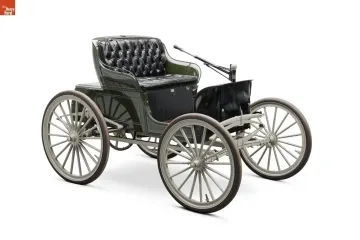
The foundation for the fiberglass boat industry rests on innovations developed outside of boating entirely. Owens-Corning, a major player in the materials science of this era, played a significant role in advancing fiberglass production during the 1930s. [7] Initially, this new composite was explored for uses far removed from the water, finding application in items like insulation, automotive bodies, and protective headwear. [3] The material's appeal was clear: it was lightweight relative to its strength, resistant to rot and marine borers, and could theoretically be molded into complex shapes more easily than bending wood planks. [1] By the late 1940s and early 1950s, builders began to seriously consider its potential for serious marine construction, moving beyond small dinghies and tenders. [5] This transition wasn't immediate; early adoption faced skepticism from traditionalists who questioned the material's long-term durability and repairability when faced with the rigors of constant saltwater exposure. [1]
# First Sailboat
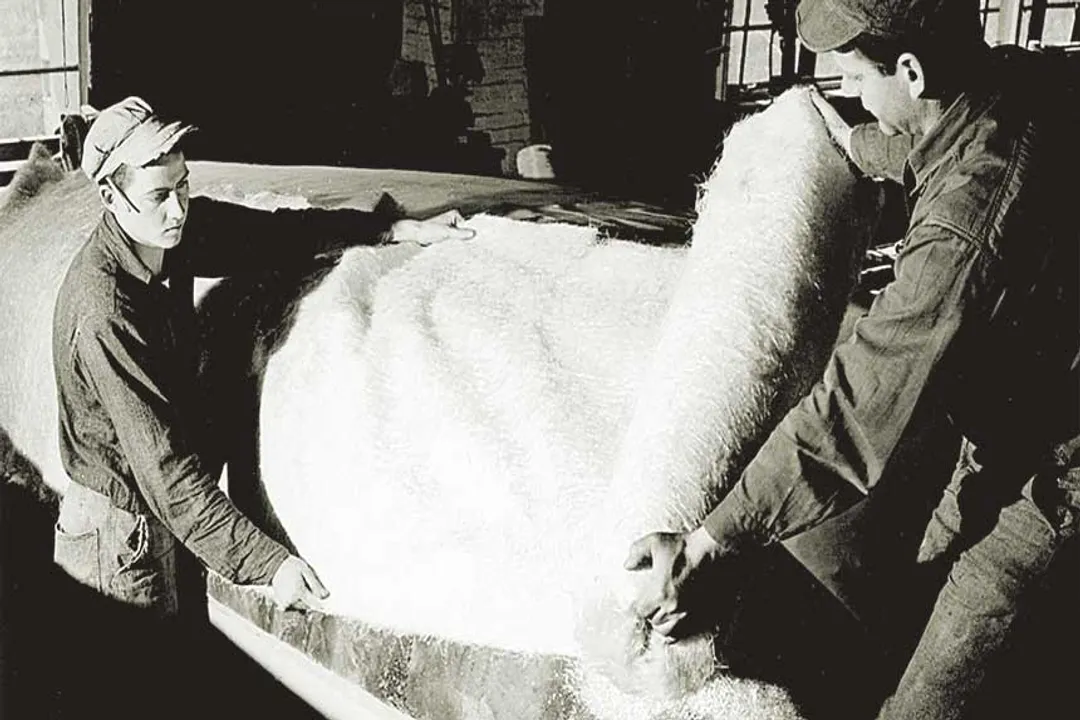
When discussing the earliest fiberglass sailing vessels, the narrative often centers on prototypes built by enthusiasts looking to test the new material's structural integrity under sail loads. While various small, experimental dinghies likely appeared in the late 1940s, pinning down a single first sailboat is difficult because many early examples were one-offs built by individuals. [5] A more substantial, though still early, milestone in sailing might be found in production boats. For instance, the Dolphin 24, designed by Cuthbertson & Cassian, represents a known product from the fiberglass revolution, though its introduction came a bit later in the timeline, around 1960. [8] The Dolphin 24 was built by Dolphin Marine, and its success helped establish a market for production fiberglass sailboats, demonstrating that the material could handle the stresses of a performance keelboat. [8] The existence of companies like Allied Boat Company, which was deeply involved in fiberglass production, further underscores that by the 1960s, the material was accepted in the sailboat sector for serious cruising and racing designs. [9]
# Powerboat Claims
The race for the first fiberglass powerboat introduces another layer of complexity, often becoming entangled with influential names in performance boating. The skepticism surrounding fiberglass was perhaps strongest here, as speed translates quickly into high dynamic loads on a hull, which many assumed only proven wood construction could withstand reliably. [2] One name frequently associated with the early powerboat adoption is designer Ray Hunt. [2] Hunt’s involvement, particularly with the vessel known as the Argo, is often highlighted as a turning point. [2] The Argo demonstrated that fiberglass could handle the pounding of offshore conditions. Following the successful testing of this concept, Dick Bertram acquired the rights and began producing the Bertram 30, often cited as one of the first successful production fiberglass powerboats. [2] This move signaled a critical shift from experimental use to commercial viability in the powerboat segment, proving the material could be reliably manufactured for speed and strength. [2]
To illustrate the slow but steady acceptance of the technology across different boat types, one can observe the timeline of material adoption:
| Boat Type Focus | Approximate Era of Early Examples | Key Challenge Addressed |
|---|---|---|
| Small Tenders/Dinghy | Very Early (Pre-1950s) | Ease of maintenance, small scale [5] |
| Performance Sailboat | Late 1950s/1960s | Rigidity under sail and structural layering [8] |
| Production Powerboat | Early 1960s onwards | Handling high-speed impact and fatigue [2] |
It is worth noting that the transition wasn't just about construction; it was about economics. Wood required skilled boatwrights whose numbers were shrinking, whereas fiberglass molds, once created, allowed for consistent output by less specialized labor, offering a path to higher volume production runs. [7]
# Production Hurdles
The very first builder to successfully create a mold and lay up a hull—whether it was a powerboat or a sailboat—faced a steep learning curve that went far beyond simply buying resin and matting. [1] Early builders struggled with the curing process, which is highly sensitive to temperature and humidity. If a layup cured too quickly or unevenly, the resulting hull could develop internal stresses, creating weak spots or distortions in the shape. [1] Furthermore, achieving a smooth, high-quality finish required significant post-molding labor, often involving sanding and fairing, which counteracted some of the anticipated time savings over traditional planking methods. [1] This initial friction between the promise of molding and the reality of labor-intensive finishing meant that many early fiberglass boats, while structurally sound, were not inherently cheaper than their wooden counterparts until production volume increased substantially. [7]
An interesting divergence point in history seems to be between the development of high-performance, high-load vessels and general utility craft. For a small utility launch or skiff, the initial experiments with an early fiberglass layup might have been relatively forgiving. However, for a deep-V planing hull designed to run at 30 knots, any flaw in the laminate schedule—the thickness and orientation of the fiber layers—would become catastrophically apparent quickly. [2] This explains why advancements in powerboat construction often drove the material standards, as success offshore conferred far more credibility than success in a calm harbor. Thinking about the initial investment, setting up a proper mold for a deep-V hull requires precision tooling that wood construction postpones until the boat is complete; the mold is the first boat, and that upfront cost was substantial for a builder exploring unknown territory. [7]
# Industry Acceptance
The fact that resources were dedicated to creating boats like the Bertram 30, which followed the success of Hunt's Argo, indicates that the material had passed its initial viability test in the powerboat world. [2] This acceptance rapidly spread. By the time high-profile designs like the Dolphin 24 began rolling out, fiberglass was recognized as the future for many cruising and racing sailors seeking low-maintenance hulls. [8] The material effectively democratized boat ownership by lowering the long-term maintenance burden associated with wood boats, which required consistent caulking, painting, and seam repair to remain watertight. [1][7] While initial construction costs might have been high, the total cost of ownership over a decade was often lower for fiberglass, a calculation that increasingly swayed buyers in the 1960s. [7]
Sources suggest that while the term "first" is debatable, the practical revolution began when established designers and reputable builders—not just hobbyists—committed to the material. [2] A YouTube resource discussing the evolution of boat building hints at the sheer excitement and perhaps a degree of secrecy surrounding early mold construction techniques, suggesting that knowledge of how to do it well was a closely guarded competitive advantage. [4] This transition from skilled carpentry to applied material science defines the era.
For readers interested in tracking this material shift in their own collections, understanding the context of the construction is key. If you encounter a boat from the early 1960s that seems unusually heavy or has a visibly thick, perhaps uneven, gelcoat layer, it is very likely a product of this pioneering phase. Such vessels represent the builder grappling with early material science, attempting to achieve the strength of wood using a compound still being fully understood on a large scale. [1] They are, in a sense, the direct descendants of that unidentifiable first hull that proved fiberglass could float and survive. The sheer variety of approaches seen in those immediate post-pioneer boats speaks volumes about the fragmented nature of early composite construction before standards were widely formalized. [5]
The enduring legacy of whoever built that initial fiberglass hull—whether a sailboat prototype in a backyard or an experimental powerboat for racing—is that they forced the industry to look past the grain of wood and toward synthetic materials, fundamentally reshaping marine construction forever. [3][7] The debate over the exact first boat remains, but the collective achievement of all those early experimenters is undeniable: they ushered in the age of composite hulls.
The challenge today is often recognizing the difference between fiberglass hulls from the 1950s and those from the 1980s. A hull from the era of the Argo or the early Bertram production runs will likely feature hand-laid fiberglass, possibly utilizing polyester resin, which is generally more brittle and permeable than the vinylester or epoxy resins common in modern construction. [2] If a builder needed to make a swift repair on one of these early boats, knowledge of the original resin type is crucial; using modern, high-strength epoxy on a decades-old polyester hull without proper surface preparation can lead to osmotic issues or delamination, where the new, stronger resin fails to bond securely with the older substrate. [1] This need for specialized knowledge in maintaining these "first generation" glass boats is a direct consequence of their pioneering status.
#Videos
The History of Fiberglass - YouTube
Related Questions
#Citations
Birth of Fiberglass Boats | Good Old Boat
In Our Wake: What's the first fiberglass powerboat?
The Fiber Evolution - Trade Only Today
The History of Fiberglass - YouTube
How Long Have Fibreglass Hulls Been Built? - Cruisers Forum
Willis Slane was one of the first to adopt fiberglass as a ... - Facebook
Wood To Glass - Professional BoatBuilder: An IBEX Technical Journal
Fiberglass Boats - Dolphin24.org
Allied Boat Company - Wikipedia