Which country invented the bin?

The origin of the modern trash receptacle often points to a single, determined French official whose name inadvertently became synonymous with the item itself across an entire language. Long before standardized recycling programs or high-tech waste management systems, the challenge of urban sanitation revolved around a much simpler, yet profoundly unhygienic, problem: what to do with the refuse generated inside a home. For centuries, in many growing European cities, the common practice was often just to toss unwanted items out the door and into the street. [7][8]
# French Official
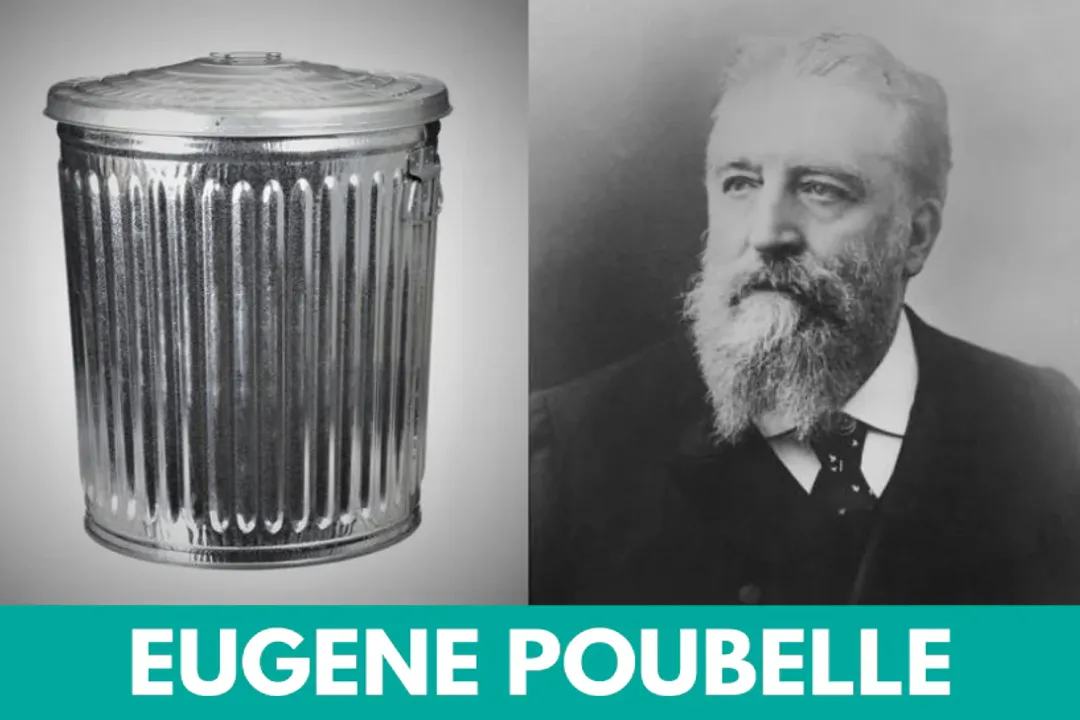
The shift from street-dumping to domestic containment is heavily credited to Eugène Poubelle. [2] Poubelle was serving as the Prefect of the Seine department in Paris when he issued a key regulation in 1884. [1][2][7] This mandate required Parisian residents to place their household garbage into specific containers with tight-fitting lids. [7] These containers were officially known as boîtes à ordures ménagères (household garbage boxes). [1]
The crucial element of Poubelle’s decree was the lid. While some form of container for waste likely existed prior, the mandate was specifically aimed at preventing animals—such as dogs, pigs, and rats—from scattering the refuse across the public thoroughfares once it was deposited. [7] The intent was a massive leap in public health, forcing citizens to manage their waste internally before collection, rather than creating an open-air refuse pile on the pavement. [8]
# Etymological Legacy
The impact of this regulation was so immediate and complete in Paris that the name of the man behind the law stuck permanently to the object itself. [2][7] In modern French, the word for a trash can is poubelle. [2][7] It is a rare example in history where a person’s surname directly and universally transitions into a common noun for an everyday object, indicating a profound, if initially unpopular, institutional change he forced upon the populace. [7] This linguistic mark of success stands in contrast to many other technical inventions where the inventor's name is often relegated to patent records or specialized histories. [1]
# Container Evolution

While Poubelle established the necessity of the covered domestic bin in late 19th-century France, the general concept of a waste container has a longer, more diffused history. [4] Early receptacles were often simple boxes or buckets, varying widely in material and design based on local availability and wealth. [4] The very earliest waste containers might have been simple earthenware jars used for disposal millennia ago. [4] In the context of a developing industrial city like Paris, Poubelle was standardizing a specific type of container—one that was lidded and intended for immediate curbside collection—rather than inventing the concept of an object to hold trash. [1][4]
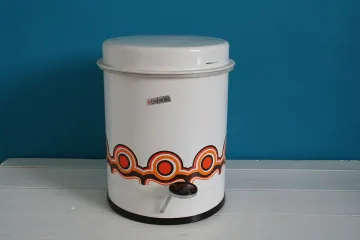
Later advancements focused more on convenience and hygiene at the point of use. For example, an inventor named Lilian B. Day is associated with a 1935 patent for a garbage can that incorporated a foot pedal to open the lid, eliminating the need to touch the potentially soiled cover. [5] This shows a move away from simply containing the waste (Poubelle's concern) toward improving the user experience for the homeowner. [5]
# Wheeled Technology
The next significant transformation in waste management arrived decades later with the advent of the wheeled container, often known colloquially as the wheelie bin. [3] This development was less about public health mandate and more about logistical efficiency, specifically to interface with new mechanized collection vehicles. [3]
The modern roll-out bin, designed to be easily moved from the house to the collection truck by a single worker, saw patented development in the United States in the 1960s. [3] One account points to a 1968 patent for a roll-out bin designed to couple with collection trucks. [3] These large, durable plastic containers represented a major departure from the metal or wooden boxes Poubelle mandated. They shifted the burden of moving heavy, full containers from municipal workers or the resident carrying a loose sack to a system where the container itself could be mechanically lifted and emptied. [3] Interestingly, while this invention solved massive labor and ergonomic issues, some later commentary suggests that the standardized, often brightly colored, presence of these bins can create their own aesthetic challenges in certain environments. [9]
If we consider the invention of the bin as a series of necessary steps rather than a single moment, the evolution looks like this:
| Stage | Primary Focus | Key Innovation | Associated Location/Era |
|---|---|---|---|
| Pre-Modern | Basic containment | Simple jars/boxes | Ancient to 19th Century |
| Containment | Public health, odor control | Mandatory covered bin (the poubelle) | Paris, 1884 [1][7] |
| User Hygiene | Ease of access | Foot pedal operation | United States, 1930s [5] |
| Logistics | Collection efficiency | Durable plastic, wheels, mechanized lift | United States, 1960s [3] |
The contrast between Poubelle's Paris and the mid-20th-century shift to plastic wheelie bins is quite stark. Poubelle's success required a top-down municipal decree forcing a social behavior change—the sheer act of covering the trash—which was enforced via penalty. [7] The wheelie bin, conversely, was an innovation driven by mechanical engineering and the desire for streamlined municipal services, being adopted because it made the already established act of containment easier to handle on a large scale. [3] One can observe that while Poubelle created the habit of indoor storage, the later wheelie bin created the system for efficient modern removal.
# Global Adoption
The concept championed by Eugène Poubelle—that household waste must be properly contained prior to collection—has become a global standard for municipal sanitation, even if the specific container varies. [4] While France inherited his name for the object, other countries developed their own solutions in parallel or in response to the same fundamental health concerns. The development of specialized recycling bins, for instance, represents another layer added to the basic waste container, driven by environmental concerns rather than pure sanitation or logistics. [6] These newer bins, often color-coded for materials like paper, plastic, or glass, integrate the lessons learned from Poubelle's initial mandate—the need for clear, designated containment—but apply it to resource separation. [6]
Ultimately, while many figures contributed to the design, materials, and functionality of what we use today, the historical pivot point that truly defined the modern household trash receptacle—the one meant to keep waste hidden and off the streets—occurred in France under the authority of Eugène Poubelle in the late 19th century. [1][2] His legacy is perhaps the most unique in sanitation history because the world, at least the French-speaking world, still calls the bin by his name. [7]
Related Questions
#Citations
Eugène Poubelle - Wikipedia
Eugène Poubelle: The Inventor of the Trash Can
The History of the Wheelie Bin
Who Invented the Trash Can? | History of Trash Cans - PlasticMill
History of Recycling Bins
Eugène Poubelle made the world a better place and now his last ...
Eugène Poubelle | everydaytrash
The curse of the wheelie bin - Terroir