When was the first spring clock invented?

The quest to measure time accurately has driven innovation for millennia, moving from observing the steady march of shadows to harnessing the consistent flow of water. Before the invention of the spring clock, timekeeping mechanisms were overwhelmingly tethered to gravity, relying on falling weights or draining liquid to power their intricate movements. [2] This fundamental constraint meant that the grandest, most complex timekeepers—the tower clocks that rang out the hours for entire cities—were immense structures, exemplified by weight-driven mechanical clocks emerging in Western Europe starting around the 13th and 14th centuries. [2] The development of the verge and foliot escapement allowed for these massive devices, but their application was fixed; you could not carry a two-ton clock driven by heavy stones out of the cathedral tower. [2]
# Mechanical Foundations

To understand the revolution that the spring mechanism brought, one must appreciate what it replaced. Prior to the 15th century, time was primarily measured by continuous processes like water clocks (clepsydrae) or, later, by the consistent, though still imperfect, mechanics of weight-driven clocks. [2][1] The water clock, refined over centuries, notably by Islamic engineers who developed sophisticated gear trains, suffered from pressure changes affecting flow rate, leading to variations in accuracy. [2] When mechanical clocks finally arrived, driven by falling weights and regulated by the verge and foliot escapement—a crucial development dating to around 1275—they offered a major step forward, though they were still prone to fluctuations caused by variations in applied force. [2]
The very concept of a smaller, personal timekeeper was severely limited by this dependence on vertical gravity. Early mechanical clocks, such as the one designed by Henry de Vick around 1360, were floor-standing or tower-mounted, demonstrating the inherent link between the power source and the device's scale. [2] A genuine breakthrough in liberating the timekeeper from its fixed location required a new kind of stored energy.
# The Power Shift
The key component that enabled portability—the mainspring—was actually developed sometime in the early 15th century. [2] Initially, this coiled spring found use in applications like locks and, later, in flintlock guns. [2] It would take roughly another hundred years for horologists to effectively adapt this stored, coiled energy to power a clock mechanism, challenging the long-reigning dominance of traditional weights.
The moment that truly marks the birth of the portable clock arrived in 1510, attributed to the German-born artisan Peter Henlein. [1] Henlein produced what is considered the first spring-driven clock. [1] This invention was nothing short of transformative, as it provided individuals with a timepiece that could function wherever they went, rather than being restricted to a static installation. [1] This initial success with spring power, derived from a coiled mechanism rather than a falling mass, was the prerequisite for miniaturization.
The impact was immediate, though accuracy lagged behind portability. By the beginning of the 16th century, this new technology made smaller mantel clocks and wall clocks feasible, and it spurred the development of watches small enough to be carried in the carriages of wealthy individuals. So significant was this shift to personal timekeeping that by 1524, Henlein was paid for what is believed to be the earliest example of a watch in Nuremberg. [2] Furthermore, the oldest surviving clock known to be spring-driven dates to 1525, made by the Bohemian craftsman Jacob Zech. [2]
# Inaccuracy and Equalization
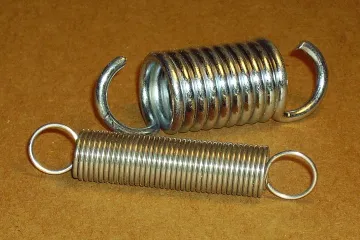
While Henlein’s device solved the problem of powering a portable clock, it simultaneously introduced a new, significant problem: regulating that power consistently. This is where the history of the spring clock deviates sharply from its predecessor. A weight, once released, exerts a nearly constant force as it falls. A coiled mainspring, however, exerts maximum force when it is fully wound and progressively less force as it unwinds and slackens. This disparity meant that the early spring-driven clocks and watches ran noticeably faster when tightly wound and gradually slower as the spring ran down.
The immediate practical reality of this inaccuracy speaks volumes about the trade-offs of early innovation. Documents from the era often mention that those carrying these novel timepieces also carried a small sundial and a compass just to verify the actual time—a clear indication that the new portability came at the expense of reliability. This situation presents an interesting observation: the initial victory was mobility, not precision. The technology was deemed useful enough to adopt for the sake of having a time reading, even if it was off by a significant margin.
To combat this inherent unevenness, a mechanical solution was engineered: the fusee. Developed in the early part of the 16th century, the fusee was essentially a specially shaped pulley system designed to work in conjunction with the barrel holding the mainspring. By connecting the spring to the fusee, the transmission of power to the clock’s gear train was equalized; the varying pull of the spring was converted into a more uniform force acting on the mechanism. This was the first dedicated engineering response to the non-linear power output of the spring, a problem that weight-driven clocks never faced to the same degree. However, even with the fusee, these early spring-driven clocks and watches were still about as prone to inaccuracy as their weight-driven tower counterparts. Metallurgical advances would be required before the fusee could be entirely dispensed with in some designs, a process that would take over two centuries.
| Timekeeping Epoch | Primary Power Source | Typical Location | Key Regulating Component | Noted Inaccuracy Factor |
|---|---|---|---|---|
| Ancient/Early Medieval | Flow of Liquid/Sun Shadow | Fixed (Water/Ground) | Flow mechanics | Changing pressure/Sun availability |
| Medieval Mechanical | Falling Weights (Gravity) | Towers/Churches | Verge and Foliot Escapement | Fluctuating applied force |
| Early Spring Clock (c. 1510) | Coiled Mainspring | Portable (Carriage/Home) | Early Escapement (no fusee) | Spring tension variance |
| Refined Spring Clock (post-1510) | Coiled Mainspring | Portable | Fusee | Still present, but mitigated |
# Final Precision
The trajectory of timekeeping technology shows a persistent pattern: a mechanism capable of storing power precedes a mechanism capable of regulating it with high accuracy. The weight clock needed the verge and foliot; the spring clock needed the fusee. [2] However, the truly significant leap in timekeeping accuracy for portable devices—moving them from merely telling the time to reliably telling the accurate time—came when the regulating principle from large, accurate clocks was successfully adapted to the smaller, spring-powered architecture.
The next great innovation for spring-driven devices involved the balance spring, also known as the hairspring. [2] This component, working with a balance wheel, creates a harmonic oscillator, much like a pendulum in a larger clock, allowing for a steady, fixed frequency of oscillation. [2] Around 1675, the balance spring was invented separately by both Christiaan Huygens and Robert Hooke. [2] Huygens patented his application to a pocket watch around the same time Hooke was working on similar concepts in England.
The combination of the mainspring providing power, the fusee providing initial equalization, and the balance spring providing the high-frequency, steady beat, finally allowed spring-driven clocks and watches to achieve an accuracy approaching that of the newly perfected pendulum clocks. With the steady transfer of power finally achieved, spring-driven timepieces began to proliferate across Europe and America, with costs decreasing and popularity soaring.
# The Watch's Trajectory
The story of the spring clock is inextricably linked to the rise of the watch. While the earliest spring clocks were larger, the continuous miniaturization driven by the mainspring concept led directly to pocket watches carried by upper-class men by the late 18th century. Interestingly, the development of the wristwatch—which many today would argue is officially a timepiece, not a clock, as it typically lacks a striking mechanism—owes its ubiquity to a confluence of military necessity and early aviation challenges, long after the core spring-driven mechanism was perfected. Aviation pioneer Alberto Santos-Dumont famously requested a wrist-mounted watch from Louis Cartier so he could check time while flying, but it was World War I that cemented the wristwatch’s role for men coordinating infantry and artillery movements.
The fundamental architecture established by Henlein in 1510, refined by the fusee in the early 16th century, and perfected by the balance spring in the late 17th century, remains the basis for high-end mechanical watches today. The first spring clock, therefore, was not just an item of novelty; it represented the moment time measurement broke its environmental shackles. It shifted timekeeping from an event observed in a public square or an astronomical moment dictated by the sun, to a private possession that could move with its owner, despite the initial, necessary compromises in precision. [1] The journey from Henlein's initial device to the precision timekeepers of the 18th century demonstrates a recurring theme in scientific history: initial invention prioritizes function (portability), followed by a lengthy engineering effort to achieve acceptable performance (accuracy).
Related Questions
#Citations
History of timekeeping devices - Wikipedia
A Timeline of Timekeeping: A History of Clocks
Spring Driven Clocks on Merritts.com