When was the first photography invented?
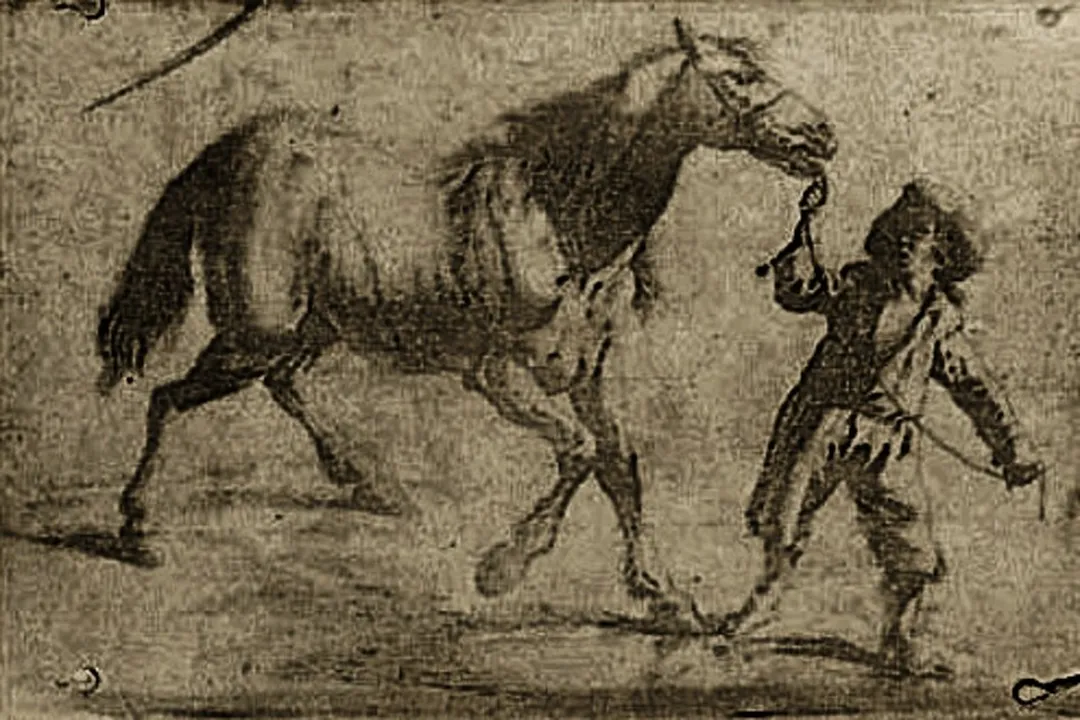
The question of when photography was invented is not met with a single date stamped on a patent. Instead, it is a layered answer residing at the intersection of chemistry, optics, and stubborn persistence. Depending on whether you mean the first permanent fixation of an image, the first commercially viable method, or the first reproducible image, the answer shifts across two decades and involves a dramatic, often competitive, race between several brilliant minds.
# Chemical Foundations

The conceptual groundwork for capturing light stretches back millennia, long before the first recognizable photograph existed. The principle relies on two pillars: the camera obscura—a dark chamber that projects an inverted image through a tiny hole—and the discovery that certain substances react visibly when exposed to light. The camera obscura was understood by philosophers like Aristotle and Mozi as early as the 4th century BCE, and by the 16th century, artists were employing portable versions as drawing aids.
However, knowing how to project an image is far different from holding it. Scientists in the preceding centuries recorded fleeting evidence of light-sensitive materials. In 1717, Johann Heinrich Schulze noted that silver particles suspended in a liquid darkened in sunlight, creating rudimentary letter shapes, though he never made these impressions permanent. Thomas Wedgwood, around 1800, managed to create detailed photograms (images made by placing an object directly onto sensitized paper) using silver nitrate, but like his predecessors, he could not prevent the entire surface from eventually blackening when exposed to light, rendering the process useless for practical capture. This problem—how to stop the chemical reaction once the image was formed—was the critical barrier that needed conquering before photography could truly be born.
# Niépce’s View
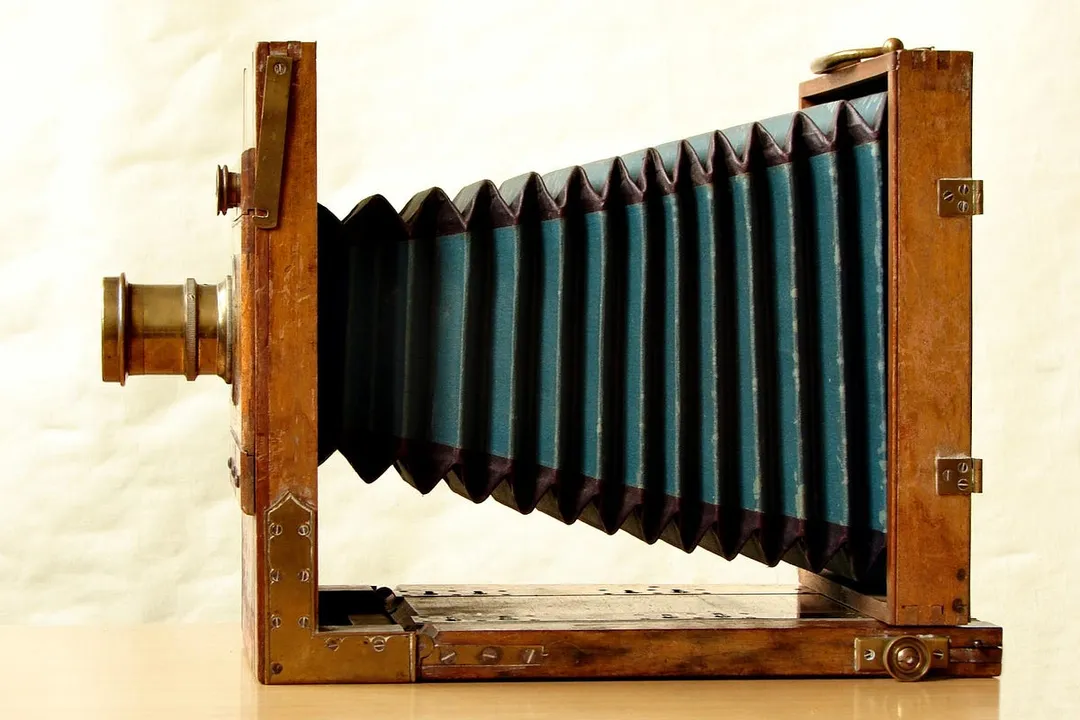
The first true breakthrough, the creation of the earliest known surviving permanent photograph captured through a camera obscura, is credited to the French amateur inventor Joseph Nicéphore Niépce. By 1826 or 1827, Niépce successfully fixed an image, titled View from the Window at Le Gras. His method, which he termed Heliography (“sun drawing”), used bitumen—a form of petroleum asphalt—dissolved in lavender oil, which was coated onto a polished pewter plate.
The plate was placed inside a camera obscura and exposed to the light streaming from his second-story window for an astonishing duration—traditionally estimated at eight hours, though modern analysis suggests it may have taken several days. The bitumen hardened in proportion to the light it received. Afterwards, Niépce washed away the unhardened sections with a solvent, leaving the hardened bitumen areas as the light tones of the final image and the bare pewter as the dark tones. While a monumental step, this process was crude, resulting in faint, difficult-to-view positives that required specific lighting angles to discern. Even earlier, around 1822, Niépce managed to create a surviving copy of an engraving using a similar process, though this image was made by contact printing rather than directly from nature via a camera.
It is important to recognize the inherent tension in defining the "first" photograph: Niépce achieved permanence in 1826/27 using an eight-hour exposure. Contrast this with the dramatic developments just over a decade later, where exposure times fell to mere minutes. The initial creation of a permanent photographic image belongs to Niépce, but it was not practical for any widespread use.

# Daguerre’s Debut
Niépce recognized the potential but also the limitations of his own invention, leading him to partner with the Parisian artist and theater entrepreneur, Louis-Jacques-Mandé Daguerre, in 1829. After Niépce’s death in 1833, Daguerre continued the research, moving away from bitumen toward silver-based chemistry with remarkable results.
Daguerre’s process, the Daguerreotype, was the one that truly shocked the public into recognizing photography as a viable medium. He discovered that a faint, or latent, image could be formed on a silver-coated copper plate treated with iodine vapor, and crucially, this latent image could be revealed to full visibility using mercury fumes—a technique called development. This reduced the exposure time from hours to mere minutes under optimum conditions. He stabilized the image using salt water, later refined by using sodium thiosulfate (hypo) suggested by Sir John Herschel.
The formal unveiling occurred on January 7, 1839, before the French Académie des Sciences. The results were breathtakingly detailed, unique, and seemingly magical to onlookers accustomed only to painting and drawing. The French government swiftly acted, purchasing the rights to the process for pensions to Niépce’s heirs and Daguerre himself, presenting the invention to the world as a gift on August 19, 1839. This public release cemented 1839 as the year photography became a practical reality.
# Talbot’s System
In an almost parallel development across the English Channel, English scientist William Henry Fox Talbot was also striving to capture nature photographically, inspired in part by his inability to draw his observations accurately. By 1835, Talbot had created stabilized, though faint, negative images on paper treated with silver chloride and common salt.
When news of Daguerre’s process hit London in January 1839, Talbot rushed to publicize his own work, presenting his "photogenic drawings" to the Royal Society six months before the French government released the complete Daguerreotype instructions. Talbot continued to refine his technique, receiving key advice from his friend Sir John Herschel regarding the use of sodium thiosulfate as a more effective fixer.
By 1841, Talbot introduced the Calotype process. This was an entirely different approach from the polished metal plate of the Daguerreotype. The Calotype used sensitized paper to create a translucent negative image. This negative could then be used to make a virtually unlimited number of positive prints through simple contact printing.
This distinction—unique object versus reproducible negative—is central to photographic history. Where Daguerre’s image was a singular, exquisitely detailed artifact, Talbot’s system introduced the concept of mass reproduction, which forms the bedrock of chemical photography even today. However, Talbot immediately patented his process, which dramatically slowed its adoption compared to the "gift" of the Daguerreotype.

# Defining Invention
So, when was photography invented?
If we define invention as the first successful fixing of a direct image from nature, the answer is 1826 or 1827 (Niépce). This is the foundational discovery of the photochemical process.
If we define invention as the first practical, commercially viable photographic process, the answer is 1839 (Daguerre). This is when the exposure time became short enough—minutes instead of hours—for public engagement and portraiture to begin in earnest.
If we consider the underlying technology for modern photography (the negative-positive process), the credit must go to Talbot and the Calotype around 1841.
It is fascinating to observe how the political economy of the era shaped the initial trajectory of the medium. The French government’s decision to purchase the Daguerreotype rights and give the process freely to the public (though they kept the equipment patent) meant that studios utilizing the Daguerreotype flourished rapidly across Europe and the United States in the late 1830s and early 1840s. This created immediate, sharp, one-off portraiture that satisfied the rising middle-class demand born from the Industrial Revolution. In contrast, Talbot’s simultaneous development, which offered the key to reproducibility, was immediately shackled by his patent enforcement efforts, causing many photographers to initially sideline his paper-based method in favor of the immediate clarity of Daguerre’s invention. This early fork in the road meant that for nearly a decade, the world was saturated with unique metal plates, rather than the transferable paper prints we now associate with historical documentation.
# Later Refinements
The story did not conclude in 1839. The inventors spent years perfecting the mechanics and chemistry. The next major leap came in 1851 with Frederick Scott Archer’s wet collodion process. This system, used on glass plates, managed to combine the high detail of the Daguerreotype with the multiple-print capability of the Calotype, and it significantly reduced exposure times, moving them from minutes to seconds. However, the requirement that the plate be prepared, exposed, and developed while still wet made the process highly inconvenient, demanding a portable darkroom setup.
The true democratization of photography—moving it from the hands of dedicated artists and scientists into the mainstream—occurred much later. Richard Maddox introduced the dry plate in 1871, allowing plates to be stored and developed at the photographer’s leisure. This paved the way for George Eastman and the Kodak company, which introduced flexible roll film in the 1880s and the famous slogan with the Kodak No. 1 in 1888: “You press the button, we do the rest”. This slogan marks the effective end of the complex, chemistry-heavy invention phase and the beginning of photography as a widespread popular activity.
The pursuit of capturing the world as we see it continued with the introduction of commercial color film, Kodachrome, in 1935, a culmination of earlier experiments by figures like James Clerk Maxwell. Yet, every chemical process eventually ceded ground to the next revolution: digital capture, invented by Kodak engineer Steven Sasson in 1975, a device that stored an image as electronic data rather than on a light-sensitive silver compound. From Niépce’s multi-day exposure on pewter to the instant sharing capabilities of a modern smartphone camera, the first photograph was less an invention and more a slow, competitive unfolding across centuries of scientific inquiry.
Related Questions
#Citations
History of photography - Wikipedia
When was photography invented? A brief timeline of photographic ...
When Was Photography Invented — A Quick History Lesson
The Niépce Heliograph - Harry Ransom Center
Harvard's History of Photography Timeline - Harvard University
Daguerre (1787–1851) and the Invention of Photography
History of photography | History, Inventions, Artists, & Facts | Britannica