When did guitar pedals get invented?
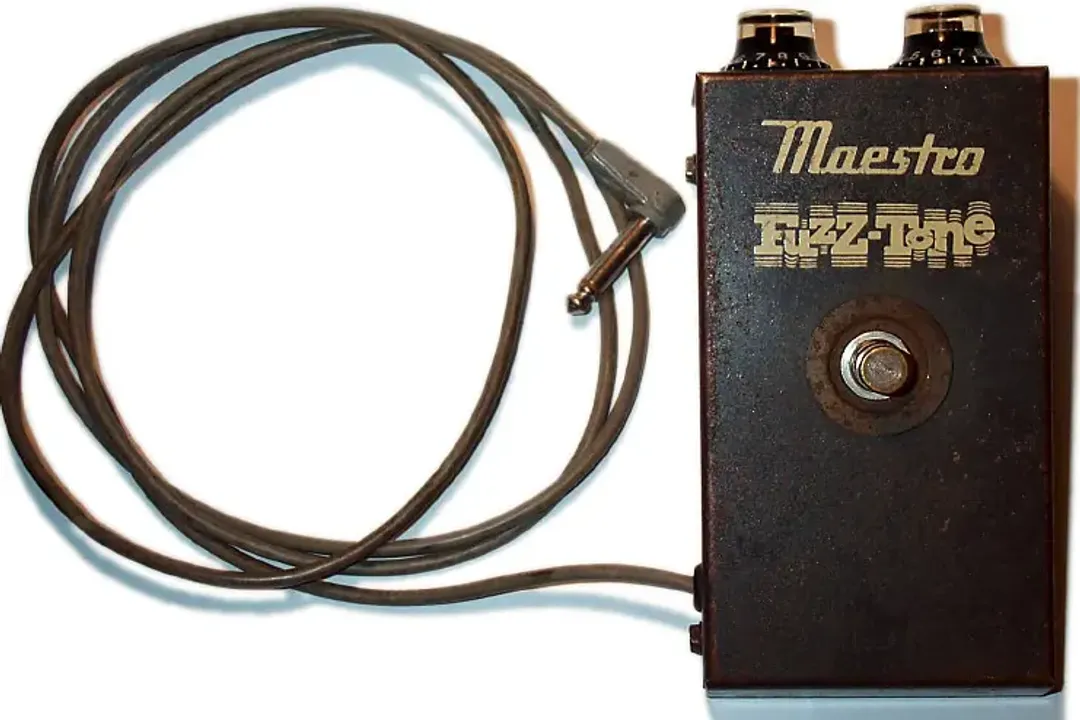
The genesis of the guitar effect pedal is not a single date marked by a patent filing, but rather a gradual evolution driven by musicians seeking sounds that their amplifiers alone could not produce. [4] Long before dedicated stompboxes sat on a pedalboard, guitarists were chasing saturation and grit through sheer volume, amplifier limitations, or even intentional damage. [4] Sometimes, a ripped speaker cone or a failing tube in a volume-maxed amplifier would inadvertently create a desirable fuzzy sound, which became the sonic goal that engineers would later attempt to replicate electronically. [4] Early efforts often involved modifying existing amplifier circuits or using large, often rack-mounted, units that were far from the compact floor controllers we recognize today. [1][3]
# Sound Origins
The desire for sonic manipulation predates the mass production of foot-controlled effects units. [1] Effects like tape echo and spring reverb were available in the preceding decades, often built into larger, dedicated tape machines or the amplifiers themselves. [1] Spring reverb, for example, was commonly integrated into Fender amplifiers, offering an immediate, albeit fixed, modulation of the guitar signal. [1]
The critical step toward the modern "pedal" involved capturing the sound of intentional clipping—what would become overdrive or distortion—in a separate, controllable device. [4] In the vacuum tube era, pushing an amp past its clean headroom produced that sought-after saturation. [4] When guitarists wanted this sound without having to risk blowing up their expensive amplifiers or playing at deafening volumes, the need for an external circuit became clear. [4]
# First Boxes

Identifying the very first commercial guitar effect is tricky because early units were often bulky, integrated into other gear, or built by technicians for individual stars. [1] However, the introduction of the Maestro Fuzz pedal, model FZ-1, is frequently cited as a watershed moment, appearing commercially around 1962 or 1963. [1] This marked the beginning of effects being mass-produced and sold specifically as standalone units for guitarists. [4]
It is important to recognize the distinction between an effect and a pedal. The sound might have been present, but the mechanism that allowed a player to switch it on and off instantly, using their foot while playing, is what truly defined the stompbox era. [3] Before dedicated pedals, controlling effects might have required manually patching cables or having a technician adjust knobs on the back of an amp. [4] The advent of a device that could be placed directly on the floor and engaged by a simple stomp represented a massive leap in performance practicality. [3]
When considering the early history, we often overlook the sheer physical engineering involved. The internal construction of these first-generation pedals—often housed in heavy metal enclosures designed to withstand being stomped on—contrasts sharply with today's lightweight enclosures. Early designers were solving mechanical problems (durability, switch reliability) alongside the electronic ones (creating the desired effect). [1][4]
# Fuzz Era
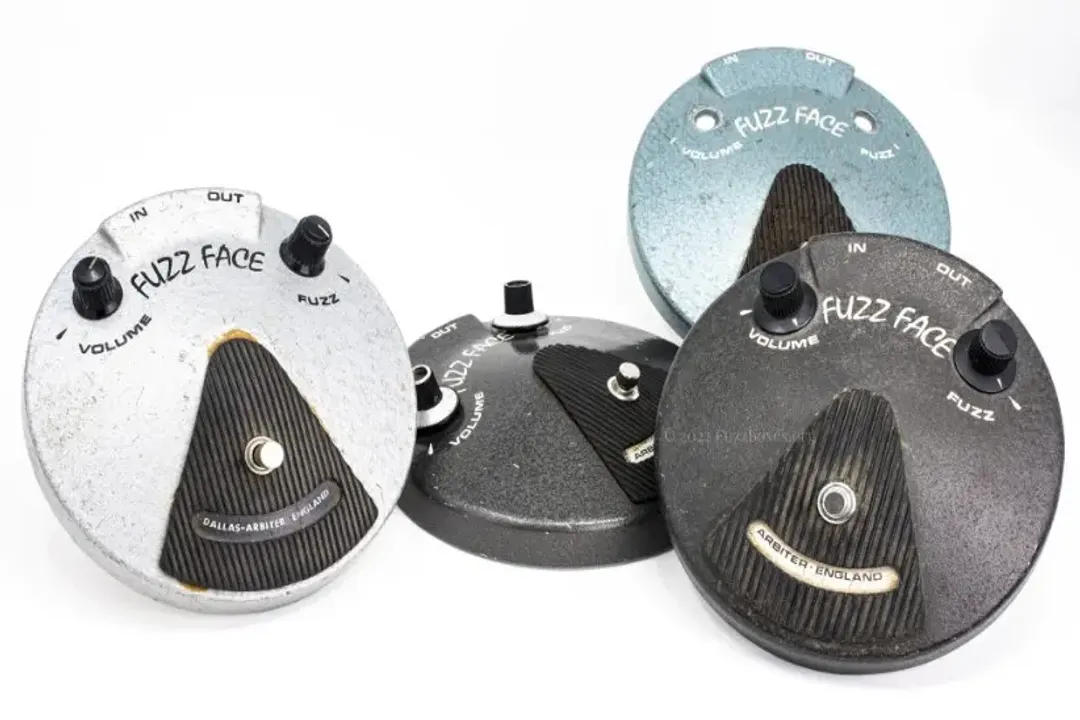
The mid-to-late 1960s saw the effect solidify its place in popular music, particularly with the rise of fuzz. [1] The Maestro Fuzz was one pioneer, but the sound evolved rapidly. [4] A significant milestone came with the Arbiter Fuzz Face, which emerged around 1966. [1] This unit, famously associated with players like Jimi Hendrix, utilized germanium transistors and offered a distinctive, smooth saturation that became the benchmark for fuzz tones for decades. [1]
Another notable, though less distortion-focused, entry from this period was the Univox Uni-Vibe, often simply called the Bender. [1] Developed in the late 1960s, this unit was originally intended to simulate the sound of a rotating Leslie speaker cabinet, offering a unique pulsing modulation effect. [1] While not strictly a distortion unit, the Uni-Vibe cemented the format: an external box with an input, an output, and a foot switch to toggle the effect on or off. [3]
The early competitive landscape saw various companies attempting to capture or improve upon the fuzzy sound:
| Effect Type | Approximate Emergence | Noteworthy Early Example | Key Characteristic |
|---|---|---|---|
| Distortion/Fuzz | Early 1960s (sound), ~1962 (box) | Maestro FZ-1 | First commercially available unit |
| Fuzz | Mid-1960s (popularized) | Arbiter Fuzz Face | Iconic smooth saturation |
| Modulation | Late 1960s | Univox Uni-Vibe | Rotating speaker simulation |
These early successes demonstrated that the market—and guitarists—craved dedicated signal processors. [9] The success of these units spurred further innovation across different sonic categories. [1]
# Expanding Palette
As the technology proved viable, engineers began applying the pedal format to other effects that had previously been cumbersome or limited to amplifier integration. [1]
One area was modulation. Following the success of the Uni-Vibe, other phase-shifting and chorus effects began to appear, allowing guitarists to widen their sonic textures beyond simple clipping. [1]
Another key area involved time-based effects. While tape echo units existed before the stompbox boom, they were complex, large machines requiring constant maintenance. [1] Delay pedals, which offered a more compact and reliable digital (or later, analog bucket-brigade) solution for repeating notes, started emerging later, building upon the foundation laid by the fuzz boxes of the previous decade. [1]
It is interesting to note that the initial wave was predominantly driven by distortion because it was the easiest effect to create digitally or with simple transistor circuits to emulate a complex amplifier sound that was already popular. [4] Other, more complex time-based or pitch-shifting effects required greater electronic sophistication, which took a little longer to miniaturize into the stompbox format. [1] The early adoption rate was heavily skewed toward effects that could be switched on for solos or specific heavy passages, making overdrive the immediate financial winner. [9]

# Mainstream Adoption
While the first commercial pedals date back to the early 1960s, the period when they truly became popular and essential tools for the average working musician likely centers around the mid-to-late 1960s. [9] The explosion of genres like blues-rock, psychedelic rock, and hard rock in that era provided the necessary demand for these sound-shaping tools. [4][9]
Before this time, if a guitarist used an effect, it might have been a one-off modification or an obscure piece of rack gear known only to studio engineers or the most avant-garde players. [4] Once the Fuzz Face and similar devices became associated with globally recognized artists, the adoption curve steepened dramatically. [9]
The transition wasn't instantaneous across the board; many rhythm players still relied solely on clean tones for years. [9] However, for lead guitarists, the pedal offered an affordable and portable way to mimic the sound of an overdriven Marshall or Fender stack pushed to its limit, without the associated volume or cost. [4] This accessibility democratized the "loud" sound of rock and roll. [4]
Ultimately, while the concept of electronically manipulating a guitar signal is older, the invention of the guitar pedal—defined as a dedicated, foot-controllable effects unit—is best situated in the early 1960s, with the Maestro FZ-1 often recognized as the starting gun, followed by rapid maturation and popularization throughout the rest of that decade. [1][4] The foundation established by those first few boxes dictated the form factor and market for every pedal that followed.
#Videos
Josh Scott Presents: The Complete History of Guitar Effects | Part 1
Related Questions
#Citations
Guitar Pedal History: The Origins of Every Guitar Effect Pedal
A Brief history of Guitar Effects Pedals - Pedaltown
History of Guitar Pedals: Past, Present, and Future - Inside Blackbird
The Secret History of Guitar Effects Pedals - Sound Affects Premier
Josh Scott Presents: The Complete History of Guitar Effects | Part 1
Effects unit - Wikipedia
When was distortion / overdrive invented and put to use for the first ...
Guitar Pedals: A Short History - Mission Engineering
When did guitar effect pedals start to become popular? - Quora