What was John Browning's first invention?
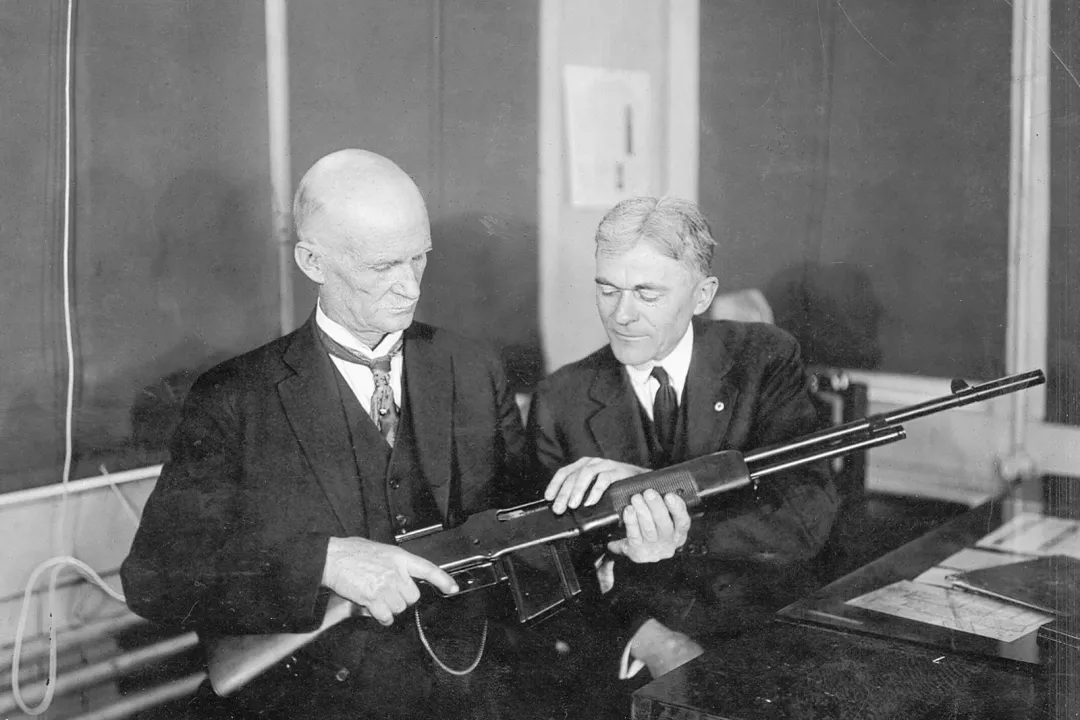
John Moses Browning stands as one of the most significant figures in the history of small arms design, a man whose mind seemed perpetually tuned to mechanical efficiency. While his name is associated with an astonishing catalog of firearms that shaped military and sporting use across the globe, the genesis of this prolific output lies in a single, foundational transaction. Understanding what served as his first recognized invention reveals much about the practical genius that would define his career: it was not a revolutionary new weapon, but a crucial refinement to existing technology, born from hands-on experience in a modest workshop.
The path to his first patent began in Ogden, Utah, where Browning was born on January 23, 1855. He grew up immersed in the world of firearms, working in his father’s gunsmith shop. This environment provided an unparalleled apprenticeship; unlike many aspiring designers who worked theoretically, Browning had immediate, tangible access to weapons needing repair or improvement. He was known to tinker and invent from a young age, constantly seeking ways to make firearms better, faster, or more reliable. This early exposure meant that when he did file his first patent application, it was based on practical knowledge gained from countless hours working with metal and mechanisms, rather than abstract design exercises.
# Early Work
Browning’s family connection was significant; his father, William A. Browning, was also a gunsmith and inventor, setting a precedent for mechanical aptitude in the household. It is often said that John learned the trade by taking apart and reassembling guns in the shop, a hands-on method that instilled a deep, intuitive understanding of how components interacted. This practical grounding meant his initial contributions focused on solving existing problems. His early inventive spirit wasn't aimed at inventing an entirely new concept from scratch but at perfecting the mechanisms that were already in common use by sportsmen and others. In this setting, where practicality reigned supreme, the first logical step for an aspiring inventor was often the adaptation or betterment of a current design, making the eventual move toward a patent a natural progression of his daily work.
# 1879 Patent
The formal beginning of John Browning’s commercial career as an inventor is marked by his first patent filing, which occurred in 1879. This initial intellectual property was not for a complete firearm, but rather for a modification applied to an existing design: a breech-loading rifle. While the sources confirm the mechanism was an improvement for a breech-loading rifle, the specific nature of that 1879 modification—whether it related to the locking system, the firing pin, or the cartridge extraction—is less emphasized in the historical summaries than the fact of its registration. What is clear is that this patent represented his first successful step in formalizing his mechanical ideas into legally recognized property. For a young man establishing himself outside his father’s established business, securing that patent was the first step toward engineering independence.
It is interesting to note that many of the most consequential firearm designs that followed involved complex, repeating action systems—pump, lever, or semi-automatic. His very first official patent, however, was focused on an incremental improvement to a simpler, single-shot loading mechanism, suggesting that Browning’s initial success stemmed from mastering the fundamentals of existing, common hardware before developing the radical systems he would later be famous for.

# Winchester Deal
This first patented improvement quickly attracted the attention of the burgeoning American firearms industry. Browning secured a deal with the Winchester Repeating Arms Company for his mechanism. The terms of this transfer were straightforward and perhaps a small sum by later industry standards, but monumentally important at the time: Browning sold the patent rights for $1,000.
This transaction holds a significant place in the narrative of American innovation. For a young man in the late 1870s, receiving a thousand dollars for an idea provided immediate, crucial capital. This cash infusion was far more than just pocket money; it represented seed funding that allowed him the financial freedom to continue inventing without being strictly bound by the operational needs or product line direction of his family's local shop. It acted as a tangible validation of his potential, signaling that his skills were valued by major manufacturers, which undoubtedly bolstered his confidence for the complex licensing agreements he would later forge, most famously with Winchester, involving royalties and deeper collaborations.
# Family Legacy
The environment surrounding John Browning was clearly conducive to inventive thought, suggesting that genius often requires the right soil to sprout. While the 1879 patent belongs solely to him, the atmosphere of innovation at his father’s shop provided the necessary laboratory. The fact that he came from a line of craftsmen and inventors, however modest their scale, meant that mechanical problem-solving was the accepted norm for solving daily challenges. Furthermore, the Browning family legacy continued; John’s own children and relatives would also become involved in the firearms industry, continuing the tradition he established. This familial context helps explain why his first patent was a refinement rather than a complete departure—he was building upon generations of practical mechanical exposure.
# Next Steps
The sale of the 1879 rifle modification opened the door, but it was merely the first threshold crossed. The success of that initial deal cemented a relationship with Winchester, which would blossom into one of the most fruitful industrial partnerships in firearms history. Following this initial success, Browning continued to design and license improvements, eventually leading to seminal designs like the legendary Winchester Model 1885 Single Shot Rifle, which was based on an earlier patent, and subsequently the lever-action repeaters and automatic shotguns that would make his name synonymous with quality and ingenuity. Though that first $1,000 transaction was small compared to the millions generated by his later royalty agreements, it remains the essential starting point: the moment John Browning transitioned from a skilled craftsman to a recognized industrial inventor.
#Videos
John Moses Browning's First Patent - YouTube
Related Questions
#Citations
John Browning - Wikipedia
Historic Timeline - Browning
John Moses Browning's First Patent - YouTube
JOHN M. BROWNING INVENTIONS - Browning Collectors Association
Gun designer John Browning is born | January 23, 1855 - History.com
John Moses Browning | Biography, Facts, & Gun Designs - Britannica
More than One Man – The Browning Family Legacy
John Browning Shotguns: A History of Innovation | Rock Island Auction
John Browning's firearm design contributions - Facebook