What is the most profitable invention in history?

Determining the single most profitable invention in the span of human history is less about finding one dollar figure and more about measuring transformative impact against sustained revenue generation across centuries. While the question invites a search for the highest earner, the true titans of profit often fall into two distinct camps: those that created entirely new global industries, and those that perfected a cheap, universally applicable consumer good. [3][6] The sheer scale of wealth generated by foundational technologies—those that underpin modern civilization—often dwarfs the profits made from selling discrete items, no matter how popular those items become. [2][9]
# Foundational Shift

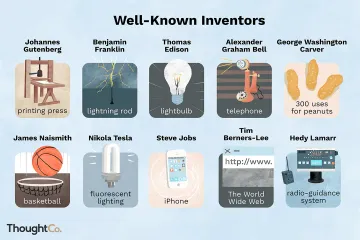
Inventions that reshape society create endless downstream revenue streams, meaning their profitability is virtually continuous, extending far beyond the life of the original inventor or patent. The printing press, dating back to the mid-15th century, stands as a monumental example of this concept. [2][9] While Johannes Gutenberg himself did not amass unimaginable personal fortune in the way a modern CEO might, the invention he pioneered fundamentally changed information dissemination, learning, and commerce. [2] Every book, newspaper, and printed document that followed, for hundreds of years, was a direct descendant of his breakthrough, creating a massive, self-perpetuating economy. [9]
Similarly, the development of electricity and systems for its distribution represent perhaps the most significant economic engine ever created. While often seen as a collective achievement rather than a single invention, figures like Nikola Tesla and Thomas Edison were instrumental in commercializing the underlying technologies. [2] The profitability here is not just in selling lightbulbs or motors, but in enabling virtually every other modern industry—manufacturing, communication, entertainment, and data processing all rely on this basic utility. If one were to attempt to calculate the cumulative GDP growth enabled by reliable, distributed electrical power, the figure would likely be astronomical, dwarfing any single product's sales record. [2]
# Simple Goods Wealth

On the other side of the spectrum are inventions that solved a common, persistent problem with elegant simplicity, leading to massive unit sales across populations. These often feature mundane designs that are nonetheless incredibly clever. [5] The profitability for the inventors of these items often comes from shrewd patenting and licensing, rather than control over an entire industry infrastructure.
For instance, the invention of the zipper is frequently cited in discussions of surprising fortunes made from simple mechanisms. [5] While the initial concept evolved over time, the final, reliable design found its way into clothing, luggage, and countless other accessories. The revenue model here is based on high-volume licensing or direct sales of millions upon millions of units globally over decades. [5][6] The inventor, or the company holding the key patents, collects a small royalty on a massive scale. [3]
Another category involves items that became culturally ubiquitous. Ideas stemming from brainstorming lists of potentially lucrative inventions sometimes focus on consumer convenience, such as certain types of bottle caps, simple household gadgets, or even specialized fasteners. [1] The key differentiator for these "mundane" successes is often timing and ubiquity; the invention must be affordable enough for mass adoption while being essential enough that people buy replacements or upgrade their older versions. [5]
| Invention Category | Primary Profit Mechanism | Example Contender | Estimated Duration of High Profit |
|---|---|---|---|
| Foundational Technology | Infrastructure lock-in; enabling other industries | Electricity Distribution | Centuries [2][9] |
| Mass-Market Consumer Good | High-volume licensing/unit sales | Zipper or similar simple mechanism | Decades [5][6] |
| Information Dissemination | Creating a new medium for knowledge and trade | Printing Press | Many Centuries [2] |
One interesting observation when comparing these two profit models—infrastructure versus unit sales—is the nature of the monopoly. Controlling the standard (like AC power transmission) grants a regulatory and infrastructural monopoly, which is incredibly difficult to dislodge. In contrast, high-volume unit sales are often subject to faster obsolescence or competition once patents expire, forcing the inventor to continually innovate or sell the rights to maintain cash flow. [3]
# Modern Contenders

When looking at more recent history, the scale of potential profit has been magnified by globalized markets and instant communication. While specific figures are often hard to pin down due to private company structures or the sheer complexity of multinational earnings, certain recent inventions have generated staggering wealth for their creators.
The development of the microchip or the foundational intellectual property behind the internet could be considered modern equivalents of the printing press, enabling entire new sectors of the economy. [2] However, looking specifically at product profitability, consumer electronics dominate the recent landscape. Certain iconic products, often detailed in discussions about inventors who became rich, represent incredible combinations of novel engineering and effective marketing. [8]
For example, some sources point toward inventions that became standard equipment in homes or vehicles. The internal combustion engine, while having many contributors, allowed for the creation of the automobile industry, a sector whose cumulative revenue is unparalleled in modern times. [2] While no single inventor earned all that profit, the foundational patent or key improvement that made the engine commercially viable was immensely valuable. [6]
Considering a more direct, single-product profit, some of the wealthiest inventors made their fortunes through patents on consumer items where the cost of production was low relative to the selling price, or where licensing agreements ensured continuous royalties across a vast product range. [1][5] It is common for historical analysis to circle back to inventions that simplified everyday tasks, like improved versions of agricultural tools or simple yet essential medical devices. The return on investment for these simpler, more elegant solutions is often the highest, provided the inventor maintained control long enough to capitalize on mass production. [3][5]
# The Value of Ubiquity

A crucial element, not always captured in simple revenue numbers, is the value derived from necessity. An invention that becomes indispensable—something society cannot function without—retains its value regardless of economic fluctuations. Consider innovations in plumbing or sanitation, which, while perhaps less glamorous than a new gadget, generate consistent revenue because they address non-negotiable human needs. [4]
If we define profitability not just by initial wealth accumulation but by sustained economic utility, the answer leans heavily toward infrastructure and foundational intellectual property. A system that allows millions of transactions daily, even if it only yields a fraction of a cent per transaction, will quickly outpace an invention that sells for a high price but only to a limited market. [7]
This principle suggests that inventions which successfully integrate into existing, massive supply chains—like a patented adhesive, a specific dye, or a standardized manufacturing process—can accumulate wealth more reliably than a standalone gadget. For example, a small improvement in the strength or flexibility of a commonly used plastic polymer could result in billions in savings or increased product lifespan across dozens of industries, far exceeding the profit from a single successful electronic gadget. [1]

# Calculating Economic Impact
To truly grasp the scale, one must consider not just the inventor's direct earnings but the economic multiplier the invention created. The lightbulb didn't just make Edison money; it enabled factories to run 24 hours a day, creating entirely new employment sectors and shifting social habits worldwide. [2] This multiplier effect is often the true measure of historical profitability.
When analyzing lists of lucrative inventions, it becomes clear that the most profitable ones often solve a problem that was previously unsolvable or incredibly inefficient to solve. [6] The leap in efficiency or capability must be significant enough to justify the cost of adoption by manufacturers and consumers.
If an inventor claims a massive personal fortune, like the rumored millions from a seemingly simple product, it usually indicates one of two things: either the inventor held an extremely broad or long-lasting patent monopoly, or the product was so cheap to manufacture that the profit margin on billions of units was substantial. [3][5] For example, many common household items listed as unexpectedly profitable inventors often point to the latter: low manufacturing cost meeting high consumer frequency of use. [5]
# Actionable Takeaway on Value
For an aspiring inventor today, understanding this historical divide offers a key strategic insight: focus on creating something that either becomes a necessary component of a large existing system (the infrastructure approach) or something that replaces a universally accepted, but deeply flawed, older method (the elegant replacement approach). [1] Being the sole supplier of a critical, inexpensive material to a multi-trillion-dollar global manufacturing sector is arguably more profitable in the long run than designing the next hit phone, which faces immediate, fierce competition as soon as its patent expires. [9]
# Historical Context and Longevity
The challenge in naming the most profitable invention lies heavily in temporal bias and data availability. For inventions centuries old, like the printing press or the screw (which appears in historical timelines), calculating the inventor's direct earnings is impossible, but their societal value is undeniable. [2][9] Conversely, modern inventors often have documented earnings, but their invention may only have a few decades of profitability left before obsolescence hits. [8]
When weighing the Gutenberg Bible era against the invention of the transistor, the transistor wins on sheer, documented, contemporary wealth creation associated with its direct patents and the industries it spawned. [2] However, the foundational nature of information transfer via print remains an ongoing, world-spanning economic activity.
We must also consider the role of scale over time. The internal combustion engine, by enabling personal transport and global shipping, transformed economies across the entire globe, leading to industries built around oil, rubber, steel, and road construction. [2] This pervasive influence suggests that the underlying technology, not just the first commercially successful vehicle, is the true profit driver. [6]
This longevity is what separates the truly epoch-making inventions from mere commercial successes. A good analogy is comparing a best-selling novel to the invention of written language itself. While the novel earns a finite amount of money, the language enables all future literature and commerce, rendering its total economic impact infinite. [4] The most profitable inventions, therefore, are those that best approximate this "language" for a specific domain—be it mechanical movement, communication, or power delivery. [2]
In the end, while specific individuals like the inventors of the zipper or specific pharmaceuticals might have realized staggering personal wealth from their patents, the title of "most profitable invention" belongs to the few breakthroughs that became the unseen foundation upon which entire global economic structures were built. These include the mechanisms that allowed for widespread, reliable power and the systems that enabled mass information replication. [2][9]
# Final Assessment of Scale
If forced to choose based on total economic transformation and sustained revenue generation across time, the dual forces of harnessing and distributing electricity and the technology enabling mass replication of information (from the printing press to digital communication) must rank at the top. [2] They are not single products but open-ended platforms.
An additional consideration for modern analysis is the concept of network effects applied to inventions. An invention that becomes more valuable as more people use it—like a communication protocol or a social media algorithm—can achieve profitability figures that dwarf traditional manufacturing profits. [7] While these newer technologies are still accumulating their historical value, their initial growth trajectory suggests they may eventually eclipse even the foundational industrial revolution inventions in terms of dollar valuation within a much shorter timeframe than was required for electricity or print to permeate the globe. [8]
The true most profitable invention, then, is likely the one that best integrated into the most existing or new systems, becoming an invisible prerequisite for wealth creation everywhere else. It is the invention whose absence would cause the global economy to seize up today, a testament to its quiet, irreplaceable profitability across centuries. [2][4]
Related Questions
#Citations
18 Random Invention Ideas That Made Millions | Cad Crowd
The Greatest Inventions In The Past 1000 Years | OSU eHistory
What is the most profitable invention ever? Who invented it ... - Quora
What are some of the biggest inventions/discoveries of the 20th ...
7 Mundane Objects That Made Their Inventors Unexpectedly Wealthy
30 of the most lucrative inventions ever created - MSN
Fact or fiction: The telephone is the most profitable invention in US ...
This Is How Rich You'd Be If You Invented These Iconic Products
Timeline of historic inventions - Wikipedia