Did Nikola Tesla invent the lightning rod?
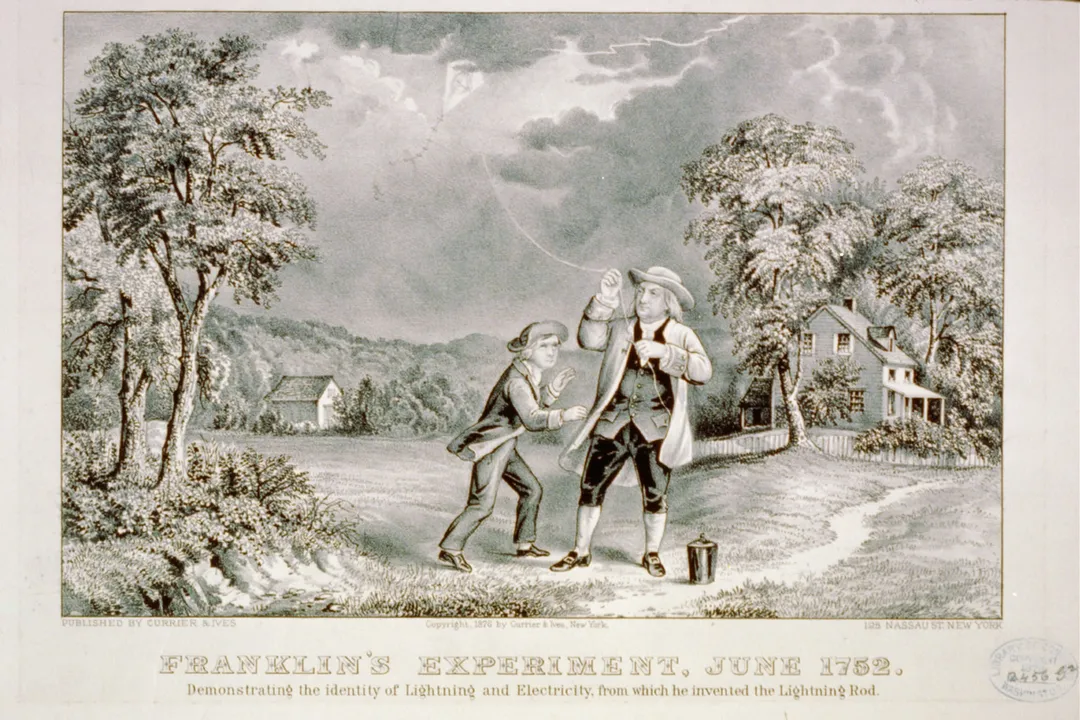
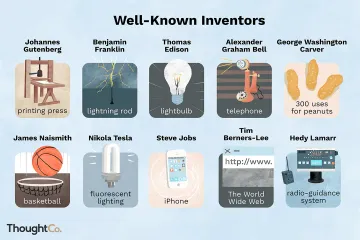
The invention of the device designed to protect structures from the destructive force of lightning is firmly attributed to Benjamin Franklin in the mid-18th century, not Nikola Tesla. [4] Franklin established the basic, effective principle: a conductive rod connected to the earth to safely dissipate the electrical charge of a strike. [4][9] However, the story of lightning protection does not end with Franklin’s simple rod. Nikola Tesla, a towering figure in electrical science, later became a significant critic of the prevailing design, arguing that Franklin’s pointed terminal was not only insufficient but potentially harmful, leading him to develop his own concepts for superior protection systems. [2][6]
# The First Rod
Benjamin Franklin’s contribution came during his famous kite experiment era, around the 1750s. [4] His insight was revolutionary because it treated lightning not as an inscrutable act of nature, but as a predictable form of electricity. [9] Franklin understood that metal objects, when properly connected to the ground, could attract the electrical charge and safely guide it away from a structure, thereby preventing ignition or damage. [9] This concept formed the basis of modern lightning protection for well over a century. [4] It remains a foundational piece of safety engineering, a testament to his clarity in understanding the fundamental interaction between atmospheric charge and grounded conductors. [4][9] Many early protectors simply featured a pointed metal rod affixed to the highest point of a building, connected by a heavy conductor running down the side to a grounding point in the earth. [4]
# Tesla Disagrees
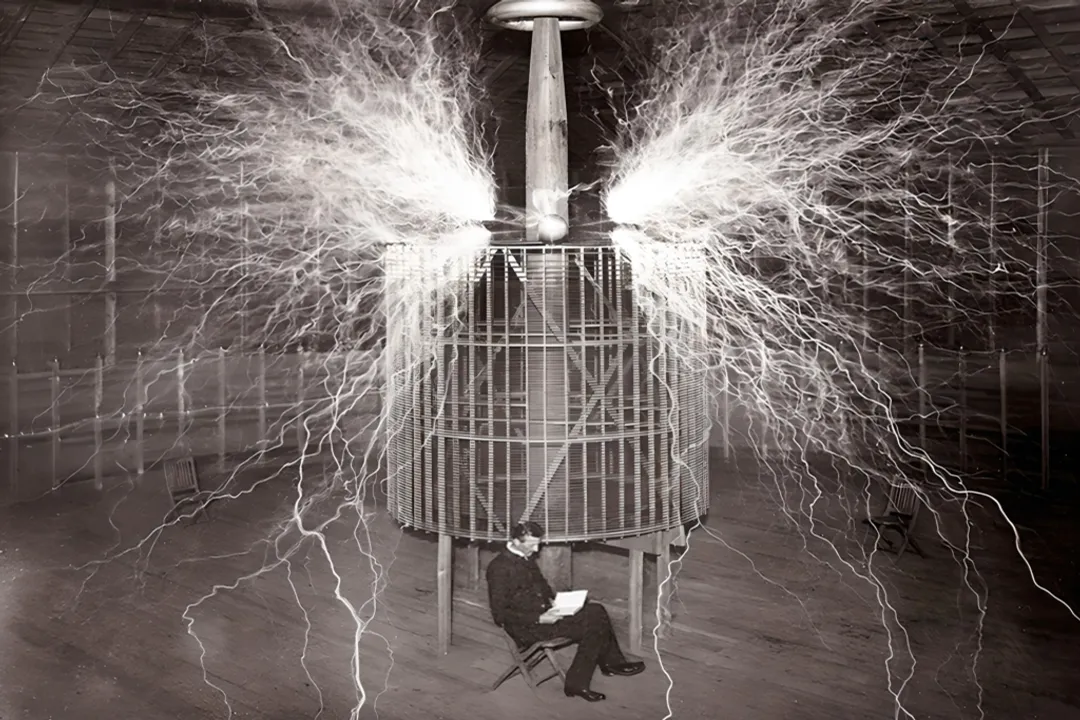
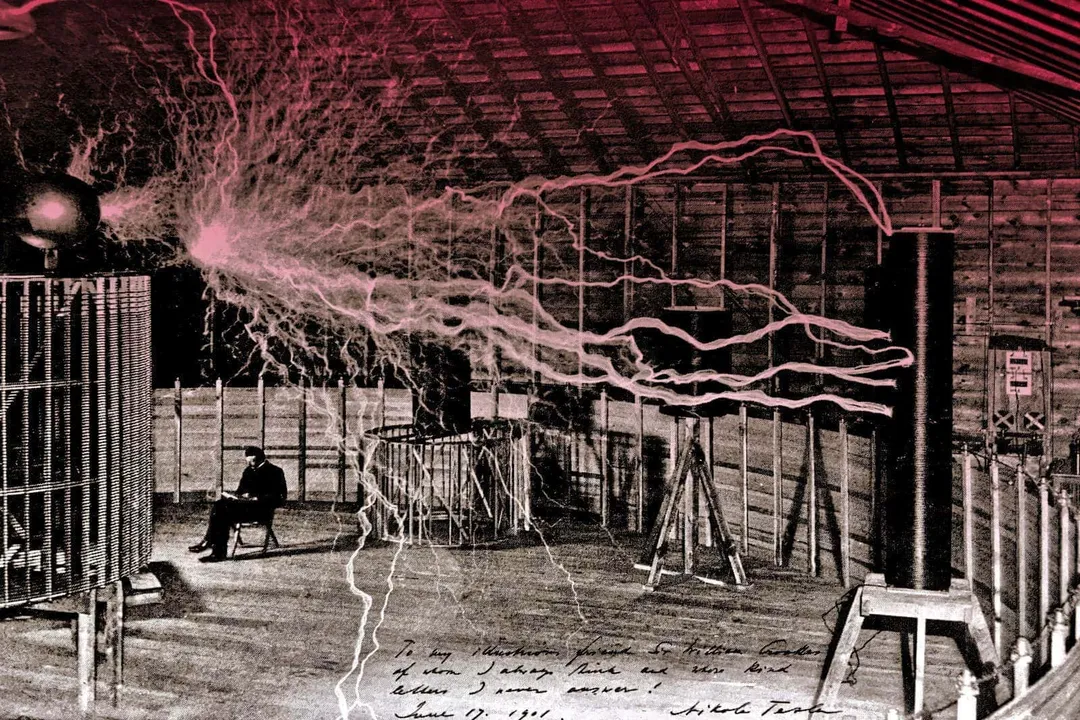
As electrical understanding advanced into the 20th century, Tesla began to publicly question the efficacy of Franklin’s standard design, particularly focusing on the point of the rod. [2][6] In an interview published in 1916, Tesla stated that Franklin’s pointed rod had actually increased the frequency of lightning strikes on protected buildings by drawing the charge to them, rather than simply deflecting or neutralizing it. [2] Tesla asserted that the sharp point, due to its ability to concentrate electrical potential, caused the atmosphere around it to become ionized more readily. [6] This ionization, he argued, created a conductive path, effectively inviting the lightning to strike that specific, vulnerable point, rather than allowing the charge to dissipate harmlessly or strike elsewhere. [6] This is a fascinating divergence from the standard historical narrative, suggesting that what was intended as a shield might have, under certain conditions, acted as a beacon. [2]
It strikes one as remarkable that a design proven effective for nearly 150 years could be so fundamentally critiqued by a scientist whose work was entirely focused on manipulating high-frequency alternating currents. Tesla’s objection wasn't to grounding itself, but to the method of capture. He believed the pointed rod was inherently flawed because it acted as a localized collector of charge build-up rather than an element that merely intercepts the final discharge. [6] For Tesla, the goal was not to attract the strike to a defined spot, but to manage the entire electrical potential field surrounding the protected area. [2]
# Protector Patent
Tesla’s theoretical critique was backed by practical development in the form of patents. In 1916, he was granted U.S. Patent 1,266,175 for a Lightning Protector. [3] Unlike a simple rod, Tesla’s design focused on intercepting and neutralizing the lightning discharge through a system of conductors and resistors. [3] His patent description details an apparatus intended to operate by diverting the energy of a surge, specifically addressing the high-frequency nature of the electrical phenomenon. [3] One key element mentioned in his patent involves a mechanism designed to ensure the protection system does not itself become a path for dangerous electrical energy to enter the protected structure under normal or near-normal conditions, while still effectively handling the massive surge of a direct strike. [3] This patent reflects a transition in thinking: moving from Franklin’s relatively simple dissipation concept to a more active, measured management of atmospheric transients. [3]
The technical difference between Franklin’s rod and Tesla’s protector lies in their intended scope of operation. Franklin’s rod manages the final, visible, high-current discharge event. Tesla’s later concepts, informed by his work on high-frequency power transmission, looked to manage the precursors to the strike—the build-up of charge—and ensure that the interception device itself was not a source of secondary problems. [6]
# Alternative Methods
Beyond specific patents, Tesla’s broader work often touched upon harnessing atmospheric electricity, suggesting an interest in controlling or utilizing the energy rather than just protecting against it. [5] While this goal differed from the primary function of a standard lightning rod—which is purely defensive—it reinforces his view that lightning was a manageable physical phenomenon. [5] For instance, when considering the protection of high structures, such as his conceptualized Wardenclyffe Tower, the approach would have necessarily involved far more than just a pointed stick on the roof. [5][7] A structure designed to interact with the ionosphere would require a far more nuanced system to avoid self-destruction during a major electrical event. [7]
Considering the context of early 20th-century engineering, one can see an interesting parallel between Tesla’s proposed lightning protector and modern surge suppression devices used in data centers. Franklin’s rod is analogous to a physical barrier diverting a large volume of water; it stops the immediate flood. Tesla’s approach, with its emphasis on resistance and controlled diversion, echoes the function of a modern Variable Energy Transfer (VET) device—it seeks to condition the energy so that the system connected behind it remains functional, even if the primary strike is intercepted. [3] This analytical shift from blocking the strike to conditioning the energy flow represents a significant conceptual leap in electrical safety engineering.
# Protection Legacy
The debate over the best method of protection continues to this day, though modern building codes often incorporate principles from both eras. While the concept of a grounded rod remains the standard for basic defense against structure-to-ground strikes, contemporary industrial protection often incorporates elements that acknowledge the limitations of the purely pointed design. [4] High-value assets, sophisticated communication towers, and critical infrastructure rarely rely on a single, simple Franklin rod; they employ concentric protection zones, advanced air terminals (which may or may not be pointed, depending on the specific standard applied), and sophisticated grounding grids. [7]
Ultimately, the question of who invented the lightning rod is straightforward: Benjamin Franklin. [4][9] Nikola Tesla did not invent the original concept of grounding a structure to prevent fire. His significant contribution lies in his critique of the standard design and his development of later, more complex protective apparatuses intended to manage the electrical event with greater precision. [2][3][6] His legacy here is not one of initial invention, but one of necessary evolution—forcing the scientific community to re-examine and refine a century-old, yet incomplete, safety standard. [6] The existence of Tesla’s patent and his published statements confirm that the science of surviving an electrical discharge was a field he felt was insufficiently addressed by the simple, albeit effective, methods of the previous age. [3][2]
Related Questions
#Citations
History of the lightning rod: who invented it and how it works - Endesa
In 1916 Nikola Tesla point out that Franklin's lightning rod greatly ...
Nikola Tesla U.S. Patent 1266175 - Lightning-Protector
Lightning rod - Wikipedia
Harnessing the Lightning: Tesla's 3,000-Year Backstory | Desiring God
How Nikola Tesla improved upon Franklin's pointed lightning rod ...
The Lightning Rod: A Not-So-Shocking Invention
Remembering Nikola Tesla: His Legacy and Innovation in Lightning ...