Who invented the lightning rod and when?
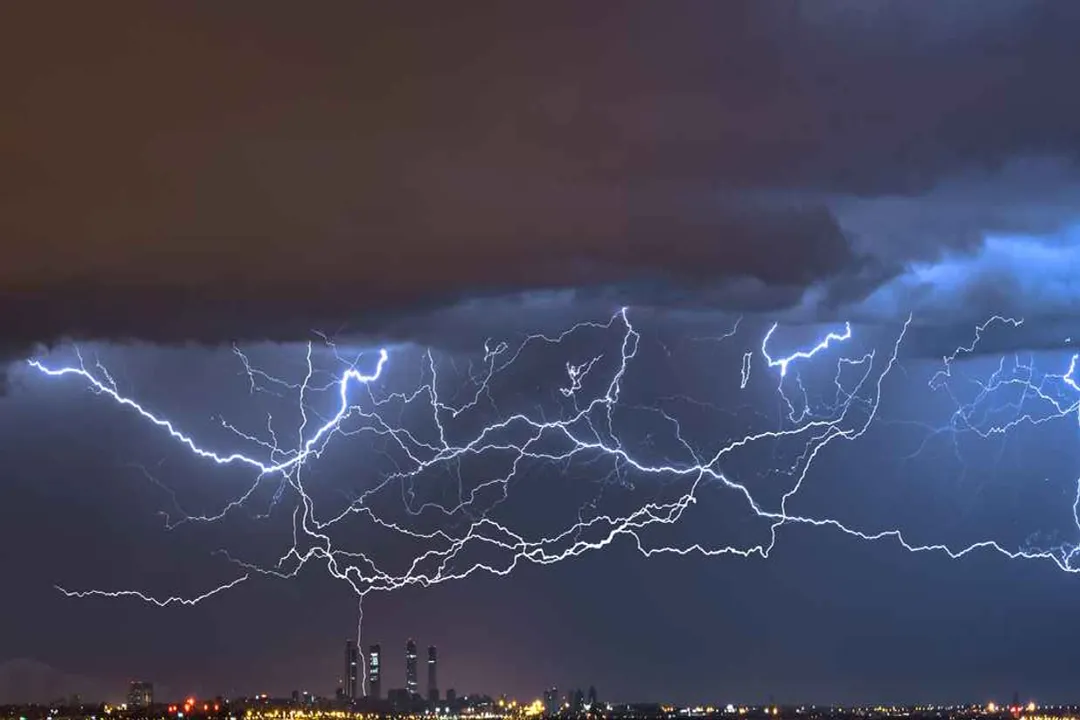
The invention of the lightning rod is inextricably linked to the scientific inquiries of the mid-eighteenth century, a period when humanity began to systematically demystify the terrifying power of atmospheric electricity. While lightning was long viewed through a lens of divine anger or inexplicable chaos, one figure, Benjamin Franklin, is widely credited with both proving its electrical nature and providing the practical means to tame it. [1][5][6] By the 1750s, Franklin’s experiments and subsequent device offered a tangible solution to protect structures from one of nature’s most destructive forces. [2][5]
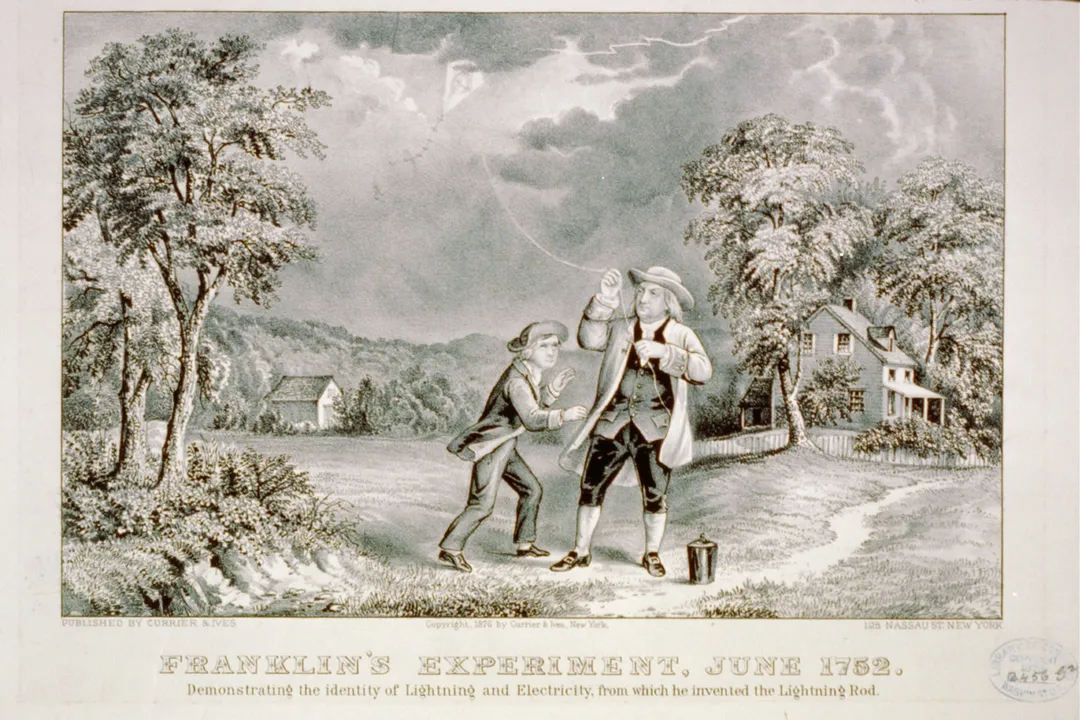
Franklin’s groundbreaking work wasn't just about attaching metal to a roof; it was the culmination of experiments designed to definitively prove what many suspected: that lightning was merely an electrical discharge on a colossal scale. [1][6] His famous kite experiment, conducted around 1752, served as the dramatic, and often mythologized, demonstration of this principle. [2] Even if the exact circumstances of flying the kite near a storm cloud are subject to historical debate—some sources suggest he may have used a more grounded method involving a key and a jar—the underlying scientific conclusion remained firm. [6] Once lightning was understood as an electrical fluid, controlling it became a matter of applied physics rather than superstition. [1][5]
# Proof Applied

The lightning rod itself was the practical application of Franklin’s discovery. He posited that a pointed piece of metal, installed atop a building and properly grounded, would act as a preferred conductor for the electrical charge building up in the atmosphere. [5] Franklin’s initial theory favored the idea of dissipation: the pointed tip would gently bleed off the accumulated electrical fluid from the clouds into the earth before the charge could build up sufficiently to create a disruptive, violent strike. [5] This idea suggested a subtle, preventative defense rather than a brute-force interceptor.
However, the mechanics of the invention also involved the concept of attraction. The pointed rod made it easier for the electrical discharge to seek a path to the ground, effectively drawing the strike away from the vulnerable parts of a structure, like wooden beams or steeples. [5] A functioning lightning rod system requires three main components: the air terminal (the rod itself, often pointed), the conductor (the heavy metal cable running down the side of the building), and the ground connection, ensuring the charge safely disperses into the earth. [1]
It is noteworthy that while Franklin conceived of the device and published his findings, the actual implementation saw some immediate international contributions and even fatalities related to its testing. The swiftness with which his theories were tested speaks volumes about the urgency felt by the scientific community to master this phenomenon. [1][6]
# International Reaction
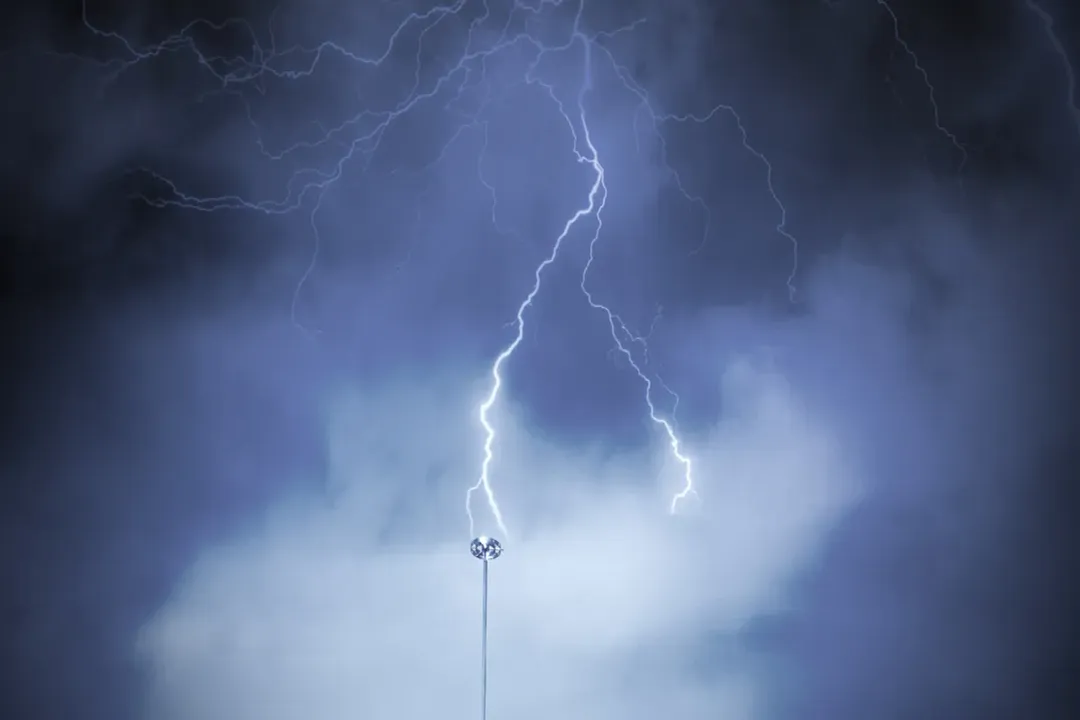
The dissemination of Franklin's work happened rapidly across the Atlantic. Before Franklin even installed the first rod in Philadelphia, a French abbé named Thomas-François Dalibard had read Franklin’s theories and, without waiting for Franklin’s own demonstration, erected a rod near Marly, France, in 1752. [1][6] Dalibard’s installation successfully diverted a lightning strike, providing early, independent confirmation of Franklin’s published concepts. [1][6]
Tragically, the pursuit of this knowledge resulted in loss of life shortly thereafter. In 1753, Professor Georg Wilhelm Richmann of St. Petersburg was killed while conducting an experiment based on Franklin’s designs. [1][2][5][6] Richmann was attempting to measure the atmospheric electricity when a massive discharge occurred, proving the immense power they were dealing with. [1][5] This incident served as a stark reminder that while the rod could protect structures, the experimentation itself carried significant risk.
In response to these dangers and the clear benefit, the adoption of the rod began in earnest, starting with public buildings in Philadelphia. [1][5] King Louis XV of France, taking the advice of the French Academy of Sciences, ordered a rod installed on the Academy building in Paris, marking an official endorsement from European royalty and scientific bodies. [1]
# Pointed Versus Blunt
One fascinating aspect of the lightning rod’s early history was the immediate technical debate surrounding the design of the air terminal—specifically, whether it should be pointed or blunt. [1][5] Franklin, grounded in his understanding of electrical fluid dynamics, strongly advocated for the pointed rod, believing it was essential for the protective dissipation effect. [1][5]
Across the English Channel, however, a counter-theory gained traction, particularly influential in Britain and parts of Europe. [1] This perspective argued that a blunt-ended rod was safer because it would not attract lightning. Proponents of the blunt design feared that a sharp point acted as a deliberate lure, inviting the very strike they sought to prevent. [1][5] This debate wasn't merely academic; it involved matters of national pride and scientific schools of thought. For a period, there was a distinct difference in preferred design: pointed rods in America and blunt rods in Britain. [1] Over time, the pointed design prevailed, aligning with Franklin’s original, scientifically sound preference for managing electrical potential.
A simple comparison helps illustrate this critical design difference:
| Feature | Pointed Rod (Franklin) | Blunt Rod (Counter-theory) |
|---|---|---|
| Primary Mechanism | Gentle dissipation of charge | Avoidance/Interception |
| Appearance | Sharp tip | Rounded or flattened tip |
| Adoption | Widely adopted later | Favored temporarily in some regions |
The persistence of the blunt-rod argument highlights an important element of technological acceptance: even when a solution is correct, overcoming ingrained skepticism or alternative theories can take time. The fear that attracting the bolt was worse than simply protecting against it required demonstrable, repeatable success to overcome. [1][5]
# Cultural Shift
The adoption of the lightning rod represents more than just an engineering footnote; it marks a subtle but profound shift in the relationship between society and natural phenomena. Before the rod, a lightning strike was an act of nature to be endured or blamed; afterward, it became a preventable hazard. This transition from passive acceptance to active control over a destructive force had broad societal implications.
This concept of proactive risk management, derived from scientific inquiry, became a model for other safety measures. When we look at modern building codes or insurance requirements, the lightning rod stands as an early, successful prototype demonstrating that systematic application of scientific principles can systematically reduce vulnerability. It democratized safety, moving protection from an appeal to divine providence to a matter of architectural installation.
Furthermore, the invention encouraged continued, safer electrical research. Richmann’s death, while tragic, underscored the need for controlled environments for electrical study, pushing science away from dangerous open-air demonstrations and toward more contained laboratory settings where electrical phenomena could be studied without risking life and limb. [2][5]
Benjamin Franklin, therefore, is remembered not just for proving lightning was electricity, but for the practical wisdom to immediately engineer a defense against it. He invented the lightning rod when he bridged the gap between abstract theory and essential public safety, ushering in an era where humans could actively protect their built environment from the very sky above. [1][5][6]
Related Questions
#Citations
Franklin's Lightning Rod
Lightning rod - Wikipedia
The Lightning Rod: A Not-So-Shocking Invention
History of the lightning rod: who invented it and how it works - Endesa
Lightning rod - Ben Franklin's inventions - USHistory.org
Benjamin Franklin: Inventing the Lightning Rod - YouTube
Did Ben Franklin Really Invent the Lightning Rod? - Mental Floss
Ben Franklin's lightning rod was denounced by religious leaders
When Benjamin Franklin introduced the lightning rod in ... - Facebook