Why did Melitta Bentz invent the coffee filter?
The aroma of freshly brewed coffee is a near-universal pleasure today, but the path to a sediment-free cup in the early twentieth century was paved with sludge and frustration. It was in this environment of domestic dissatisfaction that Melitta Bentz, a housewife living in Dresden, Germany, decided enough was enough. [1][4][7] She wasn't a professional chemist or a factory owner; she was a consumer acutely aware of a daily imperfection in her routine. Her motivation stemmed from the simple, universal desire for a better-tasting cup of coffee without the messy aftermath that the current brewing methods demanded. [2][3]
# Morning Frustration
Before Melitta’s intervention, making coffee often involved boiling grounds directly in a pot, much like brewing tea, or employing reusable cloths made of linen or felt to strain the liquid. [2][3][7] If you brewed it in the pot, the resulting beverage was often thick and contained a substantial amount of coffee grounds settling at the bottom, which made the final sips unpleasant and gritty. [8] Many contemporary accounts describe this residual deposit as "sludge". [8]
The alternative, using porous fabric sacks, presented its own set of problems. While these bags kept the grounds separate, they were notoriously difficult to clean thoroughly. [2] Over time, residues would build up, potentially imparting stale or unwanted flavors to the next batch of coffee. [3] Furthermore, these reusable filters often required significant effort to rinse out after every use, which for a dedicated homemaker juggling daily chores, represented wasted time and labor. [2] The resulting cup was often a compromise: either slightly bitter and muddy, or requiring tedious post-brewing clean-up that still risked flavor contamination.
# Blotting Paper
The moment of clarity for Melitta Bentz arrived in 1908, reportedly stemming from an attempt to manage the persistent coffee grounds. [7] She was looking for a material that would effectively separate the grounds from the water but would also be disposable, eliminating the need for scrubbing felt bags. [2] Her inspiration came from an entirely unrelated source: the blotting paper she kept in her son Hugo’s school exercise book. [2][3][7][8]
This blotting paper, designed to absorb excess ink quickly, struck her as an ideal material for filtering coffee. [2][3] It was porous enough to allow the water through but fine enough to trap the fine coffee particles. Crucially, it was a single-use material, meaning the grounds and the filter could be discarded together immediately after brewing. [7] This observation represented a significant conceptual leap away from reusable filtration toward modern convenience.
In a time before standardized household convenience products were common, the shift from a durable, reusable item to a disposable, single-use solution was quite progressive. It prioritized the quality of the final product and efficiency of cleanup over material cost or longevity.

# Brass Pot
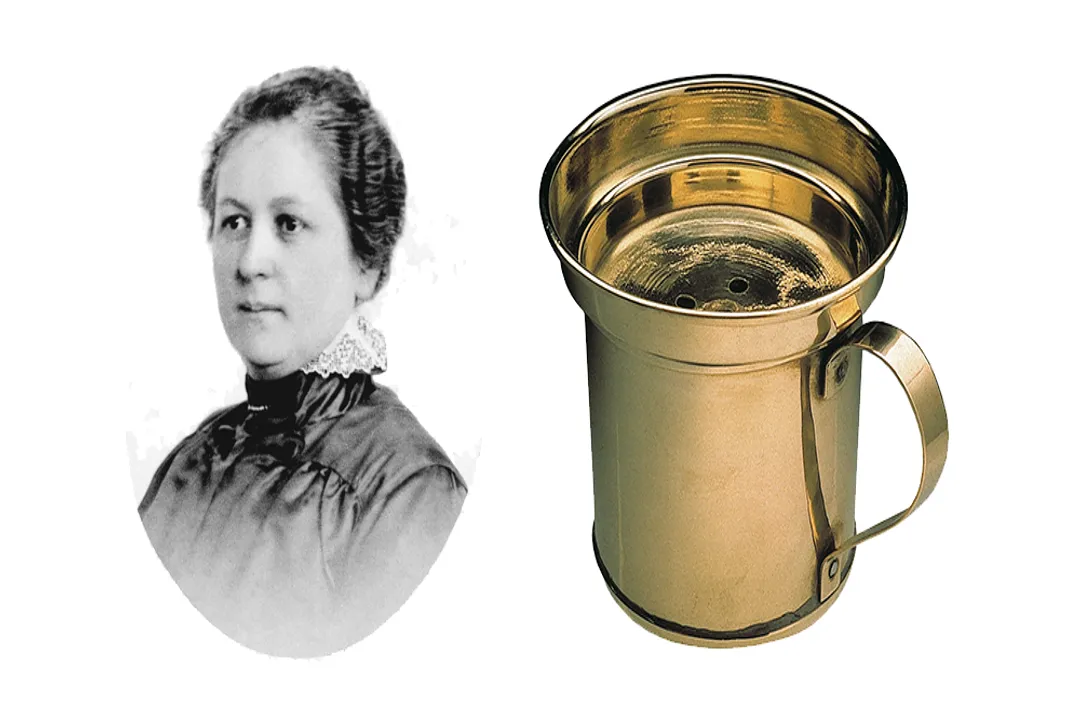
With her idea solidified, Melitta immediately set about creating a physical prototype. [2] She took a brass pot she owned and used a hammer and nail to carefully punch holes into the bottom. [2][3][7] This modified pot would serve as the holder for her experimental paper filter. [2] She then placed a sheet of the blotting paper inside this perforated brass base. [3]
This initial apparatus was simple: the paper-lined brass holder was placed over a cup or mug, hot water was poured over the grounds held within the paper, and the resulting clear coffee dripped into the vessel below. [2][7] The design was remarkably effective for its humble origins, providing a clean separation previously unattainable without excessive fuss. [3]
The practicality and immediate improvement in coffee quality were evident to her, but convincing others that a piece of paper could improve this staple beverage was another hurdle. Her husband, Hugo Bentz, apparently harbored significant skepticism, viewing the whole endeavor as a wasteful endeavor. [4] Despite the initial doubt from her own household, Melitta recognized the commercial potential inherent in solving such a common daily problem. [2]
# Patent Filed
Recognizing the novelty and utility of her creation, Melitta Bentz took the decisive step to secure intellectual property rights. [1] In 1908, she officially applied for a patent for her "filtering device for coffee". [1][7] This action formally marked the transition from a household trick to a genuine invention. [7]
The patent registration number was 188188. [1] Shortly thereafter, she secured a patent from the German Emperor Wilhelm II. [1] This patent protected her design, which was essentially a simple, permeable paper liner designed to fit inside a holder. [7]
While the patent gave her the exclusive right to produce the device, launching a business as a woman in that era required immense drive. [2] Melitta, alongside her husband Hugo, established a business to manufacture and sell these filters. [2] They began production in their own home, using the modest capital they had saved. [2] The initial operation was small-scale, reportedly involving production with the help of two young men. [2]
# Cleaner Coffee
The core benefit Melitta offered was a fundamentally superior cup of coffee. The paper filter achieved what boiling and reusable cloth could not consistently: it produced a clear, sediment-free brew. [3][7] This single factor dramatically improved the drinking experience for many coffee lovers who preferred their beverage free of particulate matter.
The adoption curve, while steady, suggests an immediate market appreciation for the convenience. [2] Early sales figures, though small by modern standards, demonstrated traction. In the first year of operation, the small business sold approximately 1,500 filter units. [2] This initial success was significant enough for the family to move the production out of their home and into a dedicated small workshop. [2]
The product continued to evolve slightly after its initial introduction. While the first iteration used blotting paper, the final, commercially successful version utilized a specialized, round, porous paper designed specifically for coffee filtration. [3][7] This move from repurposed stationery to engineered paper showed a commitment to quality improvement beyond the initial makeshift solution.
| Pre-Filter Method | Primary Drawback | Melitta's Solution | Resulting Benefit |
|---|---|---|---|
| Boiling Grounds | Grounds/Sludge in the cup [8] | Disposable Paper Liner | Clear, sediment-free coffee [3] |
| Felt/Linen Bags | Difficult to clean; flavor retention [2][3] | Single-Use Paper | Time saved; consistently clean taste [7] |
The establishment of the Melitta company marks a significant point in the history of domestic technology. It is a strong case study in how a minor, everyday annoyance—the sludge at the bottom of a cup—can fuel an industry-shaping invention when addressed by someone with an eye for practical substitution. [2] Her experience echoes many other innovations where the required material was already available, just repurposed for a novel function. [3] For instance, consider the evolution of specialized coffee equipment today; while modern brewers involve complex electronics and temperature control, the fundamental principle Melitta introduced—the barrier filtration layer—remains the dominant methodology for countless home brewers worldwide. [7]
# A Lasting Legacy
Melitta Bentz’s invention, born out of necessity in 1908, was not merely a passing fad; it laid the foundation for what would become a global brand and fundamentally altered daily coffee rituals. [1][2] The company she started, Melitta, continued to grow, eventually expanding its offerings beyond just the paper filter itself to include coffee machines and other brewing accessories. [1] Even as coffee preparation methods change, from pour-over cones to automated drip machines, the reliance on a paper barrier to achieve clarity remains a cornerstone of standard American and European drip brewing practices. [7] The initial patent provided the essential lock on the concept, allowing the business to build authority around that single, simple, yet revolutionary piece of paper. [1][7]
#Videos
The Woman Who Invented the Coffee Filter | Melitta Bentz - YouTube
Related Questions
#Citations
Melitta® Journey through Time
Melitta Bentz - the woman who invented the coffee filter | Europeana
Coffee History: Melitta Bentz, Inventor of the Paper Filter - Serious Eats
How the coffee filter was invented (and what you can learn)
The Invention of Coffee Filters by Melitta Bentz - Facebook
TIL Melitta Bentz created the coffee filter using paper from her son's ...
Melitta Bentz - Wikipedia
The invention of the coffee filter and its inventor - Wildkaffee
The Woman Who Invented the Coffee Filter | Melitta Bentz - YouTube